Iowa Straight-Wall Bullet Diameter Maximum
Oh, the joys of navigating hunting regulations, especially when it comes to specific firearm laws like those governing straight-wall cartridges here in Iowa! It can feel like you need a law degree just to figure out if your favorite rifle is legal for deer season. Many of us Iowa hunters, and especially our nonresident friends, scratch our heads over the precise bullet diameter limits for straight-wall rounds, wondering what's truly allowed and what might accidentally land us in a sticky situation. This guide is here to untangle that knot, specifically focusing on the maximum bullet diameter you can legally use for straight-wall cartridge rifles in the Hawkeye State.
Navigating Iowa's Straight-Wall Cartridge Regulations
Iowa's hunting regulations, particularly for deer, have evolved significantly over the years. For a long time, many zones were "shotgun-only," a rule designed with public safety in mind, especially in our flatter, more populated agricultural landscapes where a high-powered rifle bullet could potentially travel for miles. However, hunters, understandably, wanted more options and better accuracy, leading to the introduction of straight-wall cartridge rifles.
The Why Behind Straight-Wall Cartridges in Iowa
Before the straight-wall allowance, if you weren't bowhunting or muzzleloader hunting, you were pretty much limited to a shotgun slug. While modern slug guns are incredibly accurate, they still have limitations, especially when compared to rifles. The frustration was real; many hunters felt they were using less-than-ideal equipment for ethical shots at longer ranges, particularly in open farm fields or across CRP (Conservation Reserve Program) ground.
The introduction of straight-wall cartridges was a compromise. It allowed hunters to use rifle platforms, which generally offer better accuracy and a more consistent shot, while still theoretically limiting the maximum effective range of the projectile compared to bottlenecked rifle cartridges. The idea was to strike a balance: increase hunter opportunity and effectiveness without compromising public safety by allowing rounds that could travel many miles. It's a complex dance between tradition, safety, and hunter preference, and it means we, as hunters, need to be extra diligent about understanding the specifics. Iowa's Legal Deer Hunting Equipment by Season
General Overview of Straight-Wall Rules
When straight-wall cartridges became legal, it wasn't a free-for-all. The Iowa Department of Natural Resources (DNR) put very clear parameters in place. These parameters generally cover three main aspects: bullet diameter, case length, and the projectile type (it has to be a single projectile, not shot). Each of these elements works together to define what constitutes a legal straight-wall cartridge. It's not enough for just one component to be compliant; all aspects must meet the requirements. For example, a round might have the correct bullet diameter but exceed the maximum case length, making it illegal. It’s crucial to understand that these rules are designed to be quite specific, so a general understanding isn't quite good enough. You really need to dive into the details of your chosen cartridge and ammunition.
Understanding these rules is not just about avoiding a ticket; it's about being a responsible hunter and ensuring fair chase and safety for everyone. The exact wording in the regulation book can sometimes be a bit dense, but breaking it down section by section, as we're doing here, helps clarify the nuances. Which Iowa Seasons Allow Straight-Wall Rifles
Understanding the Maximum Bullet Diameter for Straight-Wall Cartridges
Alright, let's get down to the brass tacks, or rather, the lead and copper. The question that hangs in the air for so many Iowa hunters is: "What's the absolute biggest bullet I can put through my straight-wall rifle and still be legal?" It's a critical detail that can make or break your hunting trip.
The Specific Diameter Limit
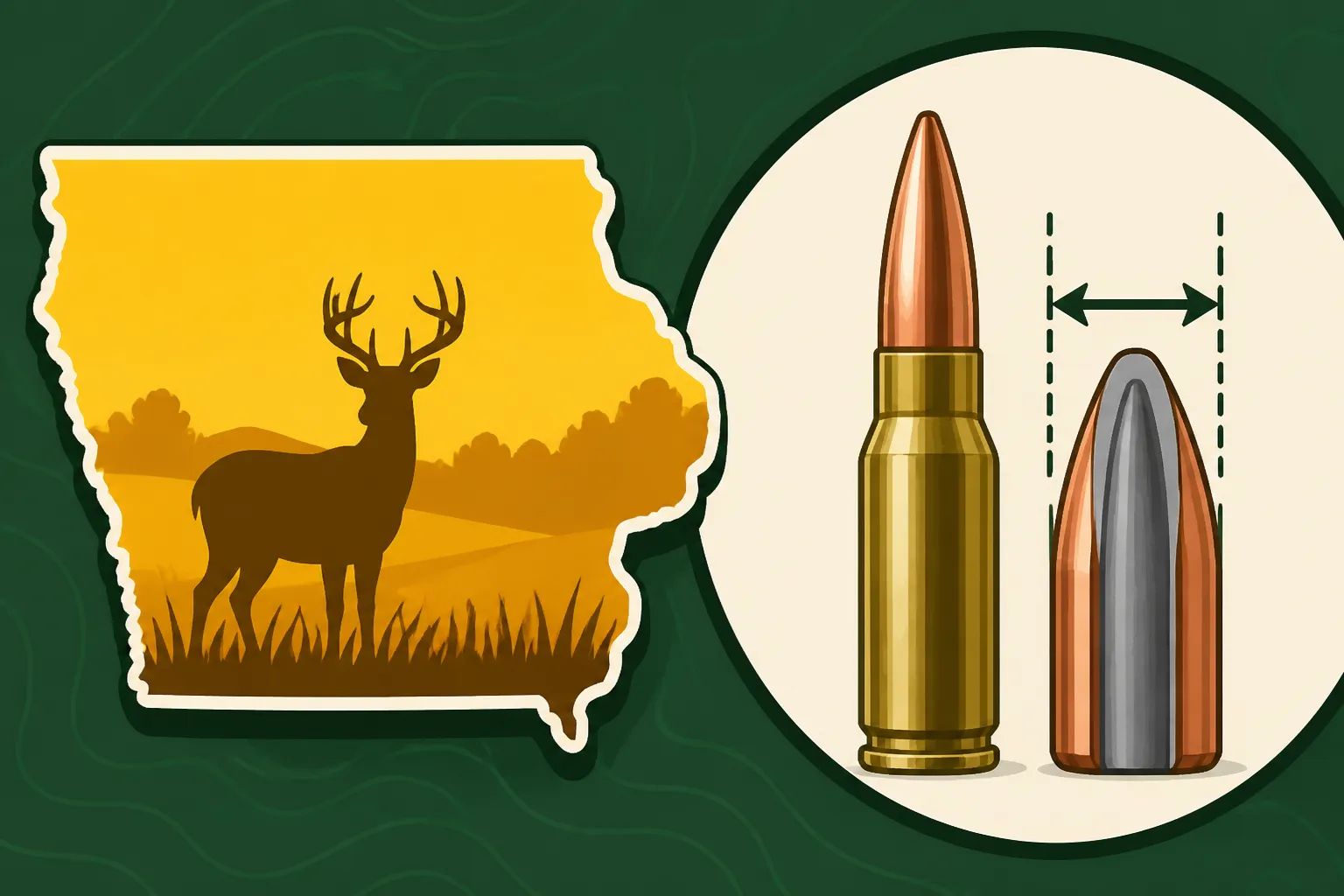
Here in Iowa, for straight-wall cartridge rifles, the legal bullet diameter must be between .357 inches and .500 inches. Yes, you read that right: the maximum allowed bullet diameter is .500 inches.
This means that any bullet you use for deer hunting with a straight-wall rifle, whether it's factory loaded or hand-loaded, must not exceed this half-inch diameter. This .500-inch maximum is a hard limit, and there's no wiggle room. If your bullet measures even slightly above that, you're out of compliance.
Let's think about this practically. Calibers like the popular .350 Legend, which typically fires a .357-inch bullet, are well within this range. The same goes for the .450 Bushmaster, which uses a .452-inch bullet, or the traditional .44 Magnum, which shoots a .429-inch bullet. These are all comfortably below the .500-inch ceiling. However, you rarely see commercially available straight-wall cartridges pushing right up against that .500-inch limit, simply because other factors like case capacity and bullet weight start to become prohibitive for the effective rifle systems most hunters use.
The key takeaway here is to know your specific ammunition's actual bullet diameter, not just the nominal caliber name. While a "50 caliber" might sound too big, some specifically designed straight-wall rounds that nominally are called ".50" might still fall within the acceptable .500-inch maximum if the actual bullet diameter is precisely that or less. It's a subtle distinction but an important one for avoiding any ambiguity. Iowa Straight-Wall Bullet Diameter Maximum
How to Confirm Your Ammunition's Diameter
You might be thinking, "How do I even check that?" It's a fair question, and thankfully, it's not as hard as it sounds. The easiest and most reliable way to confirm your ammunition's bullet diameter is to check the manufacturer's specifications.
- Ammunition Packaging: Most reputable ammunition manufacturers will list the bullet diameter prominently on the box. Look for terms like "bullet diameter," "projectile diameter," or simply the actual measurement in inches (e.g., .357", .452").
- Manufacturer Websites: If it's not on the box, a quick visit to the manufacturer's website for that specific load will almost certainly provide the precise dimensions. They have detailed specifications for every product.
- Reloading Manuals: If you're a handloader, your reloading manual is an invaluable resource. It will list the standard bullet diameters for each cartridge, and you'll be using specific bullets that have their dimensions clearly stated by the bullet manufacturer.
- Using Calipers: For the truly meticulous (and I respect that level of detail!), you can physically measure the bullet diameter with a set of calipers. This is especially useful if you're dealing with handloads or if you have any doubt about a particular factory load. Just be safe and only measure a pulled bullet or an unprimed, empty case with a bullet seated, never a live round without proper safety precautions.
Resources like GoHunt often have forums and gear guides where hunters discuss specific ammunition choices and compliance, providing another layer of community knowledge. However, always double-check with official sources and manufacturer data. The goal is to eliminate any doubt before you head to the field. When a conservation officer checks your setup, they'll be looking for clear compliance, and it's your responsibility to demonstrate it.
The Impact of Diameter on Cartridge Choice and Performance
Understanding the maximum bullet diameter isn't just an academic exercise; it directly influences which cartridges you can legally choose and how they perform in the field. This limit, combined with other regulations, shapes the entire landscape of straight-wall hunting in Iowa.
Popular Straight-Wall Cartridges and Their Diameters
The .500-inch maximum diameter rule, along with the minimum .357-inch diameter and maximum case length, has effectively carved out a niche for several popular cartridges that have become mainstays for Iowa deer hunters.
- ** .350 Legend:** This cartridge was practically designed with straight-wall states like Iowa in mind. Its .357-inch bullet diameter perfectly hits the minimum, and its case length is well within limits. It's a mild-recoiling, accurate round that has gained immense popularity.
- ** .450 Bushmaster:** A heavier hitter, the .450 Bushmaster uses a .452-inch bullet. It's known for its knockdown power and is a favorite for those seeking a bit more punch at legal distances. Again, its diameter is well under the .500-inch maximum.
- ** .44 Magnum:** While more commonly known as a handgun cartridge, the .44 Magnum (with its .429-inch bullet) is also perfectly legal in straight-wall rifles and can be a very effective deer round, especially in lever-action rifles.
- ** .45-70 Government:** This classic cartridge, firing a .458-inch bullet, is another popular choice. It's powerful and historically significant, and its diameter fits within Iowa's straight-wall regulations. However, with the .45-70, it's particularly important to ensure the case length is also compliant. While most modern factory loads are designed to fit the overall criteria, always verify. Popular Straight-Wall Cartridges in Iowa
It's important to remember that the nominal caliber name doesn't always reflect the exact bullet diameter. For instance, a ".357 Magnum" actually uses a .357-inch bullet. A ".44 Magnum" uses a .429-inch bullet. A ".45 Long Colt" uses a .452-inch bullet. Always verify the actual bullet diameter to ensure compliance with the .500-inch maximum.
Here’s a quick glance at some common straight-wall calibers and their typical bullet diameters:
| Cartridge Name | Typical Bullet Diameter (inches) | Is it within Iowa's .357" – .500" range? |
|---|---|---|
| .350 Legend | .357 | Yes |
| .357 Magnum | .357 | Yes |
| .44 Magnum | .429 | Yes |
| .45 Long Colt | .452 | Yes |
| .450 Bushmaster | .452 | Yes |
| .45-70 Government | .458 | Yes (ensure case length is also compliant) |
| .50 Beowulf | .500 | Yes (if precisely .500" or less) |
| .50 Action Express | .500 | Yes (if precisely .500" or less) |
Balancing Diameter with Other Straight-Wall Requirements
The bullet diameter is a crucial piece of the puzzle, but it’s not the only piece. Iowa's straight-wall regulations also include specific minimum bullet energy requirements (typically 500 foot-pounds of muzzle energy) and a maximum case length. A cartridge must meet all these criteria to be legal for deer hunting during the appropriate seasons. Iowa's 500 Foot-Pound Energy Rule
For example, a .50 AE (.50 Action Express) might have a .500-inch bullet, making it diameter-compliant, but you'd also need to ensure it meets the energy minimum and that its case length is within the legal maximum. This layered approach to regulations ensures that hunters are using cartridges that are both effective and conform to the underlying safety philosophy of the law.
Beyond legality, bullet construction and weight within the legal diameter range can dramatically affect performance. A lighter, faster bullet might carry more energy at the muzzle but shed it quicker, while a heavier bullet might maintain energy better downrange. Hunters often experiment with different bullet weights and designs (e.g., soft point, hollow point) within their chosen legal cartridge to find the best balance of accuracy, energy transfer, and ethical performance for their specific hunting conditions in Iowa. This experimentation is part of the fun of hunting, as long as it's within the legal boundaries.
Practical Considerations and Avoiding Mistakes
With such precise rules, it's easy to make an honest mistake if you're not paying close attention. But in the eyes of the law, an honest mistake can still lead to significant penalties. So, let's talk about staying on the right side of the regulations and where to turn for help.
Why Adherence to Regulations is Crucial
Nobody wants to have their hunting trip ruined, and certainly, no one wants to face legal trouble, especially when they're out enjoying Iowa's incredible hunting opportunities. Using illegal ammunition, even inadvertently, can lead to some pretty serious consequences:
- Fines: You could be facing a hefty fine, which can quickly outweigh the cost of your hunting trip and gear.
- Loss of Hunting Privileges: Potentially far worse than a fine, you could lose your hunting privileges for a period, which is a devastating blow for any passionate hunter.
- Confiscation of Gear: In some cases, illegal firearms or ammunition might be confiscated.
- Damage to Reputation: Beyond the legal ramifications, there's the personal stain on your reputation as a responsible hunter, something most of us value highly.
The regulations are in place for a reason—primarily for safety and to maintain fair chase principles. As hunters, it's our solemn responsibility to know and abide by these rules. Ignorance, unfortunately, is rarely an acceptable excuse when dealing with wildlife laws. It's a small price to pay (a little homework) to ensure you have a legal and enjoyable hunt. Iowa Wildlife Violation Penalties
Resources for Staying Informed
Staying current with Iowa's hunting regulations is an ongoing task because rules can occasionally be tweaked or clarified. The best way to stay informed is to:
- Read the Annual Iowa Hunting and Trapping Regulations: This is your bible. The Iowa DNR publishes an updated booklet every year, usually around mid-summer. It's available online as a PDF and often in print at sporting goods stores and county conservation offices. Make it a point to read through the sections relevant to your hunting method and species every single year, even if you think you know them inside and out. Iowa Regulation Booklet Release Date
- Visit the Iowa DNR Website: The official DNR website is a treasure trove of information. They often post updates, FAQs, and clarifications on specific regulations. It’s also where you'll find details on Iowa Deer Harvest Reporting Rules and Iowa CWD Mandatory Sampling Counties.
- Contact the Iowa DNR Directly: If you have a specific question that isn't clearly answered in the regulations booklet or online, pick up the phone and call your local DNR office or a conservation officer. They are typically very helpful and prefer you ask questions upfront rather than make a mistake in the field.
- Hunting Forums and Communities: While not an official source, hunting forums and community platforms can be great for discussions and sharing practical experiences. Websites like GoHunt often have active communities where hunters discuss regulations, gear choices, and best practices. Just remember to always cross-reference any advice found online with official DNR publications.
- Measure Your Own Ammunition: As mentioned earlier, if there's any doubt about a specific load, especially if it's new to the market or a handload, invest in a good set of calipers and physically measure the bullet diameter. It's the ultimate way to be absolutely certain.
Being a responsible hunter means doing your due diligence. It means understanding not just what the rules are, but why they exist. By keeping informed about the maximum straight-wall bullet diameter and all other related regulations, you ensure your hunt is ethical, legal, and truly enjoyable. Good luck out there this season!
Disclaimer
This article is for general informational purposes only and does not constitute professional advice. Laws, prices and regulations vary by location and change over time. Consult a qualified professional for guidance on your specific situation.