Arrow Weight for Whitetails
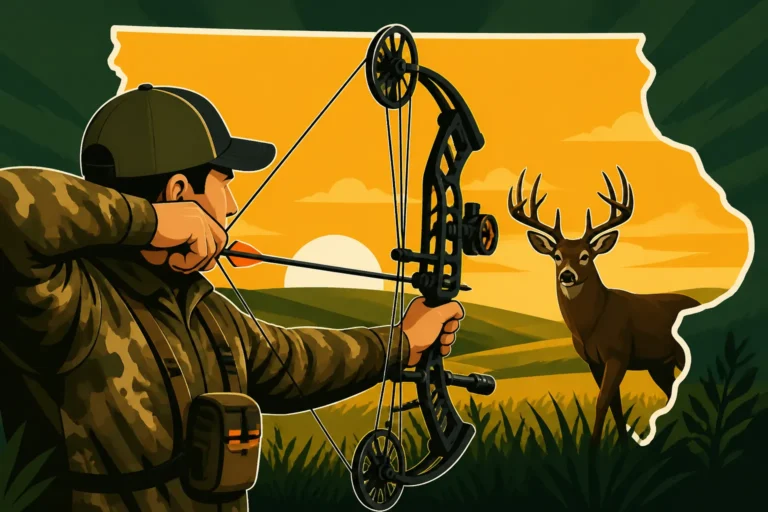
One of the most common headaches for any bowhunter, especially those chasing Iowa's elusive whitetails, is figuring out the perfect arrow setup. You spend countless hours practicing, scouting, and dreaming about that perfect shot opportunity, only to second-guess whether your arrow has enough oomph to get the job done when it counts. This guide is here to untangle the complexities of arrow weight, helping you build a setup that offers both speed and the penetration needed for ethical kills on Iowa's big deer.
Understanding Arrow Weight: Why It Matters for Iowa Whitetails
When you're flinging an arrow at a whitetail, you're not just sending a projectile downrange; you're delivering a carefully balanced package of energy and momentum designed to punch through hide, muscle, and potentially bone. Many hunters get hung up on arrow speed, believing faster is always better. While speed certainly helps flatten trajectory and can be a confidence booster, it's only one piece of the puzzle. For a clean, ethical kill on a tough Iowa whitetail, especially if you encounter a quartering-away shot or an unexpected deflection, penetration is paramount.
The physics behind this can feel a bit like a college lecture, but it's crucial to grasp the basics. Kinetic energy (KE) is what most bow manufacturers love to quote, as higher speeds naturally translate to higher KE. It's the "wow" factor. However, momentum (P) is arguably more critical for penetration. Momentum is less about how fast the arrow is going and more about how much mass it carries at that speed. Think of it this way: a ping-pong ball traveling 200 mph has high KE but almost no momentum, so it won't penetrate much. A bowling ball moving 5 mph has low KE but massive momentum, and it will knock over anything in its path. For whitetail hunting, we need a good balance, but favoring momentum slightly can give you a significant advantage in bone-crushing power. This is especially true when hunting Iowa's bigger-bodied deer, which can be surprisingly resilient.
Kinetic Energy Versus Momentum in Whitetail Hunting
Let's dive a little deeper into these two concepts, as they’re often misunderstood. Kinetic energy (KE) is calculated as (mass * velocity^2) / 450,240 (for feet per second and grains). Because velocity is squared, small increases in speed dramatically boost KE numbers. This is why lighter arrows, which can be shot faster, often boast higher KE figures. It looks great on paper, and certainly a fast arrow means less pin gap and a flatter trajectory, which is nice for those longer shots from a ground blind on a field edge.
However, momentum (P) is calculated as (mass * velocity) / 7,000. Notice that velocity isn't squared here. This means mass plays a much more direct role in momentum. A slightly heavier arrow, even if it's a bit slower, can carry significantly more momentum than a very light, super-fast arrow. When your broadhead hits a deer's rib cage, shoulder blade, or the opposite-side leg bone, it’s momentum that will continue to drive that arrow forward. In Iowa, where you might be shooting a big buck that weighs 250 pounds or more, having an arrow with plenty of momentum is a non-negotiable insurance policy. It means the difference between a pass-through and an arrow stuck in the off-side shoulder, potentially hindering your blood trail.
The "Too Light, Too Heavy" Debate: Finding Your Sweet Spot
This is where the real frustration for hunters often sets in. You’ll hear experienced hunters swear by ultra-heavy arrows for maximum penetration, advocating for setups pushing 500-600 grains. Then you'll talk to others who champion lightweight, high-speed arrows for flatter trajectories and greater forgiveness on yardage estimation errors. Both sides have valid points. An arrow that's too light can be unstable, noisy, and lose energy quickly, leading to poor penetration, especially after hitting anything dense. Conversely, an arrow that's too heavy might fly like a brick, making accurate shot placement challenging beyond close ranges, especially if you’re trying to stretch your effective range.
The key is finding your sweet spot, a balance that delivers reliable penetration without sacrificing too much shootability. This balance is especially important if you hunt a variety of terrains in Iowa, from tight timber stands where shots are often close and quick to wide-open soybean fields where a deer might step out at 40 yards. A well-balanced arrow system will consistently perform, giving you confidence in any scenario. It’s not just about the numbers; it’s about how that arrow flies from your bow and what it does on impact.
Factors Influencing Your Ideal Arrow Weight
Choosing the right arrow weight isn't a one-size-fits-all proposition. What works perfectly for one hunter might be completely inadequate or overkill for another, even if you’re both hunting Iowa whitetails. Several crucial factors come into play, and understanding them will help you tailor an arrow setup that's truly optimized for you and the hunting conditions you face. Ignoring these factors can lead to inconsistent accuracy or, worse, poor performance when you finally get a shot opportunity at that Iowa giant you've been chasing.
Your bow itself is perhaps the most significant piece of the puzzle. Its design and capabilities will heavily influence the range of arrow weights it can effectively launch. Beyond the bow, your broadhead choice is critical, as it's the component that actually does the work on the animal. Finally, considering your typical hunting scenarios and the size of the deer you’re pursuing in Iowa will help narrow down your options.
Your Bow's Capabilities and Arrow Spine
Let's start with your trusty bow. Its draw weight, draw length, and even the cam design all play a role in how it handles different arrow weights. A bow set at 70 pounds of draw weight is going to handle a heavier arrow with more efficiency than one set at 50 pounds. Similarly, a longer draw length allows for more power stroke, imparting more energy into the arrow. Modern bows, especially those with aggressive cam systems, are designed to launch arrows at impressive speeds, but they also demand a properly spined arrow. The spine, or stiffness, of an arrow, is critical; if an arrow is too stiff or too weak for your bow's specific setup and draw weight, it won't fly accurately, regardless of its weight. You might notice erratic flight, poor grouping, or even fishtailing.
Most arrow manufacturers provide charts to help you select the correct spine based on your draw weight and draw length. It's often recommended to be on the slightly stiffer side rather than too weak, especially if you're leaning towards a heavier total arrow weight or shooting mechanical broadheads. Tuning your bow with different arrow combinations, perhaps with a system like what GoHunt provides, is essential. Don't just pick an arrow off the shelf and hope for the best; put in the time to ensure it's matched to your specific setup. A well-tuned arrow, even if it's not the absolute fastest, will always be more accurate and lethal than a poorly tuned one.
Broadhead Design and Its Impact on Penetration
Your broadhead selection is arguably just as important as your arrow shaft when it comes to penetration. After all, the broadhead is the business end of your arrow. There are two main camps: fixed-blade broadheads and mechanical (or expandable) broadheads. Fixed-blade broadheads are known for their ruggedness and deep penetration, as their blades are rigid and don't require energy to deploy. Many traditional bowhunters and those prioritizing maximum penetration for bigger game often gravitate towards fixed blades. They tend to be less forgiving of poor arrow tuning, however, sometimes requiring extra effort to get them to fly perfectly with field points. For a detailed look at options, check out Broadhead Choices for Whitetails.
Mechanical broadheads, on the other hand, typically fly more like field points, making them appealing for their accuracy and ease of tuning. They expand on impact, creating a larger cutting diameter and potentially a wider blood trail. However, that deployment requires energy. If your arrow is on the lighter side, or if the broadhead hits heavy bone, the energy required to open the blades and penetrate can sometimes result in less pass-throughs compared to a fixed-blade. This is where arrow weight becomes even more critical with mechanical broadheads. A heavier arrow provides the momentum needed to power through, even after the blades deploy. Consider the common scenarios of Shot Placement on a Whitetail at Twenty Yards or a Quartering-Away Shots on Whitetails; reliable penetration is always the goal.
Calculating and Achieving Optimal Arrow Weight for Success
So, you understand the theory and the influencing factors. Now, how do you actually put this into practice and build an arrow that's perfectly weighted for your Iowa whitetail hunts? It involves a bit of math, some trial and error, and a dedication to tuning. The goal isn't just to hit a number, but to assemble a system that flies consistently, silently, and delivers maximum impact when it counts. Don't let the technical aspects scare you off; think of it as fine-tuning your hunting machine for peak performance.
The process usually starts with a general guideline, then moves into selecting components, assembling, and finally, rigorous testing. Remember, every component you add or change, from the broadhead to the fletching, contributes to the total arrow weight and affects its flight characteristics.
The 5-7 Grains Per Pound Guideline
A common starting point for total arrow weight is the "grains per pound of draw weight" rule of thumb. Many experienced bowhunters recommend aiming for a total arrow weight between 5 and 7 grains for every pound of your bow's draw weight.
Let's break that down with an example:
| Draw Weight (lbs) | Minimum Recommended Arrow Weight (5 grains/lb) | Maximum Recommended Arrow Weight (7 grains/lb) |
|---|---|---|
| 40 | 200 grains | 280 grains |
| 50 | 250 grains | 350 grains |
| 60 | 300 grains | 420 grains |
| 70 | 350 grains | 490 grains |
This table gives you a general range. For Iowa whitetails, many successful hunters operating at a 60-70 pound draw weight often find themselves comfortable in the 400-500 grain range. This provides a good balance of speed and momentum for reliable pass-throughs. If you tend to hunt in thicker timber where shots are always inside 30 yards, you might lean towards the heavier end of that scale for maximum punch. If your primary hunting grounds involve long field edge shots, you might lean slightly lighter for a flatter trajectory, but always within that acceptable range to ensure adequate penetration.
It’s important to note that a lot of what you see on store shelves are lighter carbon arrows designed for speed. To get into the 450-500 grain range, you'll likely need to use heavier inserts or broadheads, or choose a slightly heavier arrow shaft to begin with.
Practical Ways to Adjust and Tune Your Arrow Weight
Once you have a target weight range, how do you actually achieve it? Here are a few practical methods:
- Heavier Arrow Shafts: The most direct way to increase total weight is by starting with a heavier arrow shaft. Carbon arrows come in various weights per inch, so you can select a shaft that puts you closer to your desired final weight. Don't forget to account for Arrow Spine and Front of Center as you select your shafts.
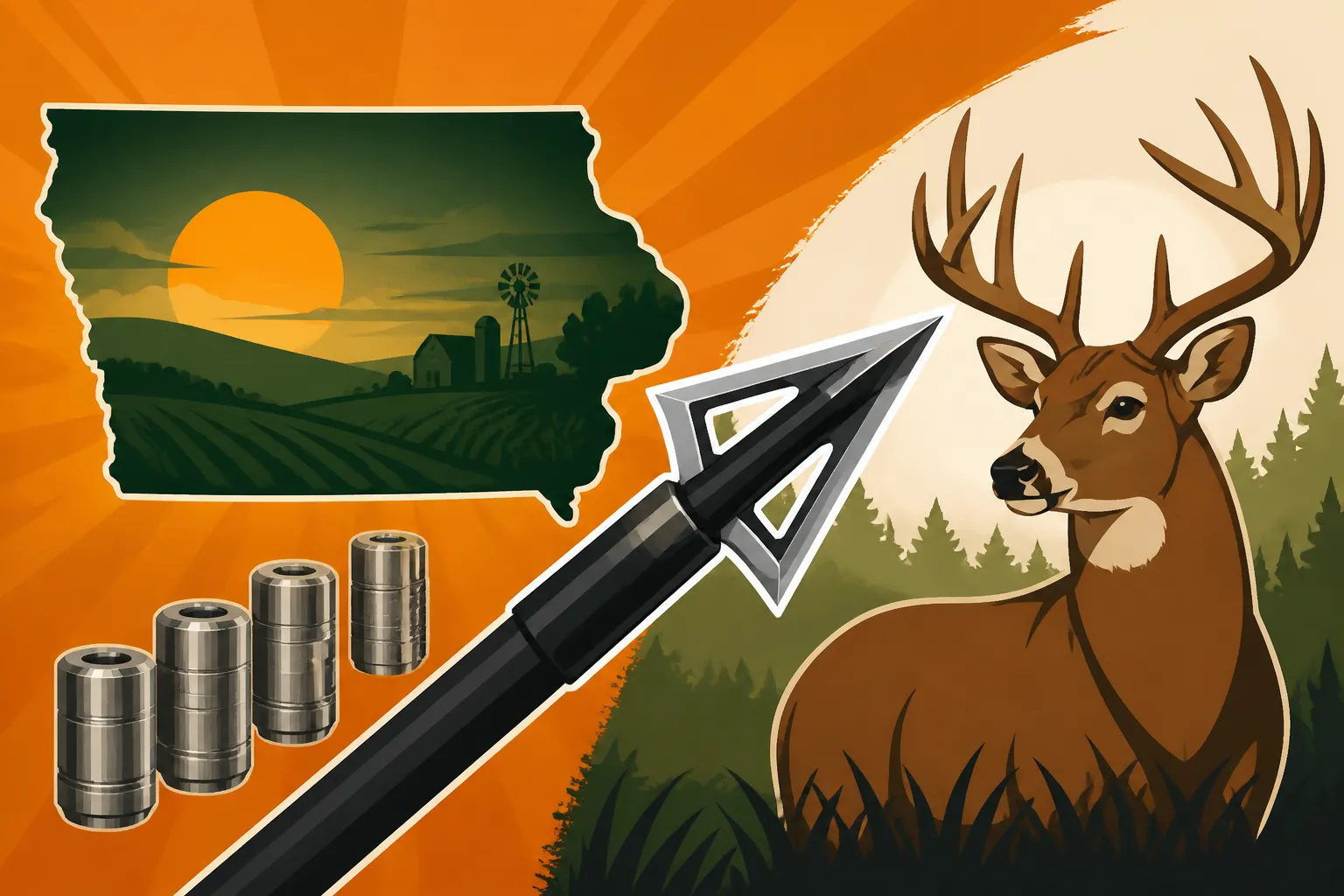
- Inserts and Outserts: Standard aluminum inserts usually weigh around 10-20 grains. Aftermarket heavy brass or stainless steel inserts can weigh anywhere from 50 grains up to 100+ grains. These are excellent for adding weight to the front of your arrow (Forward of Center or FOC), which many believe improves penetration and accuracy, especially in windy conditions or after impact.
- Broadhead Weight: Broadheads typically come in 100-grain or 125-grain options, with some heavier options available. Switching from a 100-grain to a 125-grain broadhead immediately adds 25 grains to your total arrow weight. Again, for a good look at what's out there, revisit Broadhead Choices for Whitetails.
- Fletching: While less significant, different fletching materials and sizes can add a few grains. Larger, stiffer fletching (like Blazer vanes) provides more steering but also slightly more weight and drag than smaller, lighter options.
- Footers or Collar Systems: Some hunters use small aluminum or carbon collars that fit over the front of the arrow shaft, behind the insert. These add durability to the front of the arrow and a small amount of weight.
After assembling your arrows, the absolute most critical step is tuning. You cannot simply build an arrow to a specific weight and expect it to fly perfectly. Every bow and arrow combination needs to be tuned to ensure perfect flight. This involves paper tuning, walk-back tuning, and broadhead tuning. Paper tuning helps eliminate vertical and horizontal tears, indicating how the arrow leaves the bowstring. Walk-back tuning confirms your sight settings and verifies the arrow is flying true at various distances. Finally, broadhead tuning is vital to ensure your broadheads impact the same spot as your field points. Many hunters find using an app like GoHunt can help track these tuning efforts, keeping notes on what works and what doesn't. If your broadheads aren't hitting with your field points, you've got a problem that needs to be solved before you ever step foot in the Iowa timber. Don't skip this step! It takes time, but ensuring your arrow hits exactly where you aim is the best way to honor the animal and guarantee an ethical harvest. For deeper insights into this process, be sure to check out Tuning a Bow Before Iowa's Opener.
Disclaimer
This article is for general informational purposes only and does not constitute professional advice. Laws, prices and regulations vary by location and change over time. Consult a qualified professional for guidance on your specific situation.