Tuning a Bow Before Iowa’s Opener
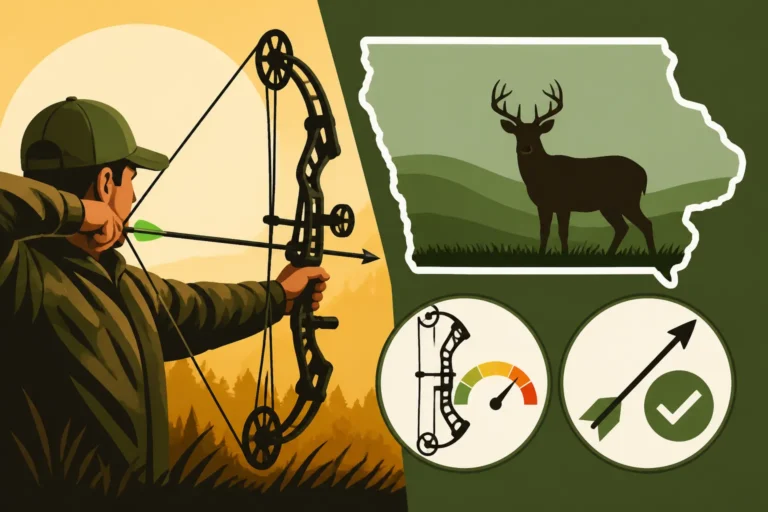
The crisp air of early fall in Iowa starts to carry that familiar scent of damp earth and decaying leaves, and for many of us, it ignites a fire of anticipation. Yet, with that excitement often comes a nagging doubt: is my bow truly ready? Many bowhunters, myself included, have felt the sting of a missed shot or a difficult blood trail, only to realize later that a subtle tuning issue with our equipment was partly to blame. This guide is all about taking the guesswork out of your archery setup, helping you meticulously tune your bow so you can step into the timber or onto that field edge with unwavering confidence before Iowa's archery opener.
Why Bow Tuning Matters More Than You Think for Iowa Deer
When we talk about hunting Iowa's whitetails, especially with a bow, every single detail matters. These deer are smart, elusive, and often provide only fleeting opportunities. A perfectly tuned bow isn't just about shooting tight groups on the target range; it's about maximizing your chances for an ethical, efficient harvest when that moment of truth arrives. It reduces variables, bolsters your confidence, and ultimately, respects the animal.
Accuracy and Consistency: The Pillars of Ethical Hunting
Think about it: an untuned bow might shoot a decent group at 20 yards, but what happens when you step back to 30, 40, or even 50 yards? Those minor inconsistencies can quickly compound into significant misses. An arrow that leaves the string with any sort of wobble or erratic flight path is already fighting a losing battle against aerodynamics. A properly tuned bow ensures that every arrow, regardless of broadhead type or weather conditions, flies true and predictable. This unwavering consistency is what allows you to make precise adjustments for wind, angle, or distance, knowing that your equipment itself isn't introducing any unforeseen errors.
Beyond just hitting the target, consistency in arrow flight also impacts penetration. An arrow that’s fishtailing or porpoising loses kinetic energy as it attempts to correct itself in flight. This wasted energy could be the difference between a pass-through on a large Iowa buck and a partial penetration, leading to a much tougher tracking job. Investing the time in tuning means that when your pin settles, you're delivering maximum energy to the vitals, which is the cornerstone of ethical bowhunting.
Shot Placement and Recovery: Making Every Arrow Count
In bowhunting, shot placement isn't just important—it's everything. The margin for error on a whitetail's vital organs is relatively small, and an arrow needs to pass through this critical zone for a quick, humane harvest. An untuned bow, even if it groups reasonably well, might throw a flyer here and there, or perhaps the broadheads simply aren't hitting exactly where your field points are. This discrepancy can lead to a slightly off-center hit, transforming a quick recovery into a potentially lost animal. This is where meticulous tuning truly pays dividends.
When your bow is perfectly tuned, you eliminate the equipment as a variable. You know that if you execute your shot properly, the arrow will go exactly where your pin is. This certainty empowers you to pick a specific hair on the deer's hide, rather than just aiming for "the general area." Making every arrow count means having the peace of mind that your equipment is performing optimally, allowing you to focus purely on form, breathing, and shot execution. This can be especially crucial when hunting dense Iowa timber where even a short blood trail can become a monumental task if the hit isn't ideal. The folks at GoHunt often emphasize the importance of precision, and that starts with your gear.
Confidence in the Field: Trusting Your Equipment
Hunting Iowa, whether on public land or a private farm, is often a game of mental fortitude as much as skill. When you sit in a stand or blind, knowing that your bow is perfectly tuned instills a deep sense of confidence. You're not second-guessing your setup; you're focused on the hunt itself, scanning the woods, listening for that tell-tale rustle, and preparing for the shot. This mental edge can be the difference between choking under pressure and making a calm, deliberate shot.
Conversely, a bow that you suspect might have an issue—maybe it makes a strange noise, or the arrows fly a little inconsistently—can plant seeds of doubt. Those doubts can creep in at the worst possible time, leading to target panic, rushed shots, or simply a lack of commitment when it matters most. Tuning your bow isn't just about mechanics; it's about building an unbreakable trust between you and your equipment, so that when that buck steps into your shooting lane, your mind is clear, and your body is ready. It's about feeling completely prepared for Iowa Whitetail Hunting Tactics Through the Rut.
The Essential Steps of Bow Tuning for a Seamless Opener
Tuning a bow isn't rocket science, but it does require patience, attention to detail, and a systematic approach. Don't try to rush through it; treat it as an integral part of your hunting preparation. By breaking down the process into manageable steps, you'll ensure no stone is left unturned and your bow is truly ready for the challenges of the Iowa deer woods.
Checking Basic Equipment: Strings, Cams, and Limbs
Before you even think about shooting an arrow, a thorough inspection of your bow is paramount. Start with your bowstring and cables. Look for any fraying, serving separation, or wear. A compromised string can lead to catastrophic failure and dangerous situations. Check the string's peep sight for proper alignment and ensure it's securely tied in. Next, examine your cams. Are they synced? Meaning, do they reach their full rotation at the same time? Uneven cam timing is a common culprit of poor arrow flight. Most bows have timing marks on the cams or limbs to help you verify this. If they're off, a pro shop can quickly make adjustments by twisting or untwisting cables.
Don't forget the limbs. Look for any cracks, splinters, or delamination, especially near the cam pockets. These can be serious issues. Finally, check all screws and bolts for tightness—riser bolts, sight mounting screws, rest screws, stabilizer connection, and quiver attachment. A loose component can introduce vibration or shifting impact points. A little bit of blue Loctite on non-critical screws can prevent them from backing out. Think of this as your pre-flight check; you wouldn't fly a plane without one, and you shouldn't hunt without thoroughly inspecting your bow.
Paper Tuning: The Foundation of Flight
Paper tuning is often the first formal step in tuning and provides an excellent diagnostic tool for arrow flight. It involves shooting an arrow through a sheet of paper stretched across a frame, typically at a close distance (around 5-10 yards). The tear the arrow leaves in the paper tells you how the arrow is flying immediately after it leaves the string.
Here's a quick rundown of what different tears indicate:
| Paper Tear | Indication | Common Adjustment |
|---|---|---|
| Perfect Hole | Ideal arrow flight, straight and true | None, maintain settings. |
| High Tear | Nock end of arrow is high | Move arrow rest down slightly or nocking point up slightly. |
| Low Tear | Nock end of arrow is low | Move arrow rest up slightly or nocking point down slightly. |
| Left Tear (RH Shooter) | Nock end is left (arrow pointing right) | Move arrow rest right slightly or decrease draw weight/increase spring tension on rest. |
| Right Tear (RH Shooter) | Nock end is right (arrow pointing left) | Move arrow rest left slightly or increase draw weight/decrease spring tension on rest. |
(Reverse left/right for left-handed shooters.)
Making small adjustments to your arrow rest (horizontally and vertically) and nocking point is key. Always make tiny changes and re-shoot to see the effect. The goal is to achieve as close to a perfect hole as possible. This initial paper tune establishes a clean launch and is critical for consistent accuracy downrange. It sets the stage for all subsequent tuning steps.
Walk-Back Tuning: Refining Your Aim
Once you've achieved a good paper tune, it's time to confirm and refine your horizontal alignment with walk-back tuning. This method is brilliant because it exposes minor left-right errors that might not be obvious at close range. Set up a target with a vertical line or tape down the center. Stand at about 10 yards and shoot an arrow, aiming directly at the vertical line. Without moving your sight pin, walk back to 20 yards and shoot another arrow, aiming at the same spot as the first. Repeat this at 30, 40, and even 50 yards, if you feel comfortable.
If your arrows are all impacting the vertical line, your horizontal alignment is excellent. If they start to drift left or right as you move back, you'll need to adjust your arrow rest horizontally in the direction the arrows are impacting. For example, if your arrows are consistently hitting to the left of the line as you walk back, move your arrow rest slightly to the left. The beauty of walk-back tuning is that it naturally compensates for any slight torque or form issues you might have, getting your broadheads to fly straight even with slight imperfections. This method helps ensure your arrows hit their mark consistently, whether you're taking a close shot or reaching out a bit further, perhaps across a Hunting a Narrow Creek Corridor.
Advanced Tuning Techniques for Peak Performance
While paper tuning and walk-back tuning lay a solid foundation, truly meticulous hunters understand that going a step further can unlock the absolute best performance from their bow. These advanced techniques help you fine-tune your setup to perfection, addressing subtle nuances that can make a difference when it matters most.
Broadhead Tuning: Matching Field Points to Broadheads
This is arguably the most critical step for any bowhunter. You can shoot perfect groups with field points all day long, but if your broadheads don't fly to the same point of impact, all that practice is for naught. Broadhead tuning ensures that your hunting arrows, equipped with their razor-sharp tips, fly identically to your practice arrows. The primary reason broadheads might fly differently is due to the larger surface area of the blades catching the air, acting like small rudders that can steer the arrow if it’s not leaving the bow perfectly straight.
To broadhead tune, start by shooting a field-tipped arrow and a broadhead-tipped arrow at a target, typically around 30-40 yards. Aim at the same spot with both.
- If your broadhead hits left of the field point (for a right-handed shooter), move your arrow rest slightly left.
- If your broadhead hits right, move your arrow rest slightly right.
- If your broadhead hits high, move your arrow rest slightly up.
- If your broadhead hits low, move your arrow rest slightly down.
Make small adjustments, shoot again, and repeat until both types of arrows impact the same spot. This process takes patience, but it's non-negotiable for ethical hunting. For mechanical broadheads, the tuning process is often less demanding than for fixed blades, as mechanicals typically fly more like field points. However, always confirm broadhead flight before heading into the field. This critical step ensures that when you choose your Broadhead Choices for Whitetails, you're confident in their flight.
Bareshaft Tuning: Exposing Form Flaws and Arrow Flex
Bareshaft tuning involves shooting an arrow without fletching (vanes) alongside a fletched arrow. This technique is a fantastic diagnostic tool because the unfletched arrow has no "steering" to correct imperfections in arrow flight or, more commonly, flaws in your shooting form. If your form is perfect and your bow is perfectly tuned for that arrow, the bareshaft and fletched arrow should impact very close to each other.
Begin by shooting fletched and unfletched arrows at a close distance, like 10-15 yards.
- If the bareshaft hits left of the fletched arrow (RH shooter), it suggests your bow is stiff for the arrow (arrow spine is too stiff), or you might be torquing the bow. You might need a weaker spined arrow, heavier point weight, or a slight rest adjustment to the right.
- If the bareshaft hits right, your bow is weak for the arrow (arrow spine is too weak), or you're pushing the bow too much at release. Consider a stiffer spined arrow, lighter point weight, or a slight rest adjustment to the left.
- Vertical differences (high/low) usually indicate nocking point issues or a vertical rest alignment problem.
Bareshaft tuning helps confirm that your arrow spine is appropriate for your bow's draw weight and length, and it's brutally honest about revealing inconsistencies in your release or grip. While achieving identical impact points for bareshafts and fletched arrows can be challenging for many, getting them to group closely indicates an extremely well-tuned system and excellent form. It's a deep dive into your setup that can greatly improve your overall archery performance.
Fine-Tuning for Different Distances and Conditions
Even after achieving perfect paper, walk-back, and broadhead tunes, the journey isn't over. Real-world hunting conditions in Iowa can throw curveballs. Fine-tuning involves shooting extensively at various distances you expect to encounter, practicing from elevated positions if you hunt from a treestand, and even shooting in different weather conditions (light rain, wind) to understand how your arrows react.
This might involve slight adjustments to your sight pins to ensure they're dead-on at 20, 30, 40, and 50 yards. Some hunters also experiment with different arrow weights or broadhead styles to see what performs best under varied circumstances. Pay attention to how your arrows fly from an elevated stand – sometimes the angle changes your perception of the shot. Practicing these scenarios helps you develop a comprehensive understanding of your setup's capabilities and limitations. Using tools like the GoHunt app for aerial scouting can also help you visualize potential shot distances and angles in your chosen Scouting Iowa Timber and River Bottoms areas, allowing you to tailor your practice sessions. Remember, true mastery comes from adapting your perfect tune to the unpredictable nature of hunting.
Maintaining Your Tune Through the Season
Tuning your bow once isn't a "set it and forget it" affair. The Iowa hunting season can be long, and environmental factors, wear and tear, and even subtle changes in your form can affect your bow's tune. Regular maintenance and checks are essential to ensure your bow performs flawlessly from the opening day of archery season all the way through the Iowa January Antlerless Hunts.
Regular Pre-Hunt Checks
Before every hunting trip, or at least weekly during the season, take a few minutes for a quick visual inspection of your bow. This goes beyond the initial thorough check and focuses on components most likely to shift or wear. Check your peep sight for rotation – has it twisted slightly, affecting your sight picture? Ensure all sight pins are tight and haven't vibrated loose. Inspect your arrow rest to make sure it's not bent or rattling, and that any drop-away mechanism is functioning smoothly.
A good habit is to shoot a couple of arrows into a target at your hunting spot (if legal and safe, of course, or at a nearby range) before a big hunt. This quick check confirms your pins are still dead-on and helps you identify any subtle shifts in your tune. If you notice any anomalies, address them immediately. Don't let a small issue fester and potentially cost you a shot at a trophy buck. This routine is like checking your oil before a long drive – a small effort that prevents big problems.
Troubleshooting Common Issues
Even with the best preparation, issues can arise. Knowing how to troubleshoot common bow tuning problems can save you a trip to the pro shop or, more importantly, a missed opportunity in the field.
- Sudden Broadhead Planing: If your broadheads suddenly start flying erratically, first check for fletching damage on your hunting arrows. Even a slightly bent or torn vane can cause major flight issues. Next, inspect your arrow rest to ensure it's still perfectly aligned and not bent. A loose broadhead insert can also cause problems, so make sure your broadheads are screwed in tightly and straight.
- Peep Sight Rotation: This is a common and frustrating issue. Often, a few twists in the string will solve it. If it keeps rotating, a qualified bow tech might need to add or remove a half twist from one side of the string.
- Vibration or Noise: A new vibration or unexpected noise during the shot could indicate a loose accessory (sight, quiver, stabilizer), a crack in a limb (check immediately!), or even a cam issue. Methodically check each component for tightness. Sometimes, a poorly tuned bow will make more noise because of the way the string and arrow interact, which is another reason a good tune is beneficial. When you're Hunting From a Blind Without Movement, every little noise is amplified, so a quiet bow is crucial.
Practice, Practice, Practice
The most perfectly tuned bow in the world is only as good as the shooter behind it. Consistent practice is not just about maintaining your shooting form but also about reinforcing your confidence in your tuned equipment. Shoot regularly throughout the season, not just before it starts. This helps you identify any subtle changes in your form or your bow's performance early on.
Practice from different positions, including elevated stands, ground blinds, and from a kneeling position. Simulate real hunting shots – quick draws, shooting through small lanes, and holding your pin steady after an extended draw. This ongoing practice, combined with a perfectly tuned bow, will make you a formidable presence in the Iowa deer woods. Remember, a well-tuned bow and a well-practiced shooter are an unstoppable combination, ready for anything from Early-Season Bowhunting Over Water to late-season food plot ambush.
Disclaimer
This article is for general informational purposes only and does not constitute professional advice. Laws, prices and regulations vary by location and change over time. Consult a qualified professional for guidance on your specific situation.