Single Projectile Rule for Iowa Muzzleloaders
Navigating the specific regulations for hunting in Iowa can sometimes feel like trying to untangle a knot in the dark, especially when it comes to the nuances of certain weapon types. Muzzleloader season, a cherished time for many of us, comes with its own set of rules, and one that often causes confusion is the "single projectile rule." This guide will demystify exactly what that means for your Iowa muzzleloader hunt, ensuring you're compliant and confident when you head afield.
Understanding Iowa's Single Projectile Rule for Muzzleloaders
When you're out there, deep in the timber or scanning a frosty field edge during Iowa's muzzleloader season, the last thing you want is a nagging doubt about the legality of your setup. The "single projectile rule" is a cornerstone of Iowa's muzzleloader regulations, designed to ensure humane and ethical harvesting of deer while maintaining a level playing field. It might sound simple, but the specifics are where hunters often get tripped up.
Defining "Single Projectile" in Iowa Law
At its heart, the single projectile rule means exactly what it says: your muzzleloader can only be loaded with one projectile at a time. This isn't just a suggestion; it's a clear legal requirement for deer hunting with a muzzleloader in Iowa. Think of it this way: when you pull the trigger, only one mass of lead or similar material should be propelled down the barrel and toward your target. This distinguishes muzzleloaders used for deer from those that might be used for small game or birds, where shot (multiple small pellets) is the norm.
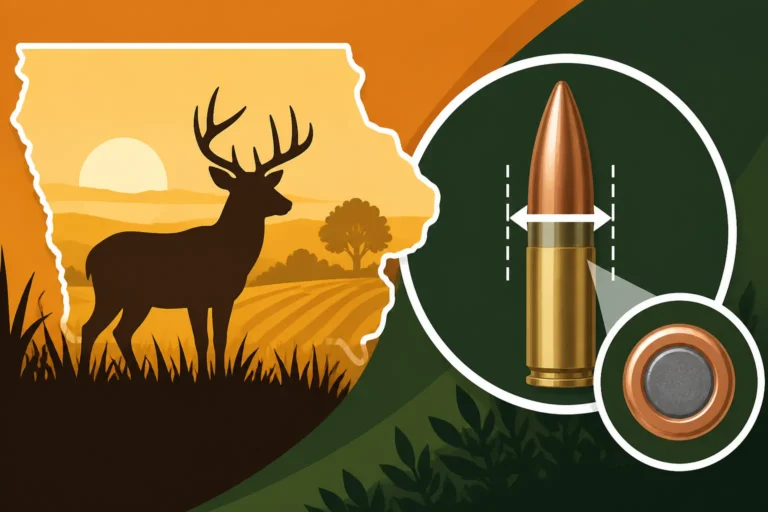
The common setup for a deer hunter's muzzleloader involves a bullet, often encased in a sabot, that travels as a single unit. Whether it's a traditional patched round ball or a modern conical bullet in a plastic sabot, the key is that it's one projectile. This rule emphasizes precision and the ability to make a clean, ethical shot on a deer. It eliminates any ambiguity that might arise from loading multiple small projectiles, which are typically designed for scattering rather than concentrated impact.
The Intent Behind the Regulation
You might wonder why such a specific rule exists. The Iowa Department of Natural Resources (DNR) establishes these regulations with several important goals in mind. Primarily, it's about hunter safety and the ethical pursuit of game. A single, heavy projectile delivers a focused impact designed for a clean kill on a large animal like a whitetail deer. Shot, on the other hand, spreads its energy over a wider area, and while effective for small birds, it’s generally not sufficient to consistently harvest a deer humanely at typical hunting ranges.
Historically, before more modern ammunition types became prevalent, some hunters might have experimented with loading multiple round balls or buckshot in muzzleloaders, especially in areas where shotguns were restricted. The single projectile rule clarifies that this practice is not permitted for deer hunting in Iowa. It aims to prevent irresponsible shooting methods that could wound deer without delivering a fatal blow, leading to unnecessary suffering and lost game. This commitment to ethical hunting is a core value among Iowa hunters, and rules like this reflect that dedication. Many hunters appreciate that the regulations help preserve the reputation of ethical hunting in the state, making sure that every effort is made to dispatch game quickly and cleanly. Checking platforms like GoHunt can provide deeper insights into the community's perspective on such regulations.
What This Means for Your Muzzleloader Setup
The single projectile rule directly influences the type of ammunition you can use and how you prepare your muzzleloader for hunting season. It's not just about what you load, but also understanding the components that make up a legal projectile.
Legal Projectile Types and Materials
For Iowa muzzleloader deer hunting, legal projectiles are generally those designed to be fired as a single unit. This typically includes:
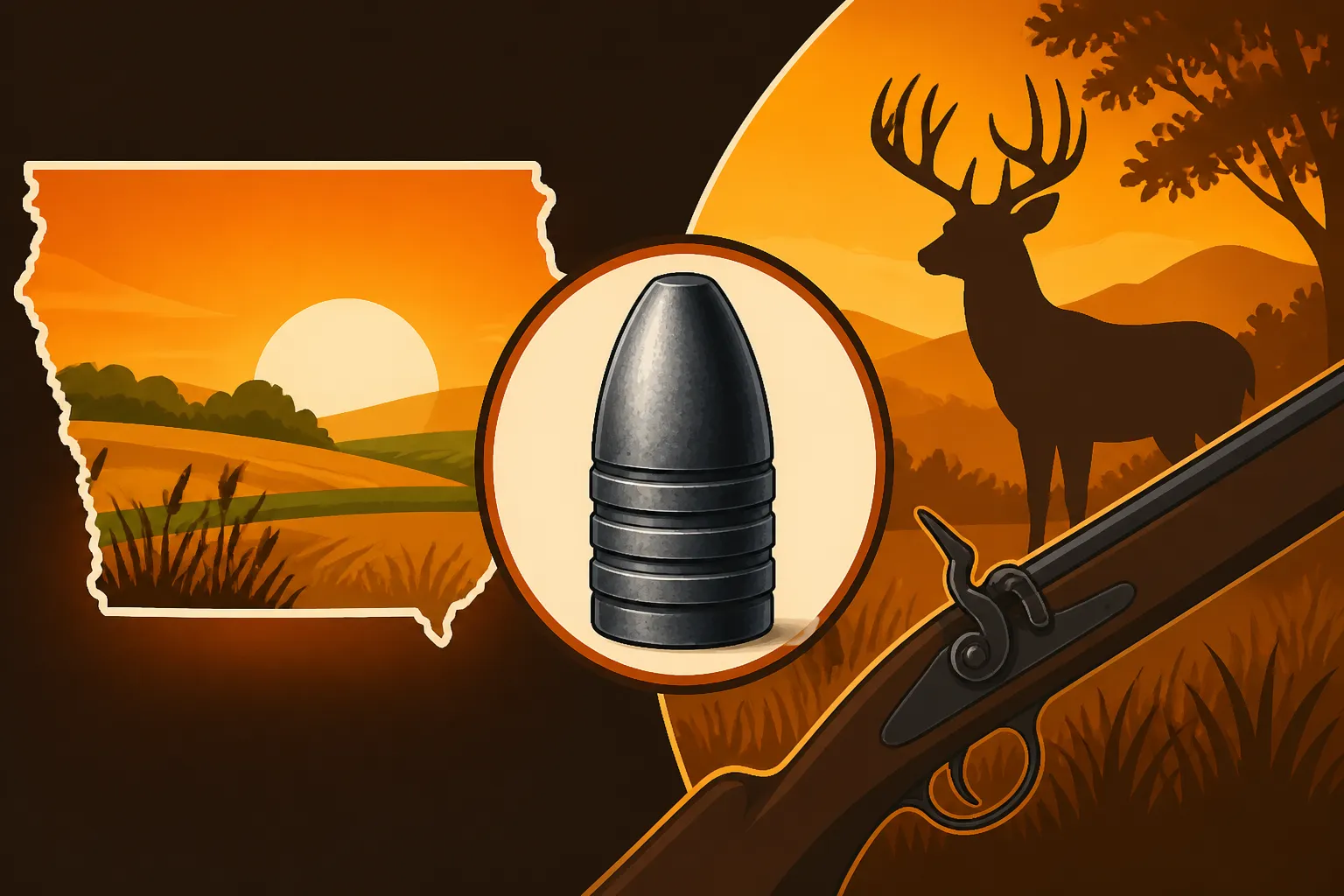
- Conical Bullets: These are modern, elongated bullets, often made of lead or a lead alloy, designed for muzzleloaders. They are loaded individually, sometimes with a sabots for increased accuracy and to fit larger bore diameters.
- Saboted Projectiles: These are essentially smaller diameter bullets encased in a plastic sabot (a sleeve) that allows them to be fired through a larger bore muzzleloader. The sabot falls away shortly after leaving the barrel, leaving the single bullet to travel to the target. These are very popular due to their accuracy and ballistic performance.
- Patched Round Balls: The traditional muzzleloader projectile, a lead ball wrapped in a lubricated patch. This combination also constitutes a single projectile.
The material itself isn't as critical as the configuration. Lead, copper, or other approved bullet materials are all acceptable, provided they are part of a single projectile system. When scouting for your next muzzleloader load, consult resources that detail Iowa Muzzleloader Projectile Rules to ensure your choice aligns with current regulations. Many hunters often look to what's performed well in terms of Muzzleloader Accuracy at 100 Yards with these single projectile types.
Illegal Configurations to Avoid
Understanding what is allowed is only half the battle; knowing what isn't allowed is equally crucial. The following configurations are explicitly prohibited under Iowa's single projectile rule for muzzleloader deer hunting:
- Shot (Buckshot or Birdshot): This is the most common mistake or misconception. Loading multiple pellets of any size, whether it's large buckshot or small birdshot, is illegal for deer hunting with a muzzleloader. These loads are designed to spread, which is inappropriate for deer.
- Multiple Projectiles Loaded Simultaneously: Attempting to load two or more conical bullets, round balls, or any combination of distinct projectiles at once is against the rules. Even if they are individually small, the act of loading and firing them as a group violates the "single" aspect of the rule.
A good rule of thumb is if it looks like what you'd load in a shotgun for small game or birds, it's probably not legal for deer in an Iowa muzzleloader. Always double-check your ammunition to ensure it's a solid, single projectile, like those you'd expect to see for big game hunting. A quick check on your ammunition packaging or manufacturer's website should clarify its intended use. Many hunters utilize apps and websites, like GoHunt's resources, to cross-reference their gear against state regulations.
Impact on Muzzleloader Performance and Selection
The single projectile rule certainly influences the overall performance you can expect from your muzzleloader and, by extension, your choice of firearm. Since you're limited to a single, solid projectile, the emphasis shifts to accuracy, bullet construction, and effective range.
You'll find that muzzleloaders designed for deer hunting with single projectiles are often built for precision. Rifled barrels, which impart spin to the projectile for stability in flight, are standard. This is quite different from smoothbore muskets, which were traditionally used with round balls but are less accurate with modern conical bullets. When considering Inline Versus Traditional Muzzleloaders, the accuracy advantages of inline systems firing saboted projectiles often come to the forefront due to this emphasis on single-projectile performance.
Furthermore, the design of these single projectiles is optimized for energy transfer and expansion upon impact with a deer. They're crafted to penetrate vital organs and create a wide wound channel, leading to a quick and humane harvest. This contrasts sharply with shot, which dissipates energy rapidly and lacks the mass to effectively penetrate a deer. Your choice of Muzzleloader Caliber Range will also play a role, as larger calibers typically handle heavier, more effective single projectiles.
Navigating Ammunition Choices and Best Practices
Choosing the right ammunition for your Iowa muzzleloader hunt isn't just about legality; it's about maximizing your chances of a successful and ethical harvest. Understanding the options available and how to properly load them is key.
Selecting Your Muzzleloader Bullet
The market for muzzleloader projectiles is vast, offering a range of options optimized for different rifles and hunting scenarios. For Iowa, you'll be looking at saboted bullets or traditional conical designs.
- Saboted Bullets: These are arguably the most popular choice for modern inline muzzleloaders. They offer excellent ballistic coefficients, meaning they fly truer and retain energy better over distance. Manufacturers like Hornady, Barnes, and Traditions offer a wide array of saboted bullets in various calibers and weights. When selecting, consider your rifle's twist rate – some barrels stabilize heavier, longer bullets better, while others perform optimally with lighter, shorter ones. Experimenting with different brands and bullet weights before the season is highly recommended to find what shoots best in your specific rifle. Don't forget to check resources like GoHunt or your local sporting goods store for common recommendations for your area and season, such as during Early Muzzleloader Season Deer Behaviour.
- Conical Bullets (Non-Saboted): If you're using a traditional muzzleloader or prefer a full-bore lead projectile, conical bullets are an excellent choice. They typically feature lubricating grooves and are designed to engage the rifling directly. Brands like Thompson/Center and Buffalo Bullet Company offer excellent conical options. These often require a tight fit for proper sealing and accuracy, so proper sizing to your bore is crucial. They generally shine at closer ranges but can be very effective with good shot placement.
- Patched Round Balls: For the purists, patched round balls are timeless. They are simple, effective at moderate ranges, and generally very accurate in properly matched bore and patch combinations. While perhaps not offering the same long-range performance as modern sabots, they've harvested countless deer over centuries and remain a perfectly legal and viable option.
Regardless of your choice, remember that the goal is accuracy and consistent performance. A bullet that groups tightly at your effective hunting range is far more valuable than one that looks impressive but shoots poorly.
| Projectile Type | Key Characteristics | Pros | Cons |
|---|---|---|---|
| Saboted Bullet | Smaller bullet in plastic sabot, modern, rifled barrel optimized | Excellent accuracy, good ballistic performance, deep penetration | Plastic fouling, sometimes less reliable expansion at low velocity |
| Conical Bullet | Full-bore lead or alloy, heavy, traditional or modern rifles | Good energy transfer, simpler loading, less bore fouling | May have lower ballistic coefficient than sabots, caliber specific |
| Patched Round Ball | Lead ball with fabric patch, traditional, round ball rifles | Simple, traditional, often very accurate at close range, inexpensive | Limited effective range, lighter energy transfer |
Loading Procedures for Compliance
Beyond choosing the right projectile, proper loading is essential for both compliance and safety. Always follow your muzzleloader manufacturer's instructions for loading, but here are some general tips relevant to the single projectile rule:
- Measure Powder Accurately: Use a reliable powder measure to ensure consistent charges. Never eyeball your powder.
- Seat Projectile Firmly: The projectile must be seated firmly against the powder charge with no air gap. An air gap between the powder and bullet can be extremely dangerous, potentially leading to catastrophic barrel failure. Use a loading rod with a comfortable handle and apply consistent pressure.
- No Double Loading: This is where the "single projectile" rule really comes into play. Develop a loading routine that ensures you never load more than one projectile. Many experienced hunters will only carry a single pre-measured powder charge and one projectile per shot to prevent accidental double loading in the field, especially under stressful hunting conditions or in low light. Some hunters even carry their powder charges in speed loaders designed for individual charges and projectiles.
Keeping your muzzleloader clean is also part of best practices, as a fouled barrel can impact accuracy and make proper seating difficult. Regular cleaning, even during the season, will ensure your firearm performs consistently and legally. You can find useful tips on Keeping a Muzzleloader Dry in December and maintaining accuracy even in challenging weather.
Common Misconceptions and FAQs
Despite the clarity of the rule, common questions and misconceptions persist among hunters, especially those new to muzzleloading or coming from other states with different regulations.
- "Can I load buckshot if it's the only thing I have?" Absolutely not. As discussed, buckshot is a collection of small projectiles and violates the single projectile rule. It's also generally ineffective and unethical for deer with a muzzleloader.
- "What if my sabot breaks apart during loading, and pieces get in the barrel?" The intent of the rule focuses on the main projectile. If a plastic sabot merely fragments or chips during loading, but the core bullet remains intact and is seated as a single unit, you are generally compliant. However, if multiple large pieces of sabot or bullet material are loaded, it becomes problematic. Always inspect your components.
- "Does this rule apply to both early and late muzzleloader seasons?" Yes, the single projectile rule applies to all muzzleloader deer hunting seasons in Iowa, including the early and Late Muzzleloader Food Source Hunting periods. The weapon type and its specific projectile rules remain consistent across these seasons.
- "Are there any exceptions for youth or disabled hunters?" No, the single projectile rule applies universally to all hunters using a muzzleloader for deer in Iowa. While there are sometimes different rules regarding weapon types (e.g., Iowa Crossbow Rules for Archery Season), the projectile rules for a given weapon type are consistent across hunter demographics.
- "Where can I find the official wording of this regulation?" The best place is always the official Iowa Hunting & Trapping Regulations booklet, published annually by the Iowa DNR. You can usually find it on their website or pick up a physical copy at most license vendors. Online resources like GoHunt often link directly to these official documents, making it easier to verify any rule you're unsure about.
By thoroughly understanding and adhering to the single projectile rule, you ensure a legal, safe, and ethical hunting experience during Iowa's muzzleloader seasons. It’s a simple rule, but one that underpins responsible hunting practices and contributes to the overall health of Iowa's deer herd.
Disclaimer
This article is for general informational purposes only and does not constitute professional advice. Laws, prices and regulations vary by location and change over time. Consult a qualified professional for guidance on your specific situation.