Recoil From a Twelve Gauge Slug
Anyone who has ever contemplated heading into the Iowa timber or an ag field with a 12-gauge shotgun loaded with slugs has likely felt a little knot of apprehension in their stomach. That reputation for shoulder-jarring recoil is well-earned, and it can definitely make you second-guess your choice, especially if you're new to slug hunting or have a lighter build. But don't let the fear of a sore shoulder keep you from participating in Iowa's fantastic shotgun deer seasons; this guide is going to walk you through exactly what to expect from 12-gauge slug recoil and, more importantly, how to manage it effectively so you can focus on the hunt, not the kick.
Understanding the Physics of Recoil and What It Means for Hunters
Before we can even begin to talk about managing recoil, it’s really helpful to understand why it happens in the first place. It's not just some random force; it's a fundamental law of physics that applies every time you pull a trigger. Getting a grip on these basics can demystify the "kick" and make it feel a lot less intimidating.
The Basics: Action, Reaction, and What You Feel
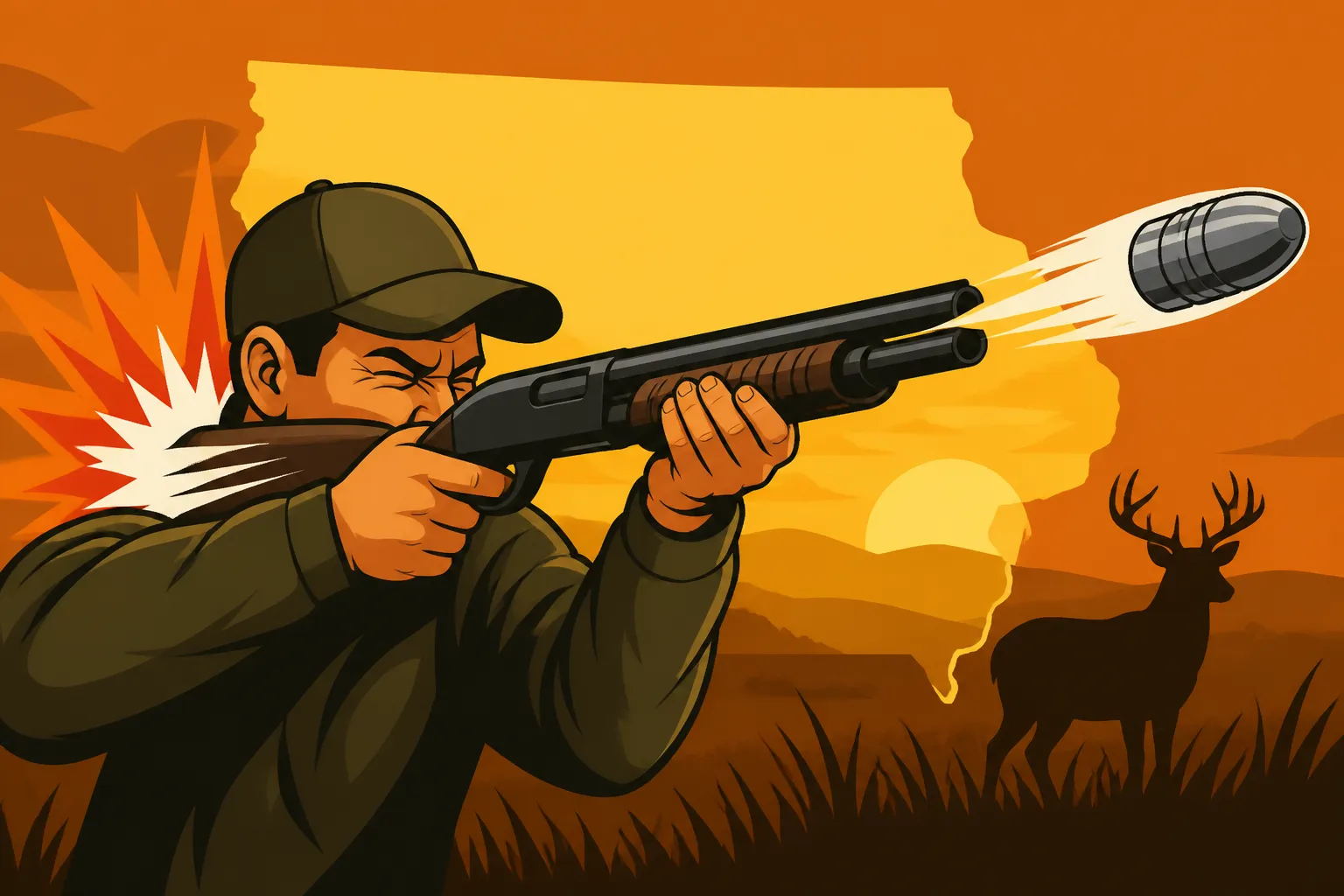
At its core, recoil is simply Newton's Third Law of Motion in action: for every action, there is an equal and opposite reaction. When you fire a shotgun, the gunpowder ignites, creating a massive amount of expanding gas that propels the slug forward at incredible speed. That forward motion of the slug and the gases exiting the barrel is the "action." The "reaction" is the shotgun moving backward into your shoulder. It’s unavoidable.
Now, what you feel is the transfer of that energy from the shotgun to your body. It's often described as a push, a shove, or sometimes, unfortunately, a sharp smack. It's totally normal to anticipate this feeling, and that anticipation itself can sometimes make the actual recoil feel worse, leading to flinching or poor shooting habits. Many a hunter has walked away from the range after a session with a slug gun thinking, "Man, that really rocked me," and it's a common, valid experience. But knowing that it's a predictable force, rather than an arbitrary punishment, helps us approach it strategically.
Factors Influencing Perceived Recoil
While the physical laws of recoil are constant, how much of that recoil you perceive can vary wildly based on several factors. This is why some people swear a 12-gauge slug "isn't that bad," while others dread it. Understanding these variables is key to finding a setup that works for you.
First, shotgun weight plays a huge role. Simply put, a heavier shotgun will absorb more of the recoil energy itself, transferring less of it to your shoulder. Think about pushing a small car versus a big truck – the truck is harder to move. So, a lighter, more nimble shotgun, while great for hiking through thick cover on public land, might deliver a sharper kick than a heavier, more stationary model.
Second, the load type makes a massive difference. Not all 12-gauge slugs are created equal. The weight of the slug itself (e.g., 1-ounce, 7/8-ounce) and the amount and type of powder charge determine the velocity and, consequently, the energy generated. A heavier slug moving at a faster velocity will produce more recoil than a lighter, slower one. This is why you'll often hear hunters discuss "low-recoil" slugs or specific brands that prioritize lighter kick.
Third, the stock design and the effectiveness of the recoil pad are critical. A good, thick, soft recoil pad can dramatically spread out and absorb the recoil impulse over a slightly longer period, making it feel more like a firm push rather than a sharp jab. Factory pads vary widely in quality, and many hunters opt for aftermarket pads to improve comfort. The fit of the stock (length of pull, comb height) also impacts how that energy is distributed. A stock that's too long or too short, or one that directs the recoil into your cheekbone, can turn an otherwise manageable kick into a genuinely unpleasant experience.
Finally, your shooter stance and technique, coupled with your individual tolerance, are perhaps the most personal factors. A solid, athletic stance that leans slightly into the shot, with the buttstock firmly seated in the pocket of your shoulder, will distribute recoil far better than a loose, slouching posture. Practice also builds confidence, and confidence can help you relax and better absorb the shock. What one person considers mild recoil, another might find painful, and that’s perfectly okay. There's no shame in seeking ways to make your hunting experience more comfortable and effective. This is where researching options and trying different setups really pays off, perhaps checking out reviews on a site like GoHunt to see what other hunters are saying about various recoil pads or slug choices.
Common 12-Gauge Slug Loads and Their Recoil Characteristics
When you walk into an outdoor store looking for 12-gauge slugs, you're going to be faced with a dizzying array of options. It's not just about brand names; there are fundamental differences in slug design and performance that directly impact how much recoil you'll feel. Knowing these distinctions will help you make an informed choice for your Iowa deer hunt.
Comparing Slug Types: Foster vs. Sabot
The two main types of 12-gauge slugs you'll encounter are Foster slugs and Sabot slugs. Each has a specific design intended for different barrel types and offers different recoil profiles.
Foster slugs are the traditional choice and are designed primarily for smoothbore shotgun barrels. They are typically made of a soft lead alloy with a hollow base that allows the slug to expand slightly and grip the barrel as it's fired. They also often have rifling-like grooves on their exterior, but these don't impart spin; they're there to reduce friction and allow the slug to compress through chokes. Foster slugs are generally lighter and travel at lower velocities compared to many sabot slugs. Because of this, they tend to produce less felt recoil. They are very effective at shorter ranges, which is often all you need in the dense timber and creek bottoms of Iowa where shots are typically 50 yards or less. If you're running a smoothbore barrel for shotgun season, these are your bread and butter, and exploring options like those detailed in Slug Choices for Iowa Shotgun Season would be a smart move.
Sabot slugs, on the other hand, are designed specifically for rifled barrels, either a dedicated rifled slug barrel or a fully rifled choke tube in a smoothbore. The "sabot" (pronounced sah-boh) is a plastic sleeve that encases a smaller, typically aerodynamic projectile, often made of copper or another hard alloy. The sabot engages the rifling, imparting spin to the projectile, which significantly improves accuracy and extends range. Once the slug leaves the barrel, the sabot separates, allowing the aerodynamic projectile to continue to its target. These slugs are generally heavier and loaded to higher velocities than Foster slugs to take full advantage of their ballistic potential. Consequently, sabot slugs tend to generate significantly more felt recoil than Foster slugs. While they offer superior accuracy at longer distances, that performance comes with a price to your shoulder. Understanding this distinction is crucial, especially when you consider Rifled Barrels Versus Smoothbore Slugs and how each impacts your hunting strategy and comfort.
Here's a quick comparison of the two:
| Feature | Foster Slug (e.g., Remington Slugger, Winchester Super-X) | Sabot Slug (e.g., Hornady SST, Federal Trophy Copper) |
|---|---|---|
| Barrel Type | Smoothbore (often with improved cylinder or modified choke) | Rifled barrel (or rifled choke tube) |
| Slug Material | Soft lead, hollow base | Copper, lead-core, or polymer tip, encased in plastic sabot |
| Accuracy | Good out to 50-75 yards, less precise at longer ranges | Excellent out to 100-150+ yards, highly accurate |
| Velocity | Moderate (around 1,400-1,600 fps) | High (around 1,800-2,000+ fps) |
| Felt Recoil | Moderate to firm push, generally less than sabot slugs | Significant, often a sharper, harder punch |
| Ideal Use | Close-range deer hunting in heavy cover, smoothbore shotguns | Longer-range deer hunting, open fields, rifled slug guns |
The Impact of Load Velocity and Weight
Beyond the slug type, the specific characteristics of the ammunition—namely the velocity and the weight of the projectile—are direct contributors to recoil. It's a fundamental principle: the heavier the object and the faster it's moving, the more energy it carries, and thus, the greater the reaction force back into your shoulder.
A 1-ounce slug moving at 1,500 feet per second (fps) will have a different recoil impulse than a 7/8-ounce slug at 1,300 fps, or a 3/4-ounce slug screaming out at 2,000 fps. Generally, manufacturers will produce "standard velocity" and "high velocity" or "magnum" loads. While those magnum loads might sound enticing for their raw power and flatter trajectory, they invariably come with a substantial increase in felt recoil. For many hunters, especially those who find 12-gauge recoil challenging, opting for a standard velocity or even a specialized "low-recoil" slug can make a world of difference without sacrificing ethical killing power at typical Iowa shotgun ranges.
Think about it this way: for a deer inside 75 yards, the difference in kinetic energy between a standard velocity and a magnum slug is often overkill, while the difference in recoil to you is very real. When adrenaline is pumping and you need to make a precise shot on a whitetail in the dense river bottoms, minimizing any factor that might cause you to flinch or develop a bad habit is paramount. You want to choose a load that you can shoot accurately and consistently, and that might mean sacrificing a tiny bit of ballistic prowess for better comfort and better shot placement. Many excellent resources, like articles discussing Best Slug Loads for Iowa Deer, can guide you toward effective yet manageable options. Always consider how comfortable you are with the recoil, especially if you plan to Sighting In Before Shotgun Season with many practice shots.
Managing and Mitigating Recoil for a Better Iowa Hunting Experience
Facing down a 12-gauge slug shouldn't feel like preparing for a boxing match. The good news is that there are numerous ways to actively manage and reduce felt recoil, turning what might be an intimidating experience into a much more comfortable one. It’s all about combining the right gear with proper technique.
Gear and Equipment Solutions
One of the most immediate and impactful changes you can make is to your shotgun itself, specifically focusing on how it interfaces with your body.
First and foremost, consider your recoil pad. The factory pad on many shotguns is, frankly, just okay. Investing in a high-quality aftermarket recoil pad can be a game-changer. Brands like Limbsaver, Pachmayr, or Kick-Eez offer pads made from advanced materials designed to absorb and dissipate recoil energy over a longer period, making the felt recoil much softer. Swapping out a hard, thin pad for a thick, soft gel or rubber pad can transform your shooting experience. This is especially true if you plan on extended range sessions to get familiar with your chosen slug.
Next, shotgun fit is paramount. A shotgun that fits you well will naturally distribute recoil forces more efficiently across your shoulder and body. If the stock is too long, the buttplate might ride on your bicep instead of the shoulder pocket, leading to bruising. If it's too short, your head might be too far forward, causing the comb to slap your cheek. The "length of pull" (distance from trigger to center of recoil pad) is particularly important. A gunsmith can often adjust this, or you might look for shotguns that come with adjustable length-of-pull spacers. Comb height, which determines where your cheek rests, is also critical for comfort and consistent sight alignment.
Some shotguns even come with recoil-reducing stocks or systems built-in. These might incorporate hydraulic buffers, spring systems, or even mercury cylinders within the stock or forend to absorb some of the rearward impulse. While these often add to the cost and weight of the firearm, they can significantly reduce felt recoil, especially for shooters who are particularly sensitive or plan to shoot many rounds.
Finally, while the focus here is on 12-gauge slugs, remember that Iowa's deer hunting regulations allow for various legal equipment. If a 12-gauge slug shotgun simply isn't working for you, even with all these mitigation strategies, you might explore other options. For instance, Iowa Legal Shotgun Gauges for Deer covers 20-gauge shotguns, which generally have noticeably less recoil than a 12-gauge while still being perfectly effective for whitetails. Or, for those eligible during certain seasons, straight-wall cartridge rifles are an option. Articles like Is .350 Legend Legal in Iowa? delve into the specifics of these alternatives, which often offer much milder recoil than a 12-gauge slug while extending effective range. Choosing a platform you’re confident and comfortable with will always lead to better accuracy and a more enjoyable hunt.
Technique and Practice
No amount of fancy gear can entirely replace solid fundamentals when it comes to managing recoil. Proper shooting technique is crucial for minimizing discomfort and ensuring accuracy, especially when targeting a whitetail in its natural habitat.
Let's start with proper stance. For shotgunning, a slightly aggressive, athletic stance is generally recommended. Stand with your feet shoulder-width apart, lead foot slightly forward, and lean into the gun with your body weight. You want to be pushing into the gun, rather than letting it push you backward. Your shoulders should be squared to the target, not bladed, allowing your body to absorb the recoil more evenly. This forward lean helps your entire body become a shock absorber.
A firm grip and shoulder mount are equally vital. Don't "baby" the shotgun; hold it firmly with both hands, but not so tight that you're tense. The buttstock should be placed high and firmly into the pocket of your shoulder, not resting on your collarbone or too far down on your bicep. This "pocket" provides the most muscle and bone to absorb the recoil. A loose mount allows the gun to build up speed before hitting your shoulder, resulting in a much sharper, more painful impact. Think of it like a punch: a loose punch from an inch away hurts more than a firm push from a foot away.
Breathing and trigger control are also key to consistent shooting, especially when dealing with recoil. Take a normal breath, let half of it out, and then focus on your sight picture. Squeeze the trigger smoothly, almost surprising yourself when the shot breaks, rather than jerking it. This prevents anticipating the shot and flinching. Many hunters flinch before the shot, which ruins accuracy. Concentrating on the sight and the smooth trigger press helps overcome this natural human tendency to brace for the kick.
The absolute best way to build confidence and muscle memory is through practice, practice, practice. Start with lighter target loads or birdshot, which have significantly less recoil, to master your stance, mount, and trigger control. Once you're consistent, gradually move up to the actual slug loads you plan to hunt with. Don't try to shoot 20 slugs in a single session if you're sensitive to recoil; a few shots at a time, focusing on form, is far more beneficial than many shots with poor form. Consider breaking up your practice into shorter sessions, allowing your shoulder to recover. Practice also makes that intense moment in the field feel more familiar. When that big buck steps out, you'll be relying on instinct and training, not fighting a foreign force. Developing that muscle memory is as important as Practicing Shots From a Treestand to ensure you're ready when a shot opportunity arises.
Real-World Expectations: Hunting with a 12-Gauge Slug in Iowa
It's one thing to experience recoil on the range, a controlled environment where you might shoot multiple rounds in succession. It's quite another to experience it in the field, when the adrenaline is pumping and you've potentially waited hours, or even days, for that single shot opportunity.
The Reality of a Hunting Shot vs. Range Practice
One of the most interesting aspects of recoil is how our perception of it changes under pressure. Many seasoned hunters will tell you that when they finally get a clear shot at a whitetail after a long sit, the recoil from their 12-gauge slug gun is barely noticeable, if at all. This isn't because the physics have changed; it's because adrenaline often acts as a natural anesthetic. Your focus is entirely on the animal, the aiming point, and making a clean, ethical shot. The "fight or flight" response kicks in, dulling your senses to pain and discomfort.
This isn't an excuse to ignore recoil management, however. While adrenaline might mask the feeling of recoil in the moment of truth, poor technique or an ill-fitting gun can still cause you to flinch, leading to a missed shot or, worse, a wounded animal. You still need to have confidence in your firearm and your ability to place the shot accurately before that adrenaline surge. The goal isn't just to not feel the recoil; it's to have such sound fundamentals that the recoil doesn't affect your shot placement.
Remember, every second leading up to that shot counts. From spotting the deer while Hunting Inside Corners of Crop Fields to patiently waiting for the perfect quartering-away shot, your preparation ensures success. It’s about building a foundation of good habits at the range so that when the pressure is on, your body instinctively performs the correct actions. You’ll be so engrossed in the target and the moment that the recoil simply becomes a part of the process, rather than a jarring event.
Choosing the Right Slug for Your Setup and Hunt
Making the right choice of slug for your specific shotgun and the type of hunting you'll be doing in Iowa is crucial for both effectiveness and comfort. It's a balance between power, accuracy, and manageable recoil.
First, consider your shotgun's barrel. If you have a smoothbore barrel, your primary choice will be Foster-style slugs. These are excellent for the typical close-to-medium range shots you'll encounter in Iowa's dense timber and creek bottoms. Don't let anyone tell you they aren't powerful enough; a 12-gauge Foster slug delivers tremendous energy. However, if you've invested in a rifled slug barrel, you'll want to use sabot slugs. The rifling will impart spin, greatly enhancing accuracy and extending your effective range. Just be prepared for the increased recoil that usually accompanies these higher-performance loads.
Next, think about your typical shooting distances. For many Iowa hunters, especially on public land or in thick private timber, shots rarely exceed 75 yards. In these scenarios, a standard velocity Foster slug out of a smoothbore is perfectly adequate and will offer less recoil than a high-velocity sabot. If you find yourself hunting larger fields or areas where a 100-125 yard shot is a real possibility, then a rifled barrel with sabot slugs might be justified, provided you've practiced extensively and can handle the kick. Understanding Slug Gun Range Limits in Iowa is key to making an ethical decision.
Ultimately, the "right" slug is the one you can shoot most accurately and consistently from your shotgun. Accuracy trumps raw power every single time. A well-placed 1-ounce Foster slug will always be more effective than a wildly flailing 3-inch magnum sabot. Head to the range, try a few different brands and types, and see what groups best for you, always mindful of the recoil. Many hunters, myself included, will prioritize comfort and accuracy at typical hunting distances. If that means choosing a slightly lighter load or a different type of slug, so be it. Your success in Iowa's deer woods hinges on confidence in your equipment and your ability to make that critical shot, and manageable recoil is a huge part of that equation. Don't forget to use tools like GoHunt to scout your hunting areas beforehand, helping you anticipate potential shot distances and further informing your slug choice.
Recoil from a 12-gauge slug is a real phenomenon, and it's absolutely valid to approach it with a healthy dose of respect, if not a little trepidation. But it's also a manageable force. By understanding the physics behind it, choosing appropriate ammunition, employing the right gear, and practicing sound shooting techniques, you can transform that shoulder-jarring experience into a comfortable and effective hunting reality. Don't let the fear of a kick keep you out of the Iowa deer woods. Prepare smart, practice often, and you'll be bringing home venison with confidence.
Disclaimer
This article is for general informational purposes only and does not constitute professional advice. Laws, prices and regulations vary by location and change over time. Consult a qualified professional for guidance on your specific situation.