Soil Fertility and Antler Growth
It's a question many of us Iowa hunters ponder, isn't it? Why do deer in the Hawkeye State consistently grow such incredible antlers? You see those pictures online, hear the stories, and maybe even have a few big racks hanging on your own wall, and you just know there's something special about this place. While genetics and age are undeniably huge factors, there’s a deeper, more fundamental secret rooted right beneath our boots: the incredibly rich soil. This guide will dig into how Iowa's fertile earth directly contributes to those impressive deer antlers we all admire.
The Unseen Roots of Big Racks: Iowa's Fertile Foundation
Iowa is renowned across the hunting world for its trophy whitetails, and it’s no coincidence that our state also boasts some of the most fertile agricultural land on the planet. This isn't just a happy accident; it's the result of millions of years of geological processes and ecological history that have laid down a rich, mineral-laden foundation. Understanding this basic geology helps us grasp why the deer here have such an advantage.
A Legacy of Glaciers and Loess
Think about it: much of Iowa was once covered by ancient glaciers. As these colossal ice sheets slowly retreated, they scraped and ground up rock, depositing a thick, nutrient-rich till across the landscape. This glacial till, combined with thousands of years of decaying prairie grasses and organic matter, created the deep, black topsoil we cherish today. But there's another major player: loess. The western part of the state, particularly the Loess Hills, is covered in incredibly deep deposits of windblown silt. This fine, mineral-rich dust, blown in from ancient floodplains, adds another layer of fertility to the already excellent soil.
This isn't just dirt; it's a living, breathing ecosystem brimming with micronutrients and minerals that are essential for plant growth. When you're driving through rural Iowa, looking at those vast fields, remember that beneath the surface lies a legacy of geological events that directly impact the quality of the forage available to deer. This rich foundation is a key reason Why Iowa Grows Trophy Whitetails.
The Prime Agricultural Engine
Because of this unparalleled soil quality, Iowa has become an agricultural powerhouse. We're talking about fields upon fields of corn and soybeans, some of the most energy-dense and nutritious crops a deer could ask for. While deer certainly aren't limited to cultivated fields, these crops provide a huge caloric and nutrient boost, especially during crucial periods of antler growth and winter survival. The simple truth is, healthy soil grows healthy plants, and healthy plants make healthy deer.
It's a cyclical relationship: the rich soil supports massive crop yields, and these crops, in turn, provide an abundant and highly nutritious food source for the deer herd. Even outside of cultivated fields, the native vegetation, timber browse, and mast crops growing in this rich soil are inherently more nutritious than what you might find in less fertile regions. This is why even deer living primarily in timber and creek bottoms benefit from the overall soil health of the state.
The Building Blocks: Key Nutrients from Soil to Antler
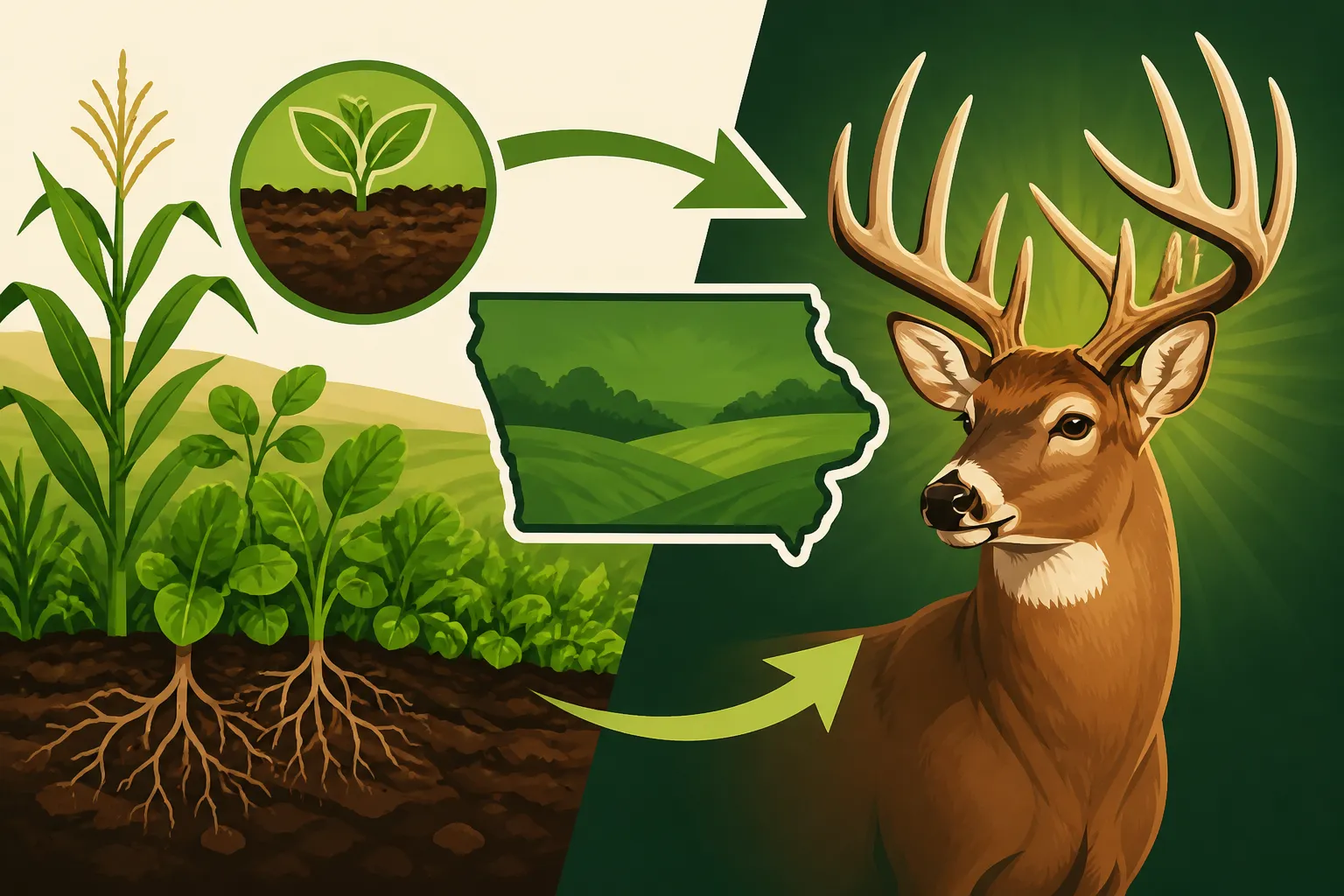
Antlers aren't just bone; they're a rapidly growing, mineral-intensive structure. To produce impressive headgear, a buck needs a consistent supply of specific nutrients, and these nutrients originate in the soil. Without healthy soil providing the raw materials, even deer with excellent genetics will struggle to reach their full antler potential.
Essential Minerals for Antler Development
So, what are these crucial minerals? The big ones we always hear about are calcium and phosphorus. These are the primary building blocks of bone and, by extension, antlers. Deer acquire these from the plants they eat, which in turn absorb them from the soil. Iowa's soils are typically rich in both. But it doesn't stop there. Other trace minerals like zinc, copper, selenium, and manganese also play vital roles in enzyme function, immune system health, and overall metabolism, all of which indirectly support robust antler growth.
Here’s a look at some key nutrients and their pathways:
| Nutrient | Primary Role in Deer/Antlers | How it Gets from Soil to Deer | Common Iowa Forage Sources |
|---|---|---|---|
| Calcium | Main component of bone and antler structure | Absorbed by roots, stored in plant tissue | Alfalfa, clover, corn, soybeans, broadleaf weeds, woody browse |
| Phosphorus | Essential for bone, energy transfer | Absorbed by roots, stored in plant tissue | Corn, soybeans, grasses, woody browse |
| Zinc | Supports immune function, enzyme activity | Absorbed by roots, stored in plant tissue | Legumes, grains, many forbs |
| Copper | Helps bone formation, red blood cell health | Absorbed by roots, stored in plant tissue | Legumes, grasses, some browse |
| Selenium | Antioxidant, immune system support | Absorbed by roots, stored in plant tissue | Forage grasses, some broadleaf plants |
| Manganese | Bone development, metabolism | Absorbed by roots, stored in plant tissue | Grains, grasses, woody browse |
When the soil lacks these vital components, the plants grown there will be deficient, and so will the deer that consume them. This is why deer in areas with poor soil, even if they have access to plenty of forage by volume, might still struggle to produce large antlers. It's about quality, not just quantity.
The Role of pH and Soil Structure
It's not just about the presence of nutrients; it's also about their availability. Soil pH, for instance, dramatically affects how well plants can absorb these critical minerals. Most agricultural plants, and therefore most of the forage deer prefer, thrive in a slightly acidic to neutral pH range (around 6.0 to 7.0). Iowa's soils often fall within this optimal range, or are managed to do so by farmers using lime, making nutrients readily available for plant uptake.
Furthermore, the physical structure of the soil – its texture, organic matter content, and drainage – impacts root development and microbial activity. Good soil structure means robust root systems that can efficiently draw water and nutrients, and a thriving microbial community that helps break down organic matter and make minerals soluble. Again, Iowa's deep, loamy soils excel in these areas, creating an environment where plants can truly flourish and pack in those antler-building minerals. This fundamental health of the soil translates directly into the impressive Iowa Whitetail Body and Antler Size we often see.
From the Ground Up: Deer Diet and Antler Development
It's one thing to have great soil; it's another to have the deer actually consume those nutrients. Fortunately, Iowa's landscape provides an almost perfect smorgasbord for whitetails, ensuring they can access those vital minerals throughout their lives. The synergy between fertile soil, abundant crops, and natural forage creates an environment where bucks can truly express their genetic potential.
The Power of Corn and Soybeans
Walk any timber edge in Iowa, and you'll likely find deer sign where they've been browsing on young growth or heading out into the fields. Corn and Soybeans in a Deer Diet are game-changers. During the growing season, deer feast on the lush green leaves of soybeans, which are packed with protein – essential for body growth and antler development. As fall approaches, the cornfields become a literal buffet, offering high-energy carbohydrates that are critical for putting on fat reserves before winter and for fueling the rut. After harvest, waste grain provides continued sustenance.
But it's not just about the calories and protein. These crops, grown in Iowa's nutrient-rich soils, are also delivery vehicles for those essential minerals we discussed. A deer consuming soybeans from a fertile field is getting a much more complete nutritional package than one browsing on poorer quality forage from depleted soil. This constant access to high-quality food, derived from superior soil, allows bucks to allocate significant resources to antler growth year after year.
Beyond the Row Crops: Native Forage and Soil Health
While row crops get a lot of attention, let's not forget the importance of natural forage in Iowa's timber, CRP fields, and creek bottoms. Healthy soil promotes a diverse array of native grasses, forbs, and woody browse that deer also rely on. These plants, like their cultivated counterparts, are richer in nutrients when grown in fertile soil. Think about the difference between a browse leaf from a struggling plant in poor soil versus a vibrant, healthy plant in productive Iowa dirt. The deer can tell the difference, and so can their bodies.
This varied diet, from farm fields to wild areas, ensures a balanced intake of nutrients. When you're Scouting Iowa Timber and River Bottoms, you're often looking at areas that, while not farmed, still benefit from the rich soil composition of the surrounding landscape. The health of the entire ecosystem, driven by soil fertility, contributes to the overall health and size of the deer herd. It's a testament to how everything is interconnected in nature, and how much the ground beneath our feet dictates what stands above it.
Beyond the Dirt: Integrating Other Factors for Trophy Potential
While soil fertility is undeniably a cornerstone of Iowa's big buck reputation, it's part of a larger, intricate puzzle. You can have the best soil in the world, but if other factors aren't aligned, you won't maximize the antler potential of your deer herd. For hunters and land managers, understanding how these elements interact is key to truly appreciating and influencing Iowa's trophy deer.
Age, Genetics, and Herd Management
Let's be realistic: a young buck, no matter how good the soil, won't grow a mature rack. Age is paramount. Bucks generally don't hit their peak antler potential until they're 4.5, 5.5, or even 6.5 years old. This is where sound herd management comes into play, allowing younger bucks to mature. Iowa's hunting regulations and hunter behavior often favor letting younger bucks walk, contributing to an impressive Buck Age Structure in Iowa.
Genetics, of course, are the blueprint. Deer in Iowa simply have good genes for growing large antlers. But even the best genetics can't express themselves without adequate nutrition. Think of it like a high-performance engine: it needs premium fuel to perform its best. The fertile soil provides that premium fuel. So, while Iowa has excellent genetics, the soil ensures those genetics are fully realized.
Balancing the Herd for Optimal Health
Effective deer herd management, including a balanced doe harvest, also plays a critical role. When deer numbers are too high for the available habitat, even rich soil can struggle to support the nutritional demands of the entire herd. Over-browsing can degrade habitat and reduce the quality of available forage, putting stress on the deer and limiting antler growth. Maintaining a healthy buck-to-doe ratio and a population level that the habitat can sustain ensures that each deer has access to abundant, high-quality forage. This is a crucial aspect of Iowa Deer Herd Management and Harvest.
For those looking to influence their own hunting areas, or even just understand the bigger picture, studying aerial imagery can reveal agricultural patterns and potential food sources influenced by soil quality. When you're Reading Aerial Imagery for Bedding Cover, also consider how those surrounding fields or timber patches are likely contributing to the deer's diet, thanks to the fertile Iowa earth. Even on public lands, the surrounding agricultural landscape often elevates the nutritional plane for deer that call those areas home. Tools like GoHunt can provide satellite imagery and topographic maps that help you analyze these landscape features and understand where the most productive areas might be.
Ultimately, Iowa’s reputation for big whitetails is a testament to the perfect storm of factors: strong genetics, an age structure that allows bucks to mature, and perhaps most crucially, an unparalleled nutritional environment created by its rich, fertile soils. As hunters, appreciating this foundational element helps us understand the magic of hunting in Iowa.
Disclaimer
This article is for general informational purposes only and does not constitute professional advice. Laws, prices and regulations vary by location and change over time. Consult a qualified professional for guidance on your specific situation.