Corn and Soybeans in a Deer Diet
It’s no secret that Iowa deer are big, and a huge part of that comes down to what they’re eating every day. Anyone who has hunted Iowa knows our whitetails are intimately connected to the agriculture that defines our landscape. This guide dives deep into the role corn and soybeans play in a deer's diet, not just as a food source, but as a driving force behind their behavior and the incredible size they achieve here.
The Golden Fuel: Why Iowa Deer Thrive on Corn and Soybeans
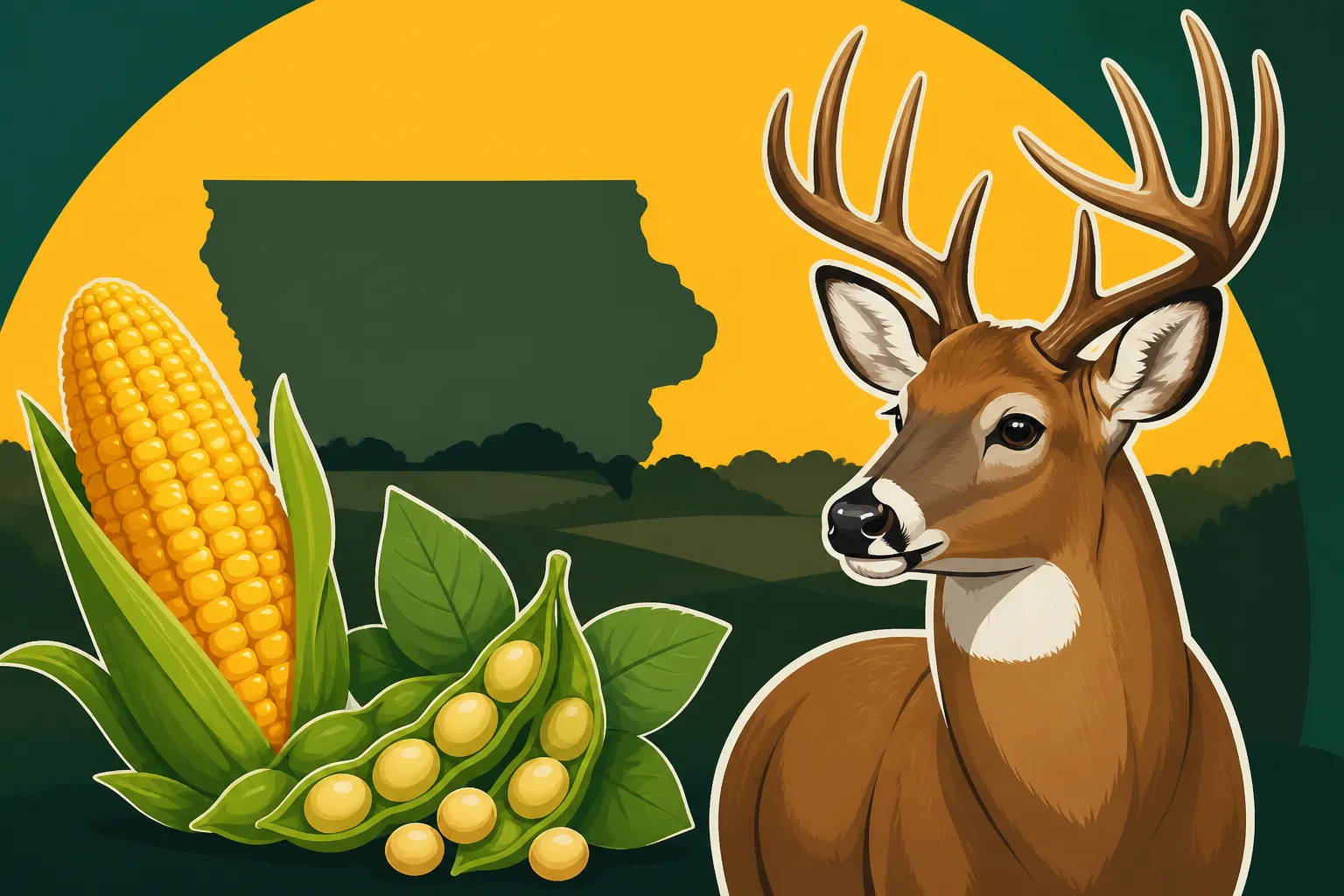
When you think about Iowa deer, images of vast corn and soybean fields almost immediately come to mind. These aren’t just pretty landscapes; they are the grocery store, the pharmacy, and the gymnasium all rolled into one for our whitetails. The sheer abundance and nutritional value of these crops are truly astounding and directly contribute to the impressive health, body size, and antler growth Iowa is famous for.
Nutritional Powerhouses: Energy, Protein, and Growth
Let's break down what makes corn and soybeans so good for deer. Corn is primarily a high-energy carbohydrate source. Think of it as pure fuel. As deer prepare for the colder months, they need to pack on fat reserves to sustain them through lean times, and corn provides those calories in spades. This energy isn't just for survival; it's also critical for maintaining body condition during the rut, when bucks burn an incredible amount of energy pursuing does and fighting rivals. A deer with a robust energy supply has more stamina and can recover more quickly.
Soybeans, on the other hand, are the protein powerhouse. Protein is absolutely essential for muscle development, fawn growth (especially for pregnant does), and, perhaps most notably to hunters, antler development. Bucks need a huge amount of protein during the spring and summer to grow those impressive racks. A diet rich in protein allows for rapid and sustained antler growth, leading to thicker main beams, longer tines, and overall larger scores. The combination of high energy from corn and high protein from soybeans creates an almost ideal diet for whitetail deer, enabling them to reach their genetic potential year after year. This nutritional advantage is a significant factor in Why Iowa Grows Trophy Whitetails.
Year-Round Dietary Staples
It’s easy to think of corn and beans as fall and winter food, but deer utilize these crops throughout their entire life cycle. In the spring, as the new crops emerge, deer will readily browse on young, tender soybean plants. These young plants are highly digestible and offer a quick boost of nutrients after a long winter. As summer progresses, the green bean fields become a favorite browsing spot. Bucks, particularly, are often seen in soybean fields during the summer, diligently fueling their antler growth.
Once corn starts to mature, deer will begin to feed on the developing ears. Even before harvest, they will access the kernels. After the combine rolls through in the fall, those dropped kernels of corn and beans become the primary food source through late fall and into the brutal Iowa winter. It's a continuous feast, adapting as the crops grow and are harvested, making agricultural areas magnetic to deer nearly all year. If you're wondering about When the Iowa Rut Peaks, you'll often find peak deer activity in or around these prime food sources.
Tracking the Harvest: How Crop Cycles Dictate Deer Movement
Understanding the agricultural cycle is like having a cheat sheet for deer movement in Iowa. The deer don't just eat the crops; their entire annual rhythm is often synchronized with the planting, growth, and harvesting of corn and soybeans. Missing this crucial connection means missing out on key opportunities to encounter mature whitetails.
The Influence of Planting, Growth, and Harvest on Deer
Imagine spring arrives and the planters are in the fields. For deer, this means fresh, green shoots of soybeans are soon to appear. They'll be out there browsing on these tender plants, especially in the evenings and early mornings. As the crops grow taller through summer, they transform from a food source into incredible bedding and escape cover. A mature corn field can be miles deep, offering an impenetrable sanctuary where deer feel incredibly safe. Bucks will often bed deep in standing corn, only emerging at last light to feed in an adjacent bean field or a more open corn section.
Then comes the harvest. This is arguably the most significant event for deer movement outside of the rut itself. As combines cut down the fields, vast amounts of cover disappear overnight. Deer are forced to relocate, often pushing into timber blocks, CRP fields, or other dense cover. However, the harvest also exposes an incredible bounty of dropped grain. This sudden availability of concentrated food creates new patterns of movement as deer flock to picked fields. For hunters, understanding How Harvest Timing Changes Deer Movement is paramount to success during the late season.
Seasonal Field Preferences and Shifting Patterns
Deer aren't just opportunistic eaters; they often show distinct preferences based on the season and the stage of the crops. In late summer, green soybean fields are prime magnets, offering high protein and moisture. As fall approaches, and especially after the first hard frosts, deer will shift their focus heavily to corn. The higher carbohydrate content in corn helps them build fat reserves for winter.
As winter settles in and temperatures plummet, standing corn can become both a food source and vital thermal cover. Deer will seek out blocks of unharvested corn to bed in, protected from biting winds and snow, while also having a readily available food source. When that standing corn is finally cut, their patterns will shift again, often pushing them to the nearest timber blocks or thickets during the day, only to emerge into picked fields under the cover of darkness. This constant adaptation means that what worked in October might not work in December, and being able to read these shifts is crucial. You can often see these transitions by scouting with tools like GoHunt, which often have updated aerial imagery showing current crop statuses.
Hunting the Agricultural Landscape: Strategies for Crop-Fed Deer
Hunting deer in Iowa's agricultural landscape requires a specific set of strategies. It's not just about finding food; it's about understanding how deer use these immense food sources for cover, bedding, and travel, and how that changes throughout the seasons.
Scouting Crop Fields and Identifying Key Funnels
Effective scouting starts long before you ever step foot in a field. E-Scouting Iowa Farm Country From Home using aerial imagery is a game-changer. Look for patterns in crop fields: inside corners, ditches, fence rows, or small timber fingers that cut into large fields. These are natural funnels and pinch points that deer will almost certainly use to enter and exit feeding areas. Pay attention to how timber blocks relate to crop fields. Where do deer transition from bedding cover to food?
Once you're on the ground, look for well-worn trails leading into and out of fields. Even if a field is picked, deer will continue to use those established pathways. During the summer, before crops get too tall, walk the edges of fields looking for tracks, droppings, and browsed plants. In the fall, after harvest, look for shelled corn or nibbled bean pods on the ground, indicating recent feeding activity. Consider where deer might be bedding in relation to these fields – often in small timbered draws, CRP grass, or creek bottoms. For example, Hunting Inside Corners of Crop Fields is a classic strategy because these spots naturally condense deer movement.
Stand Placement and Timing Around Agricultural Fields
Positioning your stand effectively around corn and soybean fields requires careful consideration of wind direction, access, and how deer typically enter and exit. For early season, when beans are still green, a stand on the downwind edge of a soybean field, especially near a known travel corridor, can be deadly in the evenings. As the season progresses and corn becomes the primary draw, consider setups that intercept deer as they leave bedding cover in the timber to head to corn fields in the afternoon, or as they return to bed in the mornings.
A classic scenario involves hunting the edge of a standing corn field adjacent to timber. Deer will often stage in the timber before entering the corn, or use the corn as a travel corridor to other feeding areas. During shotgun season, Standing Corn Late in the Iowa Season can be an absolute fortress for deer, making field edges or narrow funnels even more critical. Always think about your entry and exit routes to avoid spooking deer already in the field or approaching it. Platforms like GoHunt can help you mark these access points and plan your approach.
The Post-Harvest Boom: Late Season Opportunities
The late season, often stretching into December and January, offers some of the best hunting over agricultural food sources. Once crops are out, deer are often concentrated on the remaining high-energy foods, primarily the dropped corn and beans. This is when Late-Season Food Source Hunting in Iowa truly shines. Deer will often move in daylight, driven by the need to replenish calories in colder temperatures.
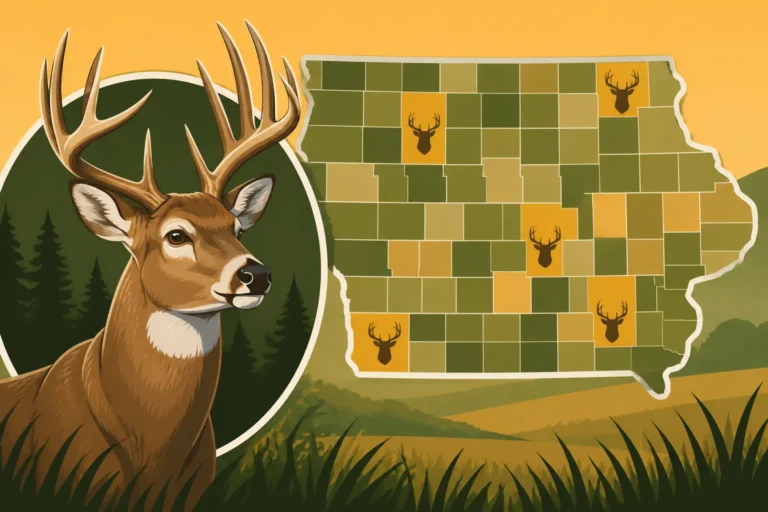
You’ll typically find deer pouring into picked corn fields in the late afternoons, sometimes in large groups, looking for any missed kernels. Setting up a ground blind or a well-brushed treestand on a field edge, especially one bordered by thick cover or an River Oxbows and Deer Movement, can be incredibly effective. Consider the coldest days with snow cover; these conditions often force deer to feed more frequently and earlier in the day. Keep an eye on local Deer Density by Iowa County to get a sense of overall population numbers, which can influence how many deer you might see in a given field.
Disclaimer
This article is for general informational purposes only and does not constitute professional advice. Laws, prices and regulations vary by location and change over time. Consult a qualified professional for guidance on your specific situation.