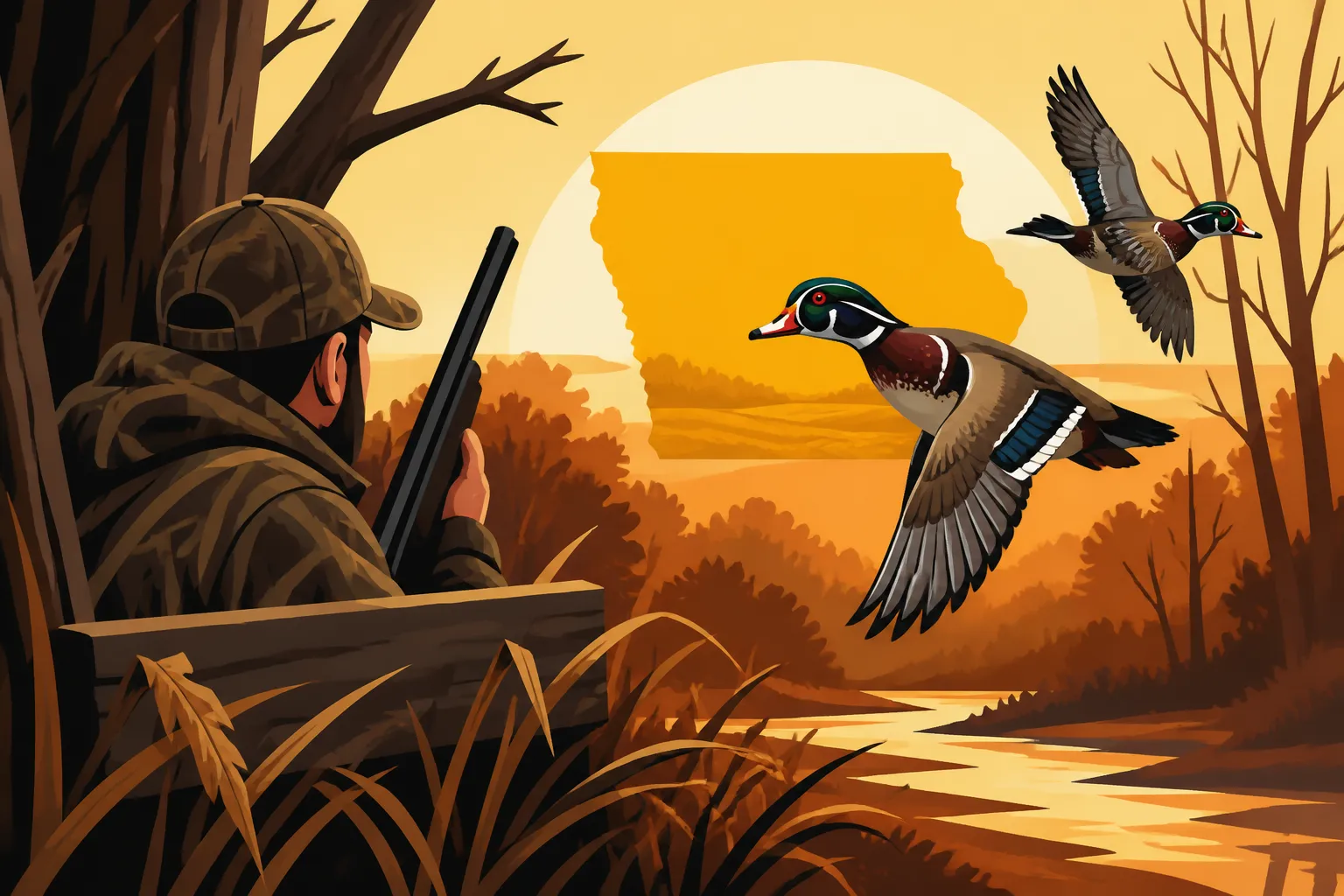
Wood Ducks in Iowa Timber
Many hunters in Iowa find themselves drawn to the big, open water, imagining flocks of mallards or geese pouring into large marsh complexes or wide river channels. But if you're overlooking the timbered creek bottoms and secluded backwaters, you're missing out on one of Iowa's most beautiful and exciting duck hunting experiences: pursuing the vibrant wood duck in its natural woodland home. This guide will walk you through everything you need to know to successfully find and hunt wood ducks within the often-overlooked timbered landscapes of the Hawkeye State.
Understanding Wood Duck Habitat in Iowa Timber
Wood ducks aren't your typical puddle ducks, happy to sit out in the middle of a vast corn field or a wide-open lake. These stunning birds are intimately connected to timber, particularly the areas where forests meet water. Understanding their specific preferences is the first step to finding them.
Preferred Roosting and Nesting Trees
When you're looking for wood ducks, you're essentially looking for trees – and not just any trees. Wood ducks are cavity nesters, a unique trait among dabbling ducks in North America. They don't build nests on the ground like many other waterfowl. Instead, hens seek out natural tree cavities, abandoned woodpecker holes, or even artificial nesting boxes high up in the canopy. Look for old-growth trees with hollow trunks, broken limbs, or large natural openings, typically overhanging or very close to water. Species like oak, sycamore, cottonwood, and soft maples are often prime candidates due to their tendency to form suitable hollows as they age.
These tree cavities aren't just for nesting; they also serve as vital roosting spots, especially during migration and throughout the hunting season. You'll often find wood ducks returning to the same timbered areas, sometimes in significant numbers, to roost overnight. The dense tree cover provides a sense of security from aerial predators and ground-based threats. When the ducklings hatch, a remarkable event occurs where they "jump" from these high cavities, sometimes many feet above the ground, down to the soft earth or water below, guided by their mother's calls. It's a testament to how crucial these timbered roosting and nesting structures are to their lifecycle.
The Importance of Water Sources
While the trees provide shelter and nesting sites, it’s the water within or adjacent to the timber that truly defines wood duck habitat. These birds thrive in environments that offer calm, shallow, and often vegetated water. Think of those hidden oxbows carved out by old river channels, stagnant sloughs deep within the woods, slow-moving creeks with dense bank cover, flooded timber areas after heavy rains, or even beaver ponds tucked away in a remote corner of a public land tract. Unlike mallards or pintails that might prefer larger expanses of water, wood ducks are drawn to these more intimate, secluded water features.
These specific water sources provide crucial resources beyond just a place to swim. They are often teeming with the aquatic vegetation, insects, and seeds that make up a large portion of a wood duck's diet. The overhead timber canopy offers shade and protection from predators, allowing them to feed and rest undisturbed. During the early season, when leaves are still on the trees, these areas can be incredibly well-hidden, offering a tranquil sanctuary. Hunters who understand this preference know to bypass the large, open lakes and focus their scouting efforts on these small, often overlooked "timber holes." Exploring the potential of these smaller waterways can lead to fantastic early season opportunities, as discussed in Jump Shooting Iowa Farm Ponds.
Wood Duck Behavior and Biology in Iowa
Understanding the life cycle and daily habits of wood ducks in Iowa is key to predicting their movements and finding success in the timber. Their unique biology dictates where they'll be and what they'll be doing.
Breeding and Brood Rearing in Timber
Wood ducks typically arrive in Iowa in early spring, often among the first waterfowl to return. Pair bonding occurs, and the hens begin their search for suitable nesting cavities. These cavities can be in deciduous or coniferous trees, but the critical factor is usually the proximity to water. A hen might choose a nest site high in a giant cottonwood along a creek, or an old oak snag in a flooded timber stand. She'll lay a clutch of eggs, typically 10-15, and incubate them for about 30 days.
Once the ducklings hatch, within 24 hours they perform their incredible leap of faith. Guided by their mother's calls from below, the tiny ducklings launch themselves from the nesting cavity, sometimes dozens of feet high, landing unharmed on the forest floor or directly into the water. The hen then leads her brood to dense, vegetated areas, often along creek banks, flooded timber, or small sloughs, where they'll spend the next several weeks growing. This dense cover provides safety from predators like hawks, raccoons, and snapping turtles. In favorable conditions, especially in parts of southern Iowa with good habitat, a hen might even attempt a second brood, adding to the state's wood duck population.
Diet and Foraging Habits
Wood ducks are primarily dabbling ducks, meaning they feed by tipping up in shallow water rather than diving. Their diet is incredibly varied and largely dictated by the timbered environments they inhabit. A significant portion of their diet consists of plant matter, with acorns being a huge favorite, particularly in the fall. If you find a timbered area with mature oak trees and shallow water below, you've likely found a wood duck cafeteria. They also gorge on seeds from various aquatic plants like smartweed, wild rice, and pondweeds.
Beyond seeds and acorns, wood ducks will also consume a good number of insects, spiders, and other small invertebrates. These can be found on vegetation, floating on the water's surface, or extracted from decaying wood in shallow areas. This diverse diet is one of the reasons they thrive in diverse timbered wetlands. Their reliance on acorns makes them particularly sensitive to mast crop failures in certain years, but generally, Iowa's rich woodlands provide ample sustenance. Understanding these feeding preferences helps hunters identify potential feeding grounds within the timber, often distinct from their roosting areas.
Hunting Wood Ducks in Iowa Timber
Hunting wood ducks in timber is a specialized pursuit that offers a truly immersive and intimate experience with nature. It requires different tactics and gear than hunting larger bodies of water, but the reward of a colorful drake rocketing through the trees is second to none.
Scouting for Timber Holes and Backwaters
Effective wood duck hunting starts long before the season opener, usually with extensive scouting. You'll want to focus on identifying those specific timber holes, creek bends, oxbows, and flooded timber stands that wood ducks frequent. Start by using detailed mapping applications, like those found on GoHunt, to pinpoint areas with dense timber adjacent to water features. Look for narrow river channels, winding creeks, and any indicators of seasonal flooding or shallow backwater pockets. Satellite imagery can reveal hidden ponds or sloughs that are inaccessible by boat but perfect for wading in.
Once you have potential spots identified on a map, it's time for boots-on-the-ground scouting. Visit these areas, ideally in the pre-season, to look for actual wood duck sign. Search for fresh droppings on logs or along muddy banks, discarded feathers, and "splash marks" under tall trees where birds might be roosting. Pay close attention to the types of trees – are there oaks dropping acorns? Are there good cavities for nesting? Crucially, listen. Wood ducks have a distinctive "woo-eek" call from the hen and a quieter, rising whistle from the drake. Early morning or late evening visits can reveal flight paths and favored roosting spots. Remember that Access Routes That Do Not Bump Deer principles apply equally to ducks; plan your entry and exit to be as stealthy as possible.
Decoy Spreads and Calling Tactics
Wood ducks are generally less wary than many other duck species, but they are still ducks, and proper decoy spreads and calling can make all the difference. When hunting in timber, you won't need a massive spread. A dozen wood duck decoys, or even fewer, often suffice. Position them in tight clusters in the shallow, calm water of your timber hole, mimicking a contented flock. Wood duck decoys are often more brightly colored than other species, so they stand out in the darker, shadowed environment of flooded timber. Consider adding a few mallard or teal decoys for a mixed flock look.
Motion is key in still water. If legal and safe, a jerk string or a couple of simple spinning-wing decoys can bring your spread to life. The fluttering wings of a spinner can be surprisingly effective at catching a wood duck's eye as it zips through the trees. For calling, resist the urge to blast loud, aggressive calls. Wood ducks respond best to soft, contented clucks and the distinctive "woo-eek" of the hen. A few soft calls to get their attention, followed by silence, often works better than continuous calling. When they commit, they commit quickly, often appearing seemingly out of nowhere through the thick canopy. For more on general decoy strategies, check out Decoying Ducks on a Backwater Slough.
Essential Gear for Timber Hunting
Hunting wood ducks in Iowa timber requires specialized gear to ensure comfort, safety, and success. First and foremost, a good pair of chest waders is non-negotiable. You'll be wading through shallow, often muddy or silty water, navigating submerged logs and branches. Make sure your waders are durable and leak-proof. Your camouflage pattern should be suited for dense woods, with good breakup to blend with the varied textures of trees and shadows. A full-camo approach, including face mask and gloves, is important.
For your firearm, a lightweight shotgun that handles quickly is often preferred. Many hunters opt for a 20-gauge for its maneuverability in tight timber, though a 12-gauge with light loads is perfectly adequate. As these hunts often happen in low light, a reliable headlamp is crucial for safe navigation in and out of your hunting spot. Don't forget bug spray, especially during the early season when mosquitoes can be relentless in timbered bottoms. A small, waterproof backpack to carry shells, calls, a thermos, and any game is also highly recommended. Understanding Iowa Waterfowl Zones and Splits will also inform specific regulations for where and when you can hunt. Many hunters use mapping software, like what you find on GoHunt, not just for scouting but also for marking their entry/exit points, stand locations, and potential hazards once they're in the timber.
Conservation and Management of Wood Ducks in Iowa
The wood duck is a true conservation success story, and their continued presence in Iowa is a testament to dedicated habitat work and responsible management. Understanding these efforts helps us appreciate these incredible birds even more.
Habitat Preservation Efforts
The comeback of the wood duck from near extirpation in the early 20th century is largely attributed to widespread conservation efforts, particularly the installation of artificial nesting boxes. These boxes provide safe, predator-resistant nesting sites in areas where natural tree cavities might be scarce. Across Iowa, state agencies, conservation organizations, and private landowners continue to manage and enhance timbered riparian corridors, wooded wetlands, and flooded timber — all critical habitats for wood ducks. This includes protecting mature forests along rivers and creeks, planting native trees, and maintaining clean water sources.
Healthy timber ecosystems, free from excessive logging that removes critical nesting trees, are vital. Efforts to control invasive species that can choke out native vegetation also benefit wood ducks by maintaining diverse food sources. When you see a nesting box mounted on a pole over water, know that it's a direct effort to support these beautiful birds. These ongoing habitat preservation efforts are key to ensuring that future generations of Iowans can continue to enjoy the sight and sound of wood ducks. For more general information on waterfowl habitat in Iowa, consider reading Mississippi River Backwater Waterfowl.
Regulations and Bag Limits
Like all migratory waterfowl, wood ducks are managed under federal and state regulations designed to ensure sustainable populations. In Iowa, wood ducks are typically included in the overall duck bag limit but often have a specific, sometimes lower, daily limit within that total. This means that while you might be able to harvest a certain number of ducks per day, only a smaller portion of that total can be wood ducks. These limits are set based on population surveys and habitat conditions to prevent overharvest.
It's absolutely essential for every hunter to check the current Iowa hunting regulations booklet annually before heading into the field. Regulations can change from year to year, including bag limits, season dates, and shooting hours. Adhering to these rules, participating in harvest surveys (like the HIP program mentioned in Iowa Duck Stamp and HIP Requirements), and practicing ethical hunting are fundamental responsibilities. Responsible management, combined with ongoing habitat work, ensures that the distinctive "woo-eek" of the wood duck will continue to echo through Iowa's timbered waterways for years to come.
Key Wood Duck Characteristics and Hunting Considerations
To help you remember some of the vital aspects of wood duck behavior and hunting, here's a quick reference:
| Characteristic | Description | Impact on Hunting |
|---|---|---|
| Preferred Habitat | Timbered creek bottoms, oxbows, flooded woods, beaver ponds; shallow, calm water. | Focus scouting on dense woods near small water bodies, not open fields or large lakes. |
| Nesting Sites | Natural tree cavities, old woodpecker holes, artificial nesting boxes. | Hunters should look for older trees with potential cavities for roosting areas. |
| Diet | Acorns, seeds (smartweed, wild rice), aquatic vegetation, insects, small invertebrates. | Hunt near mast-producing trees (oaks) and areas with abundant aquatic plants. |
| Flight Pattern | Fast, agile, often weaving through trees. | Requires quick target acquisition and lead in timber. |
| Calls | Distinctive "woo-eek" from hens, soft peeping from drakes. | Use soft, contented calls; less aggressive calling than other duck species. |
Disclaimer
This article is for general informational purposes only and does not constitute professional advice. Laws, prices and regulations vary by location and change over time. Consult a qualified professional for guidance on your specific situation.