Piebald and Melanistic Deer in Iowa
Ever been out in the Iowa timber or glassing a bean field, and suddenly you spot something that just doesn't look quite right? Maybe a deer that's mostly white, or one so dark it seems to absorb all the light around it? It's a truly memorable experience, and often leaves hunters wondering just what they saw. These unique sightings aren't just tricks of the light; they are often encounters with piebald or melanistic whitetail deer, genetic anomalies that add a rare splash of the extraordinary to our familiar Iowa landscapes. This guide is here to shed some light on these fascinating variations in the Iowa deer herd, explaining what they are, why they occur, and what it means for hunters.
Understanding Genetic Variations in Deer
Deer, like all wild animals, can sometimes exhibit genetic variations that affect their appearance. These aren't just different shades of brown or the typical rack variations we're used to seeing; these are significant departures from the norm, making these animals truly stand out. While most of us are keenly attuned to spotting a typical fawn or a mature doe, encountering a piebald or melanistic deer can stop you in your tracks and make you question your eyes. It’s a testament to the diverse genetic pool that exists within our deer populations, even in highly managed herds like Iowa’s.
These variations are often due to recessive genes, meaning both parents must carry the gene for it to express itself in the fawn. This is why they are so rare; the chances of two carriers breeding and producing an offspring with the trait are much lower than for dominant traits. It’s also why you might hear about certain localized areas having a slightly higher incidence of these deer, suggesting a pocket of the population where the recessive gene is more prevalent due to specific breeding patterns. It's a delicate balance of genetics, survival, and chance that brings these unique animals into our view.
Piebald Deer in Iowa
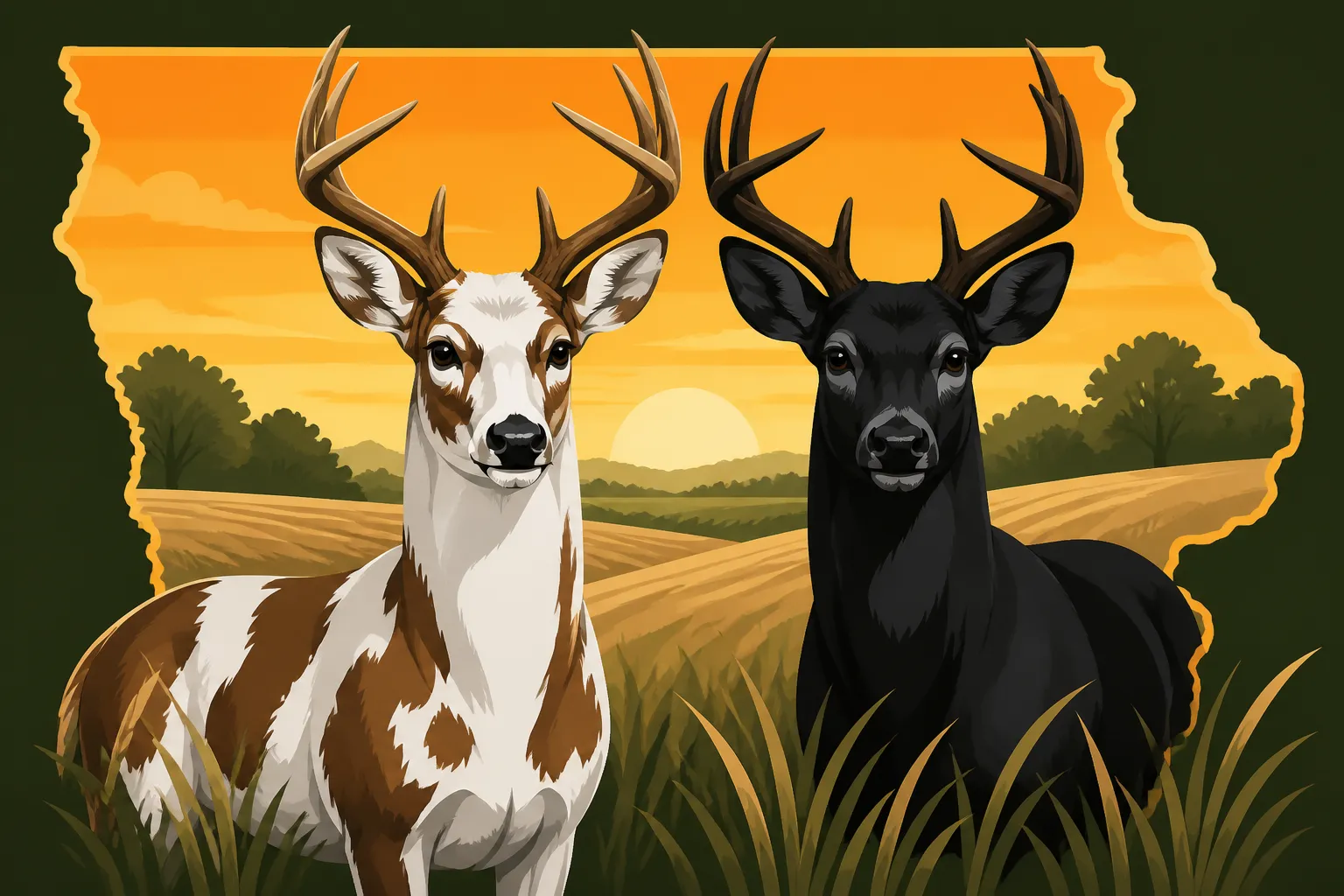
Piebald deer are probably the more commonly known of the two genetic anomalies we're discussing, though "common" is certainly a relative term here. When you see a piebald deer, it’s not truly an albino, but rather a deer with an irregular patchwork of white and normal brown hair. Think of a pinto horse, but on a deer. The amount of white can vary wildly, from just a few splashes on the legs or belly to an animal that is predominantly white with only small patches of brown. Their eyes are typically brown, distinguishing them from true albinos which have pink eyes.
Beyond the striking coloration, piebald deer often come with a suite of other physical characteristics that can make their lives in the wild more challenging. It's not just a coat pattern; it's a condition that can affect their entire physiology. You might notice shorter legs, especially on the front, giving them a somewhat awkward gait. Their facial structures can also be affected, sometimes displaying a Roman nose or a curved spine. Internal organ deformities are not uncommon either, which can lead to reduced stamina, poorer hearing, or impaired vision. These physiological challenges can make them more susceptible to predators, less efficient at finding food, and generally less likely to thrive compared to their normally colored counterparts. This is part of the reason you often hear discussions among hunters about the ethics of harvesting such an animal, which is always an individual choice, but generally, they are legal to harvest in Iowa as they are just a color phase of a whitetail. If you are ever unsure, it’s always wise to consult the latest Iowa Regulation Booklet Release Date or speak with a local conservation officer.
For a hunter, encountering a piebald deer is an unforgettable experience. They stand out dramatically against the typical muted tones of the forest or field, almost glowing in the low light. Imagine glassing a distant timber edge during the First Week of November Stand Choice and picking out a flash of white that just doesn't quite make sense as a normal deer. It's a moment that can make you pause, double-check your optics, and truly appreciate the diversity of wildlife. While they are rare, they are seen across Iowa, from the rolling hills of the southwest to the timbered river bottoms.
Characteristics of Piebald Deer
Piebaldism in deer is not just skin deep; it's a fascinating and sometimes challenging genetic anomaly. The most obvious trait is, of course, the white and brown patches, but the associated physical deformities are equally important to understand. These deformities can range from subtle to quite pronounced, impacting the deer's mobility and overall health.
| Trait | Description of Piebald Deer |
|---|---|
| Coat Color | Irregular patches of white and normal brown/tan hair. White patches vary in size and location. |
| Eye Color | Typically normal brown eyes, unlike the red/pink eyes of albinos. |
| Nose/Hoof Color | Often pinkish noses and white hooves on white patches. |
| Leg Length | Frequently exhibit shorter than average legs, sometimes bowed, especially front legs. |
| Spine Curvature | Scoliosis (curved spine) can be present, affecting posture and gait. |
| Facial Structure | May have a "Roman nose" or other jawline deformities. |
| Organ Health | Internal organ deformities (e.g., heart, lung) are possible, potentially impacting longevity. |
| Survival Rate | Generally lower survival rates due to physical disadvantages and increased visibility to predators. |
These characteristics mean that while a piebald deer might be stunning to look at, it's often living a harder life in the wild. Their conspicuous coloration can make them stand out to predators like coyotes, especially when they are fawns. Their physical limitations can hinder their ability to escape danger or navigate challenging terrain, such as deep snow or thick brush. This vulnerability is a crucial part of the piebald story and why every sighting is so special, representing a resilient individual that has defied the odds to reach the age it has.
Legal Status and Ethical Considerations
The question often arises: is it legal to harvest a piebald deer in Iowa? The straightforward answer is yes. In Iowa, a piebald deer is considered a whitetail deer, just like any other, and falls under the same regulations and tag requirements. There are no special protections or prohibitions specifically for piebald deer. If you have the appropriate tag for the season and zone, and it's within legal shooting hours, you can harvest it. Always check the current Iowa Regulation Booklet Release Date for specific rules, as regulations can change.
However, the legal aspect doesn't always address the ethical considerations that many hunters ponder. Some hunters feel a strong inclination to let a piebald walk, viewing it as a beautiful and rare anomaly that should be preserved in the wild. They might see it as something special that adds wonder to the hunting experience, a living trophy to simply observe. Others might view harvesting a piebald as a way to obtain a truly unique trophy, a once-in-a-lifetime mount or hide that tells a fascinating story. There's also a perspective that harvesting a piebald, especially one with significant physical deformities, is a compassionate act, potentially removing an animal that would otherwise suffer a more drawn-out demise due to its disadvantages. There's no single right answer, and it's a deeply personal choice that each hunter must make if they are fortunate enough to encounter one.
Melanistic Deer in Iowa
If piebald deer are rare, melanistic deer are truly exceptional. These are the opposite end of the spectrum, where deer exhibit an abnormally high amount of dark pigment, or melanin, resulting in a coat that is solid black or an incredibly dark brown. Instead of patches of white, they appear to be pure shadow moving through the landscape. While some deer can have darker coats due to age, diet, or environmental factors, true melanism is a genetic condition that makes the animal dramatically darker than typical.
Melanistic deer are significantly rarer than piebald deer across the country, and in Iowa, a verified sighting is practically a unicorn event. While there are regions, particularly in parts of Texas, where melanism is somewhat more prevalent, it’s not a common occurrence here in the Midwest. When reported, it's often due to an accumulation of melanin that darkens the fur to such an extent that it appears jet black, even in bright sunlight. Unlike piebald deer, melanistic deer typically do not suffer from the same associated physical deformities. They are generally healthy and robust, with the only real difference being their striking coloration.
Imagine you're trying to Scouting Iowa Timber and River Bottoms for a prime stand location and you catch a glimpse of a deer so dark it seems to melt into the shadows, even on a sunny day. It's an image that would be etched into your memory forever. Like piebalds, melanistic deer are fully legal to harvest under standard Iowa deer hunting regulations. They are still just whitetail deer, albeit with a unique genetic twist. Should you ever be so lucky to see one, it would certainly be a story to tell around the campfire for years to come.
The Rarity of Melanism
To say melanistic deer are rare is an understatement. They are extremely rare, making any confirmed sighting in Iowa a truly remarkable event. While piebald deer occasionally make the news or pop up on trail cameras, melanistic deer sightings are far less frequent. This rarity is a significant part of their mystique; it's like finding a needle in a haystack made of other, less rare needles. The genetic mechanism for melanism is recessive, just like piebaldism, meaning both parents must carry the specific gene for the trait to be expressed. The particular gene responsible for excessive melanin production simply isn't as widespread in most whitetail populations, especially here in Iowa.
When a melanistic deer is sighted, it often sparks intense interest among wildlife enthusiasts and hunters alike. Sometimes, a deer might just be a very dark brown, especially if it's been rolling in dark soil or has a naturally deeper coat hue, leading to mistaken identity. However, true melanism presents a uniform, deep black coloration that is unmistakable. The rarity of these animals means that documenting their presence helps wildlife biologists understand genetic diversity and distribution patterns, even if such studies are limited by the sheer lack of specimens. For most hunters, a melanistic deer remains a legendary creature, more often heard about than actually seen.
Legal and Ethical Considerations for Melanistic Deer
Similar to piebald deer, if you are incredibly fortunate enough to encounter a melanistic whitetail in Iowa, it is generally considered a legal animal to harvest under the standard deer hunting regulations. There are no specific state laws in Iowa that protect or restrict the harvest of melanistic deer due to their coloration. They are simply a color phase of the common whitetail. Hunters must still possess the correct tag for the season and zone, and adhere to all other regulations regarding legal shooting hours, weapon choice, and bag limits.
However, the extreme rarity of melanistic deer often amplifies the ethical debate. Many hunters would likely choose to pass on a melanistic deer, valuing the experience of observing such an extraordinary animal over the opportunity to harvest it. The argument for preserving such unique genetics within the local herd, however small a chance, is a strong one for some. Others might see it as the ultimate hunting achievement, a truly once-in-a-lifetime trophy that few hunters ever have the chance to obtain. Unlike piebald deer, melanistic deer typically don't suffer from significant physical deformities or health issues, so the compassionate harvest argument is generally less applicable. Ultimately, the decision to harvest a melanistic deer, if the opportunity ever arose, would be a deeply personal one, weighing the rarity and wonder of the animal against personal hunting goals and ethics. As always, consult the latest Iowa Regulation Booklet Release Date to ensure you are up to date on all hunting laws.
The Experience of Encountering a Unique Deer
Whether it's a piebald or a melanistic deer, the experience of encountering one of these genetically unique animals in the wild is something truly special. It breaks the monotony of typical deer sightings and reminds us that nature always has a few surprises up its sleeve. For many hunters, it becomes an instant memory, a story that gets retold for years around campfires and dinner tables. The sheer surprise and wonder can be exhilarating.
I remember once, during a late muzzleloader season, bundled up and trying to stay warm on a bitterly cold December morning, a faint flash of white caught my eye. It wasn't the snow-covered ground; it was a piebald fawn, following its mother through a thick cedar patch. The little guy looked healthy enough, but the contrast with its surroundings was stark. I just watched, completely mesmerized, completely forgetting about hunting for a few precious minutes. It was a moment of pure appreciation for the wild. Using tools like GoHunt to mark that location and knowing I might see it again one day definitely added to the excitement. It’s these unexpected encounters that truly enrich our time in the Iowa outdoors.
These encounters often spark conversation and even a bit of local legend. Has anyone else seen that "ghost deer" in the north timber? Or the "black phantom" that moves through the river bottom? These animals become part of the local lore, fostering a deeper connection to the land and the wildlife that inhabits it. It's a reminder that every day in the woods holds the potential for something extraordinary, something that transcends the ordinary pursuit of game. These unique deer, in their own way, contribute to the magic of Iowa Whitetail Hunting Tactics Through the Rut and indeed, every season we spend in the field.
Documenting Your Sighting
If you're lucky enough to spot a piebald or melanistic deer, documenting your sighting can be a really cool way to share your experience and potentially contribute to local wildlife knowledge. A quick photo or video, even if it's through your binoculars or spotting scope, can help confirm what you saw and provide evidence of these rare occurrences. Sometimes, the initial excitement can make you doubt your own eyes, so having proof is always a bonus.
Beyond just personal bragging rights, documenting unique sightings can sometimes be of interest to local wildlife agencies. While a single sighting might not drastically change deer management, a pattern of sightings in a particular area could alert them to a localized genetic pocket. However, be mindful of rules regarding Trail Camera Placement on Iowa Public Land if you're attempting to get photos that way. It's also a fantastic way to engage with other hunters and nature enthusiasts, sharing the wonder of these rare animals. You might find out that others in your hunting circles or on online forums like those often found when browsing through resources on GoHunt have had similar experiences, fostering a sense of community around these shared, unusual encounters.
The Role of Genetics in Deer Management
While these unique deer are certainly beautiful and fascinating, it’s important to remember that they are part of a larger deer herd, and their existence plays into broader genetic discussions in wildlife management. Deer management in Iowa, as outlined in articles like Iowa Deer Herd Management and Harvest, aims to maintain a healthy and robust population. This includes considerations of genetic diversity, herd health, and disease resistance.
For traits like piebaldism, which can come with significant health challenges, the prevalence of the gene within a population could, theoretically, impact the overall fitness of the herd if it became too widespread. However, given their extreme rarity and the natural selection pressures against less healthy individuals, these genetic traits are generally self-limiting and don't pose a widespread threat to the overall deer population's health in Iowa. Nevertheless, every sighting serves as a valuable, albeit anecdotal, data point for those who are constantly monitoring the health and dynamics of Iowa's impressive deer herd. Remember, if you ever spot a deer that appears sick or injured, regardless of its coloration, it's a good idea to know the procedure for Reporting a Sick Deer in Iowa.
Disclaimer
This article is for general informational purposes only and does not constitute professional advice. Laws, prices and regulations vary by location and change over time. Consult a qualified professional for guidance on your specific situation.