Albino Deer Protection in Iowa
It's a common moment of awe, or sometimes confusion, out in the Iowa timber: you're sitting patiently, eyes scanning the hardwoods, when suddenly, a flash of pure white moves through the trees. An albino deer. For many hunters, encountering such a unique animal brings up a lot of questions about its status and legality. This guide aims to clear up the facts about albino deer protection in Iowa, so you know exactly what to do when you see one.
Understanding Albino and Piebald Deer
Before we dive into the specifics of Iowa law, it's really helpful to understand what we're actually talking about when we say "albino deer." The terms get tossed around a lot, sometimes interchangeably, but there's a distinct difference, and that difference can even play a role in how people view them in the field. This isn't just a science lesson; it helps frame the ethical discussions that often swirl around these unique animals.
The Science Behind Albinism in Deer
True albinism is a genetic condition caused by a complete lack of melanin, the pigment responsible for skin, hair, and eye color. In deer, this means an animal that is pure white, with pink eyes, a pink nose, and pink hooves. Think about it—every part of them that would normally have color is devoid of it, giving them that almost ethereal appearance. This condition is pretty rare in the wild, largely because it can make life much harder for an animal trying to survive. Imagine being bright white against a green forest or brown cornfield; it's like carrying a neon sign saying "here I am!" for predators. Their eyesight can also be compromised due to the lack of pigment in their eyes, making them more vulnerable.
The gene responsible for albinism is recessive, meaning both parents have to carry the gene for an offspring to be truly albino. If only one parent carries it, the fawn will look normal but could be a carrier themselves. This is why you don't see them popping up everywhere; the stars have to align just right for this genetic lottery to hit. It's a fascinating biological phenomenon, but one that comes with significant challenges for the individual deer.
Distinguishing Albino from Piebald
Now, while true albinism is rare, you might also encounter what are called "piebald" deer in Iowa. These are far more common than true albinos, and they also have white patches, which can sometimes lead to confusion. A piebald deer has an irregular pattern of white hair mixed with their normal brown coat. They often have normal eye color (brown), a black nose, and black hooves, distinguishing them from true albinos. Some piebald deer can be almost entirely white with just a few brown spots, making the distinction tricky at a glance, but the eyes, nose, and hooves are usually the giveaway.
Piebaldism is also a genetic anomaly, but it's different from albinism. It results from a defect in the genes that control pigment cell migration and development, leading to patchy areas where pigment simply doesn't form. Unlike albinos, piebald deer don't typically suffer from the same severe vision problems, though they can sometimes have other genetic defects like short legs, bowed noses, or internal organ issues. From a survival standpoint, they're often better off than true albinos because they still have some camouflage and don't necessarily have impaired vision. When hunters talk about "white deer" or "ghost deer," they are often referring to piebalds without realizing the scientific difference, but from a legal standpoint in Iowa, the distinction generally doesn't matter for hunting purposes.
Iowa's Stance on Albino Deer Hunting
This is often where the rubber meets the road for hunters who encounter these beautiful animals. Many states have specific regulations, sometimes protecting albino deer outright due to their rarity or cultural significance. However, it's important not to assume what holds true in one state is the case in Iowa. The laws can vary wildly, and knowing Iowa's specific approach is crucial for any hunter.
No Special Legal Protection for Albino Deer
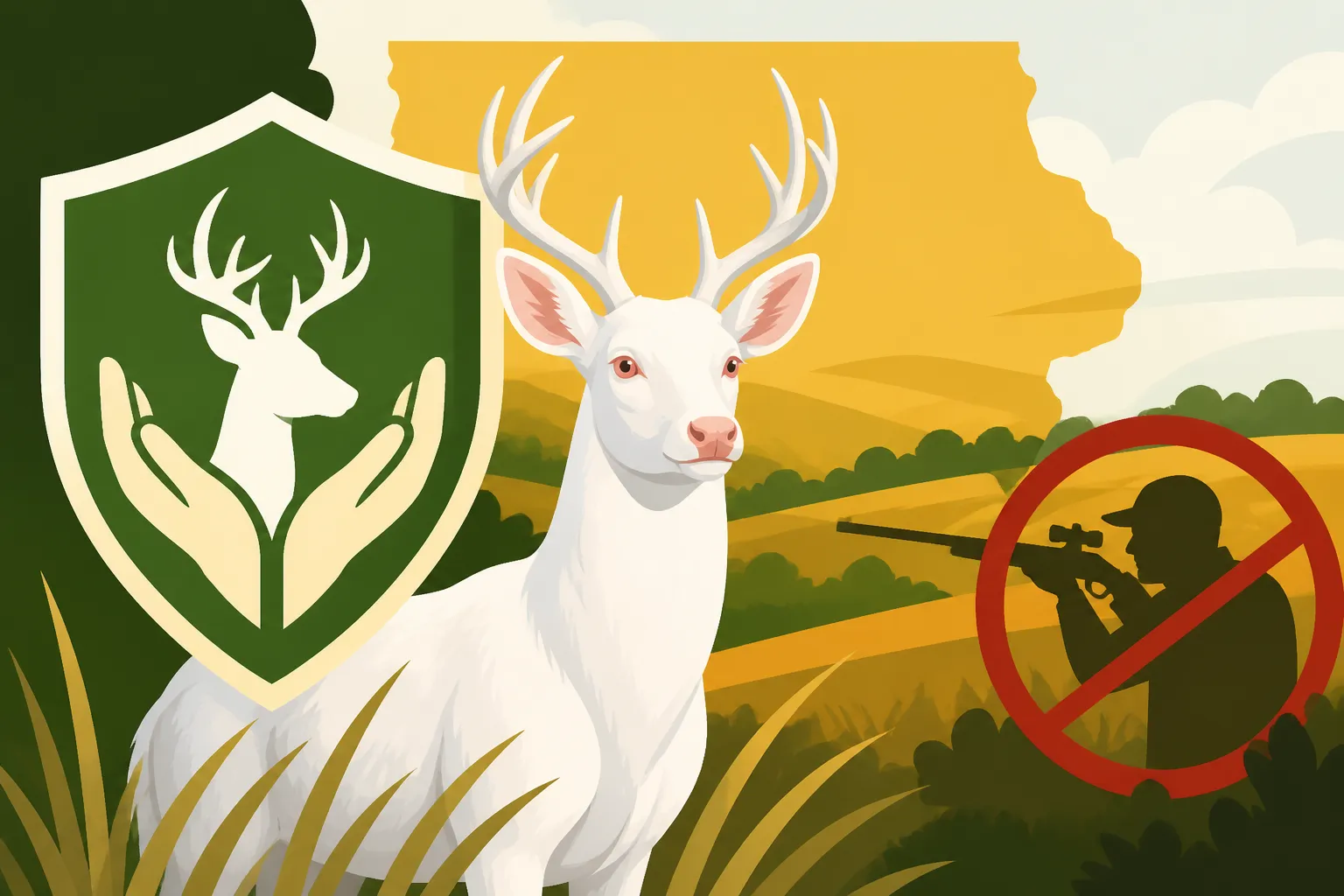
Here’s the straight truth for Iowa: there are no specific state laws that protect albino or piebald deer from being harvested. This might come as a surprise to some, especially those who've heard about protection in other states. What this means, in practical terms, is that if you encounter an albino or piebald deer during an open deer season, and you have the appropriate tag for that deer (e.g., an antlerless tag if it's a doe, or an any-sex tag if it's a buck within regulations), it is considered legal to harvest it.
The Iowa Department of Natural Resources (DNR) manages the deer herd as a whole, focusing on population health and sustainable harvest levels. Their approach doesn't typically differentiate based on genetic anomalies like albinism or piebaldism. The rarity of these animals doesn't automatically grant them special legal status under Iowa hunting regulations. This philosophy often stems from a scientific management perspective: while aesthetically unique, these animals are still part of the broader deer population, and their genetics are part of the natural variation within the herd. For guidance on general deer herd management, you might want to read up on Iowa Deer Herd Management and Harvest.
Regulations Apply to All Deer
Since there's no special protection, all the standard Iowa deer hunting regulations apply to albino and piebald deer just as they would to any other whitetail. This includes rules about hunting zones, season dates (archery, shotgun, muzzleloader, etc.), legal hunting hours, weapon restrictions, and tag requirements. For example, if you're hunting during the late muzzleloader season, you must use a legal muzzleloader, and if you have an antlerless tag, you can only harvest a doe, regardless of its color. You can find detailed information on these topics by checking out Iowa Deer Season Dates by Weapon or reviewing the current Iowa Hunting and Trapping Regulations booklet.
It's your responsibility as a hunter to be fully aware of these regulations before you head into the field. Platforms like GoHunt can be invaluable for quickly accessing up-to-date regulations, season dates, and even e-scouting tools to help you plan your hunt. Imagine using GoHunt to scout a potential new area and then cross-referencing that with the current regulations to ensure you're compliant. Knowing the Iowa Legal Shooting Hours is just as important for a white deer as it is for a brown one.
Ethical Considerations and Personal Choices
While Iowa law doesn't offer special protection, the ethical debate among hunters is very real. Many hunters believe that albino deer should be protected, not by law, but by a voluntary code of ethics. They see these animals as rare, beautiful, and almost sacred, and would choose to let them walk, even if they had a clear shot. This often comes from a place of respect for the animal and appreciation for its uniqueness.
On the other hand, some hunters view an albino deer as a rare trophy, a once-in-a-lifetime opportunity. They might argue that it's still a deer, managed under the same rules, and taking it is no different than taking any other legal deer. They might also point out that albino deer, particularly true albinos with poor eyesight, can have a harder time surviving in the wild and are often more vulnerable to predators or accidents, making them less "fit" for the herd. This isn't a judgment, but rather a reflection of the diverse perspectives within the hunting community. Ultimately, without legal protection, the decision rests solely with the individual hunter in the field.
Reporting Sightings and Staying Informed
Whether you choose to harvest an albino deer or pass on it, there's always a level of fascination and interest surrounding these animals. Understanding how to report sightings, why it might be beneficial, and where to find the most current information can enrich your hunting experience and contribute to broader wildlife understanding.
Why Report an Albino Deer Sighting?
While there's no official mandate to report an albino deer sighting in Iowa, doing so can still be a valuable contribution. The Iowa DNR collects data on deer observations, and while color phase isn't usually a primary data point, an unusual sighting like a true albino can sometimes be of interest to wildlife biologists. It helps them understand the prevalence of these genetic traits in local populations, or simply adds to anecdotal records. You might be helping to track a genetic line, or just confirming that these rare animals are indeed out there in various parts of the state.
If you choose to report, contacting your local DNR wildlife biologist's office is often the best route. You can usually find their contact information on the Iowa DNR website. They might be interested in details like the specific location, the date and time, and whether it was a buck, doe, or fawn. Even without a formal program, biologists are usually keen to hear about unique wildlife observations.
| Characteristic | Typical Whitetail Deer | Albino Deer | Piebald Deer |
|---|---|---|---|
| Coat Color | Brown/Gray | Pure White | White with Brown Patches |
| Eye Color | Brown | Pink/Red | Brown |
| Nose Color | Black | Pink | Black |
| Hoof Color | Black | Pink | Black |
| Rarity | Common | Very Rare | Uncommon |
| Survival | High | Low (due to visibility/vision) | Moderate (varies with severity) |
Checking Current Regulations
Wildlife regulations, while generally stable, can change. The Iowa DNR periodically updates its rules based on population dynamics, disease concerns, and legislative action. It’s always a good practice to consult the most recent Iowa hunting regulations booklet before each season. You can usually pick these up wherever hunting licenses are sold, or access them digitally on the DNR's official website. This is particularly important for rules related to Iowa CWD Sampling and Carcass Rules or any changes to season structures.
For the most immediate and accessible information, digital resources are a hunter's best friend. Websites and apps designed for hunters, such as GoHunt, often provide comprehensive, state-specific regulation summaries that are easy to navigate. Using an app on your phone, you can quickly check license requirements, season dates, and any special provisions directly from the field, or while planning your next outing. This is much more efficient than flipping through a paper booklet when you're trying to figure out if you're good to go.
Staying Informed and Participating in the Community
Beyond just knowing the law, being an informed hunter means engaging with the broader hunting community and staying abreast of conservation efforts. Forums, social media groups, and local hunting clubs are great places to discuss topics like albino deer, share experiences, and learn from others. You'll find a wide range of opinions, and it's a valuable way to understand the nuances of hunting ethics.
Organizations dedicated to conservation and wildlife management, even those not directly involved with hunting, often publish articles or studies that might touch on genetic anomalies in deer. Subscribing to their newsletters or following their work can provide a deeper understanding of wildlife biology and management principles. Remember, an informed hunter is a responsible hunter, and the more you know about Iowa's incredible deer herd, the better prepared you'll be for every encounter, whether it's with a common brown deer or that once-in-a-lifetime albino ghost. If you're passionate about the resource, consider diving into topics like Deer Harvest and Iowa Herd Balance to see the bigger picture of how deer populations are managed.
The Broader Context of Iowa Deer Hunting
Understanding albino deer protection is just one piece of the much larger and intricate puzzle of hunting in Iowa. The Hawkeye State is renowned for its deer hunting, particularly for trophy whitetails, and that reputation is built on careful management and a strong hunting tradition. Every aspect, from land access to gear choices, plays a role in the overall experience.
Accessing Iowa's Hunting Lands
Finding places to hunt is often the biggest challenge for many hunters, especially nonresidents. Iowa has a significant amount of private land, but also offers many opportunities on public grounds. Familiarizing yourself with resources like the Iowa Hunting Atlas, which highlights public lands including Wildlife Management Areas (WMAs) and Iowa's Habitat and Access Program Explained (IHAP) tracts, is essential. These lands are managed for various wildlife species, and deer are often a primary focus. Understanding Hunting Pressure Patterns on Iowa Public Land can help you find less-crowded spots, even during peak seasons.
If you're looking for private land access, building relationships with landowners is key. Many successful hunters in Iowa have spent years fostering these connections. This proactive approach often yields better results than simply showing up and asking for permission on opening morning. For those less familiar with the area, utilizing tools that show property boundaries and ownership information, such as those often integrated into platforms like GoHunt, can be a huge advantage when e-scouting and planning your approach. The more you know about potential access points and the lay of the land, the more effective your hunting efforts will be. E-Scouting Iowa Farm Country From Home is a skill worth developing for any serious hunter.
Licensing, Tags, and Fees
To hunt legally in Iowa, you'll need the proper licenses and tags. This includes a base hunting license, a habitat fee, and specific deer tags, which can vary in cost and availability for residents versus nonresidents. Nonresidents often have to navigate a draw system for their coveted Iowa Nonresident Deer Draw Explained antlered tags, while antlerless tags might be available over-the-counter in certain zones or during specific periods.
It's critical to understand the application windows, draw odds, and the total Iowa Deer Licence and Tag Costs before you commit. The Go Outdoors Iowa website is the official portal for purchasing licenses and applying for draws, but it's always good to consult the DNR's annual regulations booklet for specifics. For any deer harvested, including albino or piebald deer, strict Iowa Deer Harvest Reporting Rules must be followed within a certain timeframe after the kill. This reporting is vital for the DNR to gather data and make informed management decisions about the health and population of Iowa's deer herd, which directly impacts hunting opportunities in future seasons.
The Role of Conservation
Every hunter in Iowa contributes to conservation through license fees and excise taxes on hunting equipment, often referred to as the Pittman-Robertson Act. These funds are crucial for habitat restoration, wildlife research, and public land acquisition. When you purchase your Iowa Base Licence and Habitat Fee, you are directly supporting these efforts, ensuring that future generations will also have the opportunity to hunt and enjoy Iowa's natural resources.
The hunting community also plays a vital role in identifying and reporting issues like poaching, which can undermine conservation efforts. If you ever suspect illegal activity, knowing how to contact authorities or Reporting Poaching in Iowa is an important responsibility. By understanding and respecting the regulations, contributing to conservation funds, and acting ethically in the field, hunters are truly the frontline stewards of Iowa's wildlife. This holistic approach ensures that the thrill of chasing a whitetail, whether it's a common brown buck or a rare albino, remains a sustainable and cherished tradition in the Hawkeye State.
Disclaimer
This article is for general informational purposes only and does not constitute professional advice. Laws, prices and regulations vary by location and change over time. Consult a qualified professional for guidance on your specific situation.