Straight-Wall Rifle Range for Deer
Navigating the world of deer hunting regulations in Iowa, especially when it comes to firearms, can feel like trying to hit a moving target in a dense fog. Many hunters, myself included, have spent countless hours poring over rule books and forum discussions, trying to understand what's legal, what's ethical, and what kind of practical range we can expect from our chosen weapon. This guide is here to cut through that confusion, focusing specifically on the effective range you can realistically achieve with a straight-wall cartridge rifle for deer hunting in Iowa, helping you make informed decisions and hunt with confidence.
Understanding Iowa's Straight-Wall Cartridge Regulations
Before we dive into how far you can ethically shoot with a straight-wall rifle, it's really important to grasp why these cartridges are even allowed in Iowa's gun seasons. For years, many of us were limited to shotguns with slugs or muzzleloaders during the primary firearm seasons, a rule rooted in safety concerns for a state with a lot of flat, open farmland and densely populated areas. The idea was that slugs and muzzleloader projectiles lose energy and drop quickly, reducing the risk of a bullet traveling for miles across fields and into someone's backyard.
The introduction of straight-wall cartridge rifles was a game-changer, but it came with specific rules to maintain that safety philosophy. These cartridges, characterized by a bullet casing that's straight from base to mouth (unlike bottle-necked rifle cartridges), are generally designed to perform similarly to slugs in terms of velocity and trajectory, meaning they don't carry their energy quite as far as a high-powered, bottlenecked rifle round. This balance is what makes them legal during the shotgun seasons. Understanding these regulations is your first step; remember, there are specific Iowa's Straight-Wall Cartridge Rules regarding bullet diameter and muzzle energy that must be met. You can often check official sources or utilize platforms like GoHunt for quick access to regulation summaries to ensure your chosen caliber is compliant.
The Legal Framework for Straight-Walls
Iowa has specific criteria for what constitutes a legal straight-wall cartridge for deer hunting. These aren't just suggestions; they're hard rules that your ammunition must meet. Typically, there are requirements for both the minimum and maximum bullet diameter, and a minimum amount of muzzle energy. For instance, a cartridge might need to have a bullet diameter between a certain range, say 0.357 inches and 0.500 inches, and produce at least Iowa's 500 Foot-Pound Energy Rule at the muzzle.
This legal framework is designed to ensure that while you get the benefits of a rifle platform – often better accuracy and less recoil than some slug guns – you're still using a projectile that won't carry a dangerous amount of energy for extreme distances. It's about containing that projectile and its energy within a reasonable hunting area, which is crucial in a state like Iowa where property lines can be tight and cover can be sporadic. Always double-check the current regulations before heading afield, as these can be updated.
Why Not Traditional Rifles in Iowa?
This is a question many hunters new to Iowa ask, especially if they come from states where traditional bottlenecked rifle cartridges are the norm for deer hunting. The simple answer, as touched on above, comes down to geography and safety. Iowa is primarily an agricultural state, characterized by vast expanses of row crops, interspersed with timber strips, creek bottoms, and small woodlots. A high-velocity, bottlenecked rifle bullet, like a .30-06 or .270, can travel for several miles with deadly force if it misses its target or passes through an animal in open terrain.
The straight-wall cartridge provides a compromise. It offers rifle-like accuracy and handling, which is a significant improvement for many over a traditional slug gun, but its ballistic properties are more in line with a slug. This means the projectile slows down and drops much faster than a conventional rifle round, significantly reducing its maximum dangerous range. It’s a thoughtful approach to allow more versatile firearms while still prioritizing public safety in a landscape that simply doesn't have the vast, uninhabited wilderness of some western states.
Practical Effective Range for Straight-Wall Rifles
When we talk about "effective range," we're moving beyond what's merely legal and into what's ethical and responsible. Just because a cartridge can reach a target at 200 yards doesn't mean it's an ethical shot for deer, especially for the average hunter in field conditions. For straight-wall cartridges, the practical effective range is generally considered to be somewhat less than many traditional rifle calibers, but often an improvement over a typical smoothbore slug gun.
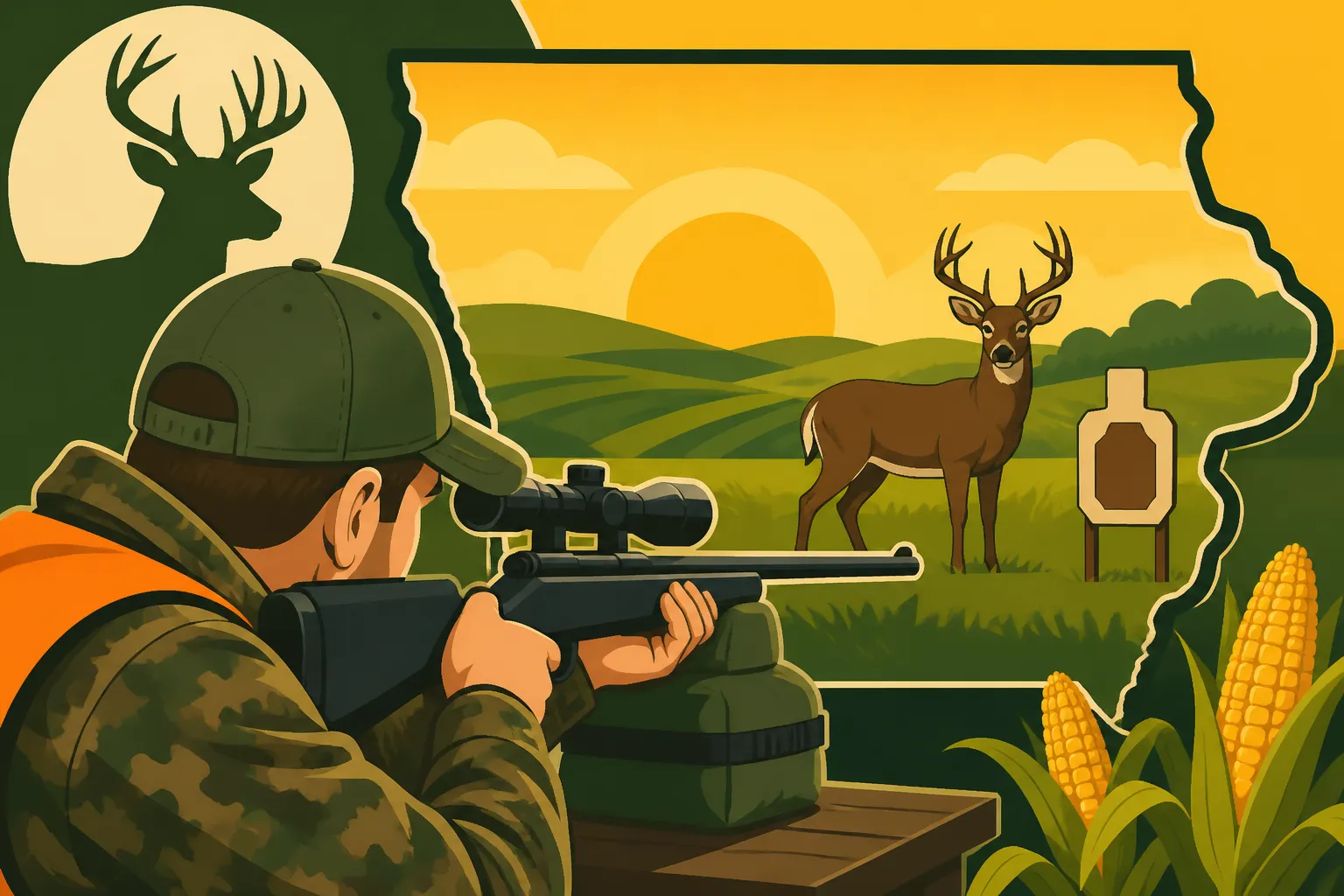
Most hunters will find that for common straight-wall calibers like the .450 Bushmaster, .350 Legend, or .45-70 Government, an effective range of 150 to 200 yards is a realistic maximum for clean, ethical kills on deer. This range considers the bullet's energy retention, its trajectory, and the average hunter's ability to place a shot precisely under hunting pressure. Beyond this, the bullet drop becomes more significant, and the energy delivered to the target might diminish to a point where a quick, humane harvest isn't assured.
Factors Influencing Your Personal Effective Range
It's crucial to understand that there isn't one universal "effective range" for everyone or every straight-wall rifle. Several factors play a huge role in determining your personal maximum ethical shot distance:
- Cartridge and Bullet Choice: While all straight-walls meet Iowa's legal requirements, some calibers retain energy better or have flatter trajectories than others. For example, a .350 Legend might have a slightly flatter trajectory than a .45-70 at longer distances, but the .45-70 typically delivers a heavier bullet with more initial energy. The specific bullet construction (e.g., bonded vs. cup-and-core) also affects terminal performance.
- Optics and Sight-in: A quality scope that's properly mounted and zeroed is paramount. Most hunters will Zeroing a Slug Gun at Fifty Yards, and the principle is similar for straight-walls – understanding your specific zero and ballistic drop is critical. If your scope isn't clear or your zero is off, even a 100-yard shot can be a gamble. Red dot sights are popular on some straight-walls, but their precision can limit ethical range compared to a magnified optic for many.
- Shooter Skill and Practice: This is perhaps the biggest factor. How comfortable are you shooting under pressure? Can you consistently place shots within a 6-8 inch vital zone at varying distances from different shooting positions? Regular practice, not just at the bench but from field positions (like off a bipod, shooting sticks, or leaning against a tree), is essential.
- Environmental Conditions: Wind, rain, and temperature can all affect bullet flight and your ability to shoot accurately. A strong crosswind can push a bullet off course, and shivering hands in cold weather make precise aiming much harder. Always factor in these conditions.
Comparing Straight-Walls to Slug Guns
For many Iowa hunters, the straight-wall rifle directly replaces the shotgun with a slug. So, how does the effective range compare?
| Feature | Shotgun with Slugs (Rifled Barrel) | Straight-Wall Cartridge Rifle |
|---|---|---|
| Typical Ethical Range | 100-150 yards | 150-200 yards |
| Accuracy Potential | Good, but often limited by projectile design | Excellent, more akin to traditional rifles |
| Trajectory (Drop) | Significant drop beyond 100 yards | Flatter than slugs, but still noticeable drop past 150 |
| Recoil | Can be substantial, especially 12-gauge | Generally less than heavy slugs, more manageable |
| Ammunition Cost | Can be expensive | Varies, but generally comparable to premium slugs |
| Platform Versatility | Shotgun can also be used for birds | Primarily for big game, more dedicated rifle feel |
As you can see, straight-wall rifles generally offer a tangible increase in ethical range and accuracy potential compared to even a rifled slug gun. This is often due to the inherent accuracy of a rifle platform, the better bullet designs available for these cartridges, and the ability to use magnified optics more effectively. This increased capability means more confidence on those longer field-edge shots, but it doesn't mean you should push beyond what you've practiced and are comfortable with. For more comparisons, check out Straight-Wall Versus Slug Gun Accuracy.
Maximizing Your Straight-Wall Rifle's Performance
Getting the most out of your straight-wall rifle isn't just about buying the right gun; it's about preparation, practice, and understanding your equipment intimately.
Choosing the Right Ammunition
The ammunition you feed your straight-wall rifle can make a significant difference in its performance downrange. Not all bullets are created equal, especially when it comes to deer hunting. Look for reputable brands that offer bullets designed for controlled expansion on deer-sized game. These bullets are engineered to expand reliably upon impact, creating a larger wound channel and transferring maximum energy to ensure a quick, humane harvest. Some bullets are designed for deeper penetration, which can be useful on larger-bodied Iowa bucks, while others prioritize rapid expansion. Experiment with different loads from various manufacturers to see what shoots best out of your rifle. What's tack-driving accurate in one rifle might be mediocre in another of the same make and model.
Dialing in Your Zero and Understanding Ballistics
A solid zero is the foundation of accurate shooting. Most straight-wall hunters will zero their rifles at 100 yards, as this gives a good balance for typical hunting ranges. However, knowing your bullet's trajectory at different distances is critical. Use a ballistic calculator (many ammunition manufacturers provide these online) or, even better, test your rifle at 50, 100, 150, and 200 yards. Note how much your bullet drops at each increment.
For instance, you might find that if you're zeroed at 100 yards, your bullet is about an inch high at 50 yards, dead on at 100, and drops 6-8 inches at 150, and perhaps 18-24 inches at 200 yards. This information is invaluable. Make a small range card to keep with you in the stand. That way, when a buck steps out at 175 yards, you know exactly how much to hold over, or if your scope has a ballistic reticle, which dot to use. Platforms like GoHunt often have detailed ballistics data available or tools to help you plot trajectory for different calibers and loads.
Consistent Practice and Shooting Positions
Range time is non-negotiable. It's not enough to shoot a few rounds once a year before the season. Regular practice builds muscle memory and confidence. But don't just shoot from a bench rest. Practice shooting from positions you might realistically encounter in the field:
- Standing: Braced against a tree or fence post.
- Kneeling: Using your knee or a pack as a rest.
- Sitting: Especially helpful if you're Hunting From a Blind Without Movement or on a bucket.
- Prone: If the terrain allows and you have a clear shooting lane.
Many of Iowa's public hunting areas, like some of the larger state forests or Corps of Engineers land, have varying terrain that requires adaptability in your shooting position. Simulating these conditions during practice will pay huge dividends when the moment of truth arrives. Also, practice quickly shouldering your rifle and acquiring the target. Deer rarely stand perfectly still for long! If you're using a treestand or saddle, practicing shots from an elevated position is vital, as shot angles change significantly. You can find more specific advice on Practicing Shots From a Treestand to hone these skills.
Ethical Considerations and Shot Placement
Beyond the legal and practical range, there's always the ethical responsibility of making a clean, humane kill. With any firearm, but especially when pushing the limits of your effective range, shot placement becomes paramount.
The Importance of Shot Placement
For a quick, ethical kill on a whitetail deer, your bullet needs to impact the vital zone: the lungs and heart. This area, roughly the size of a dinner plate on an average adult deer, is what you're aiming for. A hit here typically results in rapid blood loss and organ failure, leading to a quick demise. Shots outside this zone, such as hits to the gut or legs, can lead to prolonged suffering and a lost animal. Even a powerful straight-wall cartridge won't make up for poor shot placement.
Understand the anatomy of a deer, especially from different angles. A broadside shot is generally the easiest and most forgiving. A quartering-away shot can be very effective if you know where to aim, but a quartering-to shot is much riskier and often best avoided unless you are extremely confident in your ability to place the bullet directly into the vitals. For detailed insights on ethical shot placement, consider articles like Shot Placement on a Whitetail at Twenty Yards.
When to Pass on a Shot
This is perhaps the most difficult, yet most important, ethical consideration. There will be times when a deer steps out, and even if it's within your maximum practiced range, other factors make the shot unwise. These could include:
- Poor Lighting: Low light conditions at dawn or dusk can obscure your sight picture and make precise aiming difficult.
- Obstructions: Even a small twig between you and the deer can deflect a bullet, leading to a non-lethal hit. Always ensure a clear path to the vitals.
- Deer Movement: A deer that is constantly moving, especially at a trot or run, presents an extremely challenging target. It's almost always better to wait for the animal to stop or pass on the shot entirely.
- Uncertainty of Range: If you haven't ranged the animal, or are uncertain of the exact distance, it's better to hold off. Guessing range, especially at longer distances, is a recipe for a bad shot. Use a rangefinder diligently.
- Lack of a Good Shot Angle: As mentioned, not all shot angles are created equal. If the deer is facing directly towards you, or directly away, the vital target area is greatly reduced.
Passing on a shot is a sign of respect for the animal and the hunting tradition. It demonstrates that you prioritize a humane harvest over simply pulling the trigger. The thrill of the hunt includes making the responsible choice, even if it means going home empty-handed. Remember, technology like a good rangefinder (and knowing how to use it quickly) can greatly reduce range uncertainty in the field.
Disclaimer
This article is for general informational purposes only and does not constitute professional advice. Laws, prices and regulations vary by location and change over time. Consult a qualified professional for guidance on your specific situation.