Practicing Shots From a Treestand
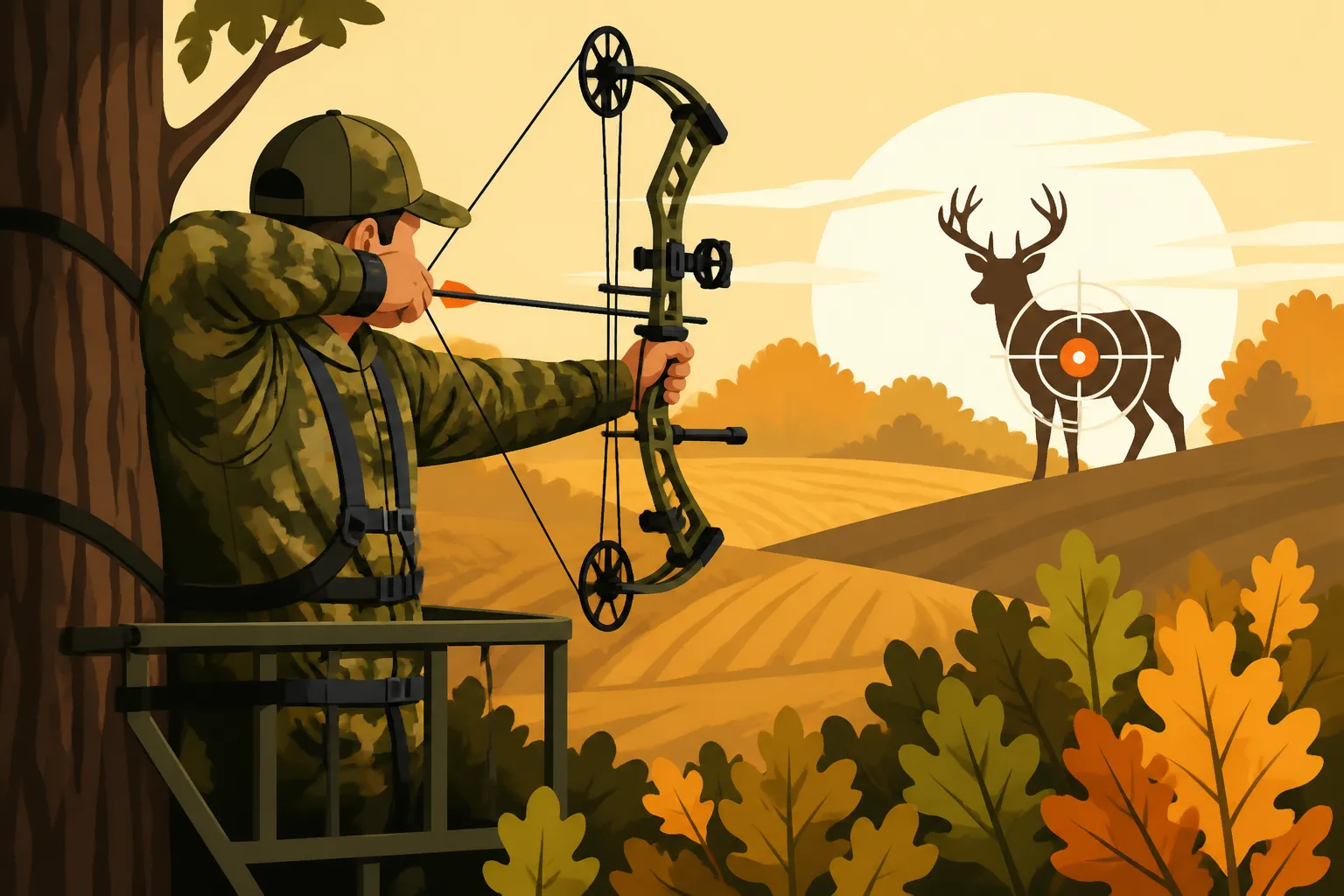
One of the biggest frustrations many hunters face, especially those committed to treestand hunting in Iowa, is that their range practice doesn't always translate to the woods. You might be drilling bullseyes from the ground, only to find yourself second-guessing a shot once you’re perched 20 feet up, twisted at an awkward angle. This guide is all about bridging that gap, showing you how to practice shots from a treestand effectively so you can confidently make the shot when it counts.
The Unique Challenges of Elevated Shooting
When you're practicing on flat ground, it's easy to get comfortable. You stand square to the target, you've got solid footing, and the angles are always predictable. But once you ascend into a treestand, everything changes. The dynamics of a shot are fundamentally altered, and ignoring these differences in your practice routine is a surefire way to introduce doubt when that trophy buck steps out.
Gravity's Impact and Perceived Distances
Perhaps the most significant difference when shooting from a treestand is the downward angle. For both archers and rifle hunters, gravity plays a different role. An arrow or bullet fired from an elevated position at a downward angle will typically impact higher than if shot at the same distance on flat ground. This isn't just a minor adjustment; it requires a deep understanding of your weapon's ballistics and how to compensate for it. Many hunters, when Sighting In Before Shotgun Season or their bow, do so strictly from flat ground, which can lead to overshooting deer from a stand.
What's more, our brains play tricks on us when looking down from a height. Distances often appear shorter than they actually are. You might mentally range a deer at 25 yards, but in reality, it's 30. In Iowa's rolling timber, where you might be overlooking a steep creek bottom or a food plot from a high vantage point, this misperception can be even more pronounced. This optical illusion can cause you to hold low or high incorrectly, turning a clean shot into a potential miss or, worse, a wounded animal. Proper rangefinding from an elevated position is absolutely critical, and it’s something you need to practice.
Unnatural Body Mechanics and Obstacle Navigation
Think about your stance on the ground: usually square, stable, and comfortable. Now picture yourself in a treestand. You might be twisting your torso to get an angle on a deer that slipped in behind you, leaning out slightly around the tree trunk, or trying to thread an arrow through a small opening in the canopy. These are not natural, comfortable shooting positions. The muscle memory developed from a flat, static shooting range simply won't cut it when your body is contorted, your legs are braced against a platform, and you're trying to remain quiet and still.
The trees themselves, while offering cover, also become obstacles. You'll often find yourself needing to shoot through narrow gaps in branches or around the main trunk of your stand tree. This requires careful aiming and an awareness of your limb clearance, especially for bowhunters. Ignoring these real-world challenges during practice means you're not truly preparing for the diverse scenarios you'll encounter in an Iowa whitetail woods. It's about developing the ability to execute a shot under less-than-ideal, but perfectly common, hunting conditions.
Constructing Your Realistic Practice Setup
To truly prepare for treestand hunting, you need to replicate the environment as closely as possible. This isn't just about shooting from a height; it's about simulating the entire experience, from climbing into the stand to making the shot, ensuring every movement becomes second nature.
Safety First: Harnesses and Stable Platforms
Before you even think about shooting, safety must be your absolute top priority. Just because it's "practice" doesn't mean you can skip the critical safety steps. Always, and I mean always, use a Safety Harnesses and Lifelines when you are in a treestand, even for practice. A fall from 15-20 feet can be devastating, leading to serious injury or worse. Ensure your safety harness is properly fitted and that your lifeline is secured before you leave the ground. This also reinforces good habits for when you’re out hunting.
It’s also crucial to practice from the exact type of treestand you intend to hunt from. If you use a hang-on stand, practice from a hang-on. If it's a ladder stand, use a ladder. And if you're experimenting with Mobile Saddle Hunting in Iowa, set up your saddle for practice. Consistency is key here. Place your stand at your typical hunting height, usually between 15 and 25 feet, in a safe, open area where you have a clear backdrop for your targets. Make sure the stand is securely fastened and stable. Wobbly platforms can throw off your shot and create dangerous conditions.
Simulating the Hunting Environment
Once your stand is safely set up, it's time to transform your practice area into a mini hunting ground. Don't just place one target straight ahead. Set up multiple 3D deer targets or bag targets at varying distances and angles around your stand. Think about where deer might appear in a real hunting scenario: 15 yards to your left, 25 yards straight ahead, 35 yards quartering away to your right. Use targets that accurately represent the size and shape of an Iowa whitetail, helping you visualize vital zones more effectively.
To further enhance realism, incorporate natural obstacles. Place small branches, saplings, or even artificial screens around your targets to mimic the dense cover often found in Iowa's Timber Points Between Two Fields or creek corridors. The goal is to force yourself to find clear shooting lanes, just as you would in the woods. This is where a good mapping app like GoHunt can be invaluable. Even for practice, you can use its features to mark target positions, visualize shooting lanes from your stand location, and identify potential blind spots. This preparation helps you anticipate real-world shot opportunities and challenges, making your practice truly effective.
Mastering Diverse Shot Angles and Conditions
Practicing from a treestand isn't just about getting used to the height; it's about becoming proficient at the specific angles and situations that are common in elevated hunting. This means moving beyond the simple broadside shot and embracing the complexities of deer anatomy from above.
Practicing Critical Elevated Shot Angles
The broadside shot, while ideal, isn't always what a deer presents. From a treestand, the shot angles can be drastically different, and understanding where to aim is paramount for a clean kill. One of the most common and effective shots from a treestand is the quartering-away shot. Because you're above the deer, the entry point changes, and you'll often be aiming for the opposite front leg or shoulder to ensure maximum penetration through the vitals. Dedicate significant time to practicing Quartering-Away Shots on Whitetails. Set your target up at a slight angle, mimicking a deer walking away, and practice visualizing that exit point.
You also need to understand Shot Angles From an Elevated Stand for broadside and even slightly quartering-to shots. For a broadside deer, aiming slightly behind the shoulder but lower than you might from the ground can help ensure your arrow or slug travels through both lungs. For a quartering-to shot, which is generally riskier, practice aiming at the near shoulder to penetrate the vitals. Never take a frontal shot on an animal if you can avoid it, as the vitals are much smaller and protected by heavy bone. These nuanced aiming points are often overlooked in flat-ground practice, making dedicated treestand angle practice a must. This precision is vital for ethical hunting and for effective Shot Placement on a Whitetail at Twenty Yards.
Incorporating Movement, Speed, and Weather Variables
Real hunting isn't static. Deer rarely stand perfectly still, and you rarely have unlimited time to make a shot. Incorporate movement into your practice. Have a friend move targets (safely, of course) or practice drawing and shooting at different "alert" stages. Practice drawing your bow or raising your rifle quietly and smoothly, then making the shot quickly but without rushing. This simulates a buck pausing briefly before moving on, giving you a tight window for success. Rotate your body at the waist and hips while staying seated or standing on your platform, mimicking the need to turn and shoot at a deer that approaches from an unexpected direction.
If possible and safe, practice in varying weather conditions. Shooting in a light rain, a steady breeze, or cooler temperatures will prepare you for the real deal. Wind, in particular, can be a major factor for arrow flight and bullet trajectory, especially in Iowa's Wind and Thermals in River Breaks or wide-open crop fields. Practicing in these conditions helps you understand how they affect your shot and how to compensate. Just remember to protect your equipment and yourself from harsh elements, and prioritize safety above all else. The more variables you introduce, the more adaptable and confident you'll become when facing them in the field.
Advanced Practice Techniques and Mental Preparation
Becoming truly proficient from a treestand goes beyond simply shooting arrows or slugs from an elevated position. It involves meticulous analysis of your form and, just as importantly, mental preparation to handle the pressure of a real hunting encounter. These advanced techniques help you refine your skills and build unwavering confidence.
The Benefits of Video Analysis and Feedback
One of the most effective tools for self-improvement is video. Set up a camera to record your practice sessions from different angles – one focused on your drawing and anchoring, another on your release or trigger pull, and perhaps a third from the ground looking up at you in the stand. When you review this footage, you'll be able to identify subtle flaws in your form, inconsistencies in your draw cycle, or any pre-shot jitters that might be affecting your accuracy.
Many hunters are surprised by what they see on video. You might notice you're dropping your bow arm, flinching during your release, or that your scope acquisition is slower than you thought. By catching these issues in a controlled practice environment, you can consciously work to correct them. This immediate, visual feedback is far more valuable than simply guessing why your shots aren't grouping as tightly as they should. It allows for targeted improvements, turning weaknesses into strengths before you step into the timber.
Mental Visualization and Routine Development
Hunting is as much a mental game as it is a physical one. The moment of truth often comes with an adrenaline rush that can cause even the most experienced hunter to make mistakes. This is where mental visualization becomes incredibly powerful. Spend time closing your eyes and mentally walking through an entire hunting scenario: climbing into your stand, a buck approaching from a specific direction, drawing your bow or raising your rifle, finding your aiming point, and executing a perfect shot. Visualize the entire sequence, focusing on staying calm, controlled, and confident.
Alongside visualization, develop a consistent shot routine. This routine should be the same whether you're on the practice range or in the stand. For archers, it might be: draw, anchor, acquire target, settle pin, execute release. For rifle hunters: raise rifle, acquire target, find crosshairs, control breath, squeeze trigger. This consistent repetition builds muscle memory and confidence, allowing your body to perform almost automatically, even under pressure. Just like Scouting Iowa Timber and River Bottoms prepares you for finding deer, a consistent shot routine prepares you for making the shot. Make sure to practice this routine while wearing your actual hunting gear, including your Cold Weather Stand Clothing if you're preparing for a late-season hunt, as bulky clothes can subtly affect your movement.
By combining meticulous physical practice with thoughtful mental preparation and analysis, you'll not only improve your shooting mechanics but also cultivate the calm confidence needed to make ethical and effective shots from your treestand when opportunity knocks in the Iowa woods.
Disclaimer
The information provided in this article is for educational and informational purposes only and is not intended as a substitute for professional advice. Always prioritize safety in all hunting activities. Consult with local wildlife authorities and official hunting regulations for the most current and accurate rules and guidelines in Iowa.