What Iowa Pays IHAP Landowners
It's completely understandable for Iowa landowners to be curious about the financial incentives behind opening up their property to public hunting access, especially with programs like the Iowa Habitat and Access Program, or IHAP. You might be weighing the benefits against the thought of strangers walking your land, and one of the biggest questions is always, "What's in it for me financially?" This guide aims to pull back the curtain on how IHAP compensates landowners, detailing the factors that influence payment, what the enrollment process looks like, and how it stacks up against other conservation opportunities.
Understanding Iowa's Habitat and Access Program (IHAP)
Let's first clarify what IHAP actually is, because understanding its mission helps make sense of the payment structure. It's not just a handshake deal; it's a strategic program designed to benefit both landowners and the broader hunting community.
The Core Mission: Opening Gates and Improving Habitat
At its heart, IHAP is a voluntary program where private landowners agree to allow public hunting, fishing, or trapping access on their property. In return, the Iowa Department of Natural Resources (DNR) provides financial incentives and habitat assistance. The primary goal is twofold: to increase public access to quality hunting grounds in a state where private land dominates, and to encourage habitat improvements that benefit a wide range of wildlife species. Think of it as a win-win: hunters get more places to go, and wildlife gets better homes. It's a recognition that strong habitat on private lands is crucial for sustaining healthy populations of deer, pheasants, turkeys, and other game animals that we cherish in Iowa. The orange IHAP signs you see on fence posts or at field edges are a beacon of opportunity for hunters, and a testament to the landowner's commitment to wildlife.
For many hunters, finding quality public land can be a real challenge. Public Hunting Land in Iowa can be crowded, and knowing where to go requires a lot of scouting. IHAP helps spread out hunting pressure and provides diverse landscapes that might otherwise be completely inaccessible. This program isn't just about opening up any piece of ground; it's specifically targeting areas that offer good hunting potential or can be enhanced to provide it.
Benefits Beyond the Check: Habitat and Control
While financial compensation is a huge draw, and we'll dive deep into that, many landowners find the other benefits of IHAP equally compelling. The program offers technical assistance and even direct funding for habitat improvements. Imagine having wildlife biologists help you design and implement projects like establishing native prairies, planting shelterbelts, or restoring wetlands. These improvements don't just benefit the animals; they can also enhance the aesthetic appeal of your property, improve soil health, and potentially offer other ecological benefits.
Furthermore, IHAP provides a crucial layer of control and trespass deterrence. The DNR manages the public access aspect, and the clear signage helps differentiate between IHAP land and other private property, reducing confusion and unauthorized access. Landowners often appreciate having the official backing of the DNR in managing visitor behavior. It can actually reduce the headaches associated with casual trespass, as hunters are aware they are on a designated access area and are generally more respectful. If you've ever had problems with people sneaking onto your land, joining IHAP can, paradoxically, give you more peace of mind because the rules are clear and visibly posted.
Unpacking the IHAP Payment Structure
Now, let's get down to the brass tacks: what kind of financial compensation can a landowner expect from participating in IHAP? It's not a one-size-fits-all number, but rather a flexible system designed to reward various contributions.
How Payments are Calculated: It's More Than Just Acres
IHAP payments are generally competitive and are determined by several factors, including the acreage enrolled, the quality and type of habitat provided, the species of wildlife benefiting, and the duration of the agreement. The program aims to offer fair market value for the public access provided, acknowledging the significant contribution landowners make. It’s not just a flat rate per acre; a well-managed timber tract with diverse undergrowth providing prime deer and turkey habitat might command a different rate than a strip of CRP grass adjacent to a harvested field.
For example, a landowner with 80 acres of diverse habitat—say, a mix of timber, thickets, and a wetland slough—will likely receive a more substantial offer than someone with 20 acres of marginal cover. The IHAP program wants to create valuable hunting opportunities, so the quality of the offering plays a big role. The DNR personnel assessing your property will look at current habitat conditions, potential for improvement, and how the land connects to existing wildlife corridors or public lands. It's a holistic assessment designed to maximize the program's impact.
Factors That Influence Your Offer: Location, Quality, and Demand
Several key elements come into play when the DNR calculates an offer for your land. Location is paramount; parcels near existing public hunting areas, or in counties known for high deer or pheasant populations, might be more attractive. The type of game species that your land can support also weighs heavily. If your property is prime whitetail bedding and travel corridor habitat, or excellent pheasant cover, it holds higher value for the program.
Here's a breakdown of common factors:
| Factor | Description | Impact on Payment |
|---|---|---|
| Acreage Enrolled | The total number of acres designated for public access. | Generally, more acres mean higher total payment. |
| Habitat Quality | Current condition and diversity of cover (timber, CRP, wetlands, food plots). | Higher quality, more diverse habitat commands better rates. |
| Wildlife Species | What game species (deer, pheasant, turkey, waterfowl) the land supports. | Land supporting desirable, high-demand species often receives higher offers. |
| Location | Proximity to existing public land, population centers, or high-harvest areas. | Strategically located parcels can be more valuable. |
| Access Provided | How easily hunters can access and utilize the property. | Clear, safe access routes are a plus. |
| Agreement Length | The duration of the landowner's commitment to the program. | Longer commitments often translate to more favorable overall terms. |
| Habitat Improvements | Willingness to implement additional habitat work through DNR guidance. | Can lead to higher payments or additional cost-share. |
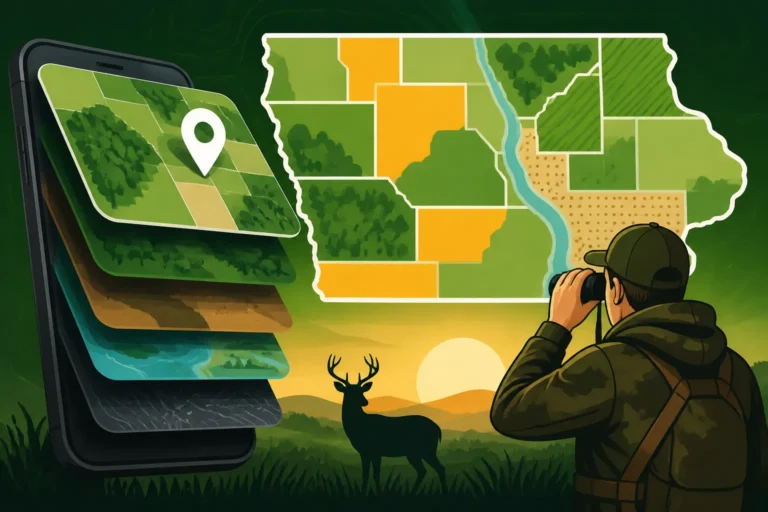
Consider a situation where you have a 100-acre tract that borders a large county conservation area. That adjacency alone makes your land incredibly valuable to IHAP, as it extends a contiguous block of habitat and access for hunters. A hunter using an app like onX Hunt can easily see how your IHAP parcel connects to other public ground, making the overall hunting experience much better. The DNR is going to see that value and factor it into their offer. Conversely, a small, isolated parcel with minimal cover in a low-density wildlife area might receive a lower per-acre offer, simply because it contributes less to the overall public access and habitat goals of the program.
The Enrollment Journey: From Inquiry to Agreement
So, you're interested. What does the actual process look like for getting your land into IHAP and securing those payments? It’s a structured, collaborative effort between you and the DNR.
Getting Started: Initial Steps and Site Assessment
The first step is usually to reach out to your local Iowa DNR wildlife management biologist or the IHAP coordinator. They're there to answer your questions and understand your property. Don't be shy about asking about the program specifics, what kind of payments are typical in your area, or what Minimum Acres to Enrol in Iowa IHAP might be. They’ll want to visit your property to conduct a site assessment. This isn't just a casual drive-by; they'll walk the land with you, discussing its current habitat, potential for improvement, and how it fits into local wildlife management goals. They'll look at things like timber stands, water sources, existing food plots, and natural travel corridors for deer.
During this visit, you'll have the opportunity to express any specific concerns or desires you have. Maybe you want to exclude a certain agricultural field from hunting during certain times, or you have livestock in a particular pasture. The beauty of IHAP is its flexibility; agreements can be tailored to fit individual landowner needs while still achieving the program's public access objectives. It's a dialogue, not a dictate. This initial assessment is crucial for both sides to determine if the partnership is a good fit and to lay the groundwork for a fair and mutually beneficial agreement.
Long-Term Commitments and Flexibility
IHAP agreements are typically multi-year contracts, which benefits both the landowner and the program. For you, a longer contract means more stable, predictable income and a sustained effort towards habitat improvements. For the DNR, it means reliable public access and the ability to implement longer-term habitat management plans that yield better results over time. How Long an Iowa IHAP Contract Runs can vary, but generally, they are designed to provide continuity.
While these are long-term commitments, they also offer a degree of flexibility. The DNR understands that land uses can change, and life happens. The agreements are designed to allow for certain adjustments, and communication is key. You're not signing away all control over your property forever. Instead, you're entering into a partnership that respects your property rights while also serving a broader conservation purpose. The contracts also clearly outline the legal responsibilities of both parties, providing peace of mind for landowners concerned about liability.
The Trade-Off: Public Access and Landowner Protections
The core of IHAP is the granting of public access. While this is the main reason for payment, it’s also the primary concern for many landowners. It's vital to understand what this means in practice and how the program helps mitigate potential issues.
Navigating Public Access Requirements
When you enroll in IHAP, you're agreeing to allow access to individuals holding valid hunting, fishing, or trapping licenses in Iowa. This means your land will be open during the relevant seasons for those activities. However, "public access" doesn't mean a free-for-all. IHAP sites are clearly marked with distinctive yellow signs. These signs not only indicate public access but also often provide guidelines, such as "Walk-In Only," which limits vehicle traffic and helps prevent damage to your land.
The "walk-in only" designation is a big one for many landowners. It means hunters will be parking off-site and walking into the property, minimizing disturbances and preventing ruts or damage from vehicles. The program also specifies activities that are typically not allowed, such as target shooting, camping, or horseback riding, which helps protect your property from misuse. It's a managed access system, not an open invitation for any activity. Understanding these nuances helps alleviate concerns about property damage or excessive intrusion. You can check the Iowa Hunting Atlas or use mapping apps like onX Hunt to see exactly where IHAP boundaries lie and the access rules posted for specific tracts.
Maintaining Control and Minimizing Impact
Landowners retain a significant amount of control even with public access. You decide which portions of your property are enrolled and can designate specific access points. If you have farm buildings, residences, or sensitive areas, these can be excluded from the access agreement. For instance, if you live on the property, the agreement will typically establish a safety zone around your home where hunting is not permitted. The DNR works with you to ensure these areas are clearly delineated and respected.
One common concern is the impact of hunting pressure. The DNR, through its management of IHAP, aims to distribute hunters across available properties. While no program can eliminate all concerns, the visible IHAP signage and the walk-in only rules often attract a more dedicated and respectful hunter who is accustomed to following regulations. The program is specifically designed to work with landowners, not against them, ensuring that your property remains a valuable asset for both your family and for wildlife. The DNR is also available to address any issues that might arise, providing a point of contact should problems occur.
IHAP in the Broader Conservation Landscape
IHAP isn't the only conservation program available to Iowa landowners, but it offers a unique blend of habitat improvement and public access. Understanding where it fits among other options can help you make an informed decision.
Comparing IHAP to Other Iowa Programs
Iowa has a rich history of conservation efforts, and there are several programs that offer incentives for landowners to improve habitat. The Conservation Reserve Program (CRP) and the Wetlands Reserve Program (WRP) are two prominent examples. CRP focuses on converting highly erodible cropland or other environmentally sensitive acreage to vegetative cover, primarily grasslands. WRP specifically targets wetland restoration. Both offer annual payments and cost-share for practices.
The key differentiator for IHAP is the public access component. While CRP and WRP focus solely on habitat, IHAP adds the crucial element of opening that habitat for public recreation. This means that while the habitat goals might overlap, the public benefit—and thus the payment structure—differs. A landowner might enroll some acres in CRP for financial gain and habitat, but then enroll additional acres or the same acres (if allowed by program rules) in IHAP to layer on public access, potentially increasing their overall return and enhancing the public good. It's often not an either/or scenario; sometimes, these programs can complement each other on a diverse property.
Evaluating the True Value of Enrollment
When considering IHAP, it's essential to look beyond just the annual payment. The true value proposition includes the financial compensation, yes, but also the habitat assistance, trespass control, and the satisfaction of contributing to Iowa's hunting heritage. For a landowner who loves wildlife and wants to see healthy populations thrive on their property, IHAP provides the resources and expertise to make that happen. Think about the cost of establishing native prairie or restoring a wetland out of pocket; IHAP can provide significant cost-share or cover those expenses entirely, depending on the agreement.
The program also helps preserve hunting opportunities for future generations, fostering a positive relationship between landowners and hunters. While GoHunt might be a brand you'd associate more with Western draw odds, the principles of seeking out and enhancing hunting opportunities resonate everywhere. IHAP is Iowa's way of ensuring those opportunities remain viable. Ultimately, the decision to enroll in IHAP is a personal one, but by understanding all the facets of the program, including its financial and non-financial benefits, you can make a choice that aligns with your property goals and conservation values.
Disclaimer
This article is for general informational purposes only and does not constitute professional advice. Laws, prices and regulations vary by location and change over time. Consult a qualified professional for guidance on your specific situation.