Iowa Muzzleloader Projectile Rules
It's incredibly frustrating when you're gearing up for a hunt, especially a special season like muzzleloader, and you find yourself tangled in a web of regulations that seem to change or, at the very least, are often misunderstood. Choosing the right projectile for your Iowa muzzleloader isn't just about what performs best; it's absolutely critical to staying legal and ensuring an ethical shot. This guide is here to untangle all that confusion, breaking down Iowa's muzzleloader projectile rules so you can hunt with confidence.
Understanding Iowa's Muzzleloader Seasons and Regulations
Iowa's deer hunting seasons are designed with a variety of weapon choices in mind, and muzzleloader hunting holds a special place, offering unique challenges and opportunities. However, with these distinct seasons come very specific rules, especially regarding the ammunition you can use. Many hunters, even those with years under their belt, find themselves double-checking the specifics, and for good reason – the nuances can be easy to miss.
The "Why" Behind Muzzleloader Specifics
The regulations surrounding muzzleloaders, including the types of projectiles allowed, aren't just arbitrary hoops to jump through. They're often rooted in historical hunting practices, wildlife management goals, and the inherent characteristics of the firearms themselves. Muzzleloaders, by their nature, are generally considered to have a more limited effective range compared to modern centerfire rifles. This limitation influences regulations that aim to promote ethical hunting practices, encouraging hunters to get closer to their quarry and ensure clean, humane kills. It's about maintaining fair chase and respecting the animal, rather than simply making things difficult for hunters. The rules help shape the experience, making it distinct from shotgun or modern rifle seasons.
Furthermore, these specific regulations play a role in managing the deer herd. By segmenting seasons and imposing weapon-specific limitations, the state can influence harvest numbers and maintain a healthy buck-to-doe ratio, contributing to the overall quality of the hunt. It also helps spread hunting pressure across different times of the year and across different weapon types, which can be crucial on public lands. When you're out there on a crisp November morning during Iowa Early Muzzleloader Season, knowing that everyone else is playing by the same specialized rules creates a sense of camaraderie and respect for the tradition.
Distinguishing Between Early and Late Muzzleloader Seasons
Iowa's hunting calendar typically features two distinct muzzleloader seasons for deer: an early season and a late season. While the core projectile rules generally remain consistent between these periods, it's always wise to review the current year's regulations because things can occasionally shift, or specific county-level nuances might apply. The early season often occurs in mid-October, offering different weather and deer behavior than the late season, which typically runs in December and January.
The main difference isn't usually in the projectile itself but in the hunting conditions and potentially the availability of antlerless tags. During the early season, you might encounter warmer weather, and deer patterns could still be heavily influenced by crop fields and early fall food sources. Conversely, the Iowa Late Muzzleloader Season often means facing bitter cold, snow, and deer that are concentrated on specific, high-energy food sources. These environmental factors, rather than a change in projectile rules, are what truly differentiate the two experiences. Regardless of the season, however, your chosen projectile must adhere to the same legal specifications to ensure a lawful hunt.
Legal Projectile Types for Iowa Whitetails
When it comes to muzzleloader projectiles in Iowa, the key is understanding the specific types allowed, which is often where most questions arise. The Iowa DNR clearly outlines what can and cannot be used, primarily to ensure hunter safety and the humane taking of game. It's easy to assume that if it fits down the barrel, it's good to go, but that's a dangerous assumption to make.
Conical Bullets and Sabots
The vast majority of modern muzzleloader hunters in Iowa will be using either conical bullets or sabot-encased projectiles. Both are designed for accuracy and terminal performance on deer, but they achieve it in different ways.
Conical bullets are essentially solid lead or lead alloy projectiles, often bullet-shaped, that are loaded directly into the bore. They engage the rifling of the barrel directly, relying on their design to stabilize in flight. These can be a fantastic choice, especially for hunters using traditional style muzzleloaders or those who prefer a simpler, all-lead projectile. They often create a larger wound channel due to their wider diameter compared to the actual bullet inside a sabot, and many swear by their knockdown power. However, finding the right conical for your specific bore can sometimes involve a bit of trial and error to ensure a snug fit without being overly difficult to load in the field, especially with a cold or fouled barrel.
Sabots, on the other hand, are a genius invention that allows you to shoot a smaller-diameter, modern bullet out of a larger-caliber muzzleloader. The sabot itself is typically a plastic sleeve that encases a rifle-style bullet (often .45 caliber bullet in a .50 caliber sabot, or a .40 caliber bullet in a .45 caliber sabot) and engages the rifling. Once the projectile leaves the barrel, the sabot peels away, allowing the bullet to continue on its ballistic path. This system offers several advantages, including excellent accuracy due to the bullet's aerodynamic shape and rifling engagement, and the use of bullets designed for controlled expansion, similar to those found in modern centerfire rifle cartridges. Many hunters find that sabots offer superior long-range performance for a muzzleloader, though "long range" in this context is still typically within 150-200 yards for ethical hunting. The variety of sabot-encased bullets available means you can really dial in the performance for your specific hunting conditions, from heavy for caliber options to those designed for rapid expansion.
Round Balls and Patched Round Balls
While not as prevalent today as conicals or sabots, patched round balls are a perfectly legal and time-honored projectile for muzzleloader hunting in Iowa. This is the truly traditional way to load a muzzleloader, especially for those using flintlock or percussion cap rifles with slower twist rates designed for round balls. A patched round ball consists of a spherical lead ball wrapped in a lubricated cloth patch. The patch serves to seal the bore, engage the rifling, and keep the ball centered as it travels down the barrel.
Hunting with patched round balls often evokes a strong sense of tradition and historical connection to the sport. They are known for their accuracy at closer ranges, often excelling out to 75-100 yards, which is still well within the effective range for many Iowa whitetail encounters, especially in thick timber. However, their ballistic coefficient isn't as high as modern conicals or sabot-encased bullets, meaning they lose energy and drop faster at extended distances. They also typically create a wound channel solely through their blunt force and diameter, without the expansion characteristics of many modern bullets. For those who appreciate the challenge and heritage, a patched round ball remains a viable and perfectly legal option, but it definitely requires more diligent practice to master its trajectory and understand its limitations.
The Single Projectile Rule
This is one of the most fundamental and critical rules for Iowa muzzleloader hunting: only a single projectile is allowed per barrel. What this means is you cannot load multiple round balls, or any combination of projectiles, into your muzzleloader for deer hunting. You certainly cannot load buckshot or birdshot, which are designed to disperse multiple pellets. The intent here is clear: to ensure that hunters are attempting to make a clean, ethical shot with a single, precisely aimed projectile, maximizing the chances of a humane kill and minimizing the risk of merely wounding an animal.
This rule emphasizes precision over pattern, which is vital for deer hunting. Unlike hunting upland birds with a shotgun, where a spread of pellets is desirable, deer hunting requires a single, well-placed shot to target vital organs effectively. Violating the single projectile rule is a serious offense and something every hunter must understand and respect. Always double-check your load before heading into the field, especially if you're experimenting with different components or if you've been working on your rifle in the off-season. When you're practicing at the range, trying to improve your Muzzleloader Accuracy at 100 Yards, always remember this fundamental principle.
Material and Design Restrictions
Beyond the basic shape and loading method, Iowa's muzzleloader regulations also touch upon the materials used in your projectiles and the minimum size requirements. These rules are in place to ensure that the projectile has sufficient energy and integrity to ethically harvest a deer.
Lead, Copper, and Other Alloys
Historically, lead has been the go-to material for muzzleloader projectiles due to its density, malleability, and affordability. Today, lead is still widely accepted and used for both conical bullets and round balls. However, with increasing environmental awareness and advancements in bullet technology, many manufacturers now offer alternatives. Copper, or copper alloys, are increasingly popular, especially in sabot-encased bullets, but also in solid conical designs. These non-lead options are often touted for their ability to retain weight and penetrate deeply, even through bone, and their expansion characteristics can be very reliable.
In Iowa, there are generally no specific statewide restrictions on projectile material for deer hunting. This means that lead, copper, and various alloy combinations are typically permissible, as long as the projectile meets other specified criteria like caliber and "single projectile" status. This flexibility allows hunters to choose projectiles based on performance, availability, and personal preference without having to worry about specific material bans, which is a relief for many who travel to hunt. When researching your options, whether through online communities or resources like GoHunt, you'll find a wide range of choices that are perfectly legal.
Understanding Minimum Caliber Requirements
Iowa does have minimum caliber requirements for muzzleloaders used to hunt deer. This is a common regulation in many states and is primarily in place to ensure that the projectile is large enough to deliver sufficient energy and create an adequate wound channel for a humane kill. For Iowa, the rule specifies that muzzleloaders must be no less than .44 caliber. This means a .50 caliber muzzleloader, which is arguably the most popular choice today, is well within the legal limits. A .45 caliber muzzleloader is also perfectly legal, provided it meets the other criteria.
This minimum ensures that the projectile has a certain mass and diameter to be effective on a game animal the size of a whitetail deer. Attempting to use a smaller caliber, such as a .36 or .40 caliber muzzleloader, even if it might be suitable for smaller game, would be illegal for deer in Iowa. When you're looking at different firearms or projectile options, always keep this minimum caliber in mind. For a comprehensive overview, you might want to look into Iowa Muzzleloader Caliber Range to understand the full scope of what's allowed.
Here's a quick reference table to help visualize the common projectile types and their characteristics:
| Projectile Type | Material Examples | Primary Advantage | Common Calibers (for .50 bore) | Ethical Range (Approx.) | Key Feature |
|---|---|---|---|---|---|
| Conical Bullet | Lead, Lead Alloys | Heavy for caliber, good penetration | .50 (direct bore fit) | 100-150 yards | Direct bore engagement, simpler design |
| Sabot-Encased | Lead Core, Copper Jacket | Aerodynamic, accurate, controlled expansion | .45, .40 (within plastic sabot) | 150-200 yards | Uses modern rifle bullets in a muzzleloader |
| Patched Round Ball | Lead | Traditional, close-range accuracy | .490, .495 (with patch) | 50-100 yards | Relies on patch for seal and rifling |
Practical Considerations for Projectile Selection
Beyond simply being legal, choosing the right muzzleloader projectile involves several practical considerations that can greatly impact your success and enjoyment in the field. What works perfectly on the range might behave differently in real-world hunting conditions.
Accuracy and Ballistics in the Field
The ultimate goal with any hunting projectile is accuracy and reliable terminal performance. While modern sabot-encased bullets often get the nod for superior ballistics and extended range, a well-matched conical or even a patched round ball can be incredibly accurate within its effective range. The trick is finding the right combination of projectile, powder charge, and primer for your specific muzzleloader. No two rifles are exactly alike, and what shoots well in your buddy's rifle might not be ideal in yours.
It's absolutely essential to spend ample time at the shooting range, not just punching paper but truly understanding your chosen projectile's trajectory at various distances. Many hunters might zero their muzzleloader at 50 or 75 yards, but knowing your holdovers (or holdunders) at 25, 100, and even 150 yards is crucial. Wind can also play a significant role, especially with lighter or less aerodynamically efficient projectiles. Factor in how cold weather might subtly affect powder burn, or how a slightly fouled barrel after a few shots could change your point of impact. Ethical hunting demands that you know your maximum effective range with your setup, and that range can vary significantly depending on your projectile choice. If you’re utilizing a tool like GoHunt for planning, remember to also plan out your range sessions with the same diligence.
Cleaning and Maintenance Impacts
Different projectile types can have varying impacts on your muzzleloader's cleaning and maintenance routine. Sabot-encased bullets, while offering excellent performance, can sometimes leave plastic fouling in your bore. This fouling, if not addressed, can build up over time and negatively affect accuracy, making subsequent loading more difficult. Many hunters find that a dedicated sabot solvent or a specific cleaning routine after a range session is necessary to keep their barrel pristine.
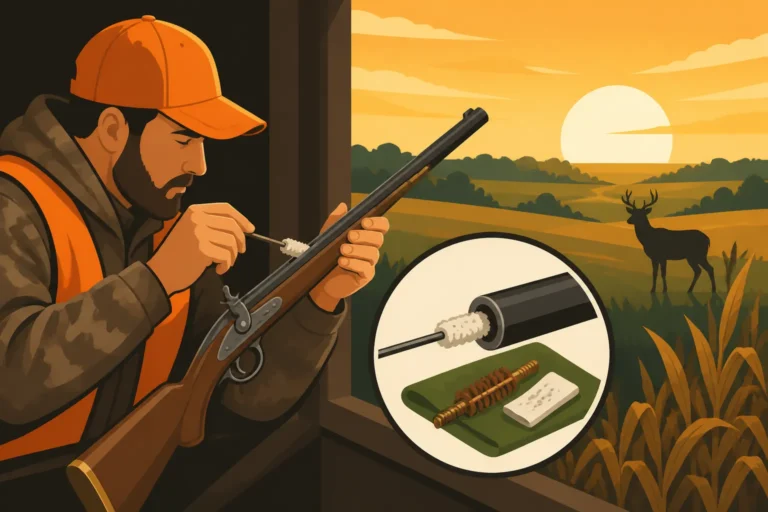
Conical bullets, being primarily lead, can lead to lead fouling in the bore. While typically easier to clean than plastic, heavy lead fouling can also degrade accuracy and make loading the next shot a struggle. Patched round balls generally produce less fouling overall if the patch material and lubricant are well-matched to your bore, but the patch itself can leave residue. Regardless of your choice, understanding the specific cleaning needs of your projectile is vital. A clean barrel not only maintains accuracy but also prevents corrosion and ensures the longevity of your valuable firearm. Knowing how to effectively clean your muzzleloader, especially after firing, will keep it performing at its best, a skill that's as important as knowing Cleaning a Muzzleloader Between Sits.
Purchasing and Preparing Your Muzzleloader Projectiles
Once you understand the rules and have a general idea of the type of projectile you want to use, the next step is actually acquiring them and getting ready for the season. This involves knowing where to look and how to prepare for your hunt effectively.
Finding Legal Projectiles Locally and Online
Finding the right muzzleloader projectiles can sometimes feel like a treasure hunt, especially if you're looking for something specific. Most reputable sporting goods stores, both large national chains and smaller local shops in Iowa, will carry a selection of common .50 caliber sabots and conicals. These stores are often a great place to start, as you can physically inspect the products and sometimes even get advice from experienced staff who hunt locally. Don't forget to ask about specific local preferences or what has worked well for others in the region.
Online retailers offer an even wider selection, often including specialty projectiles that might be harder to find in brick-and-mortar stores. When ordering online, always double-check the product description to ensure it aligns with Iowa's regulations, particularly the caliber and single projectile rule. It's also a good idea to research customer reviews regarding accuracy and terminal performance. Some hunters use online platforms like GoHunt not only for mapping but also for finding community discussions on gear, which can be invaluable for pinpointing specific brands or types of projectiles that perform well in Iowa conditions. Make sure to factor in shipping times, especially as hunting season approaches, to avoid last-minute scrambles.
Pre-Season Practice and Sight-In
You can have the most expensive muzzleloader and the "best" projectiles on the market, but if you haven't put in the time at the range, your chances of success (and an ethical harvest) plummet. Pre-season practice is non-negotiable. It's not just about hitting the bullseye; it's about building confidence, understanding your rifle's capabilities, and ingraining good shooting habits.
Start your sight-in process well in advance of the season. Shoot from a solid bench rest to eliminate as much human error as possible, and work on achieving consistent groups. Once you're grouping well from a bench, transition to practicing from field positions you might actually use while hunting – offhand, kneeling, or leaning against a tree. Pay attention to how your groups shift, if at all, when you change positions. Practice loading quickly and efficiently, as a second shot might be necessary (though you always hope for a one-shot kill). This practice is crucial for any weapon, whether it's Sighting In Before Shotgun Season or getting your muzzleloader dialed in. Knowing your actual effective range with your specific load and rifle is perhaps the most important piece of information you can have before heading into the Iowa timber or standing corn.
Common Misconceptions and Troubleshooting
Muzzleloaders, despite their relative simplicity, often come with their own set of myths and common issues that can frustrate new and even experienced hunters. Clearing up these misconceptions can save you a lot of headache and improve your hunting experience.
Clarifying "No Scopes" Myths
One persistent myth that floats around hunting camps, particularly for muzzleloaders, is that you cannot use a scope. Let's be clear: this is generally false for Iowa's muzzleloader seasons. Iowa does permit the use of scopes on muzzleloading firearms during its deer seasons. This is a huge relief for many hunters, as a quality scope can dramatically improve accuracy, especially as light fades or when trying to identify your target clearly.
The "no scopes" idea might stem from older regulations in Iowa or other states, or from specific traditional hunting events where scopes are prohibited to maintain a more primitive challenge. However, for regular Iowa deer seasons, feel free to mount a scope on your muzzleloader. Just ensure it's a good quality, durable scope that can handle the recoil and is sighted in properly. Many hunters opt for scopes with lower magnification, such as 1-4x or 2-7x, which are excellent for the typical muzzleloader ranges encountered in Iowa's diverse terrain. For more on this, you can check out Muzzleloader Scopes and Iowa Rules. Always consult the official Iowa DNR regulations for the current year to confirm any specific rules, as regulations can occasionally be updated.
Troubleshooting Accuracy Issues
Nothing is more frustrating than a rifle that just won't group, especially when you've invested time and money into practice and gear. If you're struggling with accuracy with your Iowa muzzleloader, here are some common areas to troubleshoot:
- Consistency is Key: Muzzleloaders demand consistency in every step of the loading process. Are you using the exact same powder charge every time? Is your bullet seated with consistent pressure? Are your primers fresh and seated fully? Even a slight variation in any of these steps can lead to flyers.
- Powder Choice: Different powders (e.g., granular black powder, Pyrodex, Triple Seven, BH 209) burn differently and may perform better with certain projectiles and rifles. Experiment within safe load data guidelines. Also, ensuring your powder stays dry is critical, especially when you are Keeping a Muzzleloader Dry in December.
- Bullet/Sabot Fit: The fit of your projectile in the bore is paramount. Too loose, and it won't engage the rifling consistently. Too tight, and you might deform the bullet during loading or have difficulty getting it down the barrel, especially if the bore is slightly fouled. Try different manufacturers or types of sabots/conicals, as bore diameters can vary slightly between rifles.
- Cleaning Routine: A fouled barrel can drastically reduce accuracy. Implement a consistent cleaning routine, even between shots at the range. Some hunters find that swabbing the bore with a damp patch after every shot or two helps maintain accuracy.
- Optics Check: If you're using a scope, ensure it's securely mounted and hasn't shifted. Check for loose rings or bases. A scope can sometimes be the culprit in accuracy issues, not the rifle or ammunition.
- Practice Fundamentals: Sometimes, it's not the gear, but the shooter. Focus on fundamental shooting techniques: consistent cheek weld, proper breathing, smooth trigger pull, and follow-through. A solid rest can help isolate rifle accuracy from shooter error during diagnosis.
By systematically working through these areas, you can often identify and resolve accuracy problems, ensuring your muzzleloader is ready for an ethical and successful Iowa deer hunt.
Disclaimer
This article is for general informational purposes only and does not constitute professional advice. Laws, prices and regulations vary by location and change over time. Consult a qualified professional for guidance on your specific situation.