Best Slug Loads for Iowa Deer
Navigating the sheer variety of slug loads for Iowa's deer seasons can feel like staring at an overwhelming wall of options at the sporting goods store, leaving you wondering which one will truly perform when that trophy buck steps out. It's a common frustration, especially when every box promises superior accuracy and knockdown power. This guide is here to cut through the noise, helping you understand the different types of slugs, how to match them to your shotgun, and what truly makes a slug load "best" for your Iowa deer hunt, ensuring you step into the timber or cornfield with confidence.
Understanding Slug Types for Iowa Whitetails
When you're gearing up for shotgun season in Iowa, the first big decision often revolves around the type of slug you're going to put through your barrel. It's not just about picking up a box that says "slugs" on it; there's a world of difference between sabot slugs and rifled slugs, and knowing which is right for your setup is absolutely critical for accuracy and ethical hunting.
The Precision of Sabot Slugs for Rifled Barrels
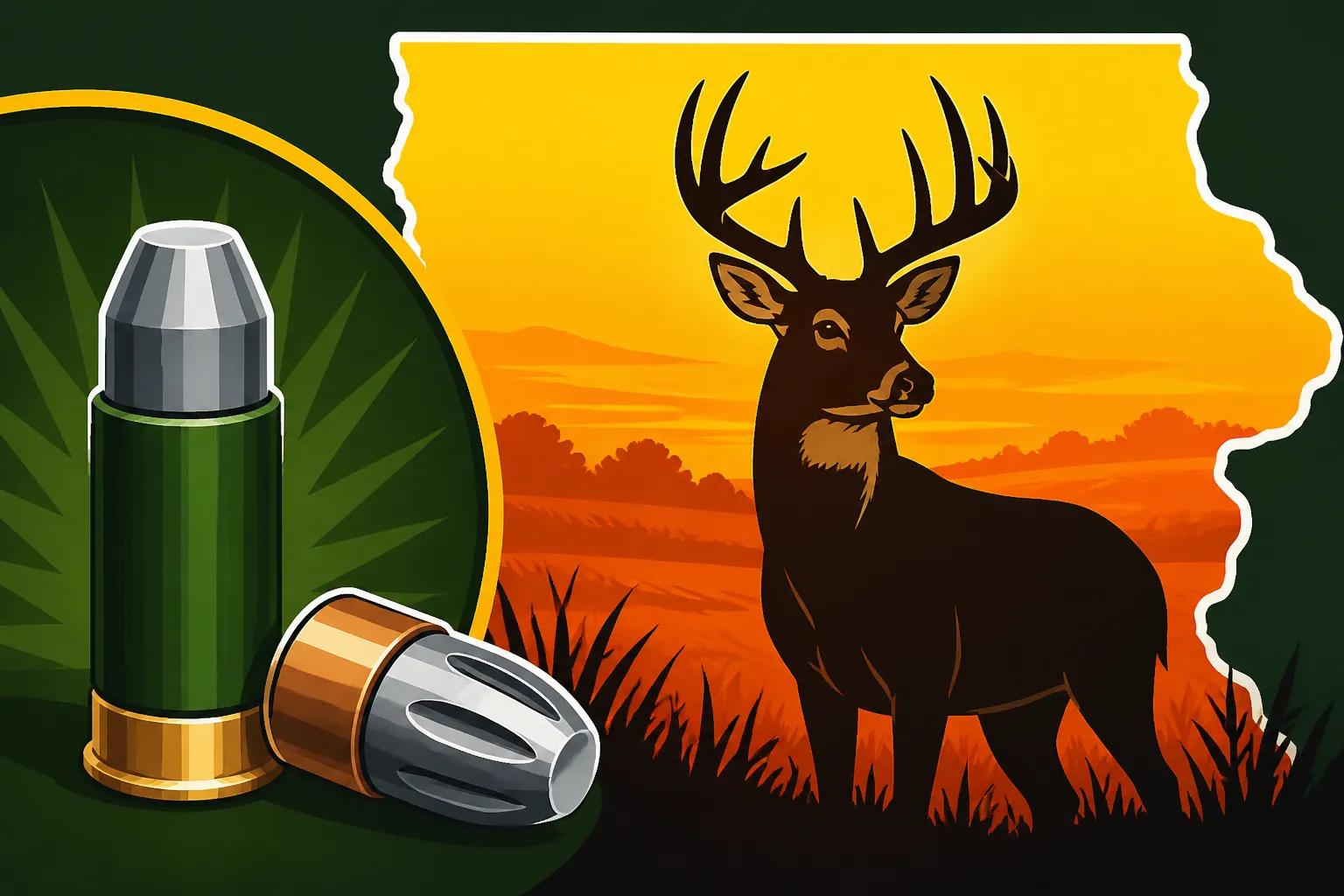
Sabot slugs are, in many ways, the closest thing shotgun hunters get to rifle ballistics. These slugs are designed to be fired from a shotgun with a rifled barrel, meaning the inside of the barrel has spiral grooves that impart a spin on the projectile. This spin stabilizes the slug in flight, much like a rifle bullet, leading to significantly improved accuracy and a flatter trajectory over longer distances.
Imagine you're setting up on a field edge, and you know a big Iowa buck might cross at 100 yards, or even a bit further. With a smoothbore, that shot would be extremely iffy, pushing the absolute limits of its accuracy. But with a rifled barrel and a good sabot slug, suddenly that range becomes a much more confident proposition. These slugs are typically made of lead, copper, or a combination, encased in a plastic sleeve (the sabot) that peels away shortly after leaving the muzzle, allowing the projectile to continue its flight with minimal drag. The better accuracy often means you can be more precise with shot placement, which is key for a quick, humane harvest on a whitetail. Rifled Barrels Versus Smoothbore Slugs explains this distinction in more detail.
However, this precision comes with a caveat: sabot slugs are generally more expensive than their rifled counterparts, and they absolutely require a rifled barrel to achieve their potential accuracy. Firing a sabot slug through a smoothbore barrel would be a waste of money and severely impact your accuracy, as there would be nothing to stabilize the projectile. For hunters who have invested in a dedicated slug gun with a rifled barrel, sabot slugs are often the go-to choice, offering performance that can rival some straight-wall rifle cartridges in terms of accuracy and effective range.
The Reliability of Rifled Slugs for Smoothbore Barrels
On the other hand, traditional rifled slugs, often called Foster or Brenneke slugs, are designed for smoothbore shotgun barrels. They don't have a sabot; instead, the slug itself has angled grooves or "rifling" on its exterior. This external rifling is not meant to impart spin like a rifle barrel; rather, it's designed to allow the slug to compress slightly as it travels down the barrel, helping it pass through various choke constrictions without damaging the barrel. The weight-forward design of these slugs, much like a badminton shuttlecock, helps them fly relatively stable over shorter distances.
If you're hunting in thick timber, river bottoms, or dense CRP cover, where shots are typically under 75 yards, a smoothbore shotgun paired with rifled slugs is an incredibly effective and often more affordable setup. Think about a shotgun drive in a small timber patch: you're likely to get quick, close-range shots where pinpoint accuracy at 100+ yards isn't the primary concern. Here, the sheer knockdown power and reliable performance of a heavy rifled slug can be ideal.
These slugs are a fantastic choice for the vast majority of Iowa hunters who utilize a standard pump-action or semi-automatic shotgun with a smoothbore barrel. They are robust, reliable, and generally more budget-friendly, making it easier to buy a few boxes for practice and hunting. Just remember their effective range is shorter than sabot slugs in a rifled barrel, so understanding your limits is crucial. You can learn more about Sabot Versus Foster Slugs to really dive into the differences.
Choosing the Right Gauge for Slug Hunting
Beyond the slug type, the gauge of your shotgun plays a significant role in your hunting experience and effectiveness. The most common gauges for deer hunting in Iowa are 12-gauge and 20-gauge, each with its own advantages and loyal following. While both are highly capable of harvesting deer, understanding their characteristics can help you make an informed choice.
The 12-gauge shotgun is often seen as the workhorse of deer hunting, firing heavier slugs that deliver substantial energy and impact. Many hunters feel the heavier projectile from a 12-gauge provides an extra margin of error, or simply more "thump" on target, especially for larger Iowa whitetails. The wider availability of 12-gauge ammunition, including a vast array of slug types, also makes it a popular choice. However, with that power often comes increased recoil, which can be a factor for some shooters, particularly after several practice shots or if they are sensitive to felt recoil. For hunters who are comfortable with the recoil and prioritize maximum energy transfer, the 12-gauge remains a top contender.
The 20-gauge, on the other hand, has gained considerable popularity in recent years, especially with advancements in slug technology. Modern 20-gauge sabot slugs, in particular, offer impressive accuracy and sufficient energy for deer hunting, often with significantly less recoil than a 12-gauge. This makes the 20-gauge an excellent option for younger hunters, those sensitive to recoil, or anyone looking for a lighter, more manageable firearm. Don't let anyone tell you a 20-gauge isn't "enough gun" for Iowa deer; with proper shot placement, it is absolutely lethal. For more on this, check out Are 20 Gauge Slugs Enough for Deer?. Ultimately, the "best" gauge is the one you can shoot most accurately and comfortably, allowing you to place your shots precisely when it counts.
Matching Slugs to Your Shotgun and Hunting Conditions
Choosing the best slug load isn't just about what's available; it's about what works best for your specific shotgun and the conditions you'll encounter in the Iowa deer woods. Every shotgun, even two of the exact same model, can have a preference for certain ammunition. This is where testing and understanding ballistic performance really comes into play, making your time in the field more effective and enjoyable.
Accuracy at Different Ranges
The most critical factor in choosing a slug load is its accuracy from your specific firearm. Different brands and types of slugs will group differently through the same barrel, and what shoots well in your buddy's gun might spray all over the target in yours. For sabot slugs and rifled barrels, consistency at 100 yards and beyond is what you're striving for. A good grouping (say, 3-4 inches at 100 yards) gives you the confidence needed for those longer field edge shots. Many hunters use optics, like a low-power scope or a red dot sight, to maximize this accuracy potential. Slug Gun Range Limits in Iowa discusses what you can reasonably expect.
For smoothbore shotguns and rifled slugs, accuracy is still paramount, but the effective range is inherently shorter. Most smoothbore setups are best suited for shots inside 75 yards, with many hunters preferring to limit themselves to 50 yards or less for consistent, ethical kills. At these distances, a tight group means the difference between a clean pass-through and a marginal hit. Practicing at varying close ranges, from 25 to 75 yards, will reveal your shotgun's true capabilities with different rifled slug loads. Remember, the goal isn't just to hit the target, but to consistently hit the vital zone. Zeroing a Slug Gun at Fifty Yards is a great resource for getting your smoothbore dialed in.
To truly find the best slug for your gun, you need to buy several different brands and types (both sabot and rifled, if you're trying to figure out which barrel you want to use) and take them to the range. Shoot from a solid rest and observe your groups. It's a small investment in ammunition that pays huge dividends in confidence and ethical hunting. Some hunters even use apps or mapping tools like GoHunt to mark their range locations and track their shooting data over time, helping them make informed decisions for future hunts.
Terminal Performance on Iowa Whitetails
Once a slug leaves the barrel and is accurately placed, its terminal performance – how it behaves upon impact with the deer – becomes the next crucial consideration. The goal is to maximize energy transfer and create a wide wound channel for a quick, humane harvest. Both sabot and rifled slugs are designed to deliver significant energy, but their construction can lead to different results.
Sabot slugs often feature advanced bullet designs, similar to those found in rifle ammunition. This means you can find slugs with controlled expansion, designed to mushroom perfectly and retain weight for deep penetration, or those designed for maximum expansion for a larger initial wound. For the tough hide and bone structure of a mature Iowa whitetail, a slug that provides deep penetration through the vitals is generally preferred. You want that slug to pass through both lungs and, ideally, the heart, ensuring maximum blood loss and a quick recovery. Shot Placement on a Whitetail at Twenty Yards emphasizes why this is so important, regardless of the slug type.
Traditional rifled slugs, being solid lead or a hard alloy, typically mushroom less violently than some sabot designs but deliver a massive blow due to their sheer mass and frontal area. They tend to punch a large, through-and-through hole, creating excellent blood trails even without extensive expansion. While they might not fragment or expand as much, the impact force and wide initial wound channel are more than sufficient for deer. The key is to ensure you're using a load that consistently penetrates deeply enough to exit the far side, providing that vital exit wound for tracking. Consider the specific conditions you'll be hunting in—will you be in thick cover where a pass-through is critical for a blood trail, or open fields where a deer might not travel far?
Managing Recoil for Consistent Shooting
Let's be honest, shotgun slugs kick. There's no getting around it, and the amount of recoil you experience can significantly impact your ability to shoot accurately, especially during practice sessions or if you need a quick follow-up shot. Recoil From a Twelve Gauge Slug is a real phenomenon that needs to be addressed. Managing recoil isn't just about comfort; it's about maintaining proper form and confidence.
For hunters who shoot a 12-gauge, recoil can be substantial, especially with heavier, high-velocity loads. This is where proper shooting technique, a well-fitting shotgun, and recoil-reducing pads come into play. A good recoil pad on your stock can make a world of difference, absorbing a significant amount of the felt kick. Some hunters opt for shotguns with gas-operated semi-automatic actions, which tend to reduce felt recoil compared to pump-actions due to their operating system. If you find yourself flinching or anticipating the shot due to heavy recoil, it's worth considering these options or perhaps switching to a 20-gauge, which generally offers a much softer shooting experience while still providing ample power for deer.
Ultimately, the best slug load is one you can shoot confidently and consistently, even under pressure. If you're so worried about the kick that you can't focus on your sight picture or squeeze the trigger smoothly, you're not going to make an ethical shot. Don't be afraid to experiment with different loads and gauges until you find a combination that feels comfortable and allows you to shoot your best. A good session at the range, practicing various shooting positions, can help you get accustomed to the recoil of your chosen load.
Key Considerations Beyond the Slug Itself
While the slug load itself is central to your hunting success, there are other crucial elements that tie directly into choosing the "best" ammunition for your Iowa deer hunt. These factors often get overlooked in the excitement of ballistic tables and bullet designs, but they are just as vital for a successful and ethical season.
Testing and Practice for Confidence
I cannot stress this enough: test your chosen slug loads thoroughly at the range. It's not enough to buy a box of what your buddy uses or what the store clerk recommends. Every shotgun is an individual, and it will "like" certain loads more than others. Head to your local range, or find a safe, approved area to set up targets. Bring a few different boxes of slugs – varying brands, bullet weights, or designs – and shoot them from a solid rest. Pay close attention to your groups at the distances you expect to shoot in the field.
Think about the conditions you'll hunt in. If you're primarily in dense timber, practice quick shots at 25-50 yards. If you're overlooking a large field, stretch it out to 75 or 100 yards, whatever your setup and chosen slug are capable of reliably. Take the time to fine-tune your sights or optics. If you're using a scope, make sure it's sighted in precisely for your chosen range. Sighting In Before Shotgun Season is not just a recommendation; it's a requirement for ethical hunting. Remember to shoot from various positions too: offhand, kneeling, or using a shooting stick, as you might not always have a perfect bench rest in the field. This practice builds invaluable confidence, which is truly the most important gear you can bring into the field.
| Slug Type | Recommended Barrel | Typical Effective Range (yards) | Key Advantage | Typical Recoil |
|---|---|---|---|---|
| Sabot Slugs | Rifled | 75-150+ | Superior Accuracy, Flatter Trajectory | Moderate to High |
| Rifled Slugs | Smoothbore | 25-75 | Reliable, Cost-Effective, Power | High |
Ammunition Availability and Cost
Let's talk practicality for a moment. Hunting can be an expensive endeavor, and slug ammunition, particularly premium sabot loads, can add up quickly. While it's tempting to always go for the absolute "best" performing slug on paper, you also need to consider its availability and cost, especially if you plan to shoot a fair amount during practice. There's no point in finding a miracle slug if you can only buy one box a year.
Traditional rifled slugs for smoothbore shotguns are generally more affordable and widely available, often found in most sporting goods stores and even many smaller hardware stores across Iowa. This makes it easier to stock up for practice and ensure you have enough for the season without breaking the bank. Sabot slugs, while offering superior performance, tend to be pricier, and certain specific brands or loads might be harder to find, especially as hunting season approaches. Many hunters find themselves using online tools or resources like GoHunt to track down specific ammunition types or compare prices across different retailers.
It's a balance. If a particular sabot slug gives you exceptional accuracy, the extra cost might be worth it for the confidence and ethical advantage. However, if a more affordable rifled slug performs perfectly well within your smoothbore's effective range, then there's no need to overspend. Buying a few boxes of different types to test, as mentioned earlier, is a good way to gauge both performance and your budget. Just remember, consistency is key, and if you can't afford to practice with your chosen hunting load, you might be better off with a slightly less expensive, more accessible option that you can practice with.
Iowa's Legal Requirements for Slug Hunting
Before you even step foot in the deer woods, you need to be absolutely certain your chosen slug load and shotgun setup comply with Iowa's hunting regulations. Iowa has specific rules regarding legal equipment for deer hunting, especially during the shotgun seasons. While this guide focuses on slug loads, it's part of a larger picture of legal compliance.
For the traditional shotgun seasons, Iowa defines "shotgun" as a firearm with a barrel length of 18 inches or more, firing a single slug. This is critical. You can't use buckshot or birdshot for deer; it must be a single projectile. Additionally, while the state allows both 12-gauge and 20-gauge shotguns (among others), there are rules about which seasons allow shotguns, and whether straight-wall cartridge rifles are also allowed in those seasons. Always check the current Iowa DNR hunting regulations booklet before your hunt, as rules can change. You can find more specific information in Which Shotgun Gauges Iowa Allows for Deer and Iowa First and Second Shotgun Seasons.
Understanding these regulations is not just about avoiding a citation; it's about respecting the game and the heritage of hunting. Ensuring your equipment is legal and appropriate for the species you're pursuing is a fundamental responsibility of every hunter. By taking the time to research and understand Iowa's specific requirements, you can focus on the hunt itself with peace of mind, knowing you're fully compliant and ready for success.
Disclaimer
This article is for general informational purposes only and does not constitute professional advice. Laws, prices and regulations vary by location and change over time. Consult a qualified professional for guidance on your specific situation.