Keeping a Muzzleloader Dry in December
There’s nothing quite like the crack of a muzzleloader echoing through a frosty Iowa timber in December. That distinct puff of smoke and the thud of a well-placed slug is a sound that brings a deep satisfaction to any hunter. But let’s be real, December hunting in Iowa can be brutally challenging, especially when you’re relying on a muzzleloader. The cold, the damp, the sleet, the freezing rain – it all conspires against that single, crucial shot, often leading to the dreaded "click" or a weak "pop" instead of a thunderous "boom." This guide is all about helping you beat the elements and ensure your muzzleloader performs flawlessly when that trophy buck finally steps out, even when Mother Nature is throwing her worst at you.
The Unique Challenges of December Muzzleloader Hunting in Iowa
Muzzleloader season in Iowa, particularly the late season in December, offers some fantastic opportunities. Deer are often concentrated on specific food sources, and the landscape is stark and open, which can make scouting easier. However, these advantages come with a significant catch: the weather. Iowa's December weather isn't just cold; it's often a nasty mix of damp, freezing, and unpredictable, and it poses unique threats to the reliability of your black powder rifle.
Why December Weather is So Tough on Muzzleloaders
Imagine sitting in a stand, the air thick with moisture, maybe a light drizzle turning to freezing sleet. The temperature hovers just around freezing, dropping and rising throughout the day. This isn't just uncomfortable for you; it's absolutely brutal on your muzzleloader. Modern centerfire cartridges are sealed units, designed to withstand a lot, but a muzzleloader's ignition system is far more exposed.
Black powder or its substitutes are hygroscopic, meaning they readily absorb moisture from the air. Even a tiny bit of dampness can degrade the powder's ability to ignite properly, leading to a slow burn, a hangfire, or a complete misfire. The primer, which provides the initial spark, is also susceptible. If moisture gets into the primer pocket or fouls the firing pin channel, you might get a light strike or a dud. The metal components of the gun itself are also at risk. Exposed to constant moisture, especially with temperature fluctuations, rust can form quickly, hindering moving parts and compromising the gun's integrity. It's a constant battle, and frankly, it feels like the weather is always winning if you don't take proactive steps.
The Misfire Frustration: What Goes Wrong When It's Wet
We've all been there, or at least heard the stories that make our stomachs churn. That moment when the buck of a lifetime is standing broadside at 80 yards, perfectly still. You shoulder your muzzleloader, take a deep breath, settle the crosshairs, and squeeze the trigger. Instead of the satisfying roar, you hear a pathetic click. Or maybe a faint pop as the primer fires, but the main charge doesn't ignite. The deer throws its head up, bounds off into the timber, and your heart sinks into your boots.
This isn't just bad luck; it's often the direct result of moisture compromising your powder or primer. A primer "pop" indicates the primer ignited, but the flash channel to the main powder charge was blocked or the powder was too damp to catch. A complete "click" means the primer itself didn't ignite, perhaps due to a light strike, a faulty primer, or a firing pin channel gummed up with ice or rust. These frustrations are entirely avoidable with proper preparation and in-field care. You work too hard to let a little bit of damp air ruin your season.
Essential Gear and Preparations to Keep Your Muzzleloader Dry
Getting ready for a December muzzleloader hunt in Iowa isn't just about sighting in your rifle and finding a good stand. It's largely about preparing your gear to defy the elements. When that brutal Iowa winter hits, you need every advantage you can get to keep your powder dry and your shot true.
Protective Covers and Cases for the Field
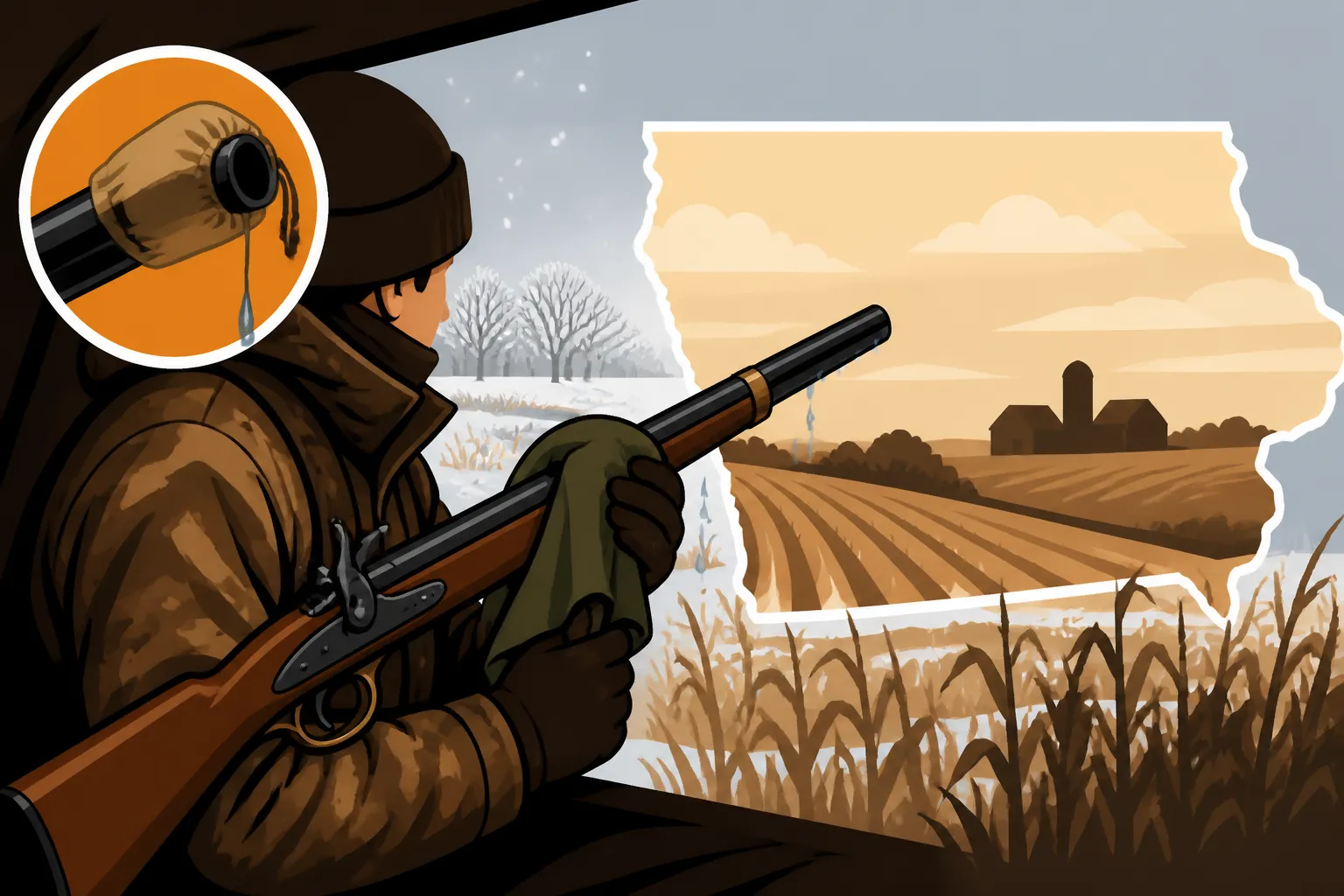
Your muzzleloader is your most critical piece of gear in this season, and it needs protection from the moment you leave the truck until you pull the trigger. Relying on simply tucking it under your arm isn't going to cut it. A good quality muzzle cover is absolutely non-negotiable. These are typically made of rubber or plastic and fit snugly over the end of your barrel, preventing snow, sleet, or rain from getting into the bore and directly onto your powder charge. It's a small item, but it can literally save your hunt.
Beyond the muzzle, consider a full-length gun sleeve or a waterproof wrap. There are excellent neoprene sleeves designed to slip over your entire muzzleloader, protecting the action, primer, and all exposed metal from constant moisture. Some hunters even use a simple garbage bag, secured with rubber bands, for a quick and cheap field solution. While maybe not the prettiest, it definitely works in a pinch. When you're spending hours on stand, exposed to the elements, this continuous protection is key. You might find resources on GoHunt that detail various field protection options, from custom neoprene covers to more robust, semi-rigid cases that offer quick access while maintaining a waterproof seal. Remember, the goal is to keep every vulnerable part shielded from direct precipitation and condensation.
Weatherproofing Your Muzzleloader Before the Hunt
The real work starts before you even step foot in the timber. A thorough pre-hunt weatherproofing routine is crucial. First, disassemble your muzzleloader as much as you're comfortable with and give it a meticulous cleaning. Remove all old powder residue and carbon buildup. Ensure the breach plug is clean and the flash channel is clear and unobstructed. A tiny speck of carbon can hold moisture and prevent ignition.
Next, focus on lubrication and protection. Apply a thin coat of rust-preventative oil to all metal surfaces, both inside and out. Don't forget the firing pin, spring, and internal components of the trigger group. Use a light, non-gumming oil that won't freeze in cold temperatures. For the external surfaces, a wax-based protectant or a water-displacing spray can add an extra layer of defense against moisture. Check all screws and fittings to ensure they are tight, as loose components can allow moisture to seep in. Lastly, ensure your ramrod, which is often forgotten, is also clean and protected. Even if your muzzleloader will be in a case during transport, the humid Iowa air can condense inside, so consider tossing a desiccant packet into your case or gun sock for added moisture absorption, especially for longer drives or overnight stays.
Field Tactics for Staying Dry and Ensuring a Shot
Even with the best pre-hunt preparation, Iowa's December can throw some nasty curveballs. It’s not enough to just prepare your gun; you need active strategies in the field to maintain its readiness. Staying on top of potential moisture issues while you’re out there can mean the difference between success and a missed opportunity.
Positioning and Movement in Inclement Weather
When snow or freezing rain starts to fall, how you carry and position your muzzleloader becomes critical. During your walk to the stand, keep your muzzleloader pointed down, ideally with a good muzzle cover in place, to prevent any precipitation from accumulating in the barrel. If you're using a sling, try to keep the action and breech area tucked as much as possible under your rain gear or hunting coat. Many hunters will walk with the rifle under their arm, or even hold it upside down (muzzle up) if a good muzzle cover is used, to keep moisture away from the critical breech area.
Once you’re settled in your stand or blind, don't just lean your muzzleloader against a tree and let it get hammered by the elements. Keep it as protected as possible. In a ground blind, lay it flat on a waterproof mat or blanket. In a treestand, try to keep it tucked under the stand's platform or a waterproof cover. Some hunters even fashion a small, removable waterproof sleeve that covers the action and primer area while on stand, allowing for quick removal when a shot presents itself. Paying attention to wind and precipitation direction can help you position your body and the rifle to minimize direct exposure. This is where e-scouting with tools like GoHunt, understanding the lay of the land, and knowing exactly where you need to set up can help you pick the most protected stand sites.
| Critical Muzzleloader Weatherproofing | Pre-Hunt Preparation | In-Field Tactics | Post-Hunt Care |
|---|---|---|---|
| Bore/Muzzle | Clean, lubricate, clear flash channel | Use muzzle cover consistently, keep pointed down | Clean bore thoroughly, oil lightly |
| Breech/Action | Clean firing pin, oil, check seals | Protect with cover, keep tucked dryly | Disassemble, clean, oil, inspect for rust |
| Primer Pocket | Ensure clean, use fresh, waterproof primers | Keep covered, swap out if damp, inspect | Remove primer, clean, ensure dry |
| Powder Charge | Use dry, fresh powder/pellets | Minimize exposure, avoid temperature swings | Unload, store powder separately |
| Metal Surfaces | Apply rust preventative oil/wax | Wipe down regularly, minimize direct rain | Clean, reapply protective coatings |
| General Storage | Desiccant packets in cases | Quick access to protective sleeves | Use desiccants, proper gun safe environment |
Quick Checks and Maintenance During a Sit
You’re out there for hours, perhaps even all day, and conditions can change rapidly. Don't wait until a deer appears to check your muzzleloader's readiness. Periodically, especially after a period of precipitation or a noticeable temperature drop, perform a quick check. Gently remove your muzzle cover and wipe away any moisture from the muzzle with a dry cloth. More importantly, check the primer. Is it wet? Is there any condensation around it? If you suspect any moisture has gotten in, or if it's been a particularly long, wet sit, it's often wise to carefully remove the current primer and replace it with a fresh, dry one from a waterproof container. Many experienced Late Muzzleloader Deer Hunting in Iowa hunters carry a small, waterproof tin of spare primers specifically for this purpose.
Another critical check is the firing pin and hammer area. Ensure there’s no ice buildup or debris that could impede the hammer's strike. A quick wipe with a dry cloth can remove surface moisture. Some hunters will even place a small piece of electrical tape over the primer and breach area as an added layer of protection, which can be quickly peeled off for a shot. The key is to be proactive. If you see moisture, address it immediately. Remember, that one shot might be the only one you get, so making sure your Iowa Muzzleloader Projectile Rules are followed and your gun is ready for it is paramount.
Post-Hunt Care: Protecting Your Investment from December's Damp
The hunt might be over, but your responsibilities to your muzzleloader are not. In fact, what you do immediately after the hunt, especially in damp December conditions, is just as vital as your pre-hunt prep. Neglecting proper care can lead to rust, corrosion, and diminished performance for future hunts.
Immediate Steps After the Hunt
As soon as you're done hunting for the day, or certainly as soon as you get back to camp or home, your muzzleloader needs attention. First, safely remove the primer. Even if you didn't fire, the primer has been exposed and might have collected moisture, or it could be faulty. If you did fire, proceed with caution, ensuring the barrel is clear before moving to cleaning. Next, if you didn't get a shot off, unload your powder charge. This is crucial. Never leave a loaded muzzleloader for an extended period, especially not with damp powder. Follow your manufacturer's instructions for safe unloading, which often involves firing a cap to clear the barrel if you can do so safely, or using a CO2 discharge tool.
Once the rifle is unloaded, it's time for a thorough cleaning. Black powder and its substitutes are corrosive, and moisture only exacerbates this. Don't delay. Start by removing the breech plug and cleaning the barrel with patches soaked in a dedicated muzzleloader solvent. Follow this with dry patches until they come out clean. Clean the breech plug, firing pin channel, and all other components that came into contact with powder or residue. Wipe down all external metal surfaces with a clean, dry cloth, removing any moisture, snow, or grime. Then, apply a light coat of rust-preventative oil to all metal parts, both inside the bore and on external surfaces. This immediate action is the best defense against the onset of rust and pitting. You might find some excellent videos on Cleaning a Muzzleloader Between Sits that offer step-by-step guidance.
Long-Term Storage to Prevent Rust and Corrosion
Once your muzzleloader is thoroughly cleaned and dried, proper long-term storage is paramount. The goal is to keep it in a cool, dry, and consistent environment. Fluctuations in temperature can cause condensation, which is a silent killer for firearms. If you have a gun safe, ensure it’s equipped with a dehumidifier or desiccant packets. These actively pull moisture from the air, creating a stable, dry environment. Regularly check and recharge or replace your desiccant packets as needed.
Avoid storing your muzzleloader in a cold, damp basement or an unheated garage, especially if you live in Iowa where humidity can be high even in winter. If possible, keep it in a climate-controlled area of your home. Before putting it away, ensure it's completely dry. You can even use a hairdryer on a low, cool setting to ensure every nook and cranny is moisture-free. Consider a silicone-impregnated gun sock to provide an extra layer of protection against dust and minor humidity changes. By taking these detailed steps, you ensure your investment remains in top condition, ready for the next time you head out for Iowa January Antlerless Hunts or the following muzzleloader season. Consulting with resources like GoHunt can often reveal the latest and greatest in gun storage solutions, helping you make informed choices for protecting your valuable hunting gear.
Disclaimer
This article is for general informational purposes only and does not constitute professional advice. Laws, prices and regulations vary by location and change over time. Consult a qualified professional for guidance on your specific situation.