Handguns Legal for Iowa Deer
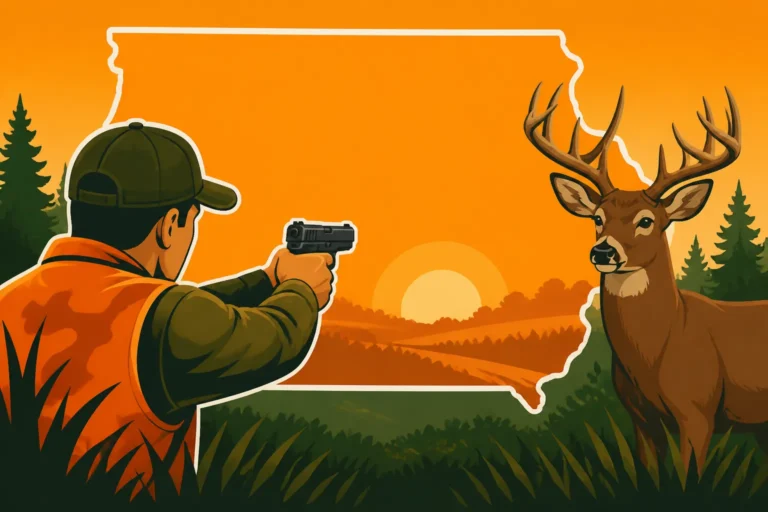
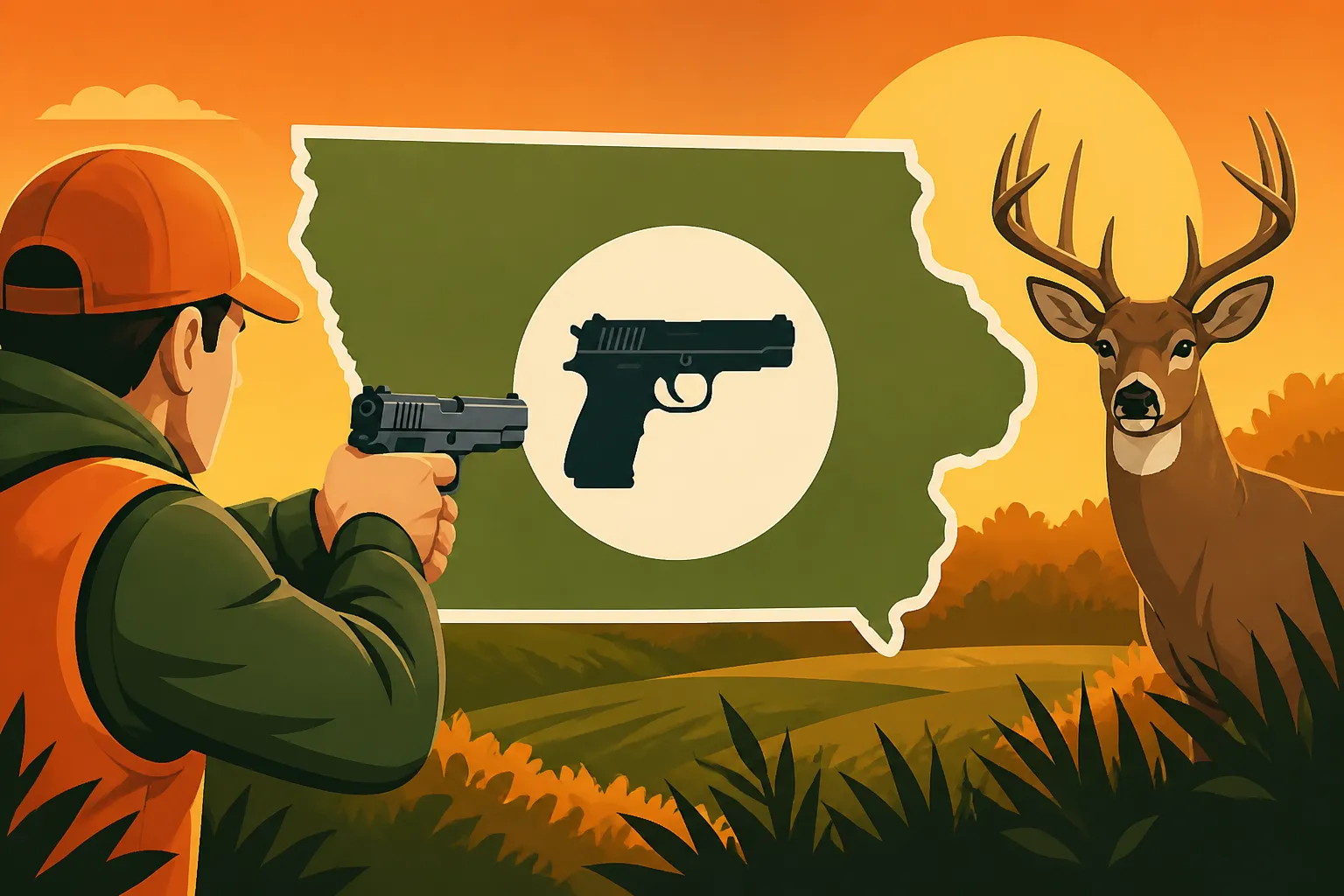
Trying to navigate Iowa's deer hunting regulations can feel like deciphering ancient scrolls, especially when you're considering a less common method like hunting with a handgun. Many hunters assume that deer hunting means a rifle or a shotgun, and the specific rules for handguns can leave you scratching your head, wondering if your trusty sidearm is even legal. This guide is here to untangle that confusion, providing clear, in-depth information on what handguns are permitted for deer hunting in the Hawkeye State, so you can head into the timber with confidence.
Understanding Iowa's Handgun Regulations for Deer
Iowa is known for its incredible deer hunting opportunities, but with that comes a very specific set of rules for how you can pursue these animals. Handguns, while offering a unique challenge and portability, fall under a distinct set of regulations that every hunter needs to understand thoroughly before heading afield. It’s not enough to simply own a handgun; it must meet the state’s criteria for deer hunting.
The Legal Framework for Handgun Hunting
When it comes to deer hunting, Iowa's legal framework for handguns primarily aligns with its regulations for shotgun and muzzleloader seasons. This means that handguns are generally permitted during the traditional shotgun seasons (first and second), the early and late muzzleloader seasons, and the special Iowa January Antlerless Hunts. They are not typically legal during the archery-only seasons for taking deer. This is a crucial distinction, as many states have vastly different rules. You'll find these specifics detailed clearly in the annual Iowa hunting regulations, which are your ultimate source of truth.
The rationale behind grouping handguns with shotguns and muzzleloaders often boils down to range and projectile characteristics. Unlike high-powered centerfire rifles, which are restricted to specific straight-wall cartridges in Iowa, handguns, shotguns, and muzzleloaders generally have a more limited effective range, making them suitable for Iowa's diverse landscape of dense timber and rolling farm country without the long-distance implications of many rifle calibers. It’s about ensuring fair chase and responsible harvesting, which means being proficient with your chosen weapon and understanding its limitations. Make sure to check the Iowa Deer Season Dates by Weapon each year to confirm which seasons allow handguns.
Minimum Caliber and Bullet Requirements
This is where the rubber meets the road for handgun hunters in Iowa. The state is very clear about the minimum requirements for a handgun to be considered legal for deer. Generally, you’re looking at a minimum caliber of .357 inch. This means calibers like .38 Special, while a .357 diameter bullet, typically do not meet the energy requirements, but a .357 Magnum almost certainly will. Other popular and suitable calibers include .41 Magnum, .44 Magnum, .45 Colt, .454 Casull, and even the potent 10mm Auto, provided they meet all other criteria.
Beyond just the caliber, the projectile itself must be an expanding bullet. This isn't just a suggestion; it's a legal requirement aimed at promoting ethical and quick harvests. An expanding bullet, often a soft-point or hollow-point design, is engineered to mushroom upon impact, transferring maximum energy to the animal and creating a wider wound channel, which is critical for a clean kill. Full Metal Jacket (FMJ) or "hardball" ammunition is expressly forbidden for deer hunting because it tends to punch straight through, often without sufficient energy transfer or tissue damage for an ethical harvest. When choosing your hunting ammunition, always look for cartridges specifically labeled for hunting big game, as these will almost universally feature expanding bullets designed for the task.
Barrel Length and Other Physical Specifications
Iowa's regulations also specify a minimum barrel length for handguns used in deer hunting. This is usually at least four inches. This requirement isn't arbitrary; a longer barrel generally contributes to increased muzzle velocity and, therefore, greater kinetic energy, which is vital for ethical big game hunting. A longer barrel also aids in accuracy, providing a longer sight radius for open sights, which can make a significant difference in the field.
Beyond barrel length, while Iowa regulations don't typically delve into minute details like grip type or specific sighting systems, common sense and ethical hunting practices dictate certain considerations. Most hunting handguns will be robust, reliable platforms, often revolvers or specialized single-shot pistols. Sights should be clear and durable, capable of holding zero through rough conditions. Many hunters opt for fiber optic sights, red dot sights, or even handgun scopes to improve aiming precision. These additions are perfectly legal and can dramatically enhance your effectiveness, turning a standard handgun into a formidable hunting tool within its effective range. Understanding these physical requirements ensures that the handgun you choose is not only legal but also capable of delivering the necessary performance for a humane harvest.
Popular Handgun Choices and Their Suitability
When you decide to pursue deer with a handgun in Iowa, you'll quickly realize that not all handguns are created equal for the task. The robust nature of whitetails, coupled with the state's specific legal requirements, pushes hunters toward certain platforms and calibers that consistently deliver the power and precision needed for an ethical harvest.
Revolvers for Deer Hunting
Revolvers are, by far, the most traditional and often preferred choice for handgun deer hunting. Their inherent simplicity, robust construction, and ability to handle powerful cartridges make them excellent candidates.
- Common Calibers: The .357 Magnum is a popular entry point, offering good power and manageable recoil for many shooters. Moving up, the .41 Magnum, .44 Magnum, and .45 Colt (especially in "Ruger Only" or "Tier 2/3" loadings) are all excellent choices, providing substantially more energy and knockdown power. The .44 Magnum, in particular, has a legendary status as a hunting caliber, widely available and incredibly effective on deer. For those seeking maximum power, the .454 Casull and .460 S&W Magnum are also fantastic options, though their recoil can be stout.
- Pros: Revolvers are incredibly reliable, often functioning even after being dropped in mud or subjected to harsh weather, which is a real possibility in Iowa's diverse hunting conditions. Their mechanical simplicity means fewer parts to potentially fail. They are also generally capable of handling very heavy, deep-penetrating bullets, which are ideal for deer. Many hunting revolvers come equipped with longer barrels (6-8 inches being common) right out of the box, easily meeting Iowa's minimum.
- Cons: The primary disadvantages are their limited capacity (typically 5 or 6 rounds) and slower reload times compared to semi-automatics. While shot capacity isn't usually a major concern for deer hunting, a quick follow-up can sometimes be necessary. The larger calibers can also produce significant recoil, requiring dedicated practice to master accurately.
Semi-Automatic Handguns for Deer
While less common, some semi-automatic handguns can be legal and effective for deer hunting in Iowa, provided they meet all the caliber, barrel length, and expanding bullet criteria. The key here is caliber and sufficient energy.
- Suitable Calibers: The 10mm Auto is the most prominent semi-automatic cartridge that typically meets Iowa's deer hunting requirements. With proper hunting loads, it delivers impressive energy and penetration. Other large-bore semi-automatic pistols, if chambered in a legal, powerful enough cartridge and meeting barrel length, could theoretically qualify, but they are rare. Common self-defense calibers like 9mm, .40 S&W, and .45 ACP generally do not meet the minimum energy or sometimes even the minimum caliber (.45 ACP does, but typically struggles with energy for hunting).
- Pros: Semi-autos offer higher capacity and faster reloads, which can be reassuring, though again, not strictly necessary for a single deer. Their recoil can sometimes feel less sharp than a comparable revolver due to the slide's cycling action absorbing some of the energy.
- Cons: Finding semi-automatic pistols chambered in truly adequate hunting calibers like 10mm that also have sufficient barrel length (4 inches minimum) can be more challenging than finding a suitable revolver. Reliability can sometimes be more sensitive to dirt and extreme cold compared to a revolver, though modern hunting-grade semi-autos are very robust. Ensure your chosen model reliably feeds expanding hunting ammunition, as some semi-autos can be finicky with bullet profiles different from standard FMJ.
Specialty Hunting Handguns
Beyond standard revolvers and semi-autos, there's a category of handguns specifically designed for hunting that often excel in Iowa's deer seasons. These are typically single-shot pistols.
- Thompson/Center Contender and Encore: These modular single-shot platforms are iconic in the hunting world. They allow hunters to swap barrels, transforming the pistol into various calibers, including many powerful rifle cartridges that are legal when chambered in a handgun. For Iowa, this means you can get a Contender or Encore chambered in powerful straight-wall cartridges like .444 Marlin, .45-70 Government, or even .30-30 Winchester (when specifically designed for handgun use and meeting barrel length and other rules), which can offer fantastic ballistic performance.
- Pros: Exceptional accuracy is often a hallmark of these pistols, thanks to their robust, precise lock-up and quality barrels. They can handle rifle-level energy, making them incredibly effective at longer handgun ranges. The single-shot nature enforces shot discipline, which is a valuable trait for ethical hunting. Many come drilled and tapped for easy scope mounting.
- Cons: They are single-shot, meaning no quick follow-up. They can be more expensive than some mass-produced revolvers, especially when you factor in extra barrels. Recoil can be substantial with the most powerful cartridges, often requiring specialized grips or muzzle brakes. However, for a dedicated handgun hunter looking for ultimate performance and versatility, these are hard to beat. Sites like GoHunt often feature articles or forums discussing optimal setups for these specialty handguns in various states.
| Caliber | Typical Bullet Diameter | Minimum Barrel Length (Iowa) | Expanding Bullet Required | General Suitability for Deer (Iowa) |
|---|---|---|---|---|
| .357 Magnum | .357 inch | 4+ inches | Yes | Good (with proper hunting loads) |
| 10mm Auto | .400 inch | 4+ inches | Yes | Good (with proper hunting loads) |
| .41 Magnum | .410 inch | 4+ inches | Yes | Excellent |
| .44 Magnum | .429 inch | 4+ inches | Yes | Excellent |
| .45 Colt (Strong) | .452 inch | 4+ inches | Yes | Excellent (in strong firearms) |
| .454 Casull | .454 inch | 4+ inches | Yes | Outstanding |
| .460 S&W Magnum | .452 inch | 4+ inches | Yes | Outstanding |
| .500 S&W Magnum | .500 inch | 4+ inches | Yes | Outstanding |
| .30-30 Win (Handgun) | .308 inch | 4+ inches | Yes | Excellent (in specialty handguns) |
| .444 Marlin (Handgun) | .429 inch | 4+ inches | Yes | Outstanding (in specialty handguns) |
| .45-70 Gov (Handgun) | .458 inch | 4+ inches | Yes | Outstanding (in specialty handguns) |
Note: Always verify current Iowa regulations for specific energy minimums, if any are stated, as well as exact barrel length and caliber requirements. "Strong" .45 Colt refers to loads exceeding SAAMI pressure for older firearms, only to be used in modern, robust revolvers like Rugers or Freedom Arms.
Practical Considerations for Handgun Deer Hunting in Iowa
Choosing the right legal handgun for Iowa deer is just the first step. To be truly successful and ethical, you need to understand the practical aspects of hunting with such a firearm, from shot placement to effective range and how best to equip your handgun for the field.
Shot Placement and Effective Range
Handgun hunting is, by its very nature, a close-range pursuit. Unlike rifles that can be effective at hundreds of yards, even the most powerful hunting handguns require you to get much closer to your quarry. For most proficient handgun hunters, an ethical range for deer is typically within 50 to 75 yards. Some highly experienced shooters with specialized firearms and optics might extend that slightly, but pushing it beyond 100 yards drastically increases the risk of a wounded animal.
This emphasis on close range makes precise Shot Placement on a Whitetail at Twenty Yards absolutely paramount. You need to be able to consistently hit a vital zone (the lungs and heart) the size of a dinner plate. Practice is not just recommended; it's essential. You should spend considerable time at the range, shooting from various positions you might encounter in the field—offhand, rested, kneeling—and becoming intimately familiar with your handgun's ballistics. Knowing your personal effective range, not just the gun's capability, is an ethical imperative. If you can't consistently put your shots into a 6-inch circle at 50 yards, then 50 yards is too far for you. This commitment to practice ensures that when the moment of truth arrives, you can deliver a clean, humane shot.
Optics and Sighting Systems
While many traditional handgun hunters prefer open sights, modern advancements in optics can significantly enhance accuracy and extend your effective range, within reason, for deer hunting.
- Open Sights: Many hunting revolvers come with excellent adjustable open sights (typically a ramped front sight and an adjustable rear sight). These are robust, simple, and don't require batteries. For shots under 30-40 yards, they are perfectly adequate if you have good eyesight and practice. However, in low light or against a busy background, they can be harder to use precisely.
- Red Dot Sights: A fantastic option for handgun hunting, red dot sights provide a single, illuminated aiming point that is fast to acquire and much easier to use in varying light conditions compared to open sights. They eliminate the need to align three planes (rear sight, front sight, target), simplifying the aiming process. This can significantly improve accuracy and confidence out to 50-75 yards. Red Dot Sights on a Slug Gun discusses many of the same benefits that apply to handguns.
- Handgun Scopes: For maximum precision and to push the ethical range slightly further, a low-power handgun scope (typically 1x to 4x or 2x to 7x) can be invaluable. These scopes have longer eye relief to accommodate the pistol's hold and are often mounted to specialized bases. They excel in target acquisition and precise aiming, especially in lower light. However, they can be bulkier, heavier, and slower to acquire a target up close in dense cover. A good handgun scope needs a very solid mounting system to withstand recoil.
Regardless of your choice, ensure your sighting system is rugged and reliable. Testing it extensively before the season is non-negotiable.
Ammunition Selection and Ballistics
We've touched on expanding bullets, but let's dive a little deeper into choosing the right ammunition. Iowa's requirement for an expanding projectile means you need to select bullets specifically designed for hunting.
- Bullet Weight and Design: For deer, heavier-for-caliber bullets are generally preferred. A heavier bullet retains more energy downrange and provides better penetration, which is crucial for reaching vitals, especially if you encounter a quartering shot angle. Look for designs like jacketed hollow points (JHP) or soft points (JSP) that are engineered for controlled expansion without fragmenting excessively or failing to penetrate. Some manufacturers, like Hornady, Federal, and Barnes, produce lines of ammunition specifically for handgun hunting.
- Ballistics and Energy: While Iowa doesn't usually specify a minimum foot-pounds of energy for handguns (they do for straight-wall rifles), it's a good practice to ensure your chosen load delivers at least 500-700 ft-lbs of energy at the muzzle for deer. Many modern .357 Magnum hunting loads, and certainly anything larger, will easily exceed this. Understanding the ballistics of your chosen load—how much it drops and how much energy it retains at various distances—is critical. This information is usually available on the ammunition manufacturer's website or packaging.
- Consistency: Once you find a load that performs well and meets all legal requirements, stick with it. Different bullet weights and designs can dramatically change the point of impact, even from the same handgun. Buying a sufficient supply of your chosen hunting ammunition and practicing with it is key. Online resources, including those found through GoHunt, can often provide comparative ballistic data for various loads, helping you make an informed choice.
Remember, the goal is always a quick, humane kill. The right combination of handgun, sighting system, and ammunition, coupled with disciplined practice, will make you an effective and ethical handgun hunter in Iowa.
Integrating Handguns into Your Iowa Hunting Strategy
Bringing a handgun into your deer hunting arsenal in Iowa opens up new possibilities and challenges. Understanding where and when they fit into the broader hunting landscape is key to a successful season.
Handguns in Specific Iowa Seasons
As mentioned, handguns are primarily legal during Iowa's firearm seasons that aren't exclusively for archery. This includes the most popular seasons for many hunters.
- Shotgun Seasons (First and Second): This is where handguns really shine as an alternative. During the Iowa First and Second Shotgun Seasons, many hunters are limited to shotguns, straight-wall cartridge rifles, or muzzleloaders. A powerful handgun fits right into this framework, offering a compact, maneuverable option for hunters who prefer a pistol or who hunt in dense cover where a long gun might be cumbersome. For party hunting, where a shotgun drive is common, a handgun can be a fantastic option for the stander.
- Early and Late Muzzleloader Seasons: Handguns are also typically allowed during both Iowa Early Muzzleloader Season and Iowa Late Muzzleloader Season. This provides an extended opportunity for handgun enthusiasts outside of the shotgun seasons. These seasons often occur when deer patterns are shifting, or when colder weather makes mobility crucial, further highlighting the handgun's portability.
- January Antlerless Season: This special season, often used to help manage deer populations, is another time handguns can be legally employed. Iowa January Antlerless Hunts are typically focused on reducing doe numbers and can offer a fantastic opportunity to fill the freezer, often in very cold conditions where a reliable handgun can be a simple, effective tool.
Understanding these specific windows allows you to strategically plan your hunts. If you enjoy the challenge and intimacy of close-range hunting, carrying a handgun can be an excellent choice for these specific seasons.
Carrying and Safety Considerations
Carrying a handgun in the field, especially while hunting, requires careful consideration of safety and practical application.
- Holsters: Choosing the right holster is paramount. For hunting, secure retention and comfort are key.
- Chest Holsters: Often favored by hunters, these keep the handgun accessible and out of the way of your hips and legs, especially when hiking or wearing a backpack. They protect the firearm from brush and keep it relatively dry.
- Hip Holsters: A traditional choice, but can interfere with backpack hip belts or sitting positions. Ensure it's a high-quality, secure holster designed for field use, not just casual carry.
- Shoulder Holsters: Can be comfortable but might conflict with backpack straps or tree stand harnesses.
No matter the style, the holster must securely hold your handgun, protect it from the elements, and allow for a smooth, safe draw when needed.
- Safe Handling: All firearm safety rules apply, amplified by the field environment. Always treat every gun as loaded. Never point the muzzle at anything you're not willing to destroy. Keep your finger off the trigger until ready to shoot. Be absolutely sure of your target and what is beyond it. When climbing into a stand, unload your handgun or use a secure method to haul it up separately after you're safely secured. Practicing Shots From a Treestand applies to handguns just as much as bows or rifles.
- Transportation: When traveling to and from your hunting spot, ensure your handgun is transported legally. In Iowa, this generally means unloaded and in a secure case. Always check the specific laws for transporting firearms in vehicles, especially if you're traveling through other states to get to Iowa. Information on transport and other safety tips can often be found on state DNR websites, or aggregated on sites like GoHunt.
Advantages and Disadvantages of Handgun Hunting
Deciding whether to hunt with a handgun involves weighing the unique pros and cons.
- Advantages:
- Portability: Handguns are much lighter and more compact than rifles or shotguns, making them easier to carry on long treks, through thick brush, or up into a tree stand.
- Challenge and Intimacy: For many, handgun hunting offers a greater challenge, requiring superior woodsmanship and stalking skills to get within ethical range. This adds a deeply rewarding layer to the hunting experience.
- Specific Season Eligibility: As discussed, handguns unlock certain deer seasons as a viable, legal option when centerfire rifles are not.
- Maneuverability: In tight cover or from a ground blind, a handgun is much easier to maneuver for a shot than a long gun.
- Disadvantages:
- Limited Range: This is the biggest drawback. You must be significantly closer to your target, requiring more skill in scouting and stalking.
- More Challenging to Master: Achieving consistent accuracy with a powerful handgun, especially under field conditions and pressure, demands considerable practice and discipline. Recoil can be substantial with hunting calibers, making follow-up shots harder and practice more fatiguing.
- Potential for Heavier Recoil: While not a disadvantage for all, some powerful hunting handguns can have significant recoil, which can be a deterrent for new shooters or those sensitive to it.
- Optics Can Be Bulkier: Adding a scope or red dot can make a compact handgun feel less so, and may require specific holster setups.
Ultimately, handgun hunting in Iowa is a fulfilling endeavor for those who embrace the challenge and dedicate themselves to ethical practice. It's not for everyone, but for many, it offers a uniquely rewarding way to pursue the state's abundant whitetail deer.
Disclaimer
This article is for general informational purposes only and does not constitute professional advice. Laws, prices and regulations vary by location and change over time. Consult a qualified professional for guidance on your specific situation.