Gun Cases for an Iowa Deer Trip
Getting your firearm safely and legally to and from your hunting grounds in Iowa can feel like navigating a minefield of rules and anxieties. It's not just about tossing your gun in the back seat; it's about protecting your valuable equipment, ensuring public safety, and, frankly, staying on the right side of the law. This guide is here to walk you through everything you need to know about choosing and using gun cases for your next Iowa deer trip, ensuring peace of mind from your doorstep to the deer stand.
Why a Reliable Gun Case is Non-Negotiable for Your Iowa Hunt
Let's be real, you've invested good money and countless hours into your hunting setup. That shotgun you meticulously sighted in for Sighting In Before Shotgun Season, or that straight-wall rifle you’ve come to trust, deserves more than just a flimsy covering. A proper gun case isn't just a suggestion; it's a critical piece of gear that safeguards your investment, maintains safety, and helps you comply with transport regulations, whether you're driving across the state or flying in from afar.
Protecting Your Investment
Imagine arriving at your prime hunting spot, only to pull your firearm out of its case and find a dinged scope, a scratched stock, or, worse, a bent barrel. It’s a gut punch no hunter wants to experience. Iowa timber can be tough, and even the best-laid plans for smooth travel can go sideways with unexpected bumps and jostles. A quality gun case acts as a buffer, absorbing impacts and keeping dirt, dust, and moisture away from delicate optics and moving parts.
Think about the conditions your gear faces: bouncing around in the back of a truck on gravel roads, being loaded and unloaded from a four-wheeler, or sitting in a blind exposed to the elements. Without adequate protection, these seemingly minor stressors can accumulate, leading to accuracy issues or even functional failures when you need your firearm the most. It’s a small price to pay for ensuring your rifle or shotgun is ready to perform when that Iowa whitetail finally steps out.
Meeting Legal Requirements for Transport
Iowa, like every state, has specific rules about how firearms must be transported, especially when loaded and unloaded. You can't just throw an uncased shotgun onto your passenger seat and head down the road. Most state laws, including Iowa's, require firearms to be unloaded and cased when transported in a vehicle, especially if they are readily accessible. This isn't about making your life harder; it's about public safety and preventing theft or misuse.
Understanding these nuances is essential to avoid potential legal hassles. A good gun case clearly signals that the firearm inside is being transported responsibly. When traveling to hunt in the Iowa January Antlerless Hunts or during the main shotgun seasons, having your firearm properly cased is not only a wise practice but often a legal obligation. Always refer to the latest Iowa Regulation Booklet Release Date to stay current on specific transport statutes.
Preventing Accidental Discharge and Theft
Safety is paramount in hunting, and that extends to how you handle your firearms when not actively hunting. An accidental discharge, even when no one is harmed, can be a terrifying and life-altering event. A sturdy gun case, especially one with good locking mechanisms, physically prevents access to the trigger and provides an extra layer of security against mishaps during transport or storage.
Furthermore, a well-secured case makes your firearm less appealing and harder to steal. Unfortunately, thefts from vehicles do happen, and an uncased or poorly secured firearm is an easy target. By investing in a robust, lockable case, you’re not only protecting your equipment but also doing your part to keep firearms out of the wrong hands. When you're out exploring public areas found through the Iowa Hunting Atlas, leaving your cased firearm locked in your vehicle is a far safer practice than leaving it unsecured.
Types of Gun Cases for Every Iowa Hunter's Journey
The world of gun cases is broad, designed to meet various needs and budgets. From simple soft sleeves to rugged, airline-approved vaults, choosing the right one depends heavily on your primary mode of transport, the conditions you expect to encounter, and how much protection you truly need.
Soft Cases: Lightweight and Convenient
Soft gun cases are the everyday workhorses for many hunters. Typically made from padded nylon or canvas, they offer a basic level of protection against scratches, bumps, and dust. They are lightweight, easy to carry, and often come with extra pockets for accessories like chokes, ammunition, or even your hunting license.
For local trips, such as driving your shotgun to a nearby Sighting In Before Shotgun Season range or taking your bow to the archery shop, a soft case is perfectly adequate. They fit easily into most vehicles and are quick to open and close. However, their protection is limited. They won't withstand significant impacts, nor do they offer much security against theft or unauthorized access. If your Iowa deer trip involves rough terrain, long drives, or any air travel, a soft case alone simply won't cut it for your primary firearm.
Hard Cases: Maximum Protection for Any Travel
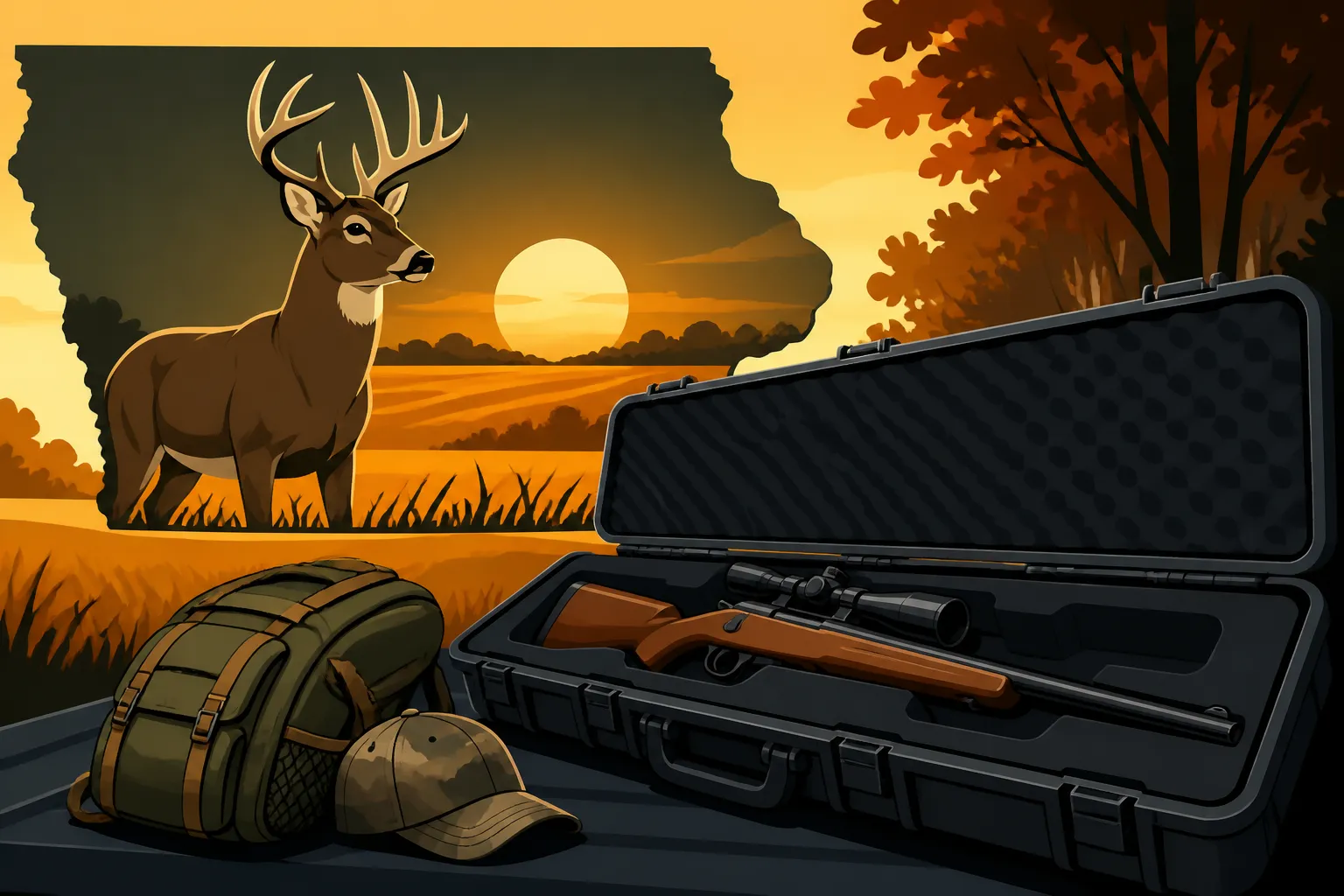
When it comes to serious protection, hard cases are the undisputed champions. Constructed from durable plastics (like reinforced polymer) or aluminum, these cases are designed to withstand extreme impacts, drops, and even being crushed. Many feature weather-sealing gaskets, making them waterproof and dustproof—a huge plus when you're dealing with Iowa's unpredictable weather.
Hard cases come in two main categories:
- Standard Hard Cases: These offer excellent protection for vehicle transport, ATV rides through timber, or even shipping via ground courier. They typically have robust latches and often built-in or padlock-ready locking points. They protect against physical damage and provide a solid deterrent against opportunistic theft.
- TSA-Approved Hard Cases: If you're flying into Iowa for your hunt, a TSA-approved hard case is not just recommended, it's mandatory. These cases feature specific locking mechanisms (usually external padlocks on reinforced points, rather than built-in combination locks) that meet airline security regulations. The key distinction is that only you should have access to the keys or combination for these locks, not TSA agents. For hunters traveling from out-of-state, these cases are absolutely essential for transporting your Iowa's Legal Deer Hunting Equipment by Season safely and legally.
Specialty Cases: Handguns and Muzzleloaders
While rifles and shotguns often get the most attention, don't forget about your handguns or muzzleloaders.
- Handgun Cases: For handgun hunters, especially during specific seasons, small, lockable hard cases are essential. Many come with pick-and-pluck foam that can be customized to securely fit your specific handgun, magazines, and other accessories. These are also often necessary for meeting airline and state transport regulations.
- Muzzleloader Cases: Muzzleloaders, with their unique components like ramrods, percussion caps, and black powder, can also benefit from specialized cases. Some hard cases are designed with extra compartments or lengths to accommodate longer muzzleloaders and their associated gear. Keeping your muzzleloader dry and protected, particularly for the Late Muzzleloader Deer Hunting in Iowa season, is crucial for reliable performance in the field.
Key Features to Look for in a Quality Gun Case
Once you've decided on the general type of case you need, it's time to dive into the specifics. Not all cases are created equal, and a few key features can make a significant difference in durability, security, and ease of use.
Material and Durability
The material of your hard case is critical. High-density polyethylene or polypropylene polymers are common, offering an excellent balance of strength, impact resistance, and weight. Look for cases that don't flex excessively when empty and have a rigid shell. Aluminum cases can be very durable but are often heavier and more prone to denting than quality polymer cases.
For soft cases, look for heavy-duty nylon or Cordura fabrics with reinforced stitching. Water-resistant coatings or treatments are a bonus, especially when you might be setting your case down in damp grass or snow during an early morning setup. Durability isn't just about surviving a single trip; it's about the case holding up season after season, protecting your gear reliably.
Locking Mechanisms and Security
This is where a good case truly shines.
- Latches: Look for robust, double-throw latches that snap securely into place. Metal latches are generally more durable than plastic, though high-quality plastic latches (often found on premium cases) can be incredibly strong. Avoid cases with flimsy, single-point latches that feel like they could pop open with a strong bump.
- Padlock Points: For hard cases, multiple reinforced padlock points are a must. These allow you to secure the case with sturdy padlocks, which is essential for airline travel and an excellent idea for any vehicle transport. Ensure the padlock holes are large enough for quality, hardened steel padlocks. If you're using GoHunt to plan your public land hunt, remember that securing your gear is part of responsible hunting, especially if you're leaving it in your vehicle at a public access point where Hunting Pressure Patterns on Iowa Public Land might mean more eyes.
- Internal Security: Some cases offer internal straps or tie-downs to further secure the firearm within the foam, preventing it from shifting around. This is especially beneficial for optics, as even minor movement can throw off your zero.
Interior Padding and Fit
The interior of your gun case is just as important as the exterior.
- Foam Types: Most hard cases come with either convoluted (egg crate) foam or dense, customizable pick-and-pluck foam. Pick-and-pluck foam allows you to create a perfect, custom fit for your firearm, ensuring it's cradled securely and doesn't shift. Convoluted foam provides general cushioning. For bows, custom cutouts are often the norm.
- Secure Fit: Regardless of the foam type, the goal is a snug fit. Your firearm should not rattle or slide around inside the closed case. Any movement can lead to scuffs, dings, or a scope losing its zero. Some hunters even add extra foam padding around critical areas like scopes or turrets for added peace of mind.
- Environmental Protection: Beyond physical padding, the interior design often contributes to environmental protection. Gaskets around the case's perimeter create a seal against moisture and dust, crucial for keeping rust and grime away from your firearm's internals, particularly after a damp morning in the blind.
Wheels and Portability
For larger, heavier hard cases, especially those designed for multiple firearms or long guns with scopes, wheels can be a game-changer. Dragging a 30-pound case loaded with a rifle, ammunition, and accessories through an airport or across a parking lot quickly loses its appeal. Integrated wheels and extendable handles turn a burdensome load into a manageable one.
Consider how far you'll need to carry your cased firearm. If your hunt involves long walks to your stand, a lighter soft case might be preferred for the final leg, but you'll still need a robust hard case for vehicle or air travel. For those planning a mobile approach to their Public Land Deer Hunting in Iowa, minimizing carried weight is always a factor, so a wheeled case for the journey to the site makes a lot of sense.
Iowa-Specific Regulations and Best Practices
Understanding general gun case features is one thing, but knowing how these apply to Iowa's specific hunting laws and conditions is another. Being prepared means knowing the rules.
Transporting Firearms in a Vehicle
In Iowa, firearms must be unloaded and encased when transported in a vehicle, especially if they are readily accessible. What "encased" means can vary slightly, but a purpose-built gun case (soft or hard) that completely encloses the firearm is generally accepted. The main goal is to ensure the firearm isn't immediately usable and is clearly distinguishable from personal belongings.
- Unloaded and Cased: Always double-check that your firearm is unloaded before placing it in its case and entering your vehicle. This includes removing any ammunition from the chamber and magazine.
- Placement: While not explicitly always required to be in the trunk, placing your cased firearm in a less accessible area, like the trunk of a car or a locked toolbox in the bed of a truck, is a smart move for both security and perceived compliance.
- Ammunition: Ammunition can typically be transported with the firearm, but it's often a good practice to keep it separate from the firearm itself, perhaps in a separate compartment of the case or a different bag, especially if you're dealing with strict interpretations of "loaded" or "readily accessible."
Public Land Considerations
When hunting on public lands, such as state forests, wildlife management areas, or Iowa's Habitat and Access Program Explained (IHAP) tracts, your transport and handling practices remain critical. Many public areas have specific rules about vehicle access and firearm display.
- Walk-In Only Access: Many IHAP properties and portions of WMAs are "walk-in only." This means you'll need to transport your cased firearm from your vehicle to your hunting location on foot. A more compact, lighter soft case might be preferred for this leg of the journey, assuming your hard case protected it during vehicle travel. Always check the specific rules for the area you are hunting using tools like the GoHunt app or the official Iowa DNR resources.
- Storage at Camp: If you're camping on public land, understanding Iowa Public Land Camping Rules is crucial, and that includes securing your firearms overnight. A locked hard case is the best option to protect your firearm from the elements and prevent theft while you're away from camp or sleeping.
Airline Travel Considerations for Nonresidents
For many nonresident hunters, the journey to Iowa involves air travel. This comes with its own stringent set of rules that you absolutely must follow.
- Declaration: You must declare your firearm to the airline at the check-in counter. Do not attempt to conceal it.
- Hard-Sided, Lockable Case: Your firearm must be transported in a hard-sided case that is capable of being locked. Crucially, only you should have the keys or combination to this lock. TSA agents will inspect the case, but they should not be able to open it without your presence or permission.
- Unloaded and Ammunition Separated: The firearm must be unloaded, and all ammunition must be packed in a separate, secure container (like a factory box or an ammo box) and also stored within the checked baggage. Ammunition cannot be loose in the case or in magazines within the case unless it is in a specifically designed ammunition holder.
- Checked Baggage Only: Firearms are never allowed in carry-on luggage. They must always be in checked baggage.
- Check Airline Policies: Each airline might have slightly different nuances to their firearm policy, so always check with your specific carrier well in advance of your trip. Don't rely on general knowledge; verify it with the airline you are flying.
Comparative Look at Case Types
To help you decide, here's a quick overview of the most common gun case types and their best uses for an Iowa deer trip:
| Case Type | Best Use Case | Protection Level | Portability | Security | Cost Range |
|---|---|---|---|---|---|
| Soft Case | Local car transport, range trips, quick access | Basic | Very High | Low | Low |
| Standard Hard Case | Vehicle transport, ATV/UTV, general storage | High | Medium | Medium | Medium |
| TSA-Approved Hard Case | Airline travel, maximum security, long-distance transport | Very High | Low to Medium | High | Medium to High |
| Specialty Case (e.g., Bow) | Dedicated protection for specific gear, air travel | High | Medium | High | Medium to High |
Choosing the right gun case isn't just about complying with regulations; it's about making your Iowa hunting trip smoother, safer, and more enjoyable. By understanding the options and what makes a quality case, you can protect your valuable gear and focus on the hunt itself.
Disclaimer
This article is for general informational purposes only and does not constitute professional advice. Laws, prices and regulations vary by location and change over time. Consult a qualified professional for guidance on your specific situation.