Field Hunting Geese in Cut Corn
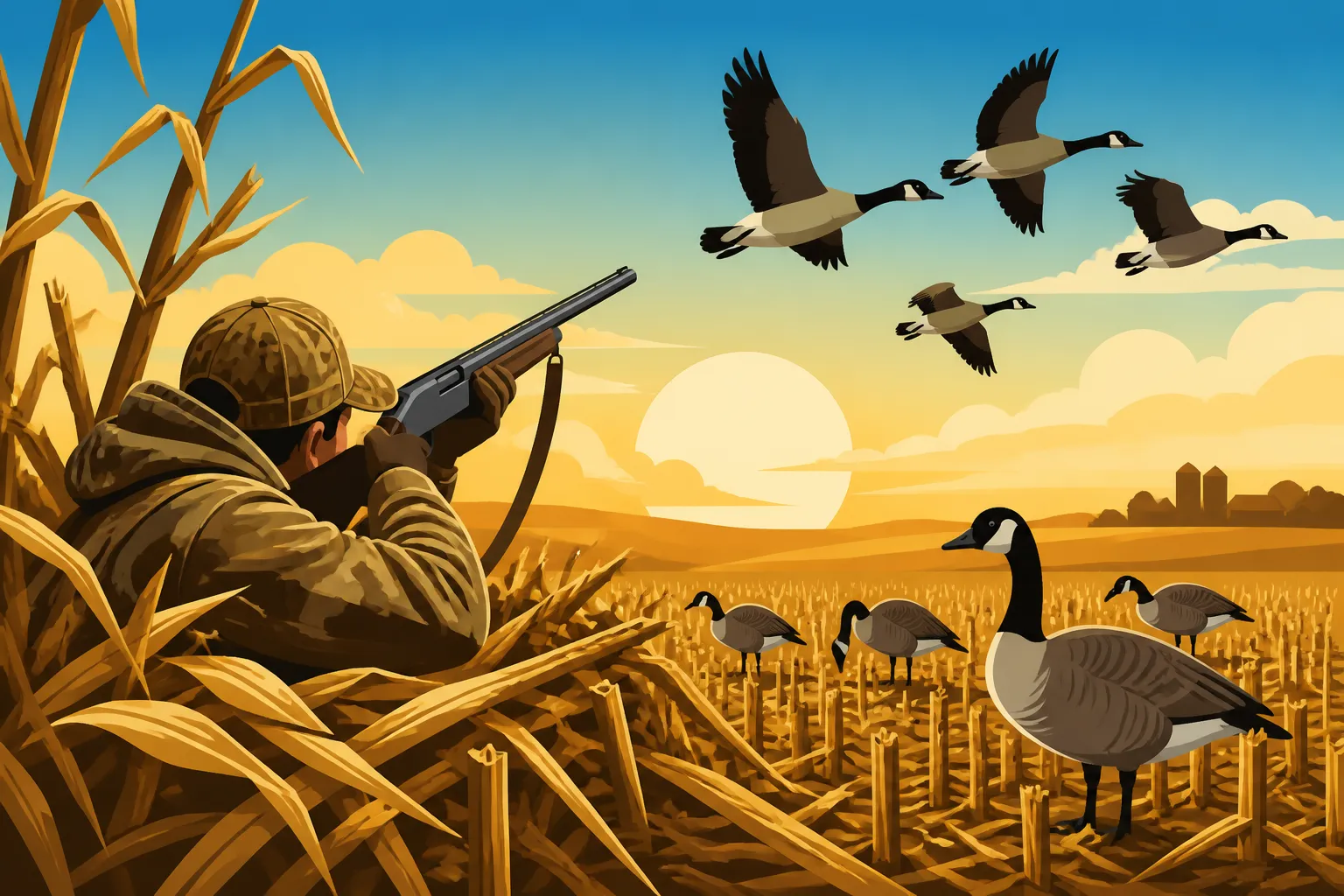
There's nothing quite like the sight of big Canada geese cupping their wings, dropping from the sky, and locking onto your decoy spread. But let's be honest, getting them to commit, especially in wide-open cut corn fields here in Iowa, can feel like trying to herd cats – highly intelligent, suspicious cats with incredible eyesight. Many hunters get frustrated, thinking they need hundreds of expensive decoys or a secret handshake with the geese gods. This guide will walk you through the nitty-gritty of successfully field hunting geese in Iowa's cut corn, from deciphering their movements to setting up a spread that practically begs them to land.
The Science of Scouting Cut Corn for Geese
You can have the best decoys and the most expensive call, but if you're not where the geese want to be, you're just exercising. Scouting is, hands down, the most crucial component of field hunting success, particularly when targeting the notoriously wary Canada goose. Don't underestimate their intelligence; these birds have seen it all.
Reading the Landscape: Why Cut Corn is King
Here in Iowa, cut cornfields are like five-star restaurants for geese. After combines roll through, they leave behind waste grain, which is an easy, high-energy meal for migrating and resident geese alike. But it’s not just about the food. Geese love the wide-open visibility that cut corn offers, giving them a clear view of any potential predators. They feel secure in these fields, especially if they're not heavily pressured.
When you're trying to figure out which field the geese are hitting, you need to think like a goose. Where are their typical flight paths? Do they have a preferred roosting lake, river, or large pond nearby? Often, geese will fly a predictable route from their roost to their feeding grounds, especially in the mornings. Pay attention to the edges of the fields, too. Geese, particularly Canada geese, often prefer to land and feed closer to the perimeter of a field rather than right in the middle, giving them quick access to escape cover if needed. Look for fields adjacent to timber or waterways that might offer additional security or loafing areas. Understanding Iowa Waterfowl on the Mississippi Flyway gives you a broader context for their seasonal movements.
E-Scouting and On-the-Ground Reconnaissance
E-scouting is your first step. Before you even burn a drop of gas, open up your computer or phone and pull up some aerial imagery. Services like the Iowa DNR Hunter Atlas or applications like GoHunt are invaluable here. Look for large cornfields, especially those that have already been harvested (you can often tell by the lighter color or visible stubble in satellite imagery, though recent imagery is key). Identify potential roosting sites – large lakes, slow-moving river sections, or even massive farm ponds. Draw lines between these roosts and the surrounding crop fields; these are your likely flight corridors.
However, e-scouting can only get you so far. The real work begins on the ground. This means driving around at dawn and dusk, well before the season opens if possible, or even during the week if you're planning a weekend hunt. Bring a good pair of binoculars or a spotting scope. Park a safe distance away and just watch. Observe where the geese are landing, where they're feeding, and how they're entering and exiting the field. Are they landing on the north end, near a specific treeline? Are they using a particular ditch or dip in the terrain to approach unseen? These details are critical. Don't be afraid to pull over and glass fields repeatedly over several days. Geese can change their preferred feeding spots, especially if disturbed or if a better food source becomes available. Pinpointing the exact landing zone within a field is paramount; you want to set your decoys right where they want to be, not just in a random spot. For more general scouting tips, consider E-Scouting Iowa Farm Country From Home.
Essential Gear and Setting Up Your Spread
Once you’ve done your homework and found a hot field, it’s time to talk gear. You don't need to break the bank, but some essentials will make a huge difference. The goal is to be as realistic as possible and disappear into the landscape.
Decoy Selection and Placement Strategies
Decoys are your visual appeal to the geese, and getting them right is crucial. While you don't need a thousand decoys, a solid spread of 3-5 dozen, sometimes even 6-8 dozen, can be effective, especially for Canada geese.
There are a few types you'll typically use:
- Full-bodies: These are the most realistic, but also the most expensive and cumbersome. They offer 3D realism that can draw wary birds from a distance. Companies like Avian-X, Dakota Decoy, and Avery make excellent full-body goose decoys.
- Shells: More affordable and easier to transport than full-bodies, shells are basically the top half of a goose. They lay flat on the ground and can fill out a spread without the bulk.
- Silhouettes: The most portable and budget-friendly. Silhouettes give the impression of a large flock, especially from a distance, but lack 3D realism up close. They can be great for adding numbers quickly.
Decoy Placement: This is where the art comes in. Geese are herd animals, and they like to land into the wind, usually separating slightly from the main flock. Your goal is to create a realistic landing zone.
- The "J" or "U" Shape: This is a classic and effective spread. You'll create the main body of your flock, leaving a wide-open gap (the bottom of the "J" or "U") directly in front of your blind and into the prevailing wind. This gap is where you want the geese to land.
- Wind Direction: Always set your spread so the landing zone is directly into the wind. Geese need to land into the wind for control, just like an airplane. This means your decoys should generally be facing into the wind, with their tails pointed downwind. Pay attention to how Reading Wind on a River Backwater might apply to an open field – wind currents are paramount for waterfowl.
- The Family Group: Canada geese often break down into family groups. Consider placing a few pairs or small clusters of 3-5 decoys slightly separated from your main flock. This adds realism.
- Sentry Decoys: Place a few decoys with their heads up (sentry positions) on the outer edges of your spread, especially on the upwind side. This mimics alert birds watching for danger, making the rest of your flock seem more secure.
- Motion Decoys: A few flapper or feeder motion decoys can add crucial movement, especially on calm days. The subtle twitching of a feeding bird or the gentle rotation of a flapper can catch the eye of high-flying geese.
It’s not just about throwing decoys out there. Think about what a natural flock looks like. It’s rarely perfectly uniform.
Blinds and Concealment in Open Fields
Hunting geese in cut corn means you're almost always in an open field, often with minimal natural cover. This is where your blind choice becomes critical. Layout Blinds in Iowa Stubble are the undisputed champions for this type of hunting. They allow you to lay flat on your back, completely concealed, and pop up for the shot.
- Layout Blind Advantages: They keep you hidden, warm, and relatively comfortable. They break up your human outline perfectly. Modern layout blinds from brands like Avery, Final Approach, or Rogers Sporting Goods are designed for concealment and quick deployment.
- Brushing In: Simply laying a layout blind in the middle of a cut cornfield isn't enough. You absolutely must brush it in. This means gathering cornstalks, stubble, and any other natural vegetation from the field and weaving it into the stubble straps and netting of your blind. Make it look like a natural clump of cornstalks. Pay particular attention to the edges and the head end, where geese will be looking directly. The more thorough you are, the better your chances.
- Utilizing Natural Features: If there's a slight rise in the terrain, a small ditch, or even a fence line, try to position your blinds to take advantage of it. This offers an extra layer of concealment and helps break up your outline even further. Sometimes, just setting up on the downwind side of a slight hump can provide just enough visual break to fool wary geese.
- Clothing: Even inside a blind, your clothing matters. Wear camouflage that matches the corn stubble (tans, browns, yellows). Keep your face covered with a mask or face paint, and wear gloves. Any exposed skin or shiny object can flare geese.
Calls and Calling Sequences
Calling is the sound that draws geese in, working in tandem with your visual spread. You don't need to be a world champion caller, but you need to be proficient enough to sound like a flock of geese.
- Types of Calls:
- Short Reeds: These are the most popular calls for Canada geese. They offer a wide range of tones, from deep honks to quick clucks and murmurs. They require more air control but can be incredibly realistic.
- Long Reeds: Generally easier to blow, long reeds produce a more traditional, deeper honk. They can be great for beginners or for punching through long distances.
- Basic Calling Sequences:
- Greeting Call: A series of loud, drawn-out honks (Hooonk-hoooonk-hoooonk) to get the attention of distant birds.
- Comeback Call: As birds turn your way, shorten your honks and add urgency (Honk-honk-honk-Hah!). This tells them they're headed in the right direction.
- Clucks and Murmurs: Once birds are close and committed, switch to softer, contented clucks and murmurs. This is the sound of geese feeding and feeling safe. It seals the deal.
- Lay-down Call: Sometimes, you'll hear a very soft, drawn-out murmur. This tells birds that everything is okay and they can land.
- Reading the Birds: The most important aspect of calling is knowing when and how much to call.
- High-flying birds: Use loud, aggressive greeting calls to get their attention.
- Birds turning your way: Ease off the volume slightly, but maintain urgency with comeback calls.
- Birds committed and cupping wings: Scale way back on calling. A few soft clucks or murmurs are all you need. Sometimes, no calling at all is the best calling.
- Birds flaring: If birds flare, stop calling immediately. They've seen something. Re-evaluate your concealment or wait for the next flock.
Practice is key. Listen to real geese, listen to experienced callers, and practice your sequences. A good call and proper technique are essential for bringing those wary birds within range.
Executing the Hunt: Tactics for Success
All your scouting and meticulous setup culminate in the hunt itself. This is where patience, discipline, and understanding goose behavior pay off.
Timing Your Approach and The Morning Set
Geese are typically early risers, flying from their roost to feeding grounds at first light. This means you need to be in the field, blinds set, and fully concealed well before legal shooting light. This often means getting up in the wee hours of the morning.
- Pre-dawn Arrival: Arrive at your chosen field at least an hour before legal shooting light, sometimes more if you have a large spread or a long walk. This gives you ample time to deploy decoys, brush in blinds, and get everyone situated without rushing. Rushing leads to noise, poor setup, and potentially missing the first flights.
- Quiet and Efficient Setup: Be as quiet as possible. Unloading gear, setting up decoys, and brushing in blinds should be done with minimal talking and clanking. Geese have excellent hearing, and sounds carry far in open fields. Assign roles to your hunting partners to make the setup process efficient. One person can lay out blinds, another can deploy decoys, and a third can gather brush.
- Weather Considerations: Always check the weather forecast. Cold, windy, or overcast days are often ideal for goose hunting, as birds tend to fly lower and closer. Heavy fog can ground birds, while bright, calm days can make them extra wary. Knowing your Iowa Goose Season Dates and typical migration patterns will help you predict these conditions.
Reading Geese and Making the Shot
Once you're hidden, it's a game of patience and observation. Watch how the geese react to your spread and calling.
- Identifying Species: While Canada geese are the primary target in cut corn, you might also see smaller cackling geese, snow geese, or even specklebellies. Knowing the difference helps in identifying patterns and understanding bag limits. Snow geese, for example, often respond to entirely different calling and decoy spreads.
- Calling the Shot: This is crucial for safety and effectiveness. The most experienced hunter or the designated caller should be the one to call the shot. Wait until the geese are within effective range (typically 30-45 yards for shotguns), with their wings set and feet down, ideally flying directly into your landing zone. A common command is "Take 'em!" or "Kill 'em!" followed by a specific direction if necessary (e.g., "Left bird!"). Everyone should then rise, acquire their target, and shoot. Discipline is vital here; don't jump up too early, which will flare the birds out of range.
- Shotgun and Choke Selection: A 12-gauge shotgun is the standard for goose hunting, though 10-gauge can also be effective. You'll typically want a modified or improved modified choke to get a good pattern at goose ranges. Steel shot is mandatory for all waterfowl hunting in Iowa. For Canada geese, #2, #1, or BB steel shot are popular choices. Ensure your shotgun is patterned with your chosen load and choke before the season to know its effective range.
After the Shot: Retrieval and Management
Once the shot is made, the hunt isn't over. Proper retrieval and adherence to regulations are important.
- Safe Retrieval: Mark where each bird falls. If possible, send out a retriever (a dog, if you have one, is invaluable) or a designated person to quickly retrieve downed birds. Leaving birds out can lead to cripples escaping or predators getting to them.
- Tagging and Reporting: In Iowa, you must immediately retrieve all downed birds. Ensure you comply with all tagging requirements. While Iowa Deer Harvest Reporting Rules are specific to deer, waterfowl hunters must also possess a valid Iowa hunting license, federal and Iowa migratory bird stamps, and a HIP (Harvest Information Program) registration. This is covered under Iowa Duck Stamp and HIP Requirements. Always be prepared to identify your birds, as bag limits vary by species.
- Respecting Property Lines: Be aware of property boundaries. Never retrieve a downed bird from private land without explicit permission from the landowner. It's not worth a trespass charge or losing hunting privileges.
- Respecting Other Hunters: If another group is hunting nearby, be courteous. Don't crowd their spread or shoot at birds working their decoys. Public land can see a lot of activity, and understanding Hunting Pressure Patterns on Iowa Public Land can help you navigate these situations.
Decoy Type Comparison Table
To help you decide which decoys might be best for your spread, here's a quick comparison:
| Decoy Type | Pros | Cons | Best Use Case |
|---|---|---|---|
| Full-body | Most realistic, highly visible, durable | Expensive, heavy, bulky to transport/store | Main body of spread, drawing wary birds from distance |
| Shell | More affordable, lighter than full-bodies | Less realistic than full-bodies | Filling out numbers in a spread, adding density |
| Silhouette | Very portable, inexpensive, easy to set up | Least realistic up close, 2D | Adding large numbers, boosting visibility from afar |
| Motion | Adds critical movement, highly attractive | Can be expensive, mechanical/battery issues | Strategic placement within the spread to add realism |
It's often best to use a combination of these decoy types to create a varied and realistic spread.
Field hunting geese in Iowa's cut corn is a challenging but incredibly rewarding experience. By focusing on diligent scouting, smart decoy placement, effective calling, and unwavering concealment, you'll significantly increase your odds of bringing home some impressive birds. Remember, every hunt is a learning experience, so pay attention to what works and what doesn't, and adjust your tactics accordingly. Good luck out there!
Disclaimer
Hunting laws and regulations can change frequently. Always consult the most current Iowa Department of Natural Resources (DNR) regulations before heading into the field. This article is for informational purposes only and does not supersede official state regulations. Be safe, ethical, and responsible in your hunting endeavors.