Reading an Iowa Timber Draw for Deer Sign
It’s incredibly frustrating to walk through a beautiful piece of Iowa timber, feeling like deer should be there, only to find sparse or confusing sign. You know these woods hold big whitetails, but understanding where and why they move through specific areas, especially those subtle timber draws, can feel like trying to read a foreign language. This guide will help you confidently decipher the subtle clues deer leave behind in these often-overlooked funnels, turning those confusing walks into focused scouting missions.
Understanding the Anatomy of an Iowa Timber Draw
When we talk about hunting Iowa whitetails, especially on those rolling properties with a mix of timber and ag fields, one of the most consistently productive features is often a humble timber draw. These aren't always grand, sprawling valleys, but rather subtle depressions in the topography that funnel deer movement like a natural pipeline. Learning to identify and thoroughly scout these draws can be a game-changer for your success.
What Defines a "Draw" in Hunting Terms
Think of a timber draw as a gentle, elongated depression or ravine that typically runs downhill, often from a higher bedding area or timber ridge towards a lower food source or water. They're like natural gutters, but instead of water, they often funnel deer. Unlike a steep-sided creek bottom with flowing water, a true "draw" might just be a slight dip in elevation, often dry for most of the year, covered in timber and underbrush. They can be narrow, barely wider than a deer trail, or broad, spanning dozens of yards. What unifies them is their function: they provide covered travel routes, especially important in heavily farmed Iowa landscapes where open movement is risky for deer. These draws offer concealment and a sense of security, allowing deer to transition between different areas without being exposed.
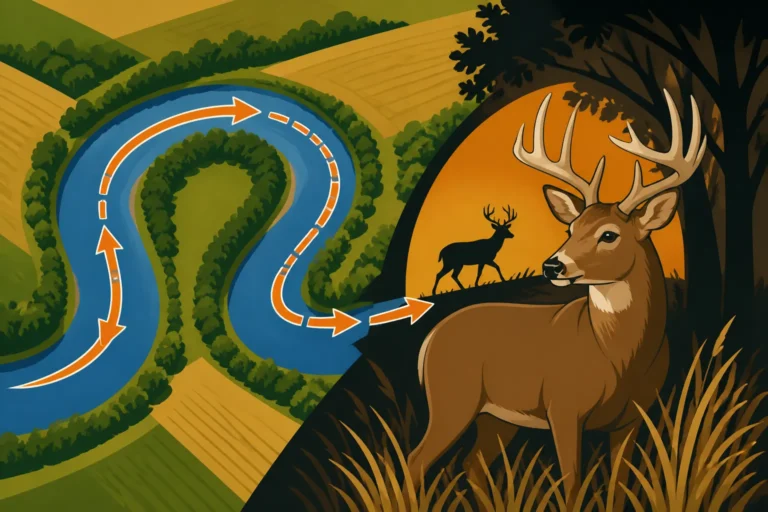
Often, these draws might lead into a larger river bottom or connect two distinct timber blocks. Sometimes they're merely fingers of timber extending into crop fields, giving deer a secure path from deep cover to the dinner table. Their subtle nature means they're often overlooked by hunters who focus on more obvious features like field edges or creek banks, but for a discerning scout, they practically scream "deer highway." Understanding their subtle elevation changes and how they interact with surrounding terrain is the first step to truly Scouting Iowa Timber and River Bottoms.
Why Draws Are Deer Magnets: Cover, Food, Water
Deer gravitate towards timber draws for a multitude of reasons, making them prime locations for finding consistent sign. First and foremost, they offer superior cover. The topography itself provides a natural barrier, shielding deer from view and providing a sense of security. The timber within these draws often grows thicker and denser than on exposed ridge tops, providing crucial bedding cover and escape routes. Think about a mature buck trying to move undetected during daylight hours; a timber draw offers him the best chance to do so, keeping him hidden from predators and hunters alike.
Beyond just physical concealment, draws are often ecological hotspots. The slightly lower elevation and protected nature often lead to more consistent moisture retention, which can foster a richer diversity of browse. You might find thickets of honeysuckle, dogwood, or young hardwoods that provide both food and bedding. Many draws also naturally collect water, either as small seeps or temporary puddles after rain, making them attractive pit stops. During dry periods, these ephemeral water sources can become invaluable, concentrating deer movement significantly. When all three elements – cover, food, and water – are present, a timber draw becomes an undeniable magnet for deer, especially during the peak rut when bucks are cruising for does or during late season when food is scarce. This combination means they often serve as crucial travel corridors and, sometimes, even bedding areas within their own right.
Decoding Key Deer Sign in Draws
Once you’ve identified a promising timber draw, the real work begins: reading the language of the deer that use it. Deer sign isn't just random marks in the woods; it tells a story of movement, behavior, and even the maturity of the deer in the area. Learning to interpret these clues is paramount to understanding how and when to hunt a draw effectively.
Rub Lines and Scrapes: The Language of Bucks
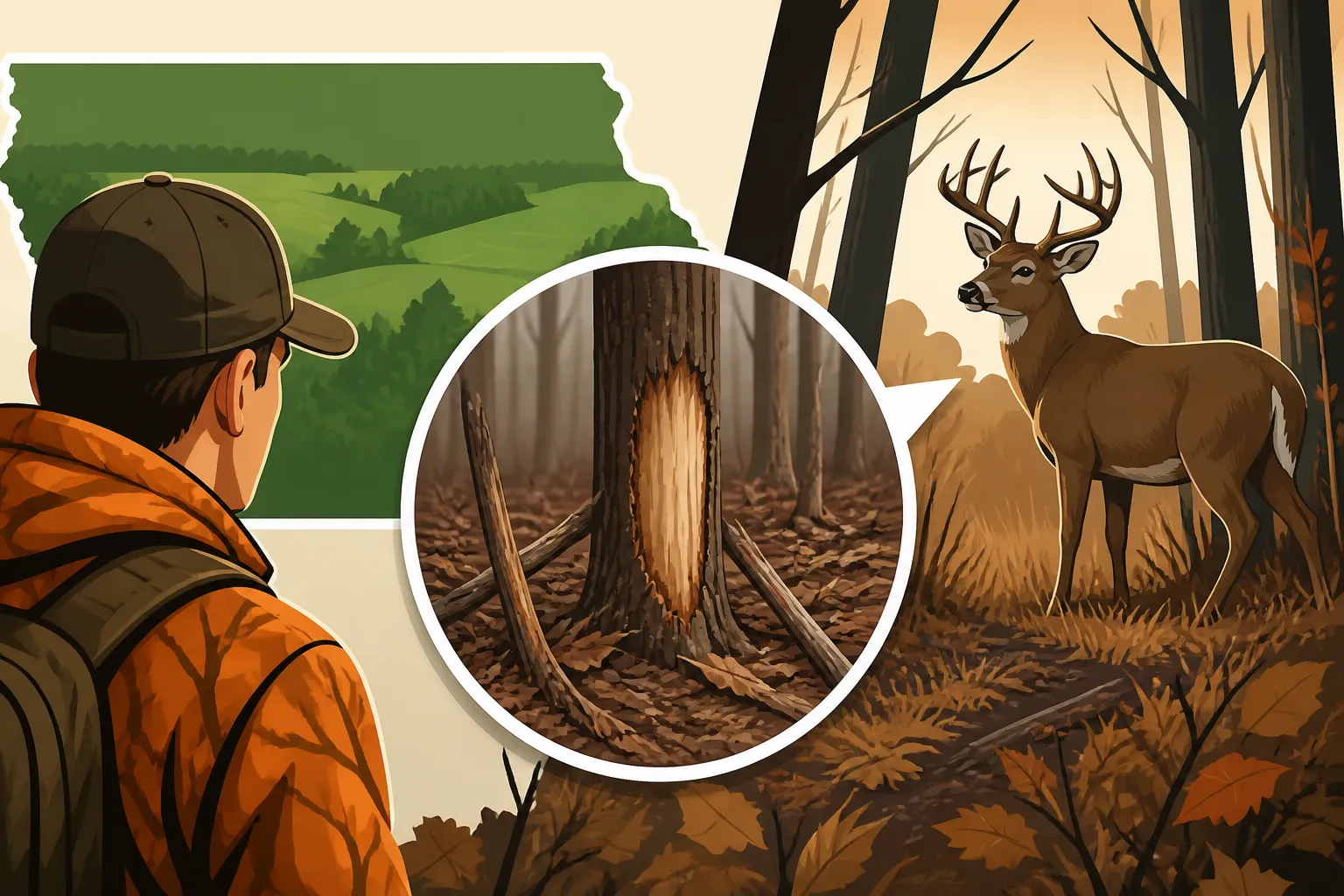
Finding a good rub line or a fresh scrape in a timber draw is like hitting the jackpot. Rubs, where bucks strip bark from trees with their antlers, serve as visual and olfactory markers. In a draw, a line of rubs typically indicates a buck's travel route, especially during the pre-rut and rut. A series of small rubs might be from younger bucks, but deep, heavy rubs on larger trees often signify a mature buck making his presence known. Pay attention to the direction the rubs face; it can tell you the direction the buck was traveling when he made it. Are they concentrated along one side of the draw? Are they heading towards or away from a particular bedding area? This detail can be vital for setting up a stand.
Scrapes, on the other hand, are the buck's primary communication centers. These are typically pawed-out patches of bare earth, usually under an overhanging branch (the "licking branch"). Bucks will urinate in them and rub their pre-orbital glands on the licking branch, depositing scent. Finding a fresh scrape – damp earth, fresh urine smell, and a well-worked licking branch – is a clear indicator that a buck is actively using that draw. Multiple scrapes in a draw, especially those connected by a rub line, suggest a high-traffic area. These are often made during the peak rut, when bucks are actively searching for does, as detailed in our guide on Iowa Whitetail Hunting Tactics Through the Rut. Don't just look for scrapes on the flat; bucks will sometimes make scrapes right on the edge of the draw itself or on small benches within it.
Tracks and Trails: Mapping Deer Movement
Tracks and trails are the most fundamental deer sign, and in a timber draw, they can be exceptionally revealing. Deer, being creatures of efficiency, will naturally follow the path of least resistance. Draws provide exactly that, often concentrating their travel. Look for well-worn trails, especially those that appear to be "superhighways" with a lot of traffic. These main trails will show clear hoof prints, compressed leaves, and maybe even broken twigs from repeated use.
Pay close attention to the size of the tracks. Large, splayed tracks with visible dewclaws often belong to mature bucks, while smaller, daintier tracks are usually does and fawns. Are the trails crossing the draw, or are they running its length? Trails crossing a draw often connect two distinct habitats – say, a bedding ridge to a food plot – while trails running the length indicate a primary travel corridor. Look for where these trails merge or split; these are natural pinch points that can be fantastic ambush sites. In soft, muddy areas within the draw, tracks can be incredibly clear, providing invaluable data on recent activity. You might even use a tool like GoHunt to cross-reference areas with significant track sign against satellite imagery to better understand the travel flow. Understanding these patterns is key to successful Bowhunting Iowa Deer From October to January.
Droppings and Beds: Uncovering Core Areas
While less exciting than a fresh rub line, droppings and beds are crucial indicators of where deer are spending their time. Droppings, or deer scat, tell you not only that deer are present but also what they're eating. Large, pelletized droppings often indicate a deer that has been feeding on browse or acorns, while softer, clumped droppings suggest a diet heavy in green forage or crops like soybeans. Fresh droppings – dark, moist, and possibly still warm – indicate very recent activity. Finding concentrations of droppings, especially those varying in freshness, tells you deer are consistently using that section of the draw.
Beds, particularly those found within the draw itself, are clear indicators of bedding areas. A deer bed is typically an oval-shaped depression in the leaves or grass where a deer has laid down. Look for beds sheltered from the wind and open to the sun (in cooler weather) or in shade (in warmer weather). In a draw, beds are often found on small benches or slight rises that offer a good vantage point downwind, allowing the deer to see and smell approaching danger. Finding multiple beds, especially different sizes, suggests a family group of does and fawns. A lone, larger bed might indicate a buck, particularly if other buck sign like rubs or scrapes are nearby. Discovering these beds helps you confirm which parts of the draw are used for resting versus just traveling, informing your approach to Best Stand Locations in Rolling Timber.
Here's a quick reference for decoding some common deer sign:
| Sign Type | What to Look For | What it Means | Fresh vs. Old Indicators |
|---|---|---|---|
| Rubs | Exposed wood, shredded bark | Buck presence, territorial marking, travel routes | Fresh sap, light wood vs. faded, dry, darkened wood |
| Scrapes | Pawed-out bare earth, overhanging licking branch | Buck communication, breeding activity | Moist, fresh scent vs. dry, leaf-covered |
| Tracks | Indentations in soil/mud, compressed leaves | Deer movement, size of deer, direction of travel | Sharp edges, clear vs. rounded, partially filled |
| Trails | Worn paths through vegetation, broken twigs | Consistent travel corridors, high-traffic areas | Clear paths vs. overgrown, less distinct |
| Droppings | Pellets or clumps of scat | Deer presence, diet, recent feeding | Moist, dark vs. dry, faded, brittle |
| Beds | Oval depressions in leaves/grass | Resting areas, bedding sites, preferred wind direction | Clear impression, disturbed leaves vs. flattened, covered by new leaf fall |
Factors Influencing Deer Use of Draws
Deer don’t just randomly pick a draw; their usage is heavily influenced by a combination of environmental factors. Understanding these elements helps you predict when and how deer will utilize a particular draw, which is critical for making informed hunting decisions. Ignoring these factors can lead to setting up in a "dead" draw, regardless of how much sign you find.
Food Sources and Browse Availability
The presence and type of food sources, both within and adjacent to a timber draw, are huge determinants of its value to deer. Draws often contain a variety of natural browse like dogwood, sumac, or young oak sprouts, which provide essential nutrition. If a draw features a good stand of mast-producing oaks or hickories, it becomes even more attractive during fall when acorns are dropping. Deer will travel significant distances through draws to access these natural buffets.
Beyond natural browse, draws frequently connect to agricultural fields – corn, soybeans, or alfalfa. These "field edge draws" are classic high-traffic areas, as deer use the cover of the draw to safely travel from their bedding areas in the timber to the abundant food in the fields. During the early season, a draw leading to a lush bean field is gold. In the late season, when those beans are harvested and standing corn becomes scarce, a draw offering access to leftover corn or a small winter food plot becomes invaluable. Knowing these connections, and how they change seasonally, allows you to anticipate deer movement patterns. Our guide on Late-Season Food Source Hunting in Iowa dives deeper into these patterns.
Water Sources and Travel Corridors
While Iowa is generally blessed with water, consistent and accessible water sources can become critical, especially during dry spells. Draws often funnel rainwater, leading to temporary puddles, or sometimes contain small seeps or springs that are active year-round. These small water sources, however seemingly insignificant, can become magnets for deer. A buck cruising a draw during the rut, or a doe family group moving between bedding and feeding, will often stop for a quick drink. Identifying these subtle water points within a draw is a great way to pinpoint a specific ambush location.
As mentioned before, draws inherently serve as natural travel corridors. They offer sheltered routes, providing a sense of security that deer crave. They act as funnels, condensing deer movement into predictable pathways, especially when moving between larger timber blocks, across open fields, or transitioning from bedding to feeding areas. A long, winding draw that connects a bedding ridge to a distant creek bottom, for example, will see consistent travel. Similarly, a draw that creates a "pinch point" between two otherwise inaccessible blocks of cover becomes a high-percentage location. Recognizing these natural funnels and how they guide deer movement is crucial for successful stand placement.
Wind, Thermals, and Cover Density
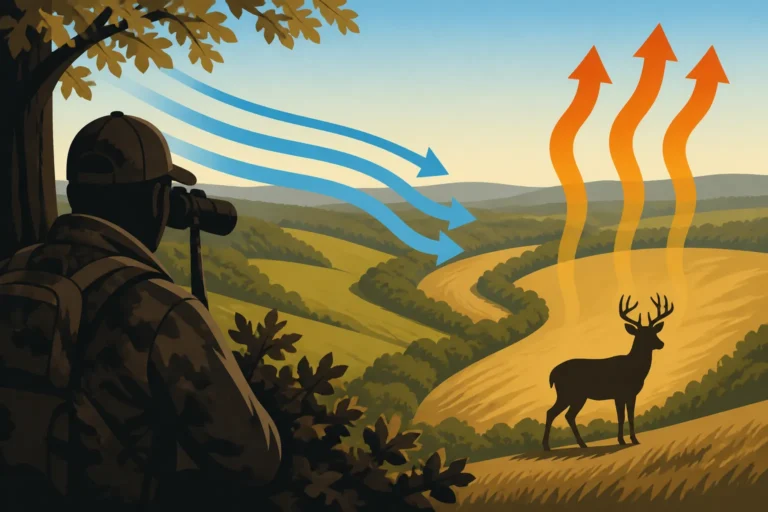
Understanding wind direction and thermals in timber draws is arguably the most critical factor in hunting them successfully. Draws are notorious for swirling winds and tricky thermal currents that can easily give away your position. Because they are depressions, draws often experience downdraft thermals in the mornings (air flows downhill) and updraft thermals in the evenings (air flows uphill). This means that a stand placement that seems perfect in the morning might be completely wrong in the evening. You must consider how the draw's topography channels air currents. Our guide on Wind and Thermals in River Breaks offers even more detail on these tricky air currents.
Beyond wind, the density of cover within the draw dictates how deer use it. A draw with very sparse timber and thin undergrowth might be used only at night or during low-light conditions, mainly for travel. However, a draw choked with thick multiflora rose, cedar thickets, or dense young hardwoods provides not only exceptional travel cover but also prime bedding. Deer will often bed right on the edges or within the densest pockets of these draws, especially on benches or subtle humps that give them a commanding view downwind. The thicker the cover, the more likely deer are to use it during daylight hours, making it a more attractive hunting location.
Strategic Scouting Techniques for Draws
Finding a timber draw on a map is one thing; effectively scouting it to unravel its secrets is another. You need a multi-pronged approach, combining modern technology with good old-fashioned boots-on-the-ground effort. This systematic approach ensures you gather all the necessary intel without "burning out" the area.
E-Scouting Before You Hit the Timber
Before you ever set foot in the woods, the best place to start scouting a timber draw is from your couch. Utilize powerful mapping applications like GoHunt, onX Hunt, or BaseMap. Look for distinct elevation changes that indicate draws. Pay attention to how these draws connect different habitat types:
- Bedding Areas: Do they lead from thick security cover on a ridge or a dense bedding thicket?
- Food Sources: Do they funnel deer towards crop fields, food plots, or oak flats?
- Water Sources: Are there ponds, creeks, or potential seep areas nearby?
Analyze the density of the timber using satellite imagery. Look for darker green areas within the draw, which often indicate thicker conifer stands or dense younger hardwoods – prime bedding and security cover. Identify potential pinch points where the draw narrows or converges with other features. Mark these as points of interest on your digital map. GoHunt’s detailed satellite imagery and property line layers are invaluable for this, helping you visualize deer movement patterns without disturbing the actual habitat. This initial e-scouting helps you formulate a game plan and directs your physical scouting efforts efficiently, saving you time and minimizing intrusion. You’d be surprised what you can learn about Reading Aerial Imagery for Bedding Cover from your computer.
Boots-on-the-Ground Verification
No amount of e-scouting can replace actually walking the draw. Your first physical scout should ideally be during the off-season (late winter/early spring is perfect after shed hunting) when vegetation is down, and you can see the lay of the land clearly. Walk the length of the draw, looking for all the signs we've discussed: rub lines, scrapes, tracks, trails, and beds. Confirm the pinch points you identified on your map.
Pay meticulous attention to detail. Are there multiple trails converging? Where are the freshest rubs concentrated? What kind of trees are the rubs on? Are there old shed antlers that confirm mature buck presence? As you walk, consider potential stand locations based on prevailing winds and thermals. Think about your access and exit routes – how can you get in and out of a potential stand without bumping deer? Remember, the goal is to confirm your e-scouting theories and collect tangible evidence of deer activity. This ground-truthing is essential for understanding the nuances of how deer utilize the draw, especially those subtle elevation changes that satellite images can't fully convey. It's how you really start to identify Saddles and Benches Deer Cross Daily.
Trail Cameras as Your Silent Scouts
Once you've identified key travel corridors and pinch points within a draw during your physical scout, it's time to deploy trail cameras. Cameras are your eyes in the woods when you're not there, providing objective data on deer movement patterns, specific buck activity, and timing. Place cameras on well-used trails, near fresh rubs or scrapes, or at choke points where deer are forced to travel close.
Ensure your camera placement is strategic. Mount them securely, slightly angled down to capture deer effectively, and clear away any brush that might trigger false detections. Set them to video mode for a few days to get a clearer picture of deer behavior. Check your cameras sparingly to minimize intrusion, maybe once every 7-14 days. The data you gather – pictures of specific bucks, the time of day they’re moving, and the frequency of movement – will be invaluable for refining your hunting strategy. This intel will help you fine-tune your approach for Trail Camera Placement on Iowa Public Land and confirm your theories about when and where deer are most active in that particular draw. Cell cameras, if allowed in your hunting area, can provide real-time updates and further reduce intrusion.
Hunting Strategies Based on Draw Sign
So, you've scouted diligently, identified a hot timber draw, and now you're ready to hunt. But translating that scouting into a successful hunt requires a thoughtful approach to stand placement, wind management, and adaptability. Hunting a draw isn't just about hanging a stand; it's about anticipating deer behavior based on the sign you've read.
Stand Placement for Archery and Gun Seasons
The beauty of a well-scouted timber draw is that it offers diverse opportunities for both archery and gun seasons. For archery, proximity is key. You'll want to place your stand within easy bow range (20-30 yards) of the most active trails, rubs, or scrapes you've identified. Look for a tree that offers good cover to break up your silhouette, allows for multiple shot angles, and provides a clear shooting lane down the primary travel corridor. Often, a tree slightly off the main trail, allowing deer to pass in front of or just downwind of you, is ideal. Consider using a mobile saddle setup for ultimate flexibility, as outlined in Mobile Saddle Hunting in Iowa, allowing you to adjust quickly to changing conditions.
For gun season, your range expands, offering a bit more flexibility. You can set up further back, covering a wider swath of the draw, or position yourself to overlook a junction of trails or a larger pinch point. However, cover for the hunter is still paramount, and controlling your scent is just as important. Whether you're bow or gun hunting, always consider the sun's position. Avoid having the sun directly in your eyes during prime hunting hours, and ideally, choose a setup where the sun is at your back, making it harder for deer to spot you.
Playing the Wind and Thermals in Draws
This cannot be stressed enough: wind and thermals are king when hunting a draw. Due to their funneling nature, draws can create unpredictable air currents. You absolutely must understand the prevailing wind direction and how the draw's topography will influence it. For morning hunts, if the draw runs north-south, expect downdraft thermals to carry your scent downhill. You might need to set up lower in the draw, or on an adjacent ridge, to keep your scent out of the primary travel routes.
In the evenings, as the air cools, expect updraft thermals to carry your scent uphill. Setting up higher in the draw or on a side slope that puts you above the main travel route can be effective. Always use a wind checker frequently. Pay attention to how the thermals interact with the larger landscape. If a draw empties into a river bottom, for example, the thermals there can be particularly swirly. Don't be afraid to abort a hunt if the wind isn't right; hunting with a bad wind in a draw is almost guaranteed to blow deer out of the area. Sometimes, the best hunt is the one you don't take, preserving the spot for optimal conditions.
Adapting to Changing Conditions
Deer behavior is constantly evolving, influenced by weather, hunting pressure, and the availability of food sources. A timber draw that was red-hot with sign in early October might be less active in late November if the primary food source it led to has been depleted. This is where adaptability, and leveraging tools like GoHunt for current intel, becomes crucial.
- Pressure: If the draw is on public land or a heavily hunted private piece, deer might become nocturnal or shift their travel routes within the draw to thicker cover. You'll need to adapt by adjusting your stand location, hunting only during specific low-pressure times (like weekdays), or focusing on more secluded pockets within the draw where deer feel safer. Understanding Hunting Pressure Patterns on Iowa Public Land is essential.
- Weather: A cold front can invigorate deer movement, making draws extremely active. A sudden warm spell might slow things down. Rain can wash away fresh sign, making it harder to read, but also create soft ground for new, clear tracks.
- Food Changes: As crops are harvested or acorns are eaten up, deer will shift their focus. You need to be scouting year-round (or at least seasonally) to understand these shifts and adapt your draw-hunting strategy accordingly. Utilize tools like GoHunt to track landowner harvest activities or local weather patterns that might influence food availability. Being flexible and willing to move your stand or change your target draw based on the most current information is key to long-term success.
Common Mistakes and How to Avoid Them
Even seasoned hunters can fall into common traps when scouting and hunting timber draws. By being aware of these pitfalls, you can improve your odds and make your time in the woods more productive and less frustrating.
Overlooking Subtle Sign
It’s easy to get tunnel vision when scouting, focusing only on the most obvious deer trails or the biggest rubs. However, timber draws often hold the most valuable information in the subtle, less apparent signs. For instance, a small, barely perceptible trail winding up a slight sidehill in the draw might be a mature buck's preferred sneak route, avoiding the main trails. Or a small patch of heavily browsed saplings could indicate a consistent feeding stop, even without a clear scrape.
To avoid this, slow down. Don't just walk through; pause frequently, look at the ground, look up at the licking branches, and scan the surrounding cover. Use your binoculars to pick apart dense thickets for subtle trails or beds you might otherwise miss. Consider all forms of sign together: a few droppings, a subtle trail, and a small rub in a secluded part of the draw might collectively tell you a buck is frequently using that specific spot, even if he's not broadcasting it. Never underestimate the power of seemingly insignificant clues; they often tell the real story.
Hunting Stale Sign or Wrong Wind
One of the biggest mistakes is clinging to old information or ignoring the current conditions. Just because you found a monster rub line in September doesn't mean it's still active in December. Deer patterns shift, and what was hot last week might be cold this week. Similarly, hunting a draw with the wrong wind or thermals is a recipe for disaster. Deer, especially mature ones, are incredibly sensitive to scent. If your scent is blowing into their primary travel route or bedding area within the draw, they'll know you're there long before you see them.
To combat stale sign, make fresh sign your priority. When you scout, always look for the freshest tracks, the darkest droppings, and the most recently worked scrapes. If you're not seeing fresh sign, move on or re-evaluate. For the wind, as emphasized, use a wind checker constantly. Never assume the wind will do what you want it to; always verify. If the wind isn't right for your chosen stand, don't hunt it. Have multiple stand options in different draws or different locations within the same draw, allowing you to choose the best setup for the day's conditions. Always plan your Access Routes That Do Not Bump Deer based on the current wind.
Not Adapting to Pressure
Timber draws, being natural funnels, can also become natural magnets for hunting pressure, especially on public land or smaller private tracts. If a draw is consistently hunted, deer will quickly adjust their behavior. They might become entirely nocturnal in that specific draw, or they might shift their travel to the absolute thickest, most difficult-to-access parts of the draw. Ignoring this pressure and continuing to hunt the same spot in the same way will lead to diminishing returns.
The key here is observation and adaptability. If you're consistently seeing deer only at night on your trail cameras, or if you're not seeing deer at all during hunting hours, it's a clear sign of pressure. Consider moving to a more remote part of the draw, or focusing on "sanctuary" areas within or adjacent to the draw that other hunters overlook. Sometimes, this means pushing deeper into heavy cover that seems impenetrable, or targeting specific windows of time when other hunters aren't out. Using platforms like GoHunt that provide insights into regional harvest data or public land usage can give you a heads-up on potential pressure patterns, helping you strategize around it rather than becoming a part of the problem. Remember, smart hunters adapt to pressure; unsuccessful ones succumb to it.
Disclaimer
Hunting is an inherently dangerous activity. Always prioritize safety, follow all local and state regulations, and obtain appropriate licenses and permissions. The information provided in this guide is for informational purposes only and should not be taken as legal advice. Always scout thoroughly, understand your limitations, and hunt responsibly.