Iowa Fall Turkey Zones
Navigating Iowa's fall turkey hunting regulations can feel like trying to call a henned-up gobbler on a windy day – confusing and sometimes frustrating. Unlike the more straightforward spring seasons, fall turkey hunting brings with it specific zone restrictions that dictate where you can pursue these elusive birds. This comprehensive guide is designed to demystify Iowa's fall turkey zones, helping you understand where you can hunt, how to plan your strategy, and ultimately, put you closer to success in the autumn woods.
Understanding Iowa's Fall Turkey Hunting Landscape
Fall turkey hunting in Iowa is a completely different ballgame compared to the spring. While the spring is all about gobbling toms and breeding rituals, autumn transforms turkey behavior dramatically. Understanding these shifts and why the Iowa Department of Natural Resources (DNR) implements zones for the fall is paramount for a successful hunt.
Why Fall Turkey Hunting Differs from Spring
When those crisp autumn leaves start to fall and the air gets a bite, turkey behavior shifts from the aggressive, breeding-focused antics of spring to a more survival-oriented mode. Gone are the booming gobblers strutting across fields, attempting to attract hens. Instead, you'll find birds gathered in large, often silent, family flocks. These flocks typically consist of a hen and her poults from the spring, sometimes joined by other hens and jakes, forming sizable groups that can number anywhere from a dozen to fifty or more birds.
This flocking behavior completely changes the hunting dynamic. Instead of calling to a lone tom, you're now trying to break up a family group and call individual birds back in, often relying on "lost hen" or "kee-kee" calls. Their focus is on feeding, maintaining the flock, and surviving the coming winter, not breeding. This means traditional run-and-gun turkey tactics that work so well in spring might not be as effective in the fall. You're looking for patterns in food sources like acorns, waste grain in corn and bean fields, and insect foraging areas. It requires a lot more glassing, patience, and understanding of flock movement than the "run to the gobble" method of spring.
The Importance of Zones in Fall Regulation
The Iowa DNR doesn't just draw lines on a map for fun; these fall turkey zones are a critical tool for managing the state's turkey population, ensuring sustainable hunting opportunities for years to come. In the spring, licences are often sold for specific units or broader regions, but fall zones are more geographically defined. The reason for these distinct fall zones often boils down to several factors:
Firstly, turkey populations aren't uniformly distributed across Iowa. Some areas, particularly those with vast tracts of timber and diverse habitat, support higher densities of birds. Other regions, dominated by row crops with fewer woodlots, might have sparser, more isolated populations. By segmenting the state into zones, the DNR can better monitor and manage harvest pressure. They can adjust licence quotas or season lengths within specific zones if needed, based on population data, poult recruitment, and habitat conditions, ensuring that hunting doesn't negatively impact local turkey numbers.
Secondly, these zones help regulate hunter distribution. Without them, everyone might flock to the perceived "best" turkey hunting counties, leading to overcrowding and an overharvest in those areas, while other areas might be under-utilized. The zones encourage a more spread-out hunting effort, providing a better experience for hunters and less localized pressure on the birds. It's a way to ensure that while you're focused on working a henned-up tom midday, the overall health of the state's turkey population is being carefully considered.
The Official Iowa Fall Turkey Zones: A Detailed Breakdown
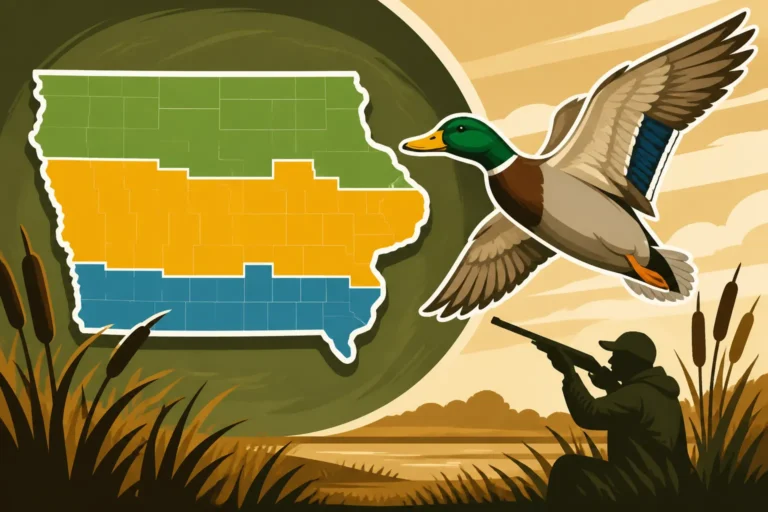
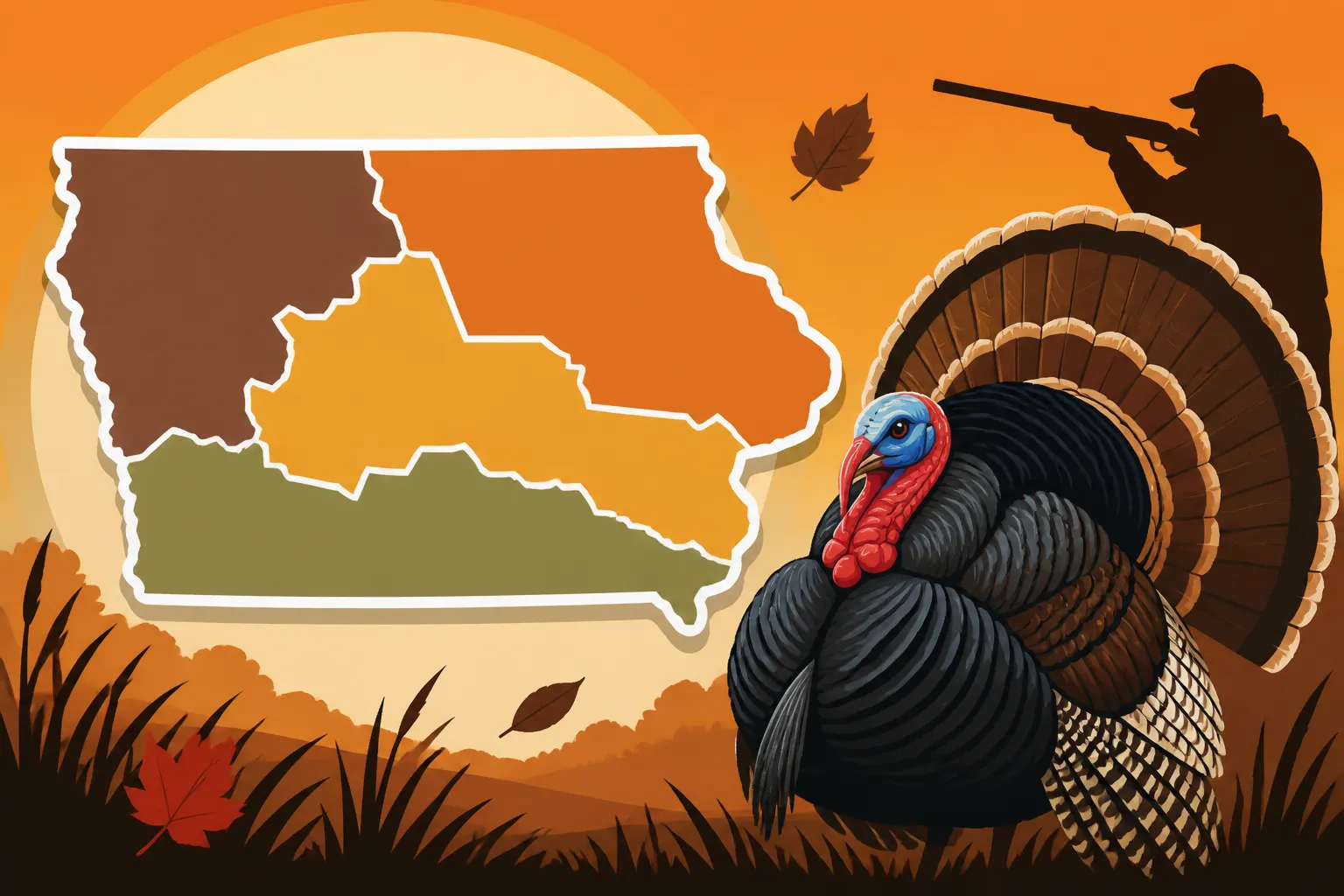
Iowa is renowned for its diverse landscapes, from the rolling timber of the south to the prairie potholes in the north. This variety in habitat directly influences turkey populations and, consequently, how the DNR structures its fall hunting zones. Currently, Iowa is divided into five distinct fall turkey zones, each with its own characteristics and counties.
Zone 1: Northeast Iowa's Timbered Hills
This zone encompasses a significant portion of Northeast Iowa, often referred to as the "Driftless Area." Counties like Allamakee, Clayton, Fayette, and Winneshiek are prime examples. The terrain here is markedly different from the rest of the state, characterized by rugged, deeply cut river valleys, steep timbered bluffs, and numerous spring-fed streams. This region was untouched by the last glaciation, resulting in unique geology and an abundance of mature oak and hickory forests.
For a fall turkey hunter, Zone 1 is a haven of habitat. The dense timber provides excellent roosting cover and abundant mast crops (acorns, walnuts) which are crucial fall food sources. Turkeys here often stick to the timber, especially on north-facing slopes and in the deep ravines where they can find shelter and food. You might find them scratching in the leaves, following creek bottoms, or moving along the edges of small crop fields interspersed within the timber. Hunters need to be prepared for some serious hill climbing, but the rewards can be plentiful, with robust turkey populations thriving in this rich environment. If you're looking for a challenge and beautiful scenery, this zone delivers.
Zone 2: North Central and Northwest Farmland
Zone 2 stretches across the more agricultural northern and northwestern parts of Iowa, including counties like Cerro Gordo, Hancock, Kossuth, Clay, and Palo Alto. This region is dominated by vast expanses of row crops – corn and soybeans – with timbered areas often confined to river corridors, creek bottoms, and smaller farm woodlots.
Turkey populations in Zone 2 are often found concentrated along these linear timber strips, which serve as their primary travel, roosting, and bedding cover. They will frequently venture out into harvested crop fields to feed on waste grain, especially later in the fall. Hunters here need to pay close attention to the transitions between timber and open fields. Identifying key travel corridors, pinch points, and preferred feeding spots is crucial. Utilizing mapping tools, like those offered by GoHunt, can be incredibly beneficial here to pinpoint smaller woodlots, creek drainages, and areas of public access that might otherwise be overlooked in the sea of agricultural land. Expect to do a lot of glassing from a distance, trying to locate flocks moving between cover and food.
Zone 3: Central and East Central Iowa's River Systems
Moving into the central and east-central parts of the state, Zone 3 includes counties such as Boone, Story, Linn, Johnson, and Muscatine. This zone is characterized by its prominent river systems, like the Des Moines River and the Iowa River, which create significant timbered corridors cutting through otherwise agricultural landscapes. You'll find a mix of mature hardwood forests along these waterways, interspersed with upland crop fields and smaller woodlots.
Turkeys in Zone 3 are heavily reliant on these river bottom habitats. They use the extensive timber for roosting, foraging, and as safe havens. They will often utilize the adjacent crop fields for feeding, especially during the day. Access routes that do not bump deer (or turkeys, in this case!) are key here. Hunters should focus their efforts along these river breaks and timbered creek systems, looking for signs of recent scratching, dusting bowls, and droppings. Knowing the intricacies of how these birds use river oxbows and timber points between two fields can make a huge difference.
Zone 4: Southern Iowa's Rolling Timber
Arguably one of Iowa's most famous deer and turkey regions, Zone 4 covers the bulk of Southern Iowa, including counties like Appanoose, Wayne, Lucas, Van Buren, and Davis. This area is renowned for its extensive, rolling timber, interspersed with smaller crop fields, pastureland, and dense brushy cover. This habitat mix is ideal for robust turkey populations.
The sheer amount of contiguous timber in Zone 4 means turkeys have vast areas to roam, offering excellent opportunities for scouting Iowa timber and river bottoms. They will utilize the mature oak-hickory forests for mast crops, find security in the thick cedar and locust thickets as bedding cover, and often feed in picked corn and bean fields. This zone is a fantastic place for hunters who enjoy working diverse terrain. You might find turkeys along a narrow creek corridor, using saddles and benches deer cross daily, or scratching in dense undergrowth. Understanding Turkey flock behaviour in winter and during the transition of fall will be vital for success here.
Zone 5: Southwest Iowa and the Loess Hills
Zone 5 encompasses Southwest Iowa, including the unique and striking Loess Hills region, with counties like Monona, Harrison, Mills, Pottawattamie, and Fremont. The Loess Hills, formed by wind-deposited silt, create incredibly steep, narrow ridges and deep, winding ravines, often covered in dense oak forests and prairie grasses. Outside the Loess Hills, the rest of Southwest Iowa features a blend of agriculture, smaller timber blocks, and river bottoms along the Missouri River.
Turkeys in the Loess Hills are adept at navigating the rugged terrain, often using the steep slopes and dense cover to their advantage. Calling a gobbler off the roost might be a challenge in these vast, open-yet-rugged areas. They will feed on acorns on the hillsides and move into bottomlands for water and other food sources. In the more agricultural parts of Zone 5, turkeys behave much like those in Zone 2 and 3, concentrating along timbered waterways and feeding in fields. Hunters here need to be prepared for challenging hikes in the Loess Hills but can also find opportunities in the river bottom habitats, adapting their tactics to the specific micro-habitats within this diverse zone.
Understanding the Lack of "Special Management" Fall Turkey Zones
Unlike some states or even Iowa's own deer regulations, there isn't typically a concept of "Special Management Zones" with unique rules or quotas specifically for fall turkey hunting in Iowa. The five zones outlined above are the primary regulatory framework.
What you might encounter, however, are individual counties that have different antlerless deer quotas or specific rules for Chronic Wasting Disease (CWD) sampling for deer. For turkeys, the regulations are generally consistent across the zone. The main variations come down to season dates and licence availability, which can sometimes be more restrictive in certain zones or for specific licence types if the DNR identifies localized population concerns. This simplifies things somewhat for fall turkey hunters, as the rules tend to be more uniform once you've secured a licence for your chosen zone. The key is to always check the most current Iowa DNR hunting regulations booklet, as details can shift slightly year to year.
How Zone Restrictions Impact Your Fall Turkey Hunt
Understanding the geographical boundaries of Iowa's fall turkey zones is just the first step. The real impact comes from how these zones dictate your licence purchase and, subsequently, where you are legally allowed to hunt. It's not just about knowing where the lines are drawn, but what those lines mean for your actual hunting trip.
Licence and Tagging Regulations by Zone
When it comes to purchasing an Iowa fall turkey licence, the zone you choose is critically important because your licence will be valid only within that specific zone. This means if you buy a Zone 4 fall turkey licence, you cannot legally harvest a turkey in Zone 1, even if you happen to be visiting family there and spot a flock. This rule is in place to help the DNR manage harvest pressure and monitor turkey populations on a localized basis.
Most fall turkey tags in Iowa are "any-sex" tags, meaning you can harvest either a tom or a hen. This contrasts sharply with the spring season, where hunters are typically restricted to harvesting bearded turkeys (which are almost exclusively toms). The bag limit for fall turkey hunting is usually one bird per licence, and hunters can purchase multiple licences depending on availability and demand in each zone. However, if you purchase a second licence, it will also be for a specific zone, which could be the same or a different one, depending on your hunting plans and the availability of tags.
Before you even think about heading afield, you need to be absolutely sure which zone you intend to hunt and purchase the corresponding licence. This is where a little upfront planning, perhaps even some E-Scouting Iowa farm country from home, can save you a lot of headache and ensure you're hunting legally.
Public Land Access and Zone Overlap
Iowa boasts a good amount of Public Hunting Land, including state forests, wildlife management areas (WMAs), and IHAP (Iowa Habitat and Access Program) tracts. The good news is that these public lands fall squarely within the boundaries of one of the five fall turkey zones.
For instance, if you plan to hunt Stephens State Forest, which is primarily located in south-central Iowa, you would need a Zone 4 fall turkey licence. Similarly, if you're eyeing Yellow River State Forest in the far northeast, a Zone 1 licence would be required. The challenge isn't usually if public land is available in a zone, but rather finding the specific public land within your chosen zone that holds birds and isn't too heavily pressured.
When planning your hunt, use the Iowa DNR Hunter Atlas or a robust mapping app like GoHunt. These tools allow you to overlay public land boundaries with the fall turkey zones, helping you identify accessible hunting opportunities. While the zones themselves don't change how you access public land (standard rules for parking, stands, etc., still apply), they add another layer to your planning. You might find a fantastic piece of public ground that looks perfect, but if it's outside your licensed zone, it's off-limits. Being aware of hunting pressure patterns on Iowa public land, especially around popular access points, is also crucial, as fall turkey hunting can draw a crowd to prime spots.
Strategizing Your Fall Turkey Hunt within Zones
Once you understand the zones and have your licence in hand, it's time to strategize. Fall turkey hunting requires a different mindset and approach than spring. You're no longer primarily dealing with lone, love-struck gobblers, but rather large family flocks whose primary goals are feeding and staying together.
Scouting and Habitat Assessment for Each Zone
Effective scouting is the backbone of any successful fall turkey hunt, and it's especially critical when navigating Iowa's diverse zones. The habitat across the state varies wildly, and understanding these differences will inform where you focus your efforts.
- Zone 1 (Northeast Timbered Hills): Here, your scouting should concentrate on finding mast crops. Look for oak and hickory ridges with abundant acorns. Turkeys will spend hours scratching through leaf litter in these areas. Also, scout south-facing slopes for warmth and protection from cold winds, and north-facing slopes for cooler, moister conditions that can hold insects. Look for signs like fresh droppings, distinct "V" scratch marks in the leaves, and dusting bowls. Access routes that avoid bedding areas (or roosting areas for turkeys) are key here, especially in the steep terrain.
- Zone 2 (North Central/Northwest Farmland): In this agricultural landscape, scouting transitions between timbered corridors and picked crop fields is paramount. Turkeys will move from their roosts in the creek bottoms or woodlots to feed in corn and bean stubble. Identify the specific fields they are using and the most efficient travel routes they take. This is where tools like GoHunt really shine; you can use satellite imagery to identify isolated woodlots or thin strips of cover that might hold birds. Spend time glassing fields from a distance at dawn and dusk to pattern their movements.
- Zone 3 (Central/East Central River Systems): Focus on the extensive timber along the major river systems. Walk these bottomlands, looking for heavy turkey sign around sloughs and timbered points. Turkeys often travel along these river corridors. Pay attention to how turkeys are using different elevations within the river breaks, and how the wind and thermals in river breaks might affect your approach. They will often utilize adjacent picked fields, so look for feeding sign at the timber edge.
- Zone 4 (Southern Rolling Timber): With vast timber, this zone requires a broader scouting approach. Look for large areas of mature timber with a good mast crop. Turkeys here have more options, so identifying their preferred food sources and roosting areas is key. Scout for cedar and locust thickets as bedding cover, as turkeys will use these dense areas for security. Spend time looking for consistent patterns of movement between these elements.
- Zone 5 (Southwest & Loess Hills): The Loess Hills demand a focus on elevation and cover. Scout the steep ridges for roosting areas and mast. In the flatter, more agricultural parts of the zone, apply scouting tactics similar to Zone 2 or 3, focusing on timbered waterways and field edges. Access can be difficult in the Loess Hills, so plan your approach carefully.
No matter the zone, remember that fall turkey flocks are often large and can cover a lot of ground. Look for consistent patterns, but be prepared to be mobile if needed.
Adapting Hunting Tactics to Fall Turkey Behavior
Once you've done your scouting, it's time to adapt your hunting tactics to the unique challenges and opportunities of fall turkeys within your chosen zone. The goal is often to break up a flock and then call individual birds back in, mimicking a lost turkey.
- Breaking Up a Flock: This is a classic fall tactic. Locate a flock (either by sight or hearing their yelps and clucks), then quickly try to get in their path or run towards them to scatter them. The idea is to make them fly or run in different directions. Once they've scattered, set up quickly.
- Calling After the Scatter: After a successful scatter, the turkeys will often try to regroup within 30-60 minutes, especially if it's a family group. This is your prime calling window. Start with subtle "kee-kee" runs or soft yelps, mimicking a lost poult or hen trying to find its family. Don't overcall. Listen carefully for faint answers. If you hear multiple turkeys calling, try to identify single birds that might come to your calls.
- Still Hunting and Stalking: In dense timber zones like Zone 1 or Zone 4, still hunting can be incredibly effective. Move slowly and deliberately through the woods, pausing frequently to listen and scan. Turkeys are often less vocal in the fall, so keen eyes and ears are paramount. Look for movement, listen for soft clucks, and be ready for a shot. Stalking, while challenging, can also work if you spot a feeding flock at a distance in a field. Use terrain features and dense cover to close the distance.
- Ambush Hunting: For zones with significant crop field usage (Zones 2, 3, 5), setting up a ground blind in Iowa farm country along a known travel route or field edge can be very effective. Get there before legal light and be patient. Turkeys will often follow predictable patterns from their roost to feeding areas. Using a decoy on a field edge can also be an effective strategy to draw in curious birds.
- Roosting and Morning Setup: While not as critical as in spring, locating a roosting flock the evening before can give you a significant advantage. Once you've identified their roost, you can set up well before fly-down the next morning, ready to scatter them as they hit the ground or call to them if they fly down and scatter naturally. This is similar to roosting Iowa turkeys the night before for a spring hunt.
- Adapting to Weather: Fall weather in Iowa can be unpredictable. Be prepared for cold fronts and rain. Knowing how to keep a muzzleloader dry in rain, or simply having quiet, waterproof gear for your bowhunt, is crucial. December cold front deer movement can often apply to turkeys too, as they will be focused on food sources.
Remember, patience and adaptability are your best friends in the fall. Turkeys are constantly on the move, and what works one day might not the next.
Common Misconceptions and Troubleshooting Fall Zones
Hunting regulations, especially when they involve zones, can often lead to misunderstandings. It's important to clarify some common points about Iowa's fall turkey zones and how to ensure you're always on the right side of the rules.
The "Any-Sex" Fall Tag Reality
One of the biggest distinctions between spring and fall turkey hunting in Iowa is the type of tag you hold. In the spring, with few exceptions, hunters are pursuing gobblers, and your tag is for a "bearded turkey." This is where the thrill of calling in a big tom with a booming gobble truly shines.
However, the reality of the Iowa fall turkey tag is that it is an "any-sex" tag. This means you can harvest either a tom (male) or a hen (female) bird. For some hunters, this distinction is crucial. While a large fall tom might still have an impressive beard, many of the birds encountered in fall flocks will be hens or jakes (young males). This "any-sex" option offers greater flexibility and generally increases a hunter's odds of success since hens and jakes are often less wary and more numerous in family flocks. It also reflects the DNR's management strategy to allow for some hen harvest in the fall, which can help balance populations where appropriate, without impacting the breeding potential of the following spring as much as a spring hen harvest would. So, if you're out there, and a mature hen or a young jake comes into your call, remember it's a perfectly legal and often delicious addition to your freezer!
Staying Informed on Annual Zone Changes
While the general layout of Iowa's five fall turkey zones has been relatively consistent over the years, it's absolutely vital to understand that regulations can, and sometimes do, change annually. The Iowa DNR regularly assesses turkey populations, harvest data, and habitat conditions, and based on this information, they might adjust season dates, bag limits, or even redraw zone boundaries if necessary for sound wildlife management.
The last thing any hunter wants is to be caught off guard by a rule change they weren't aware of. Therefore, the most critical piece of advice is to always consult the most current Iowa hunting regulations booklet before planning your hunt and purchasing your licence. This booklet, usually available online on the Iowa DNR website and at licence vendors around mid-summer, will contain all the up-to-date information on season dates, licence quotas, zone boundaries, and any other pertinent rules.
Don't rely on information from previous years or assumptions. Wildlife management is dynamic, and staying informed is part of being a responsible and ethical hunter. You can often sign up for email notifications from the Iowa DNR to receive updates on regulation changes, or regularly check their website. Tools like GoHunt can provide useful mapping and historical data, but the official DNR regulations are always the final word.
Iowa Fall Turkey Zones Overview
To help you visualize and quickly reference the key characteristics of Iowa's fall turkey zones, here's a handy table summarizing the information we've covered:
| Zone Number | Primary Region | Key Counties (Examples) | Dominant Habitat Type | Typical Turkey Behavior |
|---|---|---|---|---|
| Zone 1 | Northeast Iowa | Allamakee, Clayton, Fayette | Rugged Timbered Bluffs & Valleys | Mast-focused in timber, challenging terrain |
| Zone 2 | North Central/Northwest Iowa | Cerro Gordo, Kossuth, Clay | Farmland with River & Creek Timbers | Field edge feeding, linear cover reliance |
| Zone 3 | Central/East Central Iowa | Boone, Johnson, Muscatine | Major River Bottom Timbers & Agriculture | River corridor movement, mixed feeding |
| Zone 4 | Southern Iowa | Appanoose, Lucas, Davis | Extensive Rolling Oak-Hickory Timber | Widespread timber foraging, diverse cover |
| Zone 5 | Southwest Iowa | Monona, Mills, Pottawattamie | Loess Hills & Missouri River Bottoms | Steep terrain adaptation, field feeding |
This table provides a quick reference, but remember that within each zone, there's always local variation. Successful hunting requires understanding these broader patterns and then refining your approach based on specific conditions on the ground.
Disclaimer
Please note that hunting regulations, season dates, and zone boundaries are subject to change. Always consult the official Iowa Department of Natural Resources (DNR) hunting regulations for the most current and accurate information before planning and executing any hunting activity. This guide is for informational purposes only and should not be considered a substitute for the official regulations.