Iowa Spring Turkey Season Numbers
It's incredibly frustrating when you're trying to plan your spring turkey hunt in Iowa, and the data feels like a moving target. You hear whispers about good hatches one year and dismal ones the next, leaving you wondering if it's even worth taking that precious vacation time. This guide is here to cut through the noise, helping you understand the real story behind Iowa's spring turkey season numbers, what they mean for your hunt, and how to use this information to your advantage.
The Annual Iowa Spring Turkey Scramble: Understanding the Data
Every year, as spring approaches, turkey hunters across Iowa start anxiously checking reports and forecasts, trying to gauge their chances of punching a tag. It's not just about the weather, though that plays a huge role; it's also about understanding the health of the turkey population. Without solid data, you're essentially walking into the timber blind, hoping for the best. This can lead to wasted time, effort, and even a missed opportunity to experience one of Iowa's most exciting hunts.
Why Spring Turkey Numbers Matter to Hunters
Knowing the general turkey population numbers, and more specifically, the trends in those numbers, can drastically influence your hunting strategy. Are the birds abundant in your target area, leading to more vocal gobblers and better encounters? Or are numbers down, meaning you might need to hunt smarter, cover more ground, or even consider a different zone? A low poult survival rate from the previous year, for instance, means fewer two-year-old gobblers making noise this spring, which can make things feel a lot quieter in the woods. It's about managing expectations and being prepared for the conditions you're likely to face.
Furthermore, understanding the pressure on the resource, like how many licenses are sold or the overall harvest success rate, can give you insights into public land crowding or popular spots. This data empowers you to make informed decisions, whether that's choosing a less popular season segment or focusing on areas that typically see less hunter traffic. It’s all about stacking the odds in your favor, even slightly, in a sport where so much is left to chance.
Where to Find Reliable Iowa Turkey Data
When you're looking for trustworthy information, the Iowa Department of Natural Resources (DNR) website is your absolute go-to. They publish detailed annual reports, including harvest statistics, population estimates, and season summaries that cover everything from total birds harvested to success rates by season and weapon. It might seem like a lot of numbers at first glance, but once you know what you're looking for, it's invaluable. Beyond the official DNR sources, several reputable hunting platforms also compile and analyze this data, offering fantastic summaries and insights. Many hunters use tools like those from GoHunt to sift through various state data, looking for trends and opportunities that might not be immediately obvious in raw spreadsheets. These resources help distill complex information into actionable intelligence for your next outing.
Another great source, though less formal, comes from local conversations. Chatting with landowners, conservation officers, and other seasoned hunters in the specific area you plan to hunt can often provide crucial anecdotal evidence about localized turkey activity that official reports, by their nature, can't always capture. Remember, broad statewide numbers are useful, but local intel can be gold.
Deciphering the Iowa DNR's Turkey Population Estimates
The Iowa DNR works tirelessly behind the scenes to monitor wildlife populations, and wild turkeys are no exception. But what do all those graphs and percentages actually mean for you, the hunter? It's not just about a single number; it's about understanding the methodology and how various data points connect to paint a clearer picture of the health of Iowa's turkey flock. Getting a handle on this data can feel like learning a new language, but it's a language worth knowing if you want to be consistently successful.
How the Iowa DNR Tracks Turkey Populations
The Iowa DNR primarily uses two key methods to track turkey populations: brood surveys and harvest reports. Brood surveys, conducted during the summer months, involve DNR staff, landowners, and volunteers recording sightings of hen turkeys and their poults (young turkeys). This data is crucial for estimating the annual reproductive success and Turkey Poult Survival and Spring Weather. A strong hatch one summer means more birds on the ground that fall, and eventually, more two-year-old gobblers strutting around the following spring. Conversely, a poor hatch can signal a quieter spring two years down the line.
Harvest reports are the other significant piece of the puzzle. When hunters report their successful harvests online, the DNR collects data on the number of birds taken, their sex, and the county of harvest. This information, combined with license sales and overall hunter participation, helps estimate the total Iowa Turkey Population Estimate and gauge hunting pressure. By comparing these figures year over year, the DNR can identify population trends and make management decisions, like adjusting season lengths or tag quotas, to maintain a healthy and sustainable turkey population for future generations of hunters.
Interpreting Harvest Reports and Trends
When you dig into the harvest reports, don't just look at the total number of birds. Look at the breakdown by season segment and weapon choice. For instance, sometimes you'll see a higher success rate in the earlier archery seasons compared to later shotgun seasons, or vice versa, depending on weather patterns and Gobbling Activity Through the Spring. This can inform your decision on which Iowa spring turkey licences and seasons to apply for. If you notice a consistent trend of lower harvest numbers in a particular zone or county, it might signal a localized population decline, or perhaps just increased hunter competition.
Beyond raw numbers, pay attention to long-term trends. Is the statewide turkey population generally stable, increasing, or declining? Fluctuations are normal, often tied to weather and habitat, but a steady decline over several years might suggest broader issues. These trends, compiled by the DNR, are often highlighted in their annual summaries and can be a fantastic resource for any hunter planning their trip. For a deeper dive, using a platform like GoHunt can help you visualize these trends over time, making it easier to spot patterns and make more informed decisions about where and when to hunt.
The Nuances of Iowa Turkey Population Estimate
It's important to remember that any "population estimate" is just that—an estimate. Wild turkeys are notoriously mobile, and their numbers can fluctuate significantly based on localized factors like food availability, predator presence, and extreme weather events. The statewide estimate gives a good general picture, but it doesn't always reflect the exact situation in every timber block or creek bottom. For example, a severe winter in one part of the state might impact Turkey Flock Behaviour in Winter and local survival, even if the overall statewide numbers remain stable.
This is where integrating your own scouting and local knowledge becomes critical. The DNR's estimates provide an excellent baseline, guiding you to areas that historically hold good numbers of birds. However, current conditions on the ground might tell a different story. Always cross-reference the broad population data with recent sightings, local chatter, and your own boots-on-the-ground scouting to get the most accurate, real-time picture of turkey activity in your specific hunting zone. This layered approach is key to consistently filling your tag.
Factors Influencing Spring Turkey Numbers and Hunter Success
Hunting is as much about understanding the game and their environment as it is about skill. For spring turkeys in Iowa, a multitude of factors, many outside of our control, play a significant role in how many birds are present and how willing they are to cooperate. From the sky to the soil, everything impacts a gobbler's day, and by extension, your hunt. Recognizing these influences can help you adapt and improve your chances.
Impact of Weather on Turkey Poult Survival and Spring Weather
The weather conditions during the nesting and brooding season (typically May through July) are perhaps the single most critical factor for future turkey numbers. Cold, wet springs can decimate newly hatched poults, which are incredibly vulnerable to hypothermia and disease. If a hen’s nest gets flooded or a prolonged cold snap hits right after eggs hatch, it can mean fewer young birds make it to adulthood. This directly impacts the number of jakes and two-year-old gobblers available for hunters in subsequent springs.
Conversely, mild, dry springs typically lead to higher poult survival, bolstering the population. When you’re looking at harvest data from previous years, consider the weather reports from two springs prior. A bad weather year then often translates to a dip in the number of vocal two-year-old birds in the current spring season. This historical weather context, often overlooked, is vital for understanding current population dynamics and adjusting expectations for your hunt.
Habitat Changes and Their Effect on Turkey Flock Behaviour in Winter
Habitat is the backbone of any wildlife population, and turkeys are no different. In Iowa, with its dominant agricultural landscape, turkeys rely heavily on scattered timber blocks, creek bottoms, and CRP fields for roosting, nesting, and foraging. Changes in land use, such as timber clearing or the conversion of diverse grasslands to monoculture crops, can significantly impact turkey numbers. When suitable habitat is lost or fragmented, it can concentrate birds in smaller areas, making them more susceptible to predation and disease, and also increasing hunting pressure.
Winter conditions also play a huge role, impacting Turkey Flock Behaviour in Winter. Severe winters with prolonged deep snow and ice can make it difficult for turkeys to find food, leading to increased winter mortality. Areas with good thermal cover (like cedar thickets or dense conifer stands) and reliable food sources (such as waste grain in picked cornfields or mast crops from oak trees) are crucial for overwintering success. A strong, healthy flock going into spring means more robust birds, and likely, more enthusiastic gobbling.
Predator Impact and Disease Concerns
Predators like coyotes, raccoons, opossums, and even bobcats can have a significant impact on turkey populations, particularly on nests and young poults. While predation is a natural part of the ecosystem, an imbalance can suppress turkey numbers. For example, a surge in raccoon populations might lead to higher rates of nest depredation. The DNR monitors predator populations, but this is another area where local observations can offer insights. If you notice a high concentration of coyote sign in your hunting area, it's worth considering how that might influence local turkey dynamics.
Chronic Wasting Disease (CWD) is a significant concern for Iowa's deer herd, but other diseases can affect turkeys too. Avian influenza outbreaks, for instance, can sometimes impact wild bird populations, although widespread turkey mortality from disease isn't as commonly reported in Iowa as it is for other species. However, biologists continually monitor for novel diseases. Understanding the overall health of the Iowa Turkey Population Trends is crucial for long-term management, and ongoing monitoring helps ensure that any potential threats are identified and addressed, keeping the wild turkey a vibrant part of Iowa's natural landscape.
Regional Differences in Iowa Turkey Populations and Opportunity
Iowa might seem like a relatively homogenous state with its vast agricultural fields, but when it comes to wild turkeys, there are distinct regional differences in population density, habitat, and ultimately, hunting opportunities. What works in the rugged bluffs of Northeast Iowa might not apply to the more open country of the west. Understanding these geographical nuances is key to selecting the right hunting area and refining your tactics.
Eastern Turkeys in Iowa Timber and Driftless Region
Northeast Iowa's Driftless Area, characterized by its steep, forested river valleys, unglaciated terrain, and abundant hardwood timber, is often considered the stronghold for Eastern Turkeys in Iowa Timber. This region offers excellent habitat for turkeys, including diverse food sources (acorns, berries, insects) and ample roosting sites in mature trees along the bluffs. Consequently, it often boasts some of the highest turkey densities and, historically, very strong harvest numbers. Hunters here often find birds more concentrated in timber blocks and along ridgelines.
However, the popularity of this region means it can also experience higher hunting pressure, especially on public lands. If you're planning a hunt in counties like Allamakee, Clayton, or Winneshiek, be prepared for competition. Scouting thoroughly to find less accessible areas or focusing on weekdays can make a big difference. The terrain itself can be challenging, but it also offers natural barriers that can concentrate birds and funnel them into predictable travel corridors, making it a fantastic area for hunters who enjoy covering ground and using topography to their advantage.
Turkey Populations in Central and Western Iowa
As you move into Central and Western Iowa, the landscape transitions to more expansive row crop fields, with timber often confined to river and creek bottoms, shelterbelts, and smaller isolated woodlots. While turkey populations can still be robust in these areas, their distribution tends to be more fragmented and tied directly to these timbered corridors. Birds in these regions might travel longer distances between roosting, feeding, and strutting areas, often crossing large open fields.
Hunting here might require more mobility and adaptability. You'll often find yourself focusing on pinch points, timber fingers that extend into fields, and creek crossings. The key to success often lies in securing access to larger timber tracts, either public or private, that offer sufficient cover and food. Counties along the major river systems like the Des Moines, Raccoon, or Missouri rivers can be particularly productive, as these riparian corridors provide vital travel routes and habitat in an otherwise open landscape.
Understanding Iowa Fall Turkey Zones for Spring Insights
While this article is about spring turkey hunting, looking at the Iowa Fall Turkey Zones can actually offer valuable insights into spring opportunities. The fall zones are drawn based on general turkey densities across the state, with certain zones having higher quotas or longer seasons due to more abundant populations. This same underlying population distribution often holds true for spring as well. If a county is historically part of a high-density fall zone, it’s a good bet that it will also offer strong spring opportunities.
The fall harvest is also an indicator of overall population health. While fall hunting strategies differ greatly from spring, a consistently high fall harvest in a particular zone, without negatively impacting subsequent spring populations, suggests a very healthy and robust turkey population in that area. When doing your research for spring, don't hesitate to check out the fall data; it's another piece of the puzzle that can help confirm or challenge your assumptions about a specific hunting area.
Maximizing Your Odds in the Iowa Spring Turkey Season
Understanding the numbers is one thing, but translating that knowledge into a successful hunt is the ultimate goal. The Iowa spring turkey season is a magical time, filled with the anticipation of a distant gobble echoing through the timber. With a bit of strategic planning and a willingness to adapt, you can significantly increase your chances of calling in a big tom.
Strategies for Scouting and Roosting Iowa Turkeys the Night Before
Effective scouting is paramount, especially when turkey numbers might be lower than average or hunter pressure is high. It’s not just about finding fresh tracks; it's about locating where the birds are actually roosting and strutting. One of the most effective strategies is Roosting Iowa Turkeys the Night Before. This involves driving or walking around your chosen hunting area just before dark, listening intently for those tell-tale fly-up cackles and evening gobbles as birds settle into their roost trees. Pinpointing a roost site allows you to set up quietly in the dark the next morning, putting you in a prime position for fly-down.
Beyond roosting, look for physical signs like tracks, droppings, and shed feathers. Identify strut zones – open areas where gobblers display for hens – which are often found on field edges, ridge tops, or logging roads. Consider using topographical maps, or even tools like GoHunt's mapping features, to identify potential travel corridors, pinch points, and good roosting timber. The more you know about where birds are naturally moving, the better you can position yourself for an encounter.
Adapting Your Tactics to Gobbling Activity Through the Spring
Turkey behavior, especially gobbling activity, can fluctuate wildly throughout the spring season. Early in the season, when hens are still tightly flocked, gobblers might be incredibly vocal as they try to attract mates. As hens begin to nest, gobblers can become "henned up," meaning they are with a group of hens and less responsive to calling. Later in the season, as more hens are on nests, gobblers become solitary and might start searching more actively for the remaining receptive hens, often leading to a resurgence in gobbling.
Your calling strategy needs to adapt to this. Early season, aggressive calling can work well. Mid-season, if you're dealing with a henned-up tom, patience and subtle calling (or even no calling) might be more effective. Sometimes, letting the hens do the talking, or just moving on to find a more receptive bird, is the best play. Late season, a lonely gobbler might respond aggressively to persistent hen yelps and cutts. Always listen to the birds and adjust. Don’t be afraid to try Calling a Henned-Up Iowa Gobbler or even switching to Run-and-Gun Turkey Tactics on Iowa Public Land if birds are spread out or not responding.
Leveraging Data for Smart Hunting Choices
Ultimately, all this talk about numbers and factors comes down to making smarter decisions in the field. Use the DNR's population estimates and harvest data to select counties or zones that show consistent turkey numbers. Pair that with a look at historical weather patterns to understand potential poult survival. For instance, if you're hunting in a year following a great hatch, you might expect more jakes and two-year-olds, which can be easier to call in.
When planning your hunt, consider the time of year you want to go. If you prefer to avoid the peak of hunter pressure, look at the harvest numbers for different season segments. Sometimes, the later segments, despite having fewer overall birds, might offer a more solitary hunting experience. Remember to always prioritize Public Land Turkey Safety and be aware of other hunters, especially during busy periods. By combining official data with personal observations and flexible tactics, you’ll be well on your way to a memorable Iowa spring turkey season, regardless of what the numbers might have initially suggested.
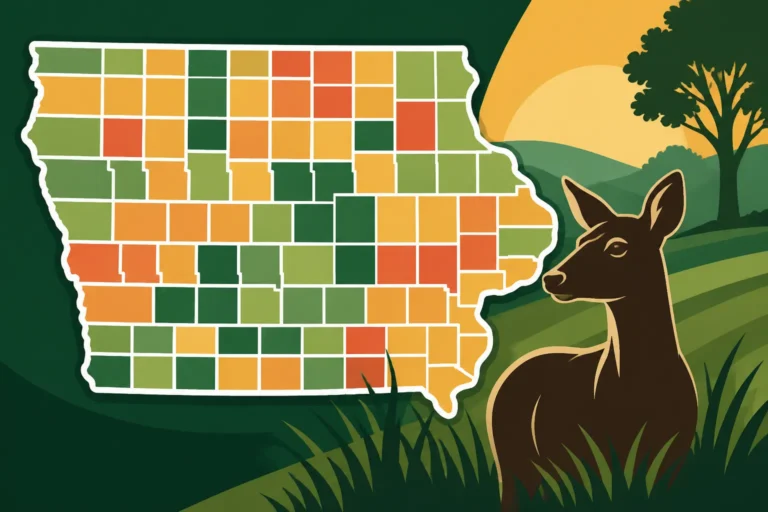
| Iowa Spring Turkey Harvest Data (Recent Years – Example) | 2021 Harvest | 2022 Harvest | 2023 Harvest | Average Success Rate (All Seasons) |
|---|---|---|---|---|
| Zone 1 (Northeast Iowa) | 3,520 | 3,380 | 3,610 | 28% |
| Zone 2 (Southeast Iowa) | 2,890 | 2,750 | 2,980 | 26% |
| Zone 3 (Central/SW Iowa) | 1,980 | 1,850 | 2,010 | 22% |
| Zone 4 (NW Iowa) | 850 | 790 | 880 | 19% |
| Total Statewide Harvest | 9,240 | 8,810 | 9,480 | 24% |
Note: Data is illustrative and based on general trends; always consult the most current Iowa DNR reports for precise figures.
Disclaimer
Hunting regulations and season dates can change. Always consult the official Iowa Department of Natural Resources (DNR) regulations and publications before planning and undertaking any hunting activities. This article is intended for informational purposes only and should not be considered legal advice.