Iowa Legal Shooting Hours
Navigating the myriad of rules and regulations surrounding hunting can feel like trying to untangle a fishing line after a particularly enthusiastic cast. One area that often trips up even seasoned hunters is understanding the precise legal shooting hours in Iowa. It's not always as simple as "sunrise to sunset," and misinterpreting these times can lead to frustrating situations, lost opportunities, or worse, legal trouble. This comprehensive guide is designed to cut through the confusion, clearly defining Iowa's legal shooting hours for various game species and offering practical advice to ensure you're always on the right side of the law.
Understanding Iowa's General Legal Shooting Hours
For most game species in Iowa, the general rule of thumb revolves around the concepts of sunrise and sunset. However, it's crucial to understand that "sunrise" and "sunset" aren't just arbitrary moments when the sun peeks over the horizon or dips below it. There's a specific definition tied to official times that vary daily and by location.
The Official Sunrise-to-Sunset Rule
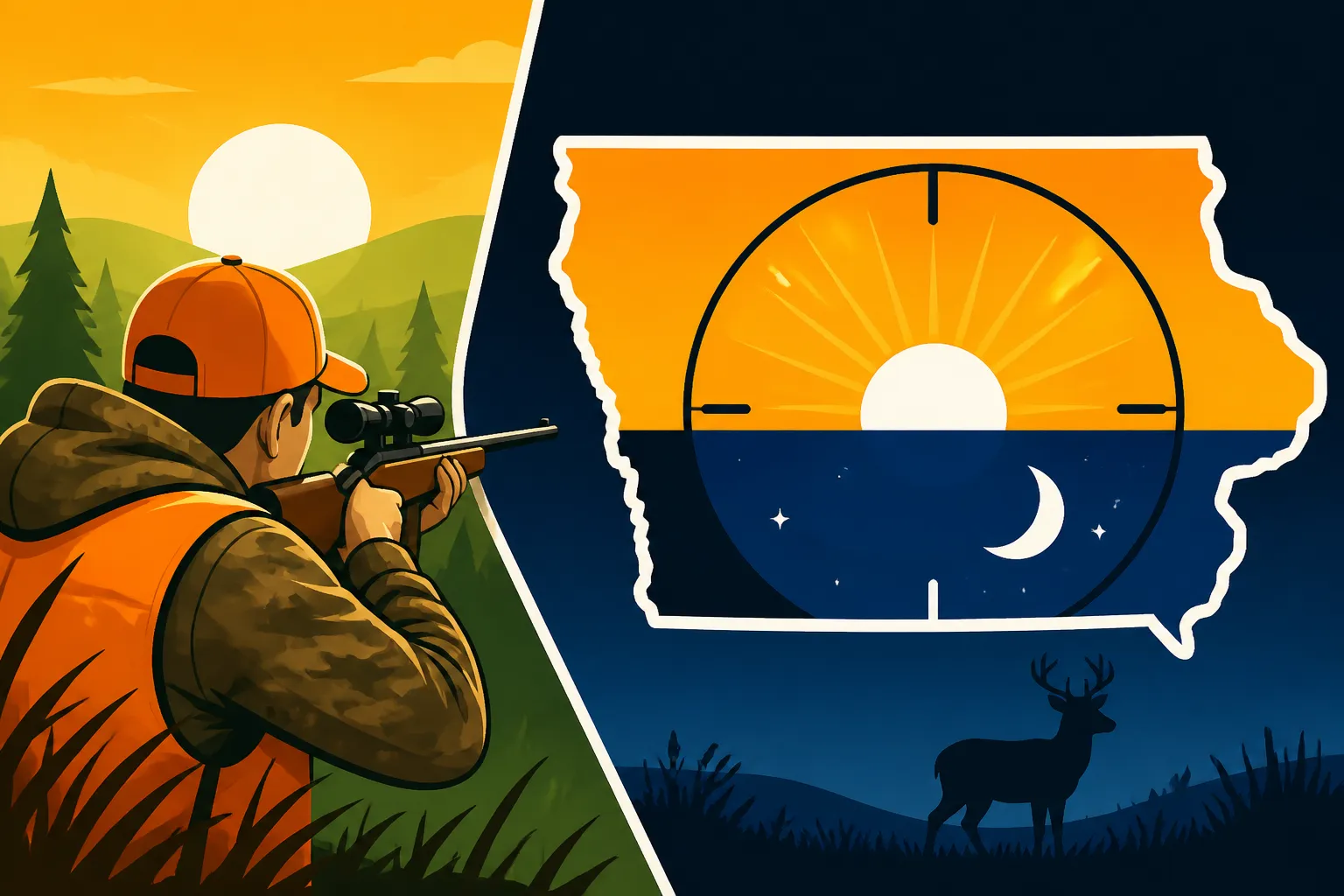
When the Iowa Department of Natural Resources (DNR) refers to "sunrise to sunset" for legal shooting hours, they are referring to the official times published for a given day and location. This isn't just when you think the sun is up or down; these are precise astronomical calculations. For many game animals, particularly big game like deer, hunting is permitted only during this window. This means that as soon as the sun officially crests the horizon and until it officially disappears, you are within legal shooting hours. Any shot taken before or after these precise times is considered a violation. It’s an easy mistake to make, especially on cloudy days when the light levels might deceive you, making it feel like it's lighter or darker than the official times suggest. Always err on the side of caution and check the official times. This rule is designed to provide clear, consistent guidelines, but it places the responsibility squarely on the hunter to know those times.
Specific Exceptions for Certain Species and Seasons
While the sunrise-to-sunset rule covers a broad range of hunting, Iowa has specific exceptions that hunters absolutely must be aware of. These exceptions are often tied to the biology of the animal, traditional hunting methods, or specific management goals. Getting these mixed up can be a costly error.
For instance, migratory game birds like ducks, geese, and doves often have different shooting hours. Typically, these are set to half an hour before sunrise and half an hour after sunset. This additional time in low light conditions accounts for their unique flight patterns, often moving to and from roosts or feeding grounds during these twilight periods. If you're out jump shooting a pond for ducks or set up for an evening dove hunt, knowing this distinction is paramount. Imagine setting up for ducks, only to realize you can't actually shoot until sunrise, while everyone else is already working birds! Conversely, if you apply the migratory bird rule to deer, you'd be hunting illegally. It’s critical to consult the Iowa DNR’s annual hunting regulations booklet, which provides these details with species-specific clarity.
Furthermore, some specific deer seasons might have nuanced shooting hour regulations, though generally, the sunrise-to-sunset rule is very consistent for deer. However, during certain late-season hunts or special management hunts, it’s always wise to double-check. Small game like pheasants, quail, and rabbits also typically follow the general sunrise-to-sunset rule, but their seasons often start later in the morning (e.g., 8:00 AM) to allow birds to fly off roosts or to reduce hunter congestion in the earliest hours. Furbearers, like coyotes, can sometimes be hunted at night, but even these hunts come with very strict rules regarding light sources and methods, which are entirely separate from typical game animal regulations. Always verify the regulations for the specific species you are targeting and for the specific season in which you are hunting. This diligence helps prevent common mistakes and ensures a smooth hunting experience.
Why Precision Matters: Calculating Shooting Hours
The difference between a legal shot and an illegal one can literally be a matter of minutes. In the hunting world, "close enough" is rarely good enough when it comes to legalities. That's why understanding how to precisely calculate and keep track of official shooting hours is such a vital skill.
Local Sunrise and Sunset Times
One of the biggest pitfalls for hunters is assuming that sunrise and sunset are uniform across the entire state. They are not. Iowa is a relatively wide state, and the sun rises and sets at different times in, say, Davenport on the eastern border compared to Council Bluffs on the western side. Even within a county, there can be slight variations, but typically, official times are provided for major cities or specific zones. These times are also constantly changing throughout the season. The days get shorter rapidly in the fall, meaning your sunset time in early October will be significantly different from late November. This daily flux means you cannot simply memorize a single set of times for the entire season.
The sun's position is an astronomical calculation, influenced by your latitude and longitude. So, a hunter near Dubuque will have slightly different legal shooting hours than one near Des Moines. It’s imperative to check the official times for your specific hunting location on each day you plan to hunt. Relying on general knowledge or what "felt right" last week is a recipe for error. These times are usually published by the National Weather Service, local news outlets, and, most reliably, within the Iowa DNR's official hunting regulations and online resources. Knowing when the Iowa Deer Season Dates by Weapon permit you to hunt is only half the battle; knowing when you can actually pull the trigger is the other.
Tools and Apps for Accuracy
Thankfully, in this modern age, keeping track of precise sunrise and sunset times has never been easier. Gone are the days of having to buy a newspaper just to find the official times, though many local papers still provide this service.
One of the most reliable methods is to use the Iowa DNR's official website or their annually published hunting regulation booklet. These resources will often provide charts or links to specific sunrise/sunset tables for various regions across the state. Many popular hunting apps, such as GoHunt, also integrate this crucial information directly into their mapping and planning tools. An app like GoHunt can use your phone's GPS location to give you hyper-accurate, real-time sunrise and sunset times, often even calculating the 30-minute civil twilight periods that are essential for migratory bird hunters.
Beyond dedicated hunting apps, general weather apps on your smartphone or even a quick web search for "sunrise sunset [your town, Iowa] [date]" will typically give you the precise information you need. Some hunters even carry a small, dedicated weather device that displays these times. The key is to check every time you go out, especially if your hunt spans several days. Before you even head into the woods, take a moment to confirm your legal shooting window. This habit, combined with understanding Walking In Before Legal Light and Parking Away From Your Stand, can make a huge difference in your hunting success and legal compliance.
Common Misconceptions and Legal Consequences
Hunting regulations can be complex, and a few widely circulated myths often lead hunters astray. Understanding these misconceptions and the potential penalties for violations is crucial for any responsible hunter.
The "Thirty Minutes Before/After" Myth
Perhaps the most common misconception among hunters, especially those new to Iowa or coming from other states, is the belief that all hunting automatically allows for shooting 30 minutes before sunrise and 30 minutes after sunset. This is a rule that does apply to migratory game birds like waterfowl and doves in Iowa, but it is not the general rule for most other species, particularly big game like whitetail deer.
For deer hunting in Iowa, the rule is strictly "sunrise to sunset." There is no additional 30-minute window for deer. This myth often stems from hunters who primarily target waterfowl or from regulations in other states where such a blanket rule might apply. The confusion can lead to hunters taking shots in low light conditions, convinced they are still within the legal window, only to find themselves in violation. This mistake can be particularly tempting during the peak of the rut, when bucks are most active at dawn and dusk. Imagine being set up during The Iowa Rut Peaks and seeing a monster buck right at first light, only to realize you legally can't shoot for another 15 minutes. It's frustrating, but it's the law. Always remember that migratory birds and upland game often have slightly different regulations, so always check the specific species section in the DNR regulations.
Penalties for Violating Shooting Hours
Violating legal shooting hours isn't just a minor infraction; it's a serious offense that can carry significant penalties. The Iowa DNR takes these violations seriously because shooting hours are in place for safety, fair chase, and wildlife management reasons. Taking a shot in poor light increases the risk of misidentification, wounding an animal, or even endangering other hunters or property owners.
Penalties can vary depending on whether it's a first offense, the species involved, and whether other violations (like hunting without a license) are concurrently committed. Typically, violating shooting hours can result in substantial fines, which can range from hundreds to well over a thousand dollars. Beyond monetary penalties, offenders often face the suspension or revocation of their hunting privileges for a period, which can be a devastating blow for passionate hunters. In some cases, particularly if the violation is part of a larger pattern of illegal activity or if an animal is illegally harvested, charges could escalate to more severe misdemeanors or felonies.
Additionally, any game harvested illegally during non-shooting hours is subject to seizure, and the hunter may be required to pay restitution for the value of the animal. This means you could lose your deer, pay a hefty fine, and lose your hunting rights, all for a few minutes of impatience. It's a stark reminder that understanding and adhering to regulations like Iowa Party Hunting Rules and Iowa Hunter Education Requirements are not just suggestions but legal obligations. Always consult the official Iowa DNR law book for the most current penalties, as these can be updated periodically.
Practical Tips for Adhering to Shooting Hours
Staying within legal shooting hours is a critical aspect of ethical and legal hunting. With a bit of planning and the right habits, you can ensure you're always compliant, maximizing your enjoyment and minimizing any risk of violations.
Pre-Dawn and Post-Dusk Considerations
The periods immediately before official sunrise and after official sunset are often prime times for deer movement. Many hunters prefer to be in their stands well before legal light and stay until after dark, hoping to catch a cruising buck. However, this strategy requires careful consideration to remain legal and ethical.
When you're walking into your stand in the dark, or exiting after sunset, it's easy to lose track of time or misjudge light conditions. Always plan your entry and exit routes meticulously to avoid disturbing game that might be moving in low light, especially if you're hunting public land. Consider using a dim red or green headlamp to preserve your night vision and reduce your visibility to wary deer. For safety, ensure your firearm or bow is not loaded or nocked until legal shooting hours commence. It's also paramount to identify your target clearly and ensure you have a safe backdrop before taking any shot. Light conditions can change rapidly, and what seemed like a clear shot at first light might become questionable moments later. Practicing Shot Placement on a Whitetail at Twenty Yards in varying light conditions can also improve your confidence and ethical decision-making. If there's any doubt about whether it's truly legal light or if you can make an ethical shot, don't take it. Patience is a hunter's greatest virtue, especially in these transitional periods.
Using Technology in the Field
In today's world, our smartphones are more than just communication devices; they are powerful tools for staying compliant with hunting regulations. Integrating technology into your hunting routine can significantly help you adhere to legal shooting hours.
Before heading into the field, make it a habit to check your favorite weather app or a dedicated hunting app like GoHunt for the precise sunrise and sunset times for your specific location. Set an alarm on your phone for both legal shooting light and legal cease-fire. For example, if sunrise is 6:45 AM, set an alarm for 6:45 AM. If sunset is 5:10 PM, set an alarm for 5:10 PM. This simple practice provides an undeniable reminder in the field, eliminating guesswork.
Many modern GPS devices and hunting apps also offer a "hunt clock" feature that displays the official legal shooting hours based on your current location. This can be incredibly useful, especially if you're hunting in unfamiliar territory or if phone service is spotty. Just remember that relying solely on your phone requires a charged battery, so always carry a portable power bank, especially during cold weather when batteries drain faster, as discussed in Cold Weather Stand Clothing. While technology is a great aid, always have a backup plan or at least a mental note of the times before you disconnect from the digital world and connect with nature. Checking your Trail Camera Rules on Iowa Public Land and reviewing the Iowa Regulation Booklet Release Date are also good habits to maintain throughout the season.
| Species Category | General Iowa Shooting Hours | Specific Nuances |
|---|---|---|
| Deer (Archery, Shotgun, Muzzleloader) | Sunrise to Sunset | Strict interpretation, no 30-min buffer. |
| Turkey (Spring/Fall) | Half-hour before sunrise to Sunset | Often begins later in the day (e.g., 8:00 AM) for some upland game. |
| Pheasant, Quail, Partridge | 8:00 AM to 4:30 PM (general) | Specific start/end times often listed in regulations, can vary by species. |
| Migratory Game Birds (Ducks, Geese, Doves) | Half-hour before sunrise to Sunset | This is the specific exception for these species. |
| Small Game (Rabbit, Squirrel) | Sunrise to Sunset | Check specific season dates for variations. |
| Coyote (Daytime) | Sunrise to Sunset | Night hunting allowed with specific restrictions. |
Disclaimer
Please remember that hunting regulations, including legal shooting hours, can change. Always consult the most current Iowa Department of Natural Resources (DNR) hunting regulations booklet or their official website before heading into the field to ensure you have the most up-to-date and accurate information. This guide is for informational purposes only and should not be considered a substitute for official state regulations.