Tagging Another Hunter’s Deer in Iowa
It's one of those moments that can bring a rush of adrenaline mixed with a healthy dose of confusion: you've tracked a deer, maybe even helped a friend track one, and now it's down. But wait, who actually fired the shot? Whose tag does it go on? In Iowa, the rules around tagging deer, especially when multiple hunters are involved, can feel a little murky. This guide is here to clear up the confusion, helping you understand the regulations for legally tagging a deer, whether it's your own, a friend's, or part of a group effort.
Understanding Iowa's Core Tagging Regulations
Let's start with the fundamental principle that guides all deer harvest in Iowa: accountability. Every deer harvested needs a tag, and that tag must be applied by the hunter who legally "took" the animal. It might sound simple, but the devil is in the details, especially when you factor in shared hunting experiences.
The Individual Hunter's Responsibility
At its heart, Iowa's deer tagging system is designed around individual responsibility. When you purchase an Iowa deer license, that tag is tied directly to you. It's not a generic "group" tag. This means that for every deer harvested, there needs to be a specific hunter whose valid license covers that animal. This is why understanding your license type – whether it's an any-deer, antlerless, or youth tag – is crucial before you even step into the timber. The Iowa Department of Natural Resources (DNR) wants a clear record of who harvested what, and where. It’s not just about filling your freezer; it’s about sound deer herd management.
What Constitutes "Taking" a Deer
This is where things can get a little tricky and often leads to questions about tagging another hunter's deer. In Iowa, "take" or "taking" generally refers to the act of pursuing, shooting, killing, capturing, or attempting to capture. For deer hunting, it most commonly means the act of shooting and killing the animal. The person whose shot ultimately brings the deer down is generally considered the one who "took" it.
However, the regulations also account for the intent and effort involved. If you shoot a deer and it runs a long distance, and then your buddy puts a finishing shot into it to prevent suffering or losing it, the original shooter is still typically considered the one who "took" the deer, assuming the initial shot was lethal or would have been lethal. The finishing shot is an act of assistance. The key is intent and the effectiveness of the initial shot. This is a big reason why open communication among hunting partners is absolutely vital. If there's any ambiguity, consult the current Iowa Regulation Booklet Release Date, as rules can sometimes be updated.
The Immediate Tagging Requirement
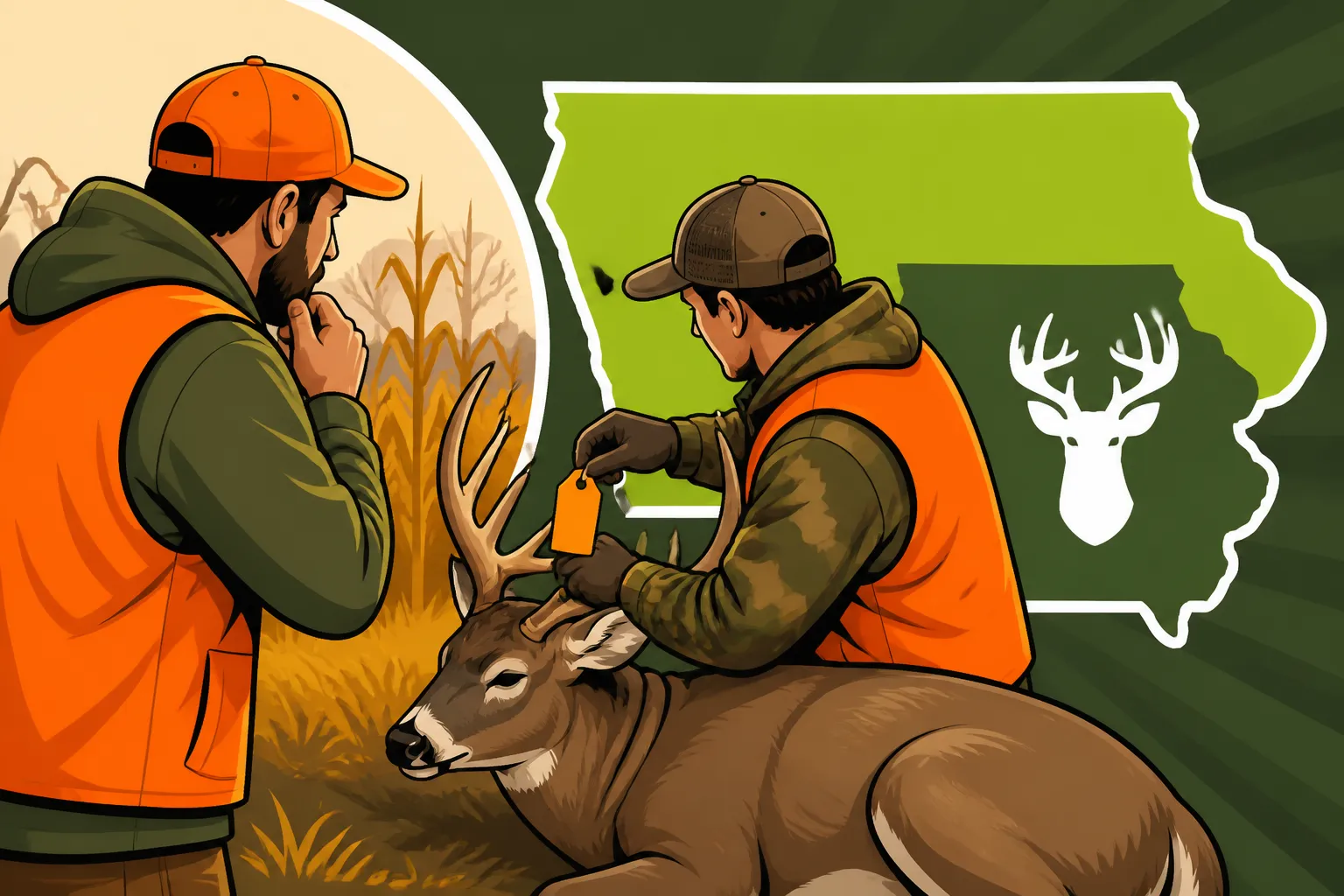
Once a deer is recovered, Iowa law requires that the hunter immediately attach their valid deer tag to the carcass. "Immediately" means as soon as the deer is found and before it's moved or field-dressed. The tag must be securely attached to the leg of the deer, between the hock and the knee, and remain there until the deer is processed for consumption or taxidermy. This isn't a suggestion; it's a hard and fast rule.
The tag information, including the date of harvest, time, and county, must be completely filled out at the time of tagging. This immediate tagging is critical for legal transport and also ensures that the proper license is used for the correct animal. If you wait, even for a short drive back to the truck, you could be in violation. It’s also crucial to remember the Iowa Deer Harvest Reporting Rules. Every deer taken must be reported to the DNR within 24 hours of recovery and before processing begins. This is a separate step from physical tagging, but equally important. Many hunters use resources like GoHunt to keep track of their season and ensure they're following all the reporting guidelines.
Navigating Party Hunting and Group Recoveries
Hunting is often a communal activity, and many of us love sharing the experience with family and friends. Iowa recognizes this through provisions like party hunting, but it’s essential to understand the specific parameters to avoid legal issues.
Official Iowa Party Hunting Rules
Iowa does have specific provisions for "party hunting," which is outlined in the Iowa Party Hunting Rules. This rule allows one member of a hunting party to tag a deer killed by another member of the same party, under very specific conditions. The key here is that all members of the party must possess a valid, unused tag for the deer species and sex that was harvested. For example, if you shoot a buck and your buddy has an unused antlered tag, he can tag your buck, provided you both have valid tags for an antlered deer.
The purpose of party hunting is often for practical reasons, such as maximizing tags on a specific hunt, especially during shotgun seasons, or ensuring every harvested deer is legally covered. It’s not a free-for-all where one person’s tag covers multiple deer taken by different people. It’s about being able to utilize the tags within a legal hunting party effectively. Always make sure everyone in your party is clear on these rules before the hunt begins, and that their licenses are suitable for the deer type harvested.
Assisting a Fellow Hunter with a Kill
This scenario often happens when tracking a wounded deer. Let’s say your buddy makes a good shot, but the deer is tough and still on its feet when you catch up to it. You might decide to put a finishing shot into it to ensure a quick, humane harvest and prevent it from escaping. In most cases like this, the deer still belongs to the original shooter who made the first lethal shot. Your finishing shot is seen as an act of assistance.
The crucial element is identifying whose shot was ultimately responsible for the kill. If the first hunter's shot was already fatal and the deer was merely succumbing, then it's still their deer. If your shot was definitively required to bring the deer down, and the first shot was not lethal, then technically, it could become your deer. This is where honest conversation and adherence to the spirit of the law come in. The DNR wants to know who harvested the deer. A good rule of thumb is that if a deer is wounded by Hunter A, and Hunter B puts a second, necessary shot in, it’s still Hunter A’s deer, assuming Hunter A possesses a valid tag. If you track a deer that was clearly wounded by someone else, and you dispatch it, it would legally be your deer if you're still actively hunting and possess a valid tag, but it's often more ethical to try and find the original hunter. This can be a very grey area, and open communication is essential.
Special Considerations for Youth Hunters
Hunting with youth is one of the most rewarding experiences, and Iowa has specific rules to encourage it. When a youth hunter harvests a deer, their specific youth tag must be used. However, situations can arise where an adult assists a youth. For instance, an adult might help a young hunter Shot Placement on a Whitetail at Twenty Yards or even take a finishing shot if the youth's shot was not immediately lethal and there's a risk of losing the animal.
If an adult helps dispatch a deer wounded by a youth hunter, the deer should still be tagged with the youth's license, provided the youth's shot was reasonably capable of taking the deer. The adult's role is typically seen as mentoring and assisting, not "taking" the deer themselves. However, if an adult essentially shoots the deer for the youth without the youth having made a significant, killing shot, that could become problematic. The intent of a youth tag is for the youth to harvest the deer. Always make sure the youth is actively participating and capable. Knowing the Iowa Hunter Education Age Requirement and the specifics of their Iowa Youth Deer Season Dates is paramount for adults mentoring young hunters.
Legal Pitfalls and Best Practices to Avoid Them
The last thing any hunter wants is a run-in with the law, especially over something that could be easily avoided. Understanding the common mistakes and how to prevent them is key to a smooth hunting season.
Misunderstandings That Lead to Violations
Many violations related to tagging another hunter's deer aren't born out of malicious intent, but rather a misunderstanding of the rules. A common pitfall is the assumption that because you're hunting together, any tag can be used on any deer. This is simply not true outside of the strict definition of party hunting where both hunters have a valid, unused tag for that specific type of deer. For example, if you've already filled your antlered tag, you cannot use an unused antlerless tag to cover your friend's buck, even if you’re "party hunting." Each tag is specific.
Another common misunderstanding is related to tags being transferred or "given" away. Your Iowa deer tag is non-transferable. You cannot give your unused tag to a friend who has already filled theirs, or to someone who doesn't have a tag for the season. Each hunter must possess their own valid license. Using a mapping app like the one offered by GoHunt to keep track of shared property lines and ensure everyone knows where they are and whose tags are still valid can help prevent accidental violations.
The Importance of Communication and Documentation
In any group hunting scenario, communication is your most powerful tool. Before you even head into the field, have a clear discussion with your hunting partners about everyone's tags, intentions, and how you'll handle various scenarios. Who has an antlered tag left? Who needs to fill an antlerless tag? What's the plan if a deer is wounded by one person but needs a finishing shot from another?
If a situation arises where a deer is recovered and there's a question about whose tag it should go on, pause. Don't move the deer. Don't tag it hastily. Talk it through honestly with your partners. If you're unsure, it's always better to call the local conservation officer for clarification before making a mistake. Documenting the circumstances, perhaps with photos or a quick note on your phone, can also be helpful, especially if a conservation officer is involved. Transparency and honesty are critical.
Using Technology for Clarity
In today's hunting world, technology can be a huge asset in preventing tagging mix-ups. Apps like GoHunt provide real-time access to regulations, maps with property boundaries, and even features for sharing hunt plans with your party. This means everyone can be on the same page regarding where they are, who is hunting what specific zone or private parcel, and even what tags they have remaining.
Before you go afield, especially on larger public areas like those you might scout using Scouting Iowa Public Land Before the Opener or Hunting Iowa Walk-In Ground Without Burning It Out, ensure everyone has access to these tools and understands how to use them. Mark stand locations, potential travel routes, and even areas where deer have been sighted. When a shot is taken, a quick dropped pin can help clarify recovery efforts and confirm who was where. This level of digital communication minimizes confusion in the heat of the moment and helps ensure compliance with Iowa's regulations.
Practical Scenarios and How to Handle Them
Let's walk through some common real-world scenarios you might encounter when hunting in Iowa and how to apply the tagging rules.
When Your Shot Finishes a Wounded Deer
Imagine you're still-hunting a creek bottom, perhaps near a good crossing point. You hear a shot in the distance, and then, a few minutes later, a deer comes limping through your shooting lane. It's clearly wounded, maybe a gut shot, and struggling. You make a clean, ethical shot, and the deer drops. What now?
The ethical thing to do is recover the deer and then try to locate the original shooter. If the original hunter can be found, and they confirm it's their deer and they have a valid tag, then their tag should be applied. Your shot was an act of mercy and recovery. If you cannot find the original hunter, and you have a valid tag for that deer (e.g., an antlerless tag for a doe, or an any-deer tag for a buck), then you would legally be required to tag it with your own license. This is often the case on public land where hunters might not know each other. The law aims to prevent wasted game. If you're faced with a tough blood trail, knowing Blood Trailing in Tall CRP techniques can be critical for recovery, even if it's not your deer.
Recovering a Deer Shot by Someone Else on Shared Land
This scenario often plays out on large public areas or shared private land. Perhaps you and a buddy are hunting separate stands on a large timber block. Your buddy shoots a deer, and you hear the crash. When you meet up, the deer is indeed down. Who tags it?
Provided your buddy made the lethal shot and possesses a valid, unused tag for that deer (e.g., an antlered tag for a buck or an antlerless tag for a doe), it’s their deer, and their tag must be applied. Even if you helped track it, field dress it, or drag it out, the "taker" is the person who made the kill shot. This is a straightforward application of the individual responsibility rule. However, if your buddy had already filled their buck tag for the season, but you still have one, and you were party hunting per the Iowa regulations (meaning you both had valid, unused tags for the type of deer harvested at the time of the kill), then your tag could be used. Always revert to the specific Iowa Party Hunting Rules for clarity in these situations.
The "Gift" of a Deer
Sometimes, hunters want to "gift" a deer they've harvested to a family member or friend who might not have had success or doesn't hunt. While the sentiment is generous, the process must still adhere to Iowa’s regulations. You cannot tag a deer with your license and then simply "transfer" the physical tag to someone else's name before it's processed.
The only way a deer can be legally "gifted" to another individual before processing is if it falls under the explicit party hunting rules, as discussed, where the person receiving the deer's tag also had a valid, unused tag for that deer at the time of the harvest. Once the deer is legally tagged by the hunter who killed it, and the harvest reported, then the meat can be shared or gifted to anyone. The carcass itself, with its attached tag, can be legally transported by the harvesting hunter. Once processed into cuts of meat, those cuts are yours to share as you see fit. You can read up on Field Dressing in Warm October Weather and Getting a Deer Cooled in October to ensure the meat is handled properly for any sharing.
It’s crucial to remember that ethical hunting also means legal hunting. When in doubt, always refer to the official Iowa DNR hunting regulations or contact a conservation officer. Resources like GoHunt can help you stay informed and prepared for any scenario Iowa’s diverse hunting seasons throw your way.
Disclaimer
Please remember that hunting regulations can change. While this guide provides a comprehensive overview of Iowa's deer tagging rules, it is your responsibility to consult the most current Iowa DNR hunting regulations booklet before heading afield. This information is for educational purposes and should not be considered legal advice.