Hunting Iowa Walk-In Ground Without Burning It Out
It's a familiar heartache for many Iowa hunters: you spend countless hours scouting a promising piece of walk-in ground, only to have your efforts, and the deer, vanish after the first few days of the season. The dream of untouched public land can quickly turn into the reality of pressured deer and over-hunted spots. This guide is all about helping you understand how to navigate the challenges of hunting Iowa's walk-in public access areas effectively, ensuring you can return to productive spots year after year without "burning them out."
Understanding Iowa's Walk-In Access and Its Unique Challenges
Iowa, while renowned for its private land hunting opportunities, also offers a surprising amount of public access through various programs. These walk-in areas are a blessing, providing vital opportunities for hunters who don't have private ground. However, this accessibility comes with its own set of hurdles, primarily intense hunting pressure that can quickly turn a hot spot cold.
What Constitutes Iowa Walk-In Ground?
When we talk about "walk-in ground" in Iowa, we're primarily referring to areas managed by the Iowa Department of Natural Resources (DNR) or other conservation entities that allow public hunting without specific landowner permission beyond a valid hunting license. The most prominent example is the Iowa's Habitat and Access Program Explained (IHAP), which leases private land from landowners and opens it to public hunting, often marked by distinctive yellow signs. Beyond IHAP, many Wildlife Management Areas (WMAs) and County Conservation Board lands also function as walk-in access. These lands are explicitly designated for public use, often with clear boundaries and regulations outlined on the Iowa DNR Hunter Atlas. The beauty of these areas is their sheer accessibility; anyone can walk in and hunt during the open seasons, which is also their Achilles' heel when it comes to sustained success.
The key characteristic of these properties is that they are generally open to everyone with a valid license, often on a first-come, first-served basis. This differs significantly from private land, where access is controlled. The varying nature of these properties—from CRP fields to timbered draws to river bottomlands—means each presents unique hunting scenarios and pressure points. Understanding the type of walk-in access you're on, be it a small IHAP tract wedged between crop fields or a larger WMA with varied habitat, is the first step in developing an effective, sustainable hunting strategy.
The "Burnout" Phenomenon on Public Land
"Burning out" a hunting spot is the unfortunate reality for many public land hunters. It describes the rapid decline in deer activity, particularly mature buck sightings, in an area due to excessive, careless, or uneducated hunting pressure. It happens when hunters unintentionally educate deer to their presence, making those animals either nocturnal, move off the property entirely, or become incredibly wary and difficult to approach.
Imagine this: you've scouted a beautiful timbered ridge on an IHAP property, found fresh rubs and scrapes, and even seen a decent buck on your trail camera. You go in on opening morning, perhaps walk right down the main deer trail, set up your stand, and have a great hunt. But if multiple hunters do this day after day, week after week, the deer quickly learn. They'll start using different travel corridors, bedding in the thickest, nastiest cover, or simply abandoning that particular section of the property. The "burnout" isn't necessarily about removing all the deer through harvest, but rather making them so aware of human presence that they become unhuntable during daylight hours, effectively making the area useless for future hunts. This is a common frustration, and one we aim to avoid with thoughtful strategies.
Pre-Season Scouting: Your Foundation for Sustainable Success
The key to hunting walk-in ground effectively, and without burning it out, starts long before you ever step foot in the woods with your bow or gun. It begins with meticulous pre-season scouting, focusing on identifying those overlooked nooks and crannies that other hunters might miss. This strategic intelligence gathering is what allows you to apply minimal pressure while maximizing your chances of encountering unpressured deer.
E-Scouting for Overlooked Opportunities
In today's hunting world, effective e-scouting is non-negotiable, especially on public land. Tools like the Iowa DNR's online mapping system, combined with powerful platforms like GoHunt, allow you to analyze vast tracts of land from the comfort of your home. You're looking for patterns, access points, and potential sanctuary areas that might escape the casual observer. Focus on terrain features that naturally funnel deer, such as timber points between two fields, narrow creek corridors, or river oxbows and deer movement, which often act as natural barriers or highways for whitetails.
When e-scouting, pay close attention to features that suggest less human traffic. Are there remote corners of a WMA far from parking areas? Are there thick cedar and locust thickets as bedding cover that look impenetrable on the map? Look for subtle changes in topography, like saddles and benches deer cross daily, or inside corners of crop fields that offer both food and cover. Overlays showing property boundaries and topographical lines can reveal hidden draws or secluded pockets of timber that might be difficult to access, and therefore less hunted. The goal is to identify areas that look promising for deer, but simultaneously present a challenge for other hunters, thereby reducing the likelihood of intense pressure. Remember, the less obvious the spot, the higher the potential for unpressured deer.
On-the-Ground Reconnaissance: Confirming the Signs
Once your e-scouting has narrowed down a few potential hotspots, it’s time to get boots on the ground. This physical scouting is crucial, but it needs to be done with extreme care to avoid contaminating your spots before the season even begins. The best time for this is typically late winter or early spring after deer shed their antlers, or in the very early fall before hunting pressure picks up. Focus on confirming what you saw on the maps. Are those thickets indeed as dense as they appeared? Are the travel corridors well-used?
When you're out there, look for definitive deer sign like consistent trails, rub lines, and old scrapes. However, don't just focus on the obvious. Try to piece together the puzzle of how deer move through the property, not just on it. Where are they bedding? Where are their primary food sources? How do they transition between these areas? Identify potential ambush points along these routes. Crucially, pay attention to potential human sign. Are there old treestand straps, boot tracks, or discarded snack wrappers? If so, this spot might already be "burnt out" or at least heavily pressured. Prioritize finding fresh, undisturbed sign in areas that show little to no evidence of other hunters. This is where your detailed scouting from home pays off, guiding you to those less-traveled paths.
Identifying Sanctuaries and Hidden Bedding Areas
The true secret to consistently finding deer on walk-in ground is locating their sanctuary areas—those spots they retreat to when pressure builds. These are typically the thickest, nastiest, most difficult-to-access parts of the property, often overlooked by less dedicated hunters. On a map, these might appear as dense timber blocks, unhuntable marsh edges, or incredibly steep, brushy ravines. Think about CRP grass and where bucks bed, or the impenetrable chaos of multiflora rose thickets that no one wants to fight through.
During your scouting, specifically look for evidence of these sanctuary zones. You might find heavier deer sign closer to these areas, indicating deer are using them for bedding. Accessing these areas should be done sparingly, if at all, to avoid pushing deer out. Instead, identify observation points or ambush locations adjacent to these sanctuaries, where deer will likely transition in and out during low-light hours. By understanding where deer feel safe, you can position yourself strategically without intruding on their core bedding areas, thus reducing the chance of burning them out. A great resource for this detailed scouting is Scouting Iowa Public Land Before the Opener.
Strategic Entry and Exit: Minimizing Your Footprint
One of the most critical aspects of hunting walk-in public land without educating deer is how you enter and exit your hunting location. Every step you take, every scent you leave, every sound you make, can have a lasting impact on deer behavior. Your goal should always be to move through the environment as stealthily and minimally as possible, leaving no trace that you were there.
Access Routes That Avoid Bumping Deer
The path you take to and from your stand or blind is just as important as the location itself. Many hunters make the mistake of walking directly through bedding areas or high-traffic zones, alerting deer to their presence before the hunt even begins. Instead, you need to identify Access Routes That Do Not Bump Deer. This means using terrain features, natural barriers, and even wind direction to mask your approach.
Consider creek bottoms, ditches in row crop country, or the edges of dense timber lines as hidden pathways. These routes often provide cover and can keep you out of sight and scent from bedding deer. Parking away from your stand, even if it means a longer walk, can also be beneficial, as deer quickly associate parked vehicles with human presence. When planning your route, think like a predator: how can you get to your ambush point undetected? This might mean walking an extra quarter-mile around a field edge or through a brushy ditch rather than taking a direct, open path. The objective is to be a ghost, appearing and disappearing without the deer ever knowing you were there, thereby preserving the integrity of the hunting spot.
Leveraging Wind and Thermals for Cover
Understanding and utilizing wind and thermals is paramount when hunting Iowa’s diverse landscapes, especially in river breaks and rolling timber. Deer rely heavily on their sense of smell, and a misplaced hunter upwind can quickly spoil a hunt. Always position yourself downwind of where you expect deer to be, or at least in a crosswind that carries your scent away from key areas. This principle applies not just to your stand location, but also to your entry and exit routes.
Thermals, which are rising or falling air currents, play a significant role, particularly in hilly or river bottom terrain. In the mornings, air typically flows downhill as the ground cools, and in the evenings, it rises as the ground warms. This means a morning hunt in a valley might require an approach from below, and an evening hunt an approach from above. Failing to account for thermals can lead to your scent being carried directly into bedding areas you're trying to avoid. By meticulously planning your approach and sit based on predicted wind and thermal patterns, you significantly reduce the chances of deer detecting your presence, ensuring they remain unpressured for future hunts. A deep dive into Wind and Thermals in River Breaks can significantly improve your strategy.
Quiet Movement and Leaving No Trace
Beyond scent and sight, sound is another critical factor. Crunching leaves, snapping twigs, or even the rustle of your clothing can alert deer to your presence. Practice quiet movement through the woods. This might involve walking slower, lifting your feet more deliberately, or even choosing softer ground to walk on. Invest in quiet clothing and gear that won't make noise as you move or when you draw your bow.
Equally important is the concept of "leaving no trace." This isn't just about packing out your trash; it's about minimizing any sign that humans have been in the area. Avoid breaking branches unnecessarily, disturbing vegetation, or leaving behind any markers that other hunters (or deer) might detect. If you're using portable stands, consider applying a strategy like Leaving No Trace on Iowa Walk-In Ground. The less evidence you leave behind, the more pristine and inviting the area remains for deer, and for your next hunt. The idea is to be so discreet that the deer never even know they're being hunted, allowing them to maintain their natural patterns.
Hunting Smart: Adapting to Pressure and Conditions
Once the season starts, the real test of your walk-in hunting strategy begins. The static plans you made during e-scouting and pre-season reconnaissance must now become dynamic, adapting to the ever-changing conditions of hunting pressure, weather, and deer behavior. Hunting smart means knowing when to be aggressive and when to back off, understanding that every action you take has consequences for the long-term viability of your spot.
Reading Iowa Public Land Hunting Pressure Patterns
The unfortunate truth about public land, especially accessible walk-in areas, is that deer quickly become accustomed to hunting pressure. Understanding Hunting Pressure Patterns on Iowa Public Land is paramount to success. Most hunters tend to hit the easiest-to-access spots first – those close to parking, or those with obvious trails leading in. This pushes deer into thicker, less accessible cover, often deeper into the property or onto adjacent private land.
By observing vehicle traffic, boot tracks, and even encountering other hunters, you can gauge the pressure level. If you consistently see other hunters in a particular area, it's likely that spot is already "burnt." This doesn't mean you should abandon the entire property. Instead, pivot your strategy. Focus on those overlooked sanctuary areas you identified during scouting. Hunt mid-week when pressure is typically lower, or during inclement weather when fair-weather hunters stay home. The deer are still there; they've just become incredibly wary and will only move when they feel safe. Your job is to find those moments of safety.
Knowing When to Hunt and When to Back Off
One of the hardest lessons for a public land hunter is knowing when to stay home or when to switch locations entirely. If you've hunted a spot a few times, and consistently seen little to no deer activity, or worse, have evidence of bumping deer, it's time to back off. Continually pressing a burnt-out area only makes it worse, further educating the deer and solidifying their nocturnal patterns or pushing them off the property altogether.
This doesn't mean giving up on the property forever, but rather letting it "rest." Deer have incredible memories, and given a week or two of no human intrusion, they may start to return to their normal routines, especially if food sources are appealing. This requires discipline. Instead of repeatedly hammering a single spot, have multiple spots scouted, both on public and potentially private land (with permission, of course). That way, when one spot cools off, you have other options to explore. This approach spreads your pressure, keeps deer guessing, and ensures you have viable hunting options throughout the season.
Tactics for Pressured Deer on Walk-In Ground
Hunting pressured deer requires a shift in tactics from what might work on unpressured private land. These deer are jumpy, observant, and often move primarily during low-light hours. You need to adapt your approach to match their heightened wariness.
- Go Mobile: Consider Mobile Saddle Hunting in Iowa or using lightweight hang-on stands with climbing sticks. This allows you to quickly adapt to fresh sign or shift locations based on wind or pressure, often getting into spots deep in cover that fixed stands can't reach. The less impact you make with permanent setups, the better.
- Ground Blinds: For certain situations, especially along field edges or in brushy pockets, a well-brushed-in Ground Blinds in Iowa Farm Country can be effective. They offer concealment for movement, which is crucial when deer are constantly scanning. Ensure it’s set up well in advance, or camouflaged perfectly, to blend into the surroundings.
- Hunt the Nastiest Cover: Don't shy away from the thickest, most impenetrable cover on the property. Pressured deer often seek refuge in these areas, and if you can quietly slip in and set up on a travel corridor within or immediately adjacent to this cover, you might catch a buck feeling safe enough to move during daylight.
- Patience and Persistence: Hunting pressured deer often means long, uneventful sits, followed by fleeting opportunities. Be prepared to wait, remain motionless, and capitalize on that one chance.
Table: High-Pressure vs. Low-Pressure Tactics for Iowa Walk-In Ground
| Tactic Category | High-Pressure Scenarios (Public Land) | Low-Pressure Scenarios (Less-Used Public/Private) |
|---|---|---|
| Entry/Exit | Indirect, wind-conscious, long walks, use natural barriers (ditches, creeks) | More direct, but still mindful of wind and thermals, shorter walks to stands |
| Stand Type | Mobile (saddles, lightweight hang-ons), well-brushed ground blinds | Ladder stands, permanent stands, pop-up blinds (set up well in advance) |
| Location Focus | Deep cover, sanctuary edges, thick transition zones, obscure funnels | Food sources, obvious travel corridors, field edges, prominent funnels |
| Hunting Times | Midday (deer often move during perceived lulls), first/last light in thick cover | Prime morning/evening, all-day sits during rut |
| Calling Strategy | Minimal, soft calling, subtle grunts or bleats (if any) | More aggressive rattling and grunting, decoys |
| Scouting Approach | E-scout heavily, minimal on-ground intrusion, focus on human sign avoidance | Regular scouting, trail cameras, monitoring known deer patterns |
| Stand Placement Depth | Closer to bedding, inside heavy cover, overlooking short shooting lanes | On travel routes leading to/from food, overlooking larger openings |
| Hunter Impact | Focus on leaving no trace, minimizing scent and sound | Still mindful, but less extreme measures if deer are less educated |
Diverse Tactics for Different Iowa Habitat Types
Iowa's walk-in hunting ground isn't a monolithic landscape. It comprises a mosaic of habitats, each demanding a slightly different approach to effectively hunt deer without burning out the spot. Understanding these nuances allows you to tailor your tactics to the specific environment you're in, maximizing your chances of success.
Timber and Creek Corridors
The timbered tracts and winding creek corridors in Iowa are often prime deer habitat, offering both food and cover. However, they can also be challenging to hunt, especially when pressured. On public timber, deer will quickly learn to use the thickest sections as bedding cover during the day, moving along less obvious trails at night. When Reading an Iowa Timber Draw for Deer Sign, look for faint deer paths that parallel the main, heavily used trails. These "secondary" trails are often where mature bucks will sneak through, avoiding the well-trodden paths that hunters tend to use.
Focus your efforts on transition zones within the timber, such as where a dense bedding thicket meets a more open canopy, or where a creek bottom narrows. These pinch points and saddles and benches deer cross daily can funnel deer movement. Consider hanging stands on the downwind side of these funnels, well off the beaten path. In a creek bottom, pay attention to subtle elevation changes or brush piles that might act as natural blinds. The key is to be patient and silent, letting the deer move through these natural pathways, rather than trying to push into their bedding. Remember, you're looking for where deer feel safe enough to travel during legal shooting hours, which is often in the less obvious, thicker sections of the timber.
CRP and Thick Field Edge Cover
Iowa's Conservation Reserve Program (CRP) fields and other thick, grassy covers are invaluable for deer, providing excellent bedding, fawning cover, and thermal protection. For hunters, however, they can be incredibly frustrating to hunt. Deer can disappear into these dense fields, seemingly without a trace. Simply walking through a CRP field in search of deer is a surefire way to burn it out, pushing every deer out of the county.
Instead, think about how deer interact with these fields. They rarely bed right on the edge. Instead, they’ll typically bed deeper inside, often near subtle changes in elevation or cover density. Focus your hunting efforts on the edges of these CRP fields, particularly where they meet a timber line, a crop field, or a drainage ditch. Deer will often stage in the CRP before moving out to feed in the evenings, or move back into it from food sources in the mornings. Look for subtle trails leading in and out of the CRP. Setting up a ground blind or a well-concealed stand on the downwind side of these entry/exit points, especially at the Inside Corners of Crop Fields, can be highly effective. The goal is to catch them as they transition, never intruding into the bedding cover itself. Understanding CRP Grass and Where Bucks Bed is critical here.
Standing Corn and Bean Field Deer Patterns
Iowa is synonymous with row crops, and these fields, especially standing corn, provide incredible food and cover for deer. Hunting these areas on walk-in ground requires a strategic understanding of Standing Corn and Bean Field Deer Patterns. Standing corn, in particular, offers a fortress-like sanctuary, allowing deer to move unseen and unfettered. Once fields are picked, especially bean fields, they become open food sources.
When corn is standing, deer will bed and feed within it, often using internal "trails" or even the rows themselves as travel corridors. Hunting the interior of standing corn is often futile and disruptive. Instead, concentrate on the external edges where the corn meets timber, CRP, or drainage ditches. Look for subtle pinch points where deer are forced to exit or enter the field. As the season progresses and corn is harvested, deer patterns will shift dramatically. They'll then rely heavily on picked crop fields for feeding, but will quickly retreat to the nearest dense cover (timber, CRP, river bottoms) for bedding. Your strategy should adapt to these changes, focusing on the interface between remaining cover and newly exposed food sources. Remember, most pressured deer will move to these exposed fields primarily under the cloak of darkness, so catching them during legal shooting light means being set up perfectly at dawn or dusk, often with a mobile stand that can be adjusted to the prevailing wind on a moment's notice.
Post-Hunt Analysis and Long-Term Management
The hunt doesn't end when you climb out of your stand. To truly succeed on Iowa's walk-in public lands without burning them out, a critical post-hunt analysis and a long-term management mindset are essential. Every hunt, successful or not, provides valuable data that can inform your future strategies and help preserve the quality of your spots.
Evaluating Your Hunt and Learning from the Experience
After each hunt, take the time to critically evaluate what happened. This isn't just about whether you harvested a deer, but about the entire experience. Did you see deer? Where were they coming from, and where were they going? Did you detect any signs of other hunters or unexpected pressure? Was your entry and exit route as stealthy as you planned? Were you busted by a deer, and if so, what do you think went wrong?
Keep detailed notes, perhaps in a hunting journal or on your mapping app. Mark down wind direction, temperatures, moon phase, and any deer sightings or sign observed. Note where other hunters were encountered. This information, over time, creates a valuable dataset that reveals patterns and helps you understand how deer react to different conditions and pressure levels on specific pieces of walk-in ground. Learning to read these subtle cues and adjusting your future plans based on real-world observations is how you evolve as a public land hunter and maintain the integrity of your spots.
The Art of Letting a Spot Rest to Prevent Burnout
Perhaps the most challenging, yet most crucial, aspect of long-term management on walk-in ground is knowing when to let a spot rest. If you've hunted a particular area a few times, or if you suspect you've bumped deer, give it a break. Continuously hunting a pressured area will only reinforce negative behaviors in deer, making them more nocturnal or causing them to vacate the area entirely.
How long should you let a spot rest? It depends on the level of pressure and the time of year. During the peak of the rut, deer behavior can be more forgiving, but even then, repeated intrusion can be detrimental. Generally, a week or two of no human presence can allow deer to settle back into their routines. Having multiple well-scouted spots, as discussed earlier, is critical here. When one area shows signs of burnout, pivot to another. This rotational strategy distributes your pressure, keeps the deer guessing, and ensures that you always have fresh options available, rather than continually rehashing a dead spot. This long-term thinking safeguards your hunting opportunities.
Planning for the Next Season: Sustained Success
True success on Iowa's walk-in public land isn't about one great hunt; it's about sustained success over many seasons. This requires a mindset of continuous learning and adaptation. Use your post-season scouting to evaluate how deer used the landscape after the hunting pressure subsided. Did they return to previous bedding areas? Did new travel corridors emerge? This off-season reconnaissance, especially after snow has fallen, can reveal much about winter deer patterns and how they utilize habitat when not being hunted.
Furthermore, stay up-to-date with Iowa DNR regulations and any changes to walk-in access programs. Land enrolled in IHAP can change year to year, so always check the latest maps before heading out. Consider opportunities for Iowa January Antlerless Hunts which can offer a different perspective on deer movement when most other seasons are closed. By constantly refining your knowledge, expanding your portfolio of scouted areas, and applying minimal-impact tactics, you can develop a sustainable strategy that ensures you'll be enjoying Iowa's walk-in ground for years to come.
Ethical Considerations and Respect for the Resource
Hunting Iowa's walk-in ground isn't just about tactics and success; it's also about ethics, sportsmanship, and being a responsible steward of the shared resource. Your actions on public land affect not only your own hunting experience but also that of other hunters and the wildlife itself.
Sportsmanship on Shared Public Land
Public land means shared land, and with that comes the responsibility of good sportsmanship. This involves respecting other hunters, their space, and their efforts. If you arrive at a parking area and see multiple vehicles, especially near a spot you've scouted, consider moving to another location. There's nothing more frustrating than having a hunt ruined by another hunter who set up too close or walked through your area.
Communicate respectfully if you encounter another hunter in the field. A simple wave or polite inquiry about where they're heading can prevent conflicts. Remember that everyone is out there for their own reasons, and while you might be focused on a trophy buck, others might be enjoying the solitude or introducing a new hunter to the sport. Being considerate, practicing patience, and giving fellow hunters ample space contributes to a positive experience for everyone and upholds the reputation of the hunting community.
Understanding and Adhering to Regulations
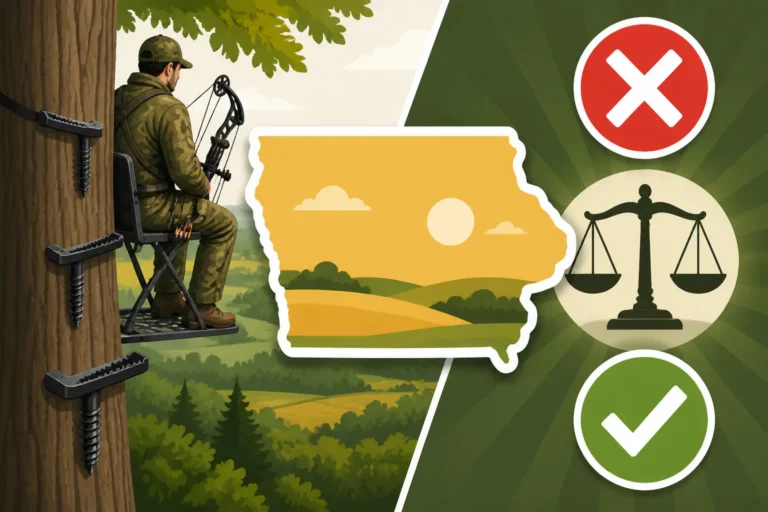
Ignorance of the law is no excuse, especially when hunting. Iowa has specific rules regarding seasons, bag limits, weapon restrictions, and even how you can utilize public land. For example, understanding portable stand rules on Iowa public ground is crucial to avoid violations. Are screw-in steps legal in Iowa? No, typically not on public lands to prevent damage to trees. Can you leave your stand overnight? Some areas allow it under certain conditions, others do not.
Always consult the most recent Iowa hunting regulations booklet, which is released annually. Pay close attention to specifics for the type of public land you're hunting, as WMAs or IHAP tracts might have additional rules beyond state-wide mandates. Using tools like the GoHunt app can provide quick access to regulations. Adhering strictly to these rules protects the resource, prevents legal trouble, and ensures that these public hunting opportunities remain available for future generations.
Leaving It Better Than You Found It
The "leave no trace" principle extends beyond just your immediate hunting period; it's a philosophy for interaction with the land. Pack out everything you pack in, and if you see litter left by others, consider packing that out too. Avoid unnecessary damage to trees or vegetation. If you harvest a deer, ensure you field dress it responsibly and in accordance with any CWD regulations, which might involve Iowa CWD Sampling and Carcass Rules.
This stewardship mindset ensures that the habitat remains healthy and attractive to wildlife, and that the hunting grounds are clean and accessible for others. By consistently demonstrating respect for the land, wildlife, and fellow hunters, you play a vital role in preserving Iowa's rich hunting heritage and ensuring that its walk-in public ground remains a viable and enjoyable resource for years to come.
Disclaimer
Please note: Hunting regulations and conditions can change. Always consult the official Iowa Department of Natural Resources (DNR) website and current hunting regulations booklet before planning any hunting activity. This guide provides general information and recommendations, but it is the hunter's responsibility to know and follow all applicable laws and safety guidelines.