Iowa Hunter Education Age Requirement
Getting into hunting in Iowa is an exciting prospect, full of potential for unforgettable outdoor adventures. However, for new or young hunters, navigating the intricate web of rules and regulations, especially concerning official requirements, can feel like trying to find your way through a corn maze blindfolded. One of the most critical steps, and often a source of confusion, is understanding Iowa's hunter education age requirements. This comprehensive guide will break down exactly who needs hunter education, how to fulfill this crucial requirement, and the various options available for both youth and adult aspiring hunters in the Hawkeye State.
Why Hunter Education is Absolutely Essential in Iowa
Before we dive into the specifics of age requirements, it’s vital to understand why hunter education exists in the first place. It's not just a hoop to jump through; it's the foundation for a safe, responsible, and enjoyable hunting experience. Iowa takes its hunting heritage seriously, and with that comes a commitment to ensuring every hunter understands their role in conservation and safety.
Safety First: Protecting Yourself and Others
At its core, hunter education is about safety. Hunting involves firearms, archery equipment, and often takes place in dynamic outdoor environments where unforeseen situations can arise. An accidental discharge, a misidentified target, or a fall from a treestand can have devastating consequences, not just for the hunter but for others in the field. Hunter education courses meticulously cover critical concepts like firearm and archery handling, safe zones of fire, proper shot placement to ensure a clean kill, and the absolute importance of knowing your target and what lies beyond it.
Imagine a scenario: You're walking through dense timber during shotgun season, pushing towards a known bedding area. Without proper hunter education, a moment of excitement could lead you to swing your shotgun towards another hunter or someone outside your designated shooting lane. The course instills the discipline needed to prevent such tragedies, covering practical safety measures like always treating every firearm as loaded, keeping the muzzle pointed in a safe direction, and having your finger off the trigger until you're ready to shoot. These aren't just suggestions; they are non-negotiable tenets of responsible hunting. You'll also learn about critical gear like safety harnesses for elevated stands and how to properly use them, which is paramount when bowhunting from a perch high above the Iowa cornfields. Leaving a detailed Leaving a Trip Plan for a Public Hunt with someone back home is another safety measure often discussed, especially when venturing into remote public lands.
Understanding Iowa's Hunting Regulations
Beyond immediate safety, hunter education provides a crucial roadmap to Iowa's complex hunting regulations. These aren't simple rules; they cover everything from season dates and bag limits to legal shooting hours and specific weapon restrictions for different seasons and game species. Misunderstanding a regulation can lead to fines, loss of hunting privileges, or even more serious legal trouble.
The Iowa Department of Natural Resources (DNR) publishes a new regulation booklet each year, and staying current with these changes is a hunter's responsibility. Hunter education courses demystify this process, teaching you how to read and interpret the regulations, where to find updated information – often around the Iowa Regulation Booklet Release Date – and how to ensure you're always operating within the bounds of the law. You'll learn about specific rules like Iowa Blaze Orange Requirements during firearm seasons, understanding Iowa Legal Shooting Hours, and the nuances of Iowa Party Hunting Rules if you plan to hunt with a group. This foundational knowledge allows you to confidently pursue game without the constant worry of inadvertently breaking the law. Failing to report a harvest or tagging a deer incorrectly can lead to Iowa Wildlife Violation Penalties, which hunter education aims to help you avoid entirely.
Ethical Hunting Practices and Wildlife Stewardship
Hunting in Iowa is more than just harvesting an animal; it's a deep-seated tradition built on respect for wildlife and the environment. Hunter education fosters a strong sense of ethical responsibility and promotes wildlife stewardship. It teaches about fair chase principles, ensuring that animals are harvested humanely and with respect. This includes understanding shot placement for quick, ethical kills and the importance of thorough game recovery.
For example, a hunter education course will explain why chasing a wounded animal in a vehicle or using certain technologies to gain an unfair advantage goes against fair chase ethics. It also delves into the broader concept of conservation, highlighting how license fees contribute directly to wildlife management and habitat restoration efforts in Iowa. Hunters are, in fact, the original conservationists, and the course empowers you to be a responsible participant in maintaining healthy wildlife populations for future generations. Learning how to properly field dress an animal and care for the meat, regardless of the temperature, is also a critical ethical component of the hunter education curriculum.
Iowa's Specific Hunter Education Age Requirements
Now, let's get down to the nitty-gritty: who needs hunter education in Iowa, and when. The requirements are tied to specific dates of birth, acknowledging that those who grew up in an era with less emphasis on formal hunting safety may already possess significant field experience.
The Mandatory Education for Young Hunters
In Iowa, the general rule is clear: anyone born on or after January 1, 1972, must successfully complete a hunter education course approved by the Iowa DNR to obtain a hunting license. This applies to most hunting licenses, including those for deer, pheasant, turkey, and other small game. If you're planning to buy a regular Iowa hunting license and you fall into this age group, you simply won't be able to purchase it without proof of your hunter education certification.
Furthermore, there's a specific requirement for archery hunters. If you were born on or after January 1, 1997, you must complete either an archery-specific hunter education course or a general hunter education course to legally obtain an archery hunting license. This ensures that those pursuing game with a bow or crossbow are well-versed in the unique safety considerations and ethical practices specific to archery hunting, such as understanding arrow trajectory and humane shot angles. This dual requirement highlights Iowa's commitment to ensuring proficiency across all hunting methods.
The "Grandfather Clause" for Older Hunters
For many seasoned hunters who grew up learning in the field, the hunter education requirement doesn't apply. If you were born before January 1, 1972, you are exempt from the general hunter education requirement for firearms. Similarly, if you were born before January 1, 1997, you are exempt from the archery-specific requirement. This is often referred to as a "grandfather clause," recognizing that individuals of a certain age likely gained their hunting knowledge and safety skills through years of practical experience and mentorship from older generations.
Even if you're exempt due to your age, it's never a bad idea to consider taking a refresher course. Hunting regulations, equipment, and safety best practices evolve over time. A voluntary course can help bridge any knowledge gaps and ensure you're up-to-date with current standards. The principles of safe hunting are timeless, but the methods and rules can certainly change. You can find more comprehensive details on general requirements by looking into Iowa Hunter Education and Licensing Basics.
Proof of Completion and Keeping Your Certification
Once you've successfully completed your hunter education course, you'll receive a certification card or record. This document is your official proof of completion and is crucial for purchasing hunting licenses. In some cases, your certification might even be noted on your state identification, but it's always wise to carry the physical card or a digital copy, especially when hunting in the field.
Iowa's hunter education certification is generally recognized by other states, thanks to reciprocity agreements. This means if you completed your course in Iowa, it should be valid if you decide to hunt in Nebraska, Missouri, or another state, and vice-versa. Always double-check the specific requirements of any state you plan to hunt in, as some might have minor additional stipulations. Keeping your certification safe and accessible is just as important as keeping your hunting license handy. Should you lose your card, the Iowa DNR website (or Go Outdoors Iowa portal) typically provides a way to request a replacement or print a copy of your certification.
Exploring the Apprentice Hunter Program in Iowa
Iowa understands that sometimes you just need to try something before committing to it fully. That's where the Apprentice Hunter Program comes into play, offering a fantastic opportunity for new hunters of all ages to experience hunting firsthand under strict supervision, before completing the formal hunter education course.
An Introduction to Apprentice Hunting
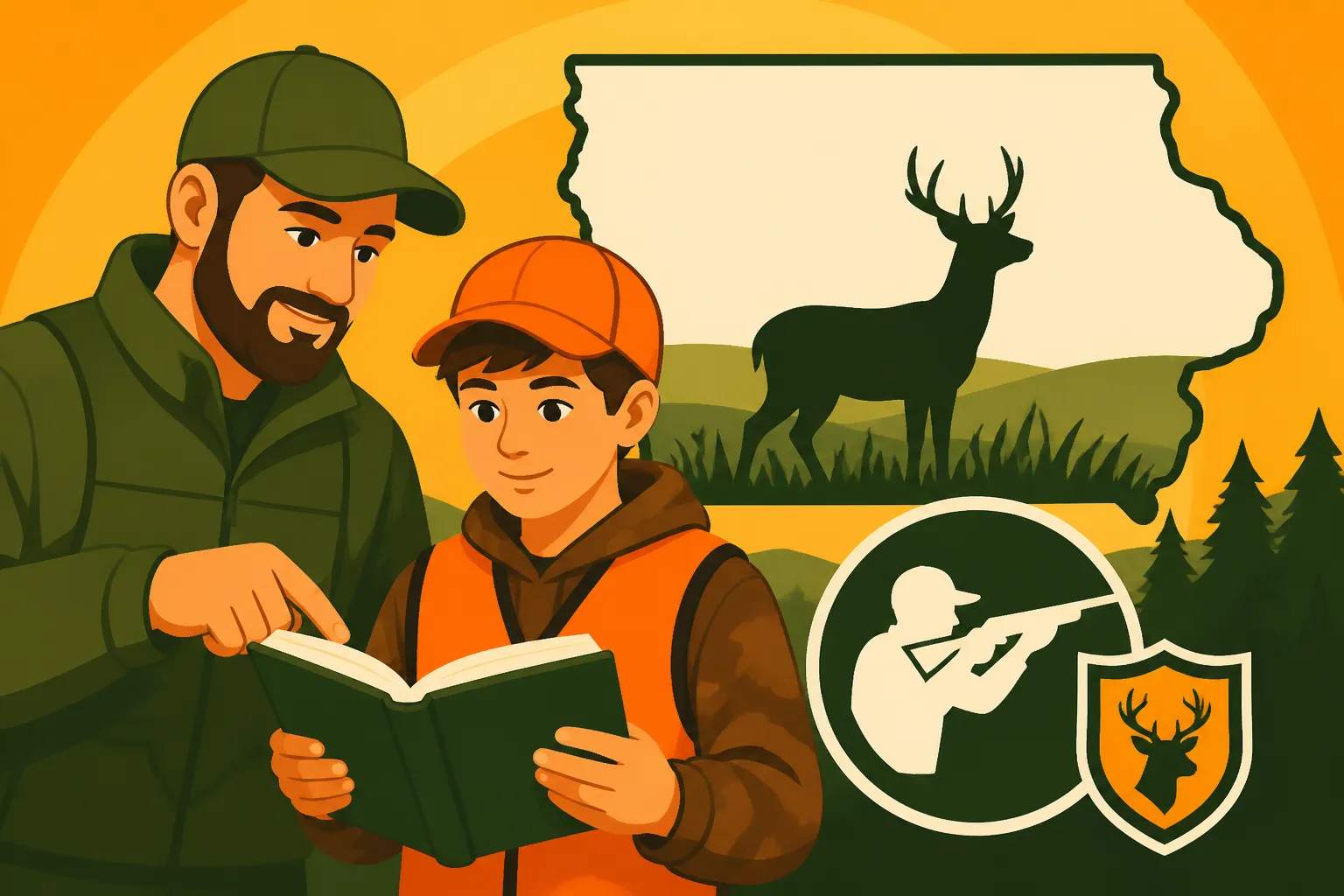
The Iowa Apprentice Hunting License is a unique program designed to encourage participation in hunting by removing the initial barrier of hunter education for one season. It allows an individual, regardless of age, to hunt without having first completed hunter education, provided they are under the direct supervision of a qualified, licensed adult mentor. This is a brilliant way for someone curious about hunting, perhaps a friend, spouse, or child, to dip their toes in the water and see if it's for them without the immediate commitment of a multi-day course.
Imagine a teenager who's expressed interest in deer hunting but isn't sure they'll enjoy it enough to dedicate the time to a hunter education course. The apprentice license offers a perfect solution. They can purchase the license, go hunting with an experienced adult, and get a real taste of the outdoors. This experience often ignites a passion that then motivates them to pursue full certification. This program is distinct from general youth licenses, as covered in Iowa Youth Deer Licence Cost for instance, because it specifically addresses the hunter education hurdle. More details can be found on how this program works under Iowa Apprentice Hunting Licence.
Who Qualifies as a Mentor and Their Responsibilities
The success and safety of the Apprentice Hunter Program hinge entirely on the mentor. To qualify as a mentor in Iowa, an individual must be at least 18 years of age, possess a valid Iowa hunting license, and, if born on or after January 1, 1972, must also have completed their own hunter education course. Critically, the mentor must remain in "direct control" of the apprentice hunter at all times.
"Direct control" means the mentor must be close enough to the apprentice to provide immediate instruction, guidance, and supervision. This isn't just about being in the same general area; it's about being actively engaged and able to intervene if a safety issue arises or assistance is needed. For example, if the apprentice is carrying a firearm, the mentor should be close enough to grab the gun if necessary. This responsibility is paramount, as the mentor is ultimately accountable for the apprentice's adherence to all hunting laws and safety protocols. This close supervision ensures that the apprentice is learning safe and ethical practices directly from an experienced individual, rather than just from a textbook. The program aligns well with initiatives like Iowa Mentored Youth Hunting, further supporting the safe introduction of new hunters.
Limitations and Transitioning from Apprentice to Certified Hunter
It's important to note that the Iowa Apprentice Hunting License is a one-time, non-renewable opportunity. It's valid for one license year only, after which the individual must complete their hunter education course to purchase a regular hunting license. This design reinforces the program's intent: to serve as an introductory pathway, not a permanent workaround for the hunter education requirement.
This means if you utilize the apprentice license, you'll need to make plans to complete your hunter education before the next hunting season begins if you wish to continue hunting independently. It’s a great trial run, but the clock starts ticking once you purchase that apprentice license. This structure ensures that while new hunters get a taste of the experience, they eventually acquire the comprehensive knowledge and skills provided by formal hunter education, preparing them for a lifetime of safe and responsible hunting.
Navigating Your Iowa Hunter Education Options
So, you've decided to get your hunter education. Excellent choice! Iowa offers a few different pathways to complete the course, allowing you to pick the option that best fits your learning style and schedule.
The Convenience of Online Courses and Required Field Days
For many busy individuals, the idea of an online hunter education course is incredibly appealing. You can work through the material at your own pace, from the comfort of your home, fitting it around work, school, or family commitments. Several approved online providers offer comprehensive curricula covering all the necessary safety, ethical, and regulatory topics specific to Iowa. However, simply completing the online portion isn't enough to get your certification.
In Iowa, if you take an online hunter education course, you will almost always be required to attend a mandatory field day or field test. This in-person component is crucial for hands-on learning, where instructors can verify your understanding of practical skills. During a field day, you'll participate in live-fire exercises, learn how to safely cross obstacles with a firearm, practice proper treestand setup, and demonstrate your knowledge through practical scenarios. This is where the theoretical knowledge from the online course comes to life, ensuring you're not just book-smart, but field-ready. You can usually find information on scheduling these field days through the Go Outdoors Iowa portal or the Iowa DNR website. These online options and field days are a core component of Iowa Hunter Education Online Course.
Traditional In-Person Classroom Courses
For those who prefer a more traditional learning environment or benefit from direct interaction with instructors and peers, Iowa still offers comprehensive in-person classroom courses. These courses are typically taught by certified volunteer instructors who bring a wealth of real-world hunting experience to the classroom. They are usually spread out over several evenings or a weekend, offering a structured curriculum.
The benefits of a classroom setting are numerous. You can ask questions in real-time, engage in discussions with other aspiring hunters, and benefit from demonstrations. Instructors often share personal anecdotes and local insights that enhance the learning experience, offering perspectives you wouldn't get from a screen. These courses cover everything from game identification and wildlife management principles to Scouting Iowa Public Land Before the Opener and understanding different types of ammunition. For a thorough understanding of the regulations and the practical aspects of hunting, a traditional classroom course offers an immersive and highly effective learning environment.
Obtaining Your Iowa Hunter Education Certificate
Once you've successfully completed either the combined online/field day program or a traditional classroom course, you'll be issued your official Iowa Hunter Education Certificate. This certificate is your golden ticket to purchasing most hunting licenses in the state. Typically, your completion is recorded in the Iowa DNR's licensing system, often through the Go Outdoors Iowa portal.
When you go to purchase your first hunting license, whether it's for deer, turkey, or small game, the system will verify your hunter education status. Many hunters will link their certification to their Go Outdoors Iowa account, which makes future license purchases seamless. This certificate, combined with your base hunting license and any specific tags like those for deer, which have associated Iowa Deer Licence and Tag Costs, prepares you for the field. After completing your education, you'll be able to confidently use resources like GoHunt to plan your hunts, secure licenses through Go Outdoors Iowa, and prepare for safe, ethical adventures. Using tools like GoHunt to scout potential hunting areas, understand boundaries, and observe topography becomes a whole lot more meaningful when you understand the ethical and safety guidelines you've learned. While GoHunt is fantastic for identifying public access and property lines, it's your hunter education that ensures you interpret those lines correctly and respect private land. Whether you're pouring over maps on GoHunt or reading the latest DNR updates, your certification is the key that unlocks the door to a rewarding hunting journey in Iowa.
Here’s a quick summary of Iowa’s hunter education requirements:
| Age/Date of Birth | Hunter Education Required? | License Type | Notes |
|---|---|---|---|
| Born before January 1, 1972 | No (General firearms) | Standard Iowa Hunting License | Exempt from general hunter ed. Still encouraged for safety. |
| Born on or after January 1, 1972 | Yes (General firearms) | Standard Iowa Hunting License | Mandatory for purchasing a regular hunting license. |
| Born before January 1, 1997 | No (Archery) | Standard Iowa Archery License | Exempt from archery-specific hunter ed. |
| Born on or after January 1, 1997 | Yes (Archery) | Standard Iowa Archery License | Mandatory for purchasing an archery-only hunting license. |
| Any age, first-time hunter | No (Temporarily) | Iowa Apprentice Hunting License | Must hunt with a qualified, licensed mentor. One-time license. |
Disclaimer
The information provided in this guide is for general informational purposes only and does not constitute legal advice. Hunting regulations can change, and it is the hunter's sole responsibility to consult the most current Iowa Department of Natural Resources regulations booklet and official sources before engaging in any hunting activities. Always prioritize safety and ethical practices in the field.