Squirrel Species in Iowa Timber
There’s nothing quite like the crisp autumn air or the quiet hush of a late summer morning, especially when you’re slipping through Iowa’s timber with a .22 in hand, listening for the tell-tale chatter of a squirrel. For many of us, chasing squirrels through the woods was our first real hunting experience, or it’s a cherished tradition passed down through generations. But even if you’ve hunted them for years, it’s easy to overlook the subtle differences between the different squirrel species scampering through our Iowa forests. This guide will take a deep dive into the fascinating world of Iowa's common squirrel species, helping you understand their habits, habitats, and how to successfully find them whether you're hunting or just enjoying nature.
The Main Squirrel Species You'll Encounter in Iowa
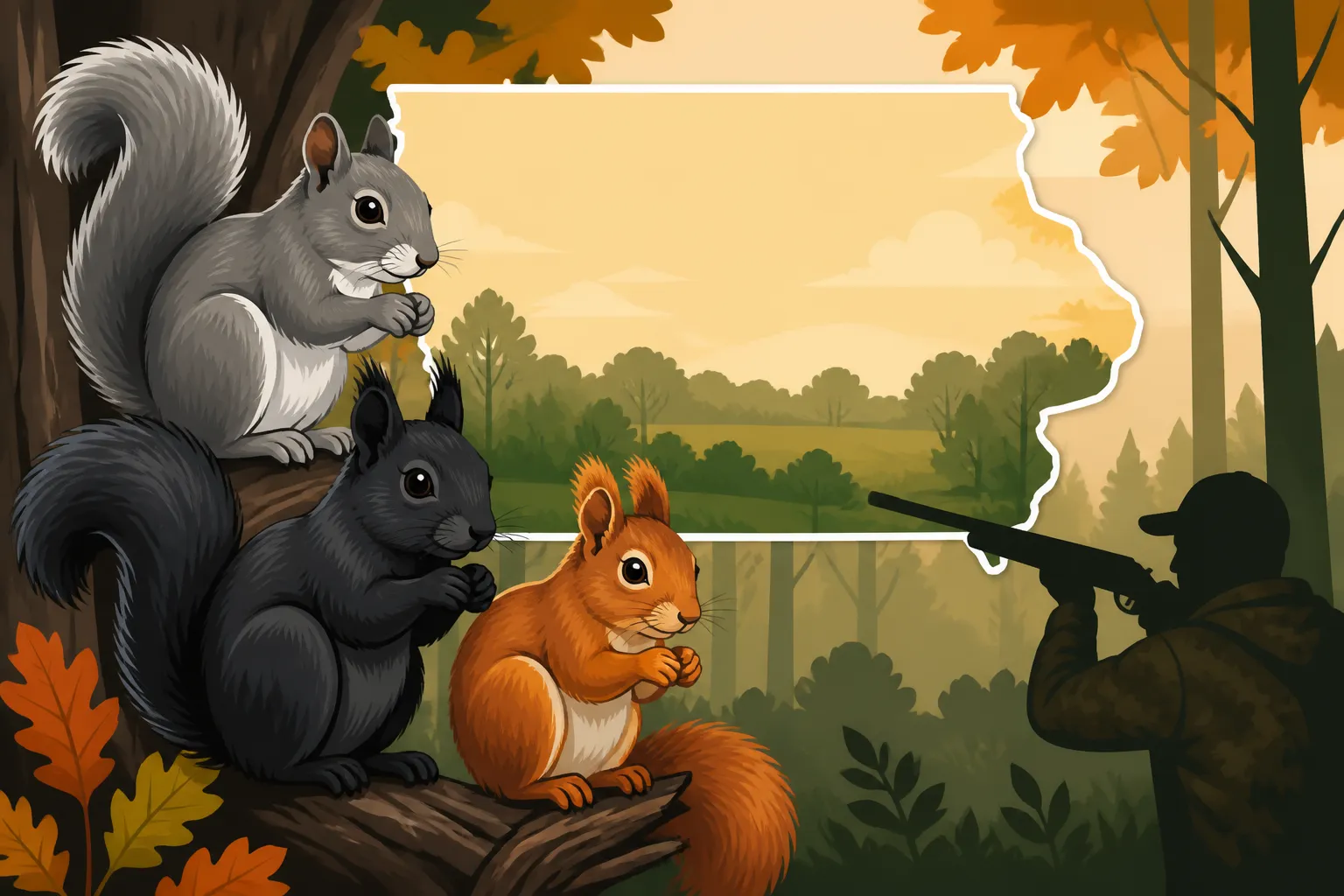
When you're out in the Iowa woods, you're primarily going to be crossing paths with two main characters in the squirrel family: the Fox Squirrel and the Gray Squirrel. While both are undeniably "squirrels," they have distinct characteristics, preferences, and behaviors that make them unique. Understanding these differences isn't just academic; it can dramatically influence your success if you're out hunting, or simply enhance your appreciation for these agile creatures.
Fox Squirrels: The Reddish Rustics of Iowa's Woodlands
The fox squirrel is often the first squirrel that comes to mind for many Iowans, and for good reason—they are widespread and relatively adaptable. These are the larger, more robust squirrels you’ll frequently spot darting across roads or foraging in smaller woodlots and even urban parks. Their scientific name, Sciurus niger, literally means "black squirrel," which can be a bit confusing given their typical coloration. However, regional variations exist, and some individuals can indeed be quite dark.
Their most defining feature is their striking coloration: a grizzled, brownish-gray back that transitions into a reddish-orange or rusty-colored belly. This reddish hue extends to the sides of their neck and sometimes their feet, giving them their "fox" moniker. They're substantially larger than their gray cousins, often weighing 1.5 to 2.5 pounds and stretching up to 25 inches from nose to tail tip. Fox squirrels tend to be a bit more terrestrial, meaning they spend a considerable amount of time foraging on the ground, even though they are perfectly capable climbers. You'll often see them bounding across open fields to reach another patch of timber, a sight less common with the more arboreal gray squirrel. Their habitat preferences lean towards more open, mature timber stands, often with less dense understory, which is abundant across Iowa's agricultural landscape.
Gray Squirrels: The Nimble Acrobats of Dense Forests
The gray squirrel (Sciurus carolinensis) is the quintessential "tree squirrel," renowned for its agility and grace in the canopy. While they share some similarities with fox squirrels, their appearance and habitat choices are quite distinct. Gray squirrels are noticeably smaller and more slender than fox squirrels, typically weighing 1 to 1.5 pounds and measuring around 18-20 inches long, including their impressive bushy tail.
Their coloration is, as their name suggests, predominantly gray. Their backs are a mix of light to dark gray, sometimes with hints of brown or reddish patches, especially on their head or flanks, but their bellies are almost always a clean, stark white. This white belly is a key distinguishing feature from the fox squirrel's reddish underside. Gray squirrels thrive in more extensive, mature hardwood forests, particularly those with a dense canopy and an abundance of mast-producing trees like oaks, hickories, and walnuts. They are incredibly arboreal, spending most of their time high in the trees, leaping effortlessly from branch to branch. If you're deep in an old-growth timber, especially along river bottoms or in larger state forests, you're more likely to encounter the agile gray squirrel.
The Elusive Flying Squirrels: Iowa's Nocturnal Gliders
While not typically a target for hunters, it's worth noting Iowa is also home to the Southern Flying Squirrel (Glaucomys volans). These fascinating creatures are much smaller than their fox and gray cousins, with huge, dark eyes perfectly adapted for their nocturnal lifestyle. Their most remarkable feature is the patagium, a furry membrane that stretches from their wrist to their ankle, allowing them to glide silently between trees.
They are incredibly shy and rarely seen during daylight hours, preferring to emerge from their tree cavity dens only after sunset. Their habitat includes mature deciduous and mixed forests, often overlapping with where gray squirrels live. Though common in many areas, their nocturnal habits make them an elusive sight for most human observers. If you ever spot a small, furry creature launch itself from a high branch and glide gracefully to another tree in the fading light, you've witnessed one of Iowa's hidden gems.
Habitat Preferences and Where to Find Them
Understanding the preferred stomping grounds of Iowa's squirrels is paramount, whether you're trying to fill a pot or just enjoy watching them. Iowa's landscape, characterized by its mosaic of agriculture and scattered timber, offers a diverse range of habitats. But not all timber is created equal in the eyes of a squirrel. Knowing what kind of trees and cover each species favors will drastically improve your chances of finding them.
Fox Squirrel Territories: Open Woods and Farmstead Havens
Fox squirrels are the generalists of the Iowa squirrel world, adaptable and thriving in a wider variety of habitats than their gray counterparts. They are perfectly content in smaller, more fragmented woodlands, especially those interspersed with agricultural fields. Think of those classic Iowa farmsteads with a few towering oaks or hickories, or the narrow timber belts lining creeks and rivers that cut through corn and bean fields—these are prime fox squirrel country.
They prefer open understories where they can easily move and forage on the ground, but still have quick access to large, mature den trees for safety and nesting. You'll find them along timber edges, fencerows, and even in many suburban parks where food sources like acorns, hickory nuts, walnuts, and corn are readily available. These squirrels are masters of utilizing scattered resources, often crossing open areas to get from one patch of cover to another. This behavior makes them a bit more predictable in their travel routes if you take the time to observe. When you're Scouting Iowa Timber and River Bottoms for deer, pay attention to these areas—chances are, you'll find plenty of fox squirrels as well. Their presence is often a good indicator of healthy mast production.
Gray Squirrel Strongholds: Dense Canopy and River Bottom Jungles
Gray squirrels, on the other hand, are true forest dwellers. They need extensive tracts of mature, contiguous hardwood forest, where the canopy is dense and allows for uninterrupted arboreal travel. Think of the deeper timber found in places like Stephens State Forest or along the larger river systems such as the Des Moines River or the Upper Iowa River. These areas provide the vertical escape routes and abundant mast crops that gray squirrels rely on.
They prefer areas with a high density of acorn-producing oaks, hickories, and walnuts, which are critical for their winter food supply. You'll often find them congregating in river bottomlands, where the rich soil supports towering trees and the topography offers natural corridors. If you’re ever exploring a Narrow Creek Corridor in Iowa, especially one with mature timber, keep an eye out for these agile climbers. Unlike fox squirrels, gray squirrels are less likely to venture far into open areas and prefer to stay within the protective cover of the forest canopy. They also utilize hollow trees and old woodpecker holes for dens, often constructing leaf nests high in the forks of trees as supplementary shelter.
Daily Routines and Behavioral Patterns
Observing squirrels can be incredibly enlightening, whether you're a seasoned hunter or just enjoying a quiet morning in the woods. Their daily routines, feeding habits, and social structures offer a glimpse into the intricate workings of Iowa's ecosystem. While both fox and gray squirrels are diurnal (active during the day), their subtle differences in behavior can influence how and when you might encounter them.
Fox Squirrel Habits: Ground Foragers with a Keen Eye
Fox squirrels typically start their day a bit later than gray squirrels, often waiting until the sun has been up for a while to begin their foraging. Their activity peaks in the mid-morning and then again in the late afternoon. They spend a significant amount of their active time on the ground, meticulously searching for nuts, seeds, fungi, and even insects. You’ll often see them digging vigorously, burying or unearthing food items. This ground-dwelling tendency makes them a bit easier to spot as they rustle through leaf litter.
When alarmed, a fox squirrel might run along the ground for a short distance before scrambling up the nearest tree. They are known for their distinctive "barking" calls and tail flicking, especially when they feel threatened or are communicating with other squirrels. While they can be found in groups, they are generally less social than gray squirrels. During the colder months, they rely heavily on their buried caches of nuts, sometimes leading to frantic digging sessions after a fresh snowfall. Their larger size means they have greater energy demands, and they'll often continue to be active on milder winter days when smaller creatures might stay denned up.
Gray Squirrel Habits: Arboreal Acrobats and Master Hoarders
Gray squirrels, being more arboreal, spend a larger portion of their day high in the trees. They are often active earlier in the morning than fox squirrels, especially on bright, still days. Their activity also peaks in the early morning and late afternoon, often with a mid-day lull. You’ll see them effortlessly navigating the canopy, sometimes appearing almost weightless as they leap between branches. This makes them a more challenging target for observation or hunting, as they can quickly disappear into the dense foliage.
Their diet is similar to fox squirrels, focusing on acorns, hickory nuts, and walnuts, but they also consume tree buds, bark, and fungi. Gray squirrels are prodigious hoarders, burying individual nuts in countless locations, a behavior known as "scatter hoarding." This method, while seemingly disorganized, helps ensure that even if one cache is forgotten or pilfered, others remain. Their high-pitched "chatter" is a common sound in mature timber, often accompanied by rapid tail movements. Gray squirrels tend to be more social, sometimes seen in loose aggregations, especially around abundant food sources. In cold weather, they may den up together in tree cavities to conserve heat.
| Feature | Fox Squirrel (Sciurus niger) | Gray Squirrel (Sciurus carolinensis) |
|---|---|---|
| Size | Larger (1.5-2.5 lbs) | Smaller (1-1.5 lbs) |
| Coloration | Grizzled brownish-gray back, reddish-orange belly, often rusty tones on neck/feet | Gray back, pure white belly |
| Primary Habitat | Open, fragmented timber, woodlots, farmsteads, timber edges | Dense, mature hardwood forests, river bottoms, extensive canopy |
| Activity Pattern | More terrestrial, forage heavily on ground; mid-morning/late afternoon peaks | More arboreal, spend more time in trees; early morning/late afternoon peaks |
| Social Behavior | Generally less social | More social, often seen in loose groups |
| Alarm Call | Distinctive "barking" | High-pitched "chatter" |
| Winter Strategy | Relies on buried caches, active on milder winter days | Relies on scatter hoards, may den together in cold |
Squirrel Hunting in Iowa: A Timeless Pursuit
Squirrel hunting is an incredible way to experience the Iowa outdoors. It's accessible, often requires minimal gear, and provides fantastic opportunities to hone your hunting skills, practice woodsmanship, and enjoy some delicious wild game. For many, it's the perfect precursor to deer season or a way to extend time in the woods after deer seasons have closed.
Seasons and Regulations: Knowing the Rules of the Game
Iowa offers a generous squirrel season, typically running from early September through the end of January, providing ample opportunity to hunt both fox and gray squirrels. This long season means you can experience squirrel hunting in a variety of conditions, from warm early autumn days to crisp, cold winter mornings. The daily bag limit is generally six squirrels (combined species), with a possession limit of twelve.
Before heading out, it's always smart to double-check the current Iowa hunting regulations, as dates and rules can occasionally change. A small game hunting license is required, along with a habitat fee. For specific public land regulations, it's often wise to consult resources like the Iowa DNR Hunter Atlas or a robust app like GoHunt which can provide up-to-date property boundary information and specific rules for Wildlife Management Areas or county lands. While many areas permit squirrel hunting, some might have special restrictions, especially near populated zones or during specific deer seasons. Being informed is part of being a responsible hunter.
Tactics for Success: From Still-Hunting to Bushytails
There are several effective ways to hunt squirrels in Iowa, each offering a different experience.
Still-Hunting and Stalking
This is perhaps the most classic and rewarding method. It involves slowly and quietly moving through the timber, pausing frequently to scan the trees and ground for movement or the flick of a tail. You're looking for areas with abundant mast (oak, hickory, walnut trees) and active squirrel sign like chewed nuts or fresh diggings. Focus your efforts during peak activity times, usually early morning and late afternoon. When still-hunting, always walk into the wind to keep your scent from drifting ahead and to make it harder for squirrels to hear you. When you spot a squirrel, try to move to a position where a tree is between you and the squirrel, then slowly peek around for a shot. This method is excellent for refining your woodsmanship and stealth.
Sit-and-Wait
Often effective, especially in areas with high squirrel density or around a specific food source. Find a comfortable spot with good visibility near a stand of mast-producing trees or a known travel corridor. Stay still and quiet, letting the woods come alive around you. Squirrels that may have been alarmed by your entry will often resume their activity after about 15-20 minutes of silence. This is a great strategy for a more relaxed hunt or for teaching new hunters the virtue of patience. Using a comfortable seat like a lightweight ground blind chair can make a world of difference during a long sit. You might even find success on the edges of fields after harvest, where squirrels are cleaning up dropped corn or beans.
Calling and Barking
While not as common for squirrels as for other game, some hunters have success using squirrel calls, mimicking their chatter or barks to draw them in or pinpoint their location. A simple "bark" can often get a territorial squirrel to respond, revealing its position. This takes practice but can be a fun addition to your arsenal.
Essential Gear for the Squirrel Woods
One of the beauties of squirrel hunting is its simplicity in gear. A good .22 rifle or shotgun, comfortable boots, and a quiet jacket are often all you need.
- Firearm: A .22 caliber rimfire rifle is the traditional choice, offering precision for headshots (which saves meat) and low recoil. Many hunters prefer a bolt-action or semi-automatic .22. A 20-gauge or 12-gauge shotgun with small game loads (like 6-shot) is also effective, especially in dense timber where squirrels are constantly on the move, or for younger hunters.
- Optics: While not always necessary, a good pair of Binoculars for Iowa Timber Hunting can help you spot squirrels in dense canopy or at a distance. A low-power scope on your .22 can also greatly improve accuracy.
- Clothing: Dress in layers for the weather. Quiet, durable clothing in earth tones or camouflage is best. Comfortable, waterproof boots are essential for navigating damp leaves and timber.
- Miscellaneous: A small game vest or pack to carry your squirrels, extra ammunition, a knife for field dressing, and a water bottle.
Beyond Hunting: Squirrels and Iowa's Ecosystem
Squirrels are far more than just a game animal or a backyard nuisance; they play a vital, often unsung, role in the health and regeneration of Iowa's forests. Their daily activities contribute significantly to the biodiversity and resilience of our woodlands. Understanding their ecological impact helps paint a more complete picture of these industrious little animals.
Nature's Foresters: Seed Dispersal and Regeneration
One of the most important ecological roles squirrels play is that of "nature's foresters." Their obsessive habit of burying nuts – particularly acorns, hickory nuts, and walnuts – is a critical mechanism for seed dispersal. While they do retrieve and consume a large portion of their buried caches, many nuts are simply forgotten or are never retrieved. These forgotten nuts, especially those buried at an optimal depth in the soil, have a much higher chance of germinating and growing into new trees than those simply left on the surface.
This scatter hoarding behavior by both fox and gray squirrels is a key driver in the regeneration and expansion of hardwood forests across Iowa. Without squirrels, the distribution and survival of these mast-producing trees would be dramatically different. They effectively plant thousands of trees every year, ensuring the continuation of the very forests they depend upon. This makes them indispensable partners in maintaining healthy timber stands, including valuable oak and hickory forests that support a vast array of other wildlife, from deer to turkeys. If you're looking at Iowa Whitetail Body and Antler Size you'll find a direct correlation to healthy mast crops which squirrels help propagate.
Food Chain Dynamics: Prey for Predators
Squirrels are also a crucial link in the food chain, serving as a significant food source for a variety of Iowa's predators. Their abundance and widespread distribution make them a readily available meal for many carnivorous and omnivorous species. Hawks, owls, coyotes, bobcats, foxes, and even snakes all rely on squirrels to varying degrees.
For raptors like Red-tailed Hawks and Great Horned Owls, squirrels are a primary dietary component. Their agility might protect them from some predators, but they are far from invulnerable, especially when foraging on the ground or exposed on branches. The presence of a healthy squirrel population is often an indicator of a thriving ecosystem that can support these higher-level predators. This dynamic interaction helps regulate squirrel numbers and contributes to the overall balance of the forest ecosystem.
Common Misconceptions and Interesting Squirrel Facts
Even for animals as common as squirrels, there are always fascinating details and frequently misunderstood aspects. Let's clear up some common myths and share a few interesting tidbits that might make you look at Iowa's squirrels with new eyes.
Squirrel Intelligence: More Than Just Nut-Hunters
It’s easy to dismiss squirrels as simple, instinct-driven creatures, but research suggests they are far more intelligent and adaptable than many give them credit for. They exhibit complex behaviors, including sophisticated strategies for food caching and retrieval. For instance, studies have shown that squirrels engage in "deceptive caching," pretending to bury a nut to fool watchful competitors (like other squirrels or birds) while actually carrying the nut to a secret, more secure location.
Their spatial memory is also incredibly impressive. They can remember the locations of thousands of buried nuts over many months, navigating intricate landscapes to recover their winter provisions. They also demonstrate problem-solving abilities, figuring out how to bypass bird feeders designed to be "squirrel-proof" or navigating complex urban environments. This high level of cognitive function is a key factor in their success and adaptability across diverse habitats, including urban settings.
Diet Diversity: Beyond Just Nuts
While nuts, especially acorns, hickory nuts, and walnuts, form the cornerstone of a squirrel's diet, they are far from exclusive eaters. Squirrels are opportunistic omnivores and will consume a wide variety of foods depending on availability. Their diet can include seeds, tree buds, bark, fungi, fruits, berries, and even insects, bird eggs, and small nestlings.
This dietary flexibility is crucial for their survival, especially during times when mast crops are scarce or in areas where nuts are less abundant. For example, in early spring, when nuts are depleted, they rely heavily on tree buds and emerging vegetation. This varied diet ensures they can adapt to seasonal changes in food availability and thrive in different ecological niches across Iowa. Their ability to switch between food sources is another testament to their adaptability and resilience.
Wildlife Management and Human Interaction
In Iowa, squirrels are managed as a small game species, but their presence in urban and suburban areas often leads to varied interactions with humans. From charming backyard visitors to notorious bird feeder raiders, squirrels often evoke strong reactions. Understanding their natural behaviors helps manage these interactions more effectively. When you're utilizing tools like GoHunt to scout public areas, you can also often find information on local ordinances or regulations that might pertain to wildlife interactions in different areas.
It’s also interesting to note that while they are abundant, squirrel populations are monitored by the Iowa DNR. Like many game species, their populations are influenced by habitat availability, mast crop success, and predator pressure. Healthy squirrel populations are a sign of healthy forest ecosystems, contributing to the overall outdoor experience for hunters, wildlife watchers, and nature enthusiasts alike.
Disclaimer
Please note that hunting regulations, seasons, and licensing requirements can change. Always consult the official Iowa Department of Natural Resources (DNR) website or the current hunting regulations booklet before participating in any hunting activities. This article is for informational purposes only and does not supersede official DNR guidelines.