Vehicle Collisions and Iowa Deer Numbers
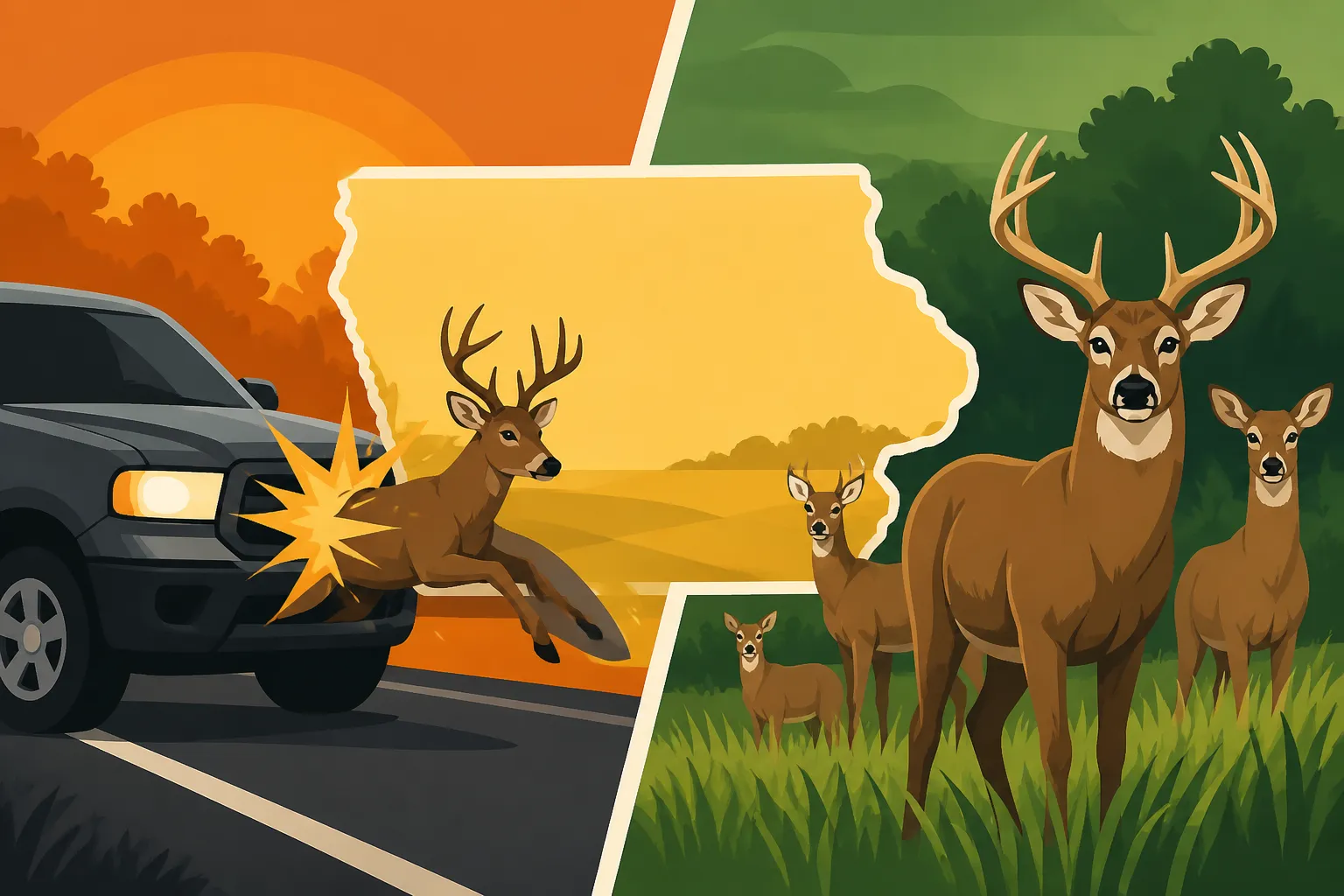
For any hunter, driver, or resident of Iowa, the sight of a deer on the side of the road, or worse, in the middle of a collision, is a stark reminder of the challenges that come with living in a state blessed with a thriving whitetail population. These incidents aren't just unfortunate individual events; they collectively represent a significant factor influencing Iowa's deer numbers, impacting everything from population dynamics to human safety and even how we approach deer management. This guide dives deep into the complex relationship between vehicle collisions and the health of Iowa's deer herd, offering insights for understanding and navigating this ever-present issue.
The Unseen Impact of Vehicle Collisions on Iowa's Deer Population
It's easy to dismiss deer-vehicle collisions (DVCs) as isolated accidents, but in a state like Iowa, where whitetails are abundant, these incidents add up to a substantial, often overlooked, drain on the deer population. Every year, thousands of deer are removed from the landscape due to collisions with vehicles, and this constant attrition plays a crucial role in the overall health and management of the herd. It's a silent harvest that significantly impacts local deer densities and can even shift patterns of movement and behavior.
Understanding the Scale of Deer-Vehicle Collisions in Iowa
When you consider the sheer miles of roads crisscrossing Iowa's diverse landscape—from timbered river bottoms to expansive corn and soybean fields—it's almost inevitable that deer and vehicles will frequently cross paths. While official statistics from state agencies often focus on human injuries and property damage, the underlying impact on the deer population is immense. Many deer hit by vehicles are not immediately fatal, but they are left injured and vulnerable, eventually succumbing to their wounds or becoming easy targets for predators. These unreported incidents mean the true number of deer lost to vehicles is likely much higher than official figures suggest. We often hear anecdotal stories from farmers and rural residents about the number of deer they see hit on local roads, and these stories paint a picture of a consistent, widespread issue. Understanding Iowa Deer Population Estimate helps put this into perspective; a small percentage of a large number is still a lot of deer.
How Collisions Affect Deer Herd Dynamics
The consistent removal of deer through vehicle collisions has several key impacts on the overall herd. Firstly, it directly reduces the population, potentially offsetting management goals aimed at maintaining healthy deer numbers. In areas with high traffic volume, DVCs can act as a form of population control, sometimes inadvertently helping to keep deer densities in check. However, this "control" is indiscriminate, affecting bucks, does, and fawns alike, regardless of their age or genetic potential.
Secondly, DVCs can alter the age and sex structure of localized deer herds. If a particular stretch of highway sees a disproportionate number of does hit, it can skew the local buck-to-doe ratio, which has implications for breeding success and the overall health of the fawns born in that area. Conversely, if young, dispersing bucks are frequently hit, it can reduce the number of mature bucks available for hunters in the following seasons. This unseen pressure is a constant force shaping the deer herds in specific areas, especially around urban fringes or along major transportation corridors.
Peak Times and Locations for Deer-Vehicle Encounters
Anyone who drives in Iowa knows that deer aren't just a concern during hunting season; they're a year-round presence, but some periods are definitely riskier than others. The autumn months, particularly October and November, consistently see the highest number of deer-vehicle collisions. This surge is directly tied to increased deer activity during the whitetail rut. As bucks begin to chase does and both sexes become more mobile, their focus on breeding often overrides their usual caution around roads.
Dawn and dusk are also notoriously dangerous times. Deer are crepuscular, meaning they are most active during these low-light periods, moving from bedding areas to feeding grounds and vice versa. This coincides with peak commuter traffic, creating a perfect storm for collisions. Hunters using mapping apps like GoHunt can often identify areas with dense timber and nearby crop fields, recognizing these as prime transition zones where deer are most likely to cross roads. Understanding Whitetail Rut Timing in Iowa is crucial not just for hunting success but for road safety too.
Here's a quick look at factors that influence collision timing:
| Factor | Peak Season/Time | Reason for Increased Activity |
|---|---|---|
| Rut Activity | Mid-October to December | Bucks actively pursuing does, both sexes more mobile. |
| Daily Movement | Dawn & Dusk | Deer moving between bedding and feeding areas. |
| Harvest Season | Fall (Post-harvest) | Deer displaced from cover, seeking new food sources. |
| New Fawns | Late Spring/Early Summer | Does with fawns, young deer dispersing. |
| Winter Pressure | January/February | Deer seeking accessible food in harsh conditions. |
Factors Contributing to Increased Deer-Vehicle Accidents
Understanding when and where these collisions happen is one thing, but it's equally important to consider why they've become such a pervasive issue. It's a complex interplay of natural deer behavior, human development, and environmental factors that combine to elevate the risk on Iowa's roadways. The landscape itself, carved up by agricultural practices and urban expansion, plays a major role in funneling deer into dangerous situations.
Habitat Changes and Deer Movement Patterns
Iowa's landscape is a patchwork of agriculture, timber, and urban development, and these habitat changes directly influence how deer move. While the state is renowned for its fertile soils and abundant crops, which provide excellent food sources, the remaining timber blocks and CRP fields serve as crucial bedding and cover areas. The fragmentation of these habitats by roads forces deer to cross open ground more frequently to access food, water, or breeding partners. A deer that once could travel miles through contiguous timber now encounters a paved road every few hundred yards.
Furthermore, agricultural practices, particularly the timing of harvest, can drastically alter deer movement. When vast cornfields, which offer incredible cover and food throughout the summer and early fall, are suddenly cut down, deer are displaced. They are forced to seek new bedding and feeding locations, often involving crossing more roads. This explains why we often see a spike in deer movement and DVCs immediately following the corn harvest, as deer adjust to their suddenly exposed surroundings. We explore this further in How Harvest Timing Changes Deer Movement.
Human Development and Road Expansion
Iowa is continually growing, and with growth comes infrastructure development. New housing subdivisions push further into rural areas, new roads are built, and existing roads are widened or improved. This encroaches upon traditional deer habitat and creates more points of conflict. Every new mile of road is another potential crossing point for deer, and increased traffic volume on existing routes means more opportunities for collisions.
This isn't just about major highways; it's also about rural county roads and even city streets on the outskirts of towns. Deer are incredibly adaptable and can thrive in surprisingly close proximity to human activity. As development expands, these adaptable deer find themselves navigating increasingly busy environments, raising the stakes for both motorists and wildlife. The more people that move into rural areas, the more cars are on the roads that cut through traditional deer range.
Seasonal Influences on Deer Activity
Beyond the rut, other seasonal factors significantly contribute to deer-vehicle incidents. In the spring, does are preparing to fawn and may seek out new, secluded areas, leading to increased movement. Later in the summer, young fawns begin to travel more independently, often less aware of dangers like vehicles. This can result in a smaller spike in collisions as inexperienced deer venture out.
Winter, especially severe winters, can also drive deer into more dangerous situations. When natural food sources become scarce and deep snow makes travel difficult, deer may be forced to cross roads more frequently in search of accessible browse or harvested fields. I've personally seen deer almost standing on the edge of the road during heavy snowfalls, just waiting for a break in traffic, because the snow in the timber was just too deep for easy movement. This often pushes deer to congregate near areas with easier travel and exposed food, making them more visible and vulnerable. Knowing when deer are most likely to be active is not only key for hunting but also for being a safe driver; a tool like GoHunt can help identify potential high-activity areas.
Implications for Hunters and Deer Management in Iowa
Vehicle collisions are not just an unfortunate reality; they are a significant factor that wildlife managers and hunters must consider when looking at the overall health and population dynamics of Iowa's deer herd. While hunting is often the primary tool for deer management, the "harvest" from DVCs acts as an uncontrolled variable that can complicate management efforts and even affect hunting strategies.
Deer Population Management Strategies
The Iowa DNR works tirelessly to manage the deer herd, balancing ecological health with agricultural concerns and hunter opportunities. When assessing Iowa Deer Herd Management and Harvest, DVC data, though imperfect, offers another piece of the puzzle. High rates of collisions in a particular county or region might indicate an overpopulation of deer or specific movement corridors that need attention. Wildlife biologists use various metrics, including hunter harvest reports, spotlight surveys, and citizen observations, to estimate deer numbers. DVC data, when collected systematically, can supplement these efforts, helping to pinpoint areas where deer densities might be higher than desired or where human-deer conflicts are most pronounced.
However, DVCs also present a challenge. Unlike hunting, which can be managed through tag quotas and season lengths, collisions are an uncontrolled source of mortality. This makes it harder to achieve precise population targets. In some areas, the sheer number of deer lost to vehicles might mean that hunting pressure needs to be adjusted, or additional antlerless tags might be issued to reduce the overall population and subsequently, the number of collisions.
Hunter Considerations and Safety
As hunters, understanding the impact of DVCs can shape our strategies and ethical responsibilities. If you frequently see hit deer in a specific area, it tells you something about the local deer density and movement patterns. These collision hotspots often correspond to natural travel corridors or areas where deer are concentrated. This information can be valuable for scouting, especially when E-Scouting Iowa Farm Country From Home. By recognizing where deer are likely to cross roads, you can also infer where they might be bedding or feeding nearby.
More importantly, it's a reminder of human safety. A collision is dangerous for deer, but also for drivers and passengers. For hunters, transporting a harvested deer, especially a large Iowa buck, also requires caution on the roads. Securing your animal properly is essential, and being aware of other deer on the road, particularly during peak rut, protects not only your harvest but also your vehicle and yourself. Also, remember that a deer hit by a vehicle may not be immediately dead or may be severely injured, requiring dispatch if salvage laws allow.
Utilizing Data for Better Hunting Decisions
Beyond just safety, understanding DVC patterns can make you a more informed hunter. Data on deer movement, including where they cross roads, can reveal bottlenecks and funnels that aren't always obvious from aerial maps alone. This is where tools like GoHunt, with their detailed mapping capabilities, can be incredibly useful. By analyzing topo maps, satellite imagery, and even local DVC reports if available, you can gain a deeper understanding of how deer interact with the landscape.
For instance, if you notice a cluster of DVCs along a particular road section that borders a large timber block and a vast agricultural field, it's a strong indicator that deer are frequently moving between those two cover types at that specific point. This might be an ideal location for a stand, perhaps overlooking a pinch point or a ditch crossing, especially if you’re trying to understand Saddles and Benches Deer Cross Daily. Combining this local knowledge with broader data helps you make more strategic decisions about where to focus your scouting efforts and hang your stands.
Mitigating the Risk: Tips for Drivers and Long-Term Solutions
While deer-vehicle collisions are a constant presence on Iowa's roads, there are definite steps both individuals and communities can take to reduce the frequency and severity of these incidents. It's about a combination of personal responsibility and strategic, long-term planning to foster a safer environment for both humans and wildlife.
Driver Awareness and Defensive Techniques
The most immediate and impactful way to reduce DVCs rests with individual drivers. Being aware, especially during peak deer activity times, is paramount.
- Be Vigilant at Dawn and Dusk: These are the golden hours for deer movement. Reduce your speed and scan the shoulders and ditches for any sign of deer.
- Slow Down: Driving at or below the speed limit gives you more time to react. A slower speed also reduces the force of impact if a collision is unavoidable.
- Look for More Than One: Deer often travel in groups. If you see one deer cross, assume there might be others following close behind.
- Use High Beams When Possible: On rural roads at night, high beams greatly extend your visibility, giving you more time to spot deer farther down the road. Just remember to dim them for oncoming traffic.
- Know the Hotspots: If you frequently drive a particular route, you'll start to notice areas where you often see deer or hear about collisions. Be extra cautious in these known trouble spots. Checking a mapping app like GoHunt before a drive can also give you an idea of areas with significant deer habitat near roadways.
- Stay in Your Lane (if safe): While the instinct might be to swerve to avoid a deer, this can often lead to more dangerous outcomes, such as hitting an oncoming vehicle, veering off the road, or rolling your car. It's generally safer to brake firmly and stay in your lane.
Community Efforts and Infrastructure Improvements
Beyond individual actions, there are larger-scale initiatives that can help mitigate DVCs over the long term. These often require coordination between state agencies, local communities, and landowners.
- Deer Crossing Signs: While common, these signs serve as important reminders, particularly in areas with historically high collision rates. However, they are most effective when drivers heed the warning and adjust their behavior.
- Roadside Habitat Management: In some cases, managing vegetation along roadways can improve visibility for drivers and deter deer from lingering near the road edge. This might involve selective clearing of brush or planting less attractive flora.
- Wildlife Exclusion Fencing: For particularly high-traffic corridors or stretches of road with extremely high DVC rates, specialized fencing can be installed to guide deer away from the road or direct them to designated crossing points. These fences are expensive but highly effective in specific, targeted areas.
- Wildlife Crossings (Underpasses/Overpasses): The ultimate solution in some high-density areas, these structures allow deer and other wildlife to safely cross busy roads without interacting with traffic. While costly, they provide a long-term, permanent solution for reducing collisions and maintaining connectivity for wildlife populations. Such projects are often considered in critical corridors, and their implementation can dramatically impact local Deer Density by Iowa County.
- Public Awareness Campaigns: Educating the public about peak seasons, times, and defensive driving techniques can make a significant difference. Sharing information through local media, community events, and online resources helps keep the issue top-of-mind for drivers.
By combining personal responsibility with thoughtful community planning, Iowa can continue to enjoy its abundant deer herd while working towards safer roads for everyone.
Disclaimer
This article is for general informational purposes only and does not constitute professional advice. Laws, prices and regulations vary by location and change over time. Consult a qualified professional for guidance on your specific situation.