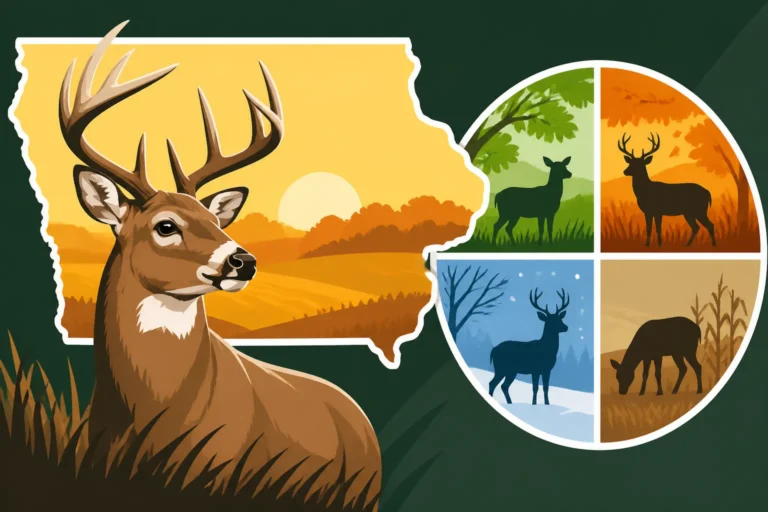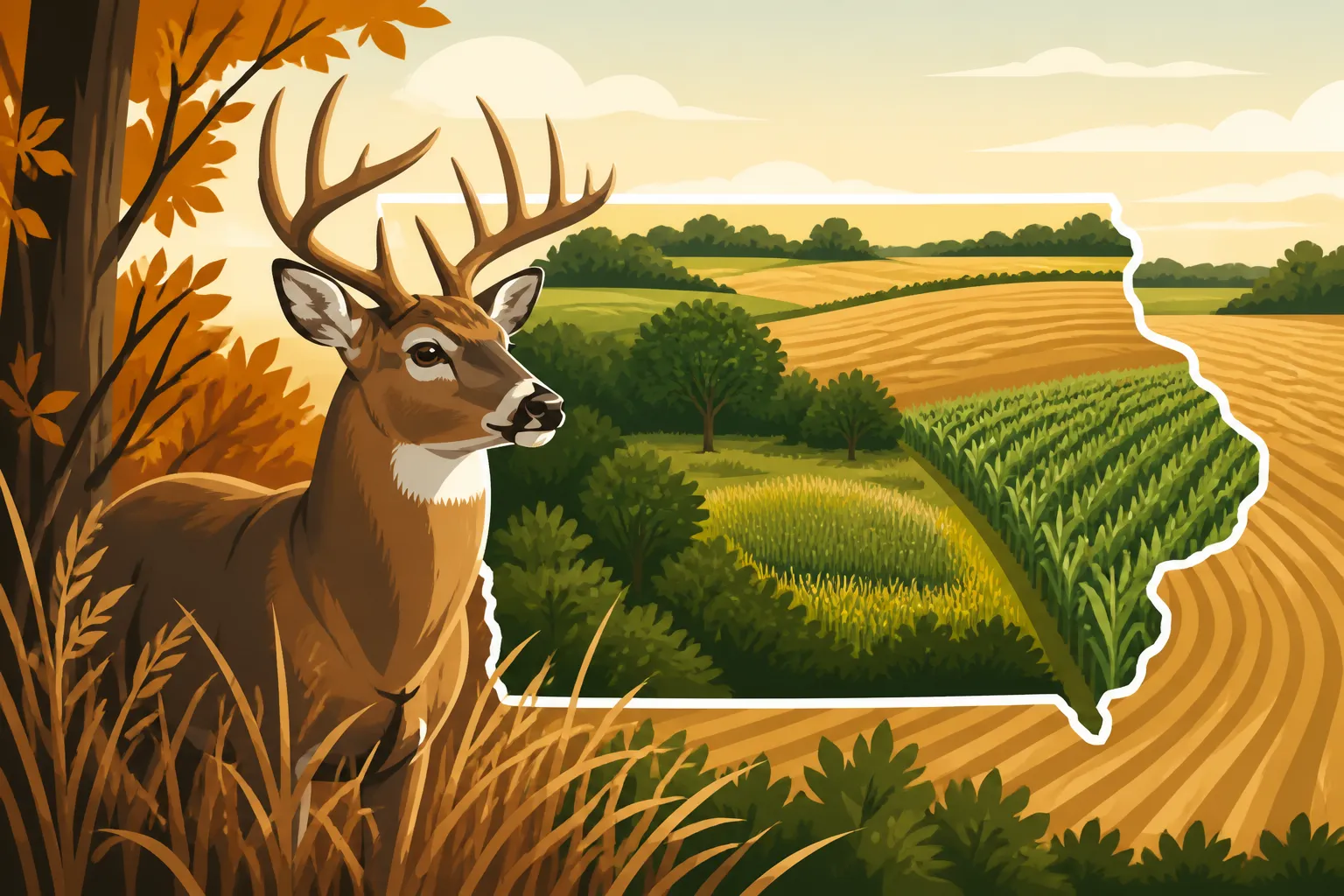
Iowa Deer Habitat in Row Crop Country
Hunting whitetails in Iowa can feel like you're trying to find a needle in a haystack, especially when all you see for miles are endless fields of corn and soybeans. It’s easy to get discouraged, wondering where deer even live when their natural timber and brush are so fragmented. This guide will meticulously break down how whitetail deer utilize Iowa's expansive row crop country, helping you identify key habitat features and patterns that will make you a more successful hunter in this unique landscape.
The Unique Challenge of Iowa's Row Crop Landscape
Iowa's landscape is famously dominated by agriculture, a mosaic of corn and soybean fields stretching to the horizon. This isn't your typical big woods hunting; it's a specialized game where understanding how deer interact with agricultural practices and fragmented cover is paramount. The sheer scale of the fields can be intimidating, making it seem impossible to pinpoint deer. Yet, these deer thrive, and truly big bucks often emerge from these very environments. You just have to know how to read the landscape for subtle clues.
The Fragmented Nature of Cover
Unlike states with vast national forests, Iowa's deer cover often comes in smaller, disconnected parcels. Think narrow creek bottoms, isolated timber patches, and brushy fence rows. These pockets of habitat become incredibly valuable to whitetails seeking refuge from the open agricultural expanse. Knowing how deer move between these islands of cover is key to success. It's about connecting the dots on the landscape, finding those subtle travel routes and bedding areas that provide sanctuary from both predators and human activity.
In these fragmented areas, deer develop incredibly precise travel patterns. A small patch of timber, perhaps only five acres, might hold several mature bucks simply because it offers the best available bedding close to a prime food source. The challenge is often not finding a deer, but finding the deer that has learned to master this complex environment. Hunters need to adapt their scouting and hunting methods to recognize and exploit these critical, often overlooked, fragments of habitat that other hunters might blow past.
The Feast and Famine Cycle of Crops
Iowa's row crops provide an incredible abundance of food for whitetails, but it's a seasonal feast. From the lush green growth of spring and summer to the golden fields of fall, corn and soybeans offer a consistent, high-energy diet that contributes significantly to the impressive body and antler size Iowa is known for. However, once the harvest rolls around, these vast food sources can disappear almost overnight, forcing deer to adjust their patterns drastically.
During the pre-rut and early rut, deer might spend almost all their time deep within standing corn, using it for both food and cover. They feel incredibly safe there, often only venturing out to neighboring bean fields or smaller timber patches under the cover of darkness. Once the combines start rolling, however, those deer are displaced, and their entire routine shifts. This dramatic change is a huge factor in How Harvest Timing Changes Deer Movement. This understanding helps hunters anticipate deer behavior throughout the season, rather than being caught off guard by sudden disappearances.
Agricultural Fields as Primary Food Sources
It's no secret that Iowa deer are big, and a huge part of that comes down to their diet. They're literally living in a giant buffet. The sheer volume and nutritional value of corn and soybeans available to them through much of the year are unmatched in many other deer hunting states. Understanding how deer utilize these crops at different stages is crucial for identifying key feeding areas and setting up effectively. The deer here aren't just surviving; they're thriving on this bounty.
Corn: Cover and Calories
Standing corn is like a five-star hotel for whitetails. It provides incredible cover, allowing deer to move unseen and feel secure, even in broad daylight. But more importantly, it's a massive source of calories. As the corn matures and the ears develop, deer will spend hours, even days, feeding directly within the fields. They'll browse on the green stalks early in the season, then switch to the high-energy kernels as they ripen, packing on crucial fat reserves for the winter and the rut.
Hunters often find it incredibly difficult to hunt deer in standing corn due to the lack of visibility and the noise of movement. However, understanding how deer enter and exit these fields, often along edges, ditches, or interior timber islands, can create excellent ambush points. These are often subtle transitions where a field edge meets a timber block or a creek bottom. Think about the specific patterns discussed in Standing Corn and Bean Field Deer Patterns. Once the corn is picked, the leftover waste grain still offers a significant food source well into the late season, influencing deer movement long after harvest.
Soybeans: Protein and Attraction
Soybean fields offer a different but equally important nutritional profile for Iowa's whitetail. Early in the growing season, the lush, green soybean plants provide a high-protein forage that is crucial for antler growth and doe lactation. Deer will aggressively browse on these young plants, often leaving noticeable feeding lines along field edges where they prefer to enter. This early season nutrition is a cornerstone of why Iowa produces such impressive deer.
As the season progresses and the soybeans dry down, deer still utilize them, especially the pods for residual protein, though perhaps not as intensely as the green forage. While they don't offer the same dense cover as standing corn, deer will still feed in bean fields, particularly during the evening hours. Once picked, harvested bean fields, especially those adjacent to good cover or standing timber, can remain attractive to deer for any dropped beans. This often creates excellent opportunities, especially when considering Hunting a Picked Bean Field in October. Pay attention to where deer enter and exit these fields, often choosing the path of least resistance or the most concealed route.
Finding Sanctuary: Cover and Bedding in Open Country
In a landscape dominated by agriculture, finding secure cover is paramount for Iowa whitetails. Without large tracts of unbroken timber, deer become masters at using every available piece of refuge, no matter how small or seemingly insignificant. Identifying these critical bedding areas is often the missing piece of the puzzle for many hunters, and it requires a keen eye and a good understanding of deer behavior.
Timber Blocks and Creek Bottoms
Even in the most intensively farmed areas, there are almost always pockets of timber, often along creek bottoms, river corridors, or in areas too steep or wet to farm. These timber blocks, whether they are a few acres or a hundred, become absolute magnets for deer seeking secure bedding. They offer thermal cover from harsh winter winds, shade in the hot early season, and most importantly, visual security from human disturbance. These are the lifeblood of deer in open country.
Deer will often bed just inside the densest parts of these timber patches, particularly on points, benches, or saddles that offer a strategic advantage, such as good wind direction or elevated vantage points. Creek bottoms, with their thick undergrowth, fallen trees, and often diverse tree species, provide superb linear cover. Understanding how deer use these linear features as travel corridors and bedding areas is fundamental. For more insights, consider studying Timber and Creek Corridors as Deer Cover. When scouting, always walk these timbered creek bottoms, looking for well-used trails, rubs, and scrapes that indicate consistent deer activity.
CRP and Brushy Field Edges
Conservation Reserve Program (CRP) ground, with its tall grasses and dense forbs, offers another vital source of bedding cover in Iowa's agricultural landscape. While it might not seem as imposing as timber, a mature CRP field can provide incredible concealment for deer, especially bucks looking for seclusion. They'll often bed down in the thickest parts of these fields, utilizing small rises or depressions for added security, feeling hidden in the swaying grasses.
Beyond CRP, even seemingly innocuous brushy fence rows, overgrown ditches, and small thickets of multiflora rose or cedar can serve as effective bedding cover, especially for does and younger bucks. These smaller pockets are often overlooked but can hold surprising numbers of deer, particularly during periods of higher hunting pressure. When you're scouting, even a narrow strip of dense brush along a field edge can be the key to understanding local deer movement. It's often where you'll find those critical areas where CRP Grass and Where Bucks Bed. Pay particular attention to transitions where these cover types meet, as they often create excellent edges for deer movement and vulnerability.
Water Sources and Their Importance
Water is an often-overlooked component of deer habitat, especially in an agricultural setting where it might seem abundant. However, reliable, undisturbed water sources can be just as crucial as food and cover, especially during dry spells or in the early archery season when temperatures are still high. Deer need water daily, and identifying their preferred watering holes can lead to successful encounters. It's a fundamental need, and deer will go to great lengths to fulfill it.
Ponds, Creeks, and Tile Lines
Iowa is crisscrossed with natural and man-made water sources. Farm ponds, even small ones, can be major hubs for deer activity, particularly if they are tucked away from human disturbance and surrounded by some cover. Similarly, creeks and small streams provide consistent water, offering a lifeline in drier periods. Deer will often incorporate a trip to water into their daily routine, making these areas key funnels where you might catch them moving between food and bed.
Something unique to row crop country are the hidden tile lines. Farmers install these to drain fields, and sometimes their outlets or collection points can create small, muddy seeps or even pools of water that persist even when other sources dry up. These often go unnoticed by hunters but can be regular stops for deer. On a hot October day, a deer might prefer a cool, secluded drink from a seeping tile line over an exposed pond. For those early season hunts, understanding Early-Season Bowhunting Over Water can be a game-changer. It's not just about the water itself, but the cover that surrounds it, offering a sense of security while they drink.
Temporary Water and Drainage Ditches
During periods of heavy rain, or throughout the spring, temporary puddles and flooded depressions in fields or along access roads can provide quick and easy water sources for deer. While not permanent, these transient water spots can influence deer movement for several days. Deer are opportunists, and if they can grab a drink without expending much energy or exposing themselves, they will take advantage of it. It's a quick, low-risk hydration stop.
Drainage ditches, even dry ones, often lead to areas where water collects or seeps to the surface, particularly at their lowest points. These natural depressions can concentrate water, especially in flatter terrain where standing water is otherwise scarce. Learning to read these topographical features, even subtle ones, can reveal where deer are accessing water. It's all about understanding the subtle flows of the landscape. Using mapping tools like those available through GoHunt can help you identify these nuances from the comfort of your home, allowing you to scout potential watering points even before you step foot on the property.
Travel Corridors and Transition Zones
In a highly fragmented landscape, deer rely heavily on established travel corridors to move between food, cover, and water. These aren't always grand, obvious trails; sometimes they are incredibly subtle, almost invisible to the untrained eye. Identifying these "highways" and "backroads" of the deer world is critical for intercepting whitetails, especially when they're on the move during daylight hours.
Fence Rows and Field Edges
Fence rows, even those that appear thin and open, often serve as vital travel corridors. Deer, especially bucks, prefer to move with some form of cover, no matter how sparse. A fence row offers visual breaks, even if it's just a line of shrubs or tall weeds, providing a sense of security that deer crave. These linear features can connect larger blocks of timber or lead directly to a prime food source.
Similarly, the edges where a crop field meets timber, CRP, or a creek bottom are classic transition zones. Deer will often hug these edges, using the standing crop or timber for cover as they move between bedding and feeding areas. These are natural funnels where deer activity is concentrated, often creating excellent stand locations. Scouting these edges for fresh tracks, droppings, and rub lines can reveal consistent travel patterns. An Iowa Whitetail Hunting Tactics Through the Rut often centers around these key transition points. For instance, the inside corner of a crop field where two types of cover meet is almost always a hotspot for deer movement.
Ditches, Draws, and River Oxbows
Beyond fence rows, subtle topographical features like ditches and draws provide excellent, often hidden, travel routes. A slight depression in a field, leading from a timber block to a feeding area, can be a major deer thoroughfare. These features offer a sense of security, allowing deer to drop below the line of sight as they travel, making them feel less exposed in open country. This is where Reading an Iowa Timber Draw for Deer Sign becomes invaluable.
River oxbows and the associated timbered fingers that extend into crop fields are also significant. These areas often have denser cover and act as natural funnels, directing deer movement. For example, understanding River Oxbows and Deer Movement can unlock patterns you might otherwise miss. Deer will follow the path of least resistance and greatest concealment, making these natural contours incredibly effective travel corridors. When e-scouting, pay close attention to any linear feature that extends into or through a large field—it’s likely a deer highway. GoHunt mapping tools are fantastic for highlighting these kinds of subtle elevation changes and cover breaks that might not be obvious from a ground-level view. Also consider their insights on Access Routes That Avoid Bedding Areas to plan your own approach.
The Impact of Agricultural Practices on Deer Movement
Iowa's deer herd is incredibly resilient and adaptable, but their behavior is undeniably shaped by the rhythms of agricultural practices. From planting to harvest, every stage of the farming cycle influences where deer bed, feed, and travel. Ignoring these influences is a mistake; understanding them allows you to predict deer movement with greater accuracy, turning what seems like random events into predictable patterns.
Planting, Growth, and Early Season Patterns
In the spring, as corn and soybeans are planted, deer activity shifts. The newly tilled soil and young plants offer little cover, but deer might browse on early sprouts. As the crops begin to grow, especially corn, they provide an increasingly important source of cover. By mid-summer, standing corn fields become virtual sanctuaries, with deer bedding deep inside them, emerging primarily at night or in very low light conditions. The deer essentially disappear into a sea of green.
This early-season pattern means that hunting strategies often focus on the very edges of these fields, or on adjacent timber and creek bottoms that serve as staging areas before deer move into the crops. The challenge is that deer feel incredibly safe in the lush, green canopy, making them hard to intercept without alerting every deer in the area. Your scouting should focus on pinch points and funnels that dictate how deer enter and exit these areas, paying close attention to any small patches of trees or brush embedded within larger fields. This is also when soil fertility is at its peak, contributing to Soil Fertility and Antler Growth.
Harvest Season and Late Season Shifts
The most dramatic shift in deer movement occurs during the fall harvest. As combines roll through vast fields of corn and soybeans, deer are displaced from their primary cover and food sources. This can scatter deer temporarily, but they quickly re-establish patterns, often moving to the nearest available dense cover—be it a timber block, a large CRP field, or even another standing crop field that hasn't been harvested yet. It's a stressful time for deer, and they prioritize security above all else.
Post-harvest, deer rely heavily on waste grain in picked fields, making these areas incredibly attractive, especially as temperatures drop. The key is to find those picked fields that are adjacent to good bedding cover. This is where you might find multiple deer feeding openly in daylight, as they no longer have the vast concealment of standing crops. For ideas on late season opportunities, check out Late-Season Food Source Hunting in Iowa. The intense pressure of harvest also means deer are more likely to seek out secure, often thicker, bedding cover during the day.
| Crop Stage / Event | Deer Behavior | Hunting Implication |
|---|---|---|
| Early Growth | Browse on young plants, limited cover. | Focus on timber/cover adjacent to fields. |
| Mature (Standing) | Bedding and feeding deep inside fields. | Hunt field edges, pinch points, staging areas. |
| Harvest | Displaced from fields, temporary scattering. | Watch for new patterns, deer seeking alternative cover. |
| Post-Harvest | Feeding on waste grain, increased visibility. | Hunt picked fields near dense bedding; late season food. |
| Winter Dormancy | Focus on remaining food sources, thermal cover. | Food plots, thick timber, south-facing slopes are key. |
Disclaimer
Please remember that hunting regulations and land access rules can change. Always consult the latest Iowa DNR regulations and obtain permission before hunting on private land. This information is for educational purposes and should not be taken as legal advice.