Doe Family Groups and Bedding
It's incredibly frustrating when you're out in the Iowa timber or along a crop edge, trying to figure out deer movement, and it feels like the does just disappear into thin air. Understanding where these doe family groups bed down isn't just about finding does; it's a critical piece of the puzzle for understanding all deer movement, including those elusive bucks. This guide is designed to peel back the layers on how Iowa's doe groups choose their bedding areas, helping you unravel those deer patterns and find more success in the field.
The Social Structure of Iowa Doe Groups
Deer aren't solitary creatures, especially does. They live in intricate family units that largely dictate their daily movements and how they use the landscape. If you want to understand deer, you have to understand the does first.
The Matriarchal System and Its Influence
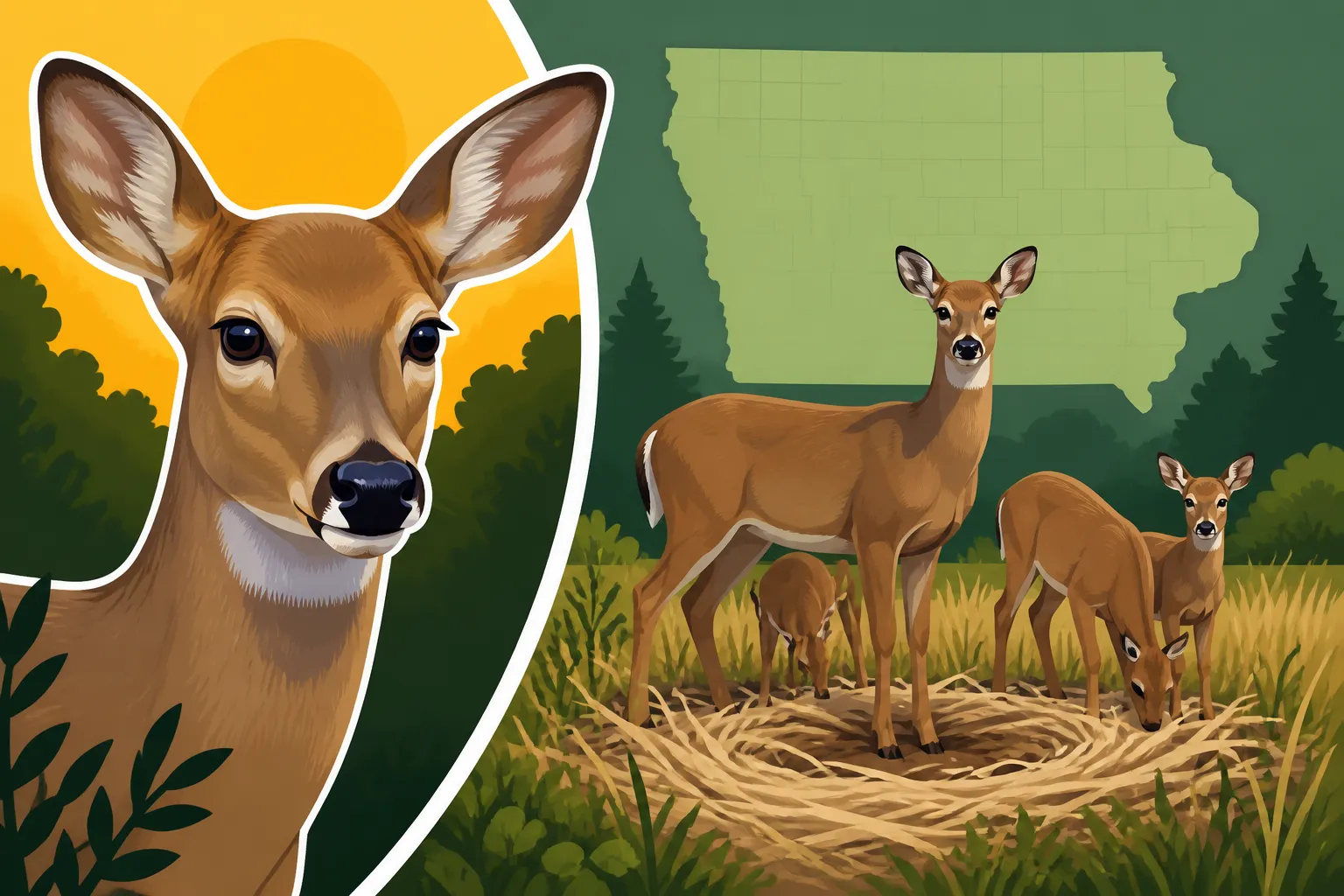
Iowa's whitetail does live in a highly organized, matriarchal society. This means an older, more experienced doe, often a grandmother or mother, typically leads a group composed of her offspring, including her fawns and yearling daughters, and sometimes even adult daughters and their fawns. This family bond is incredibly strong and offers a significant survival advantage. This seasoned matriarch has learned the lay of the land, remembers historical safe zones, escape routes, and prime feeding locations. She'll teach these lessons to her younger relatives, leading them to the best cover and guiding their movements.
This tight-knit structure means that when you locate a single doe or fawn, you're often on the fringe of an entire family unit. Their combined senses offer enhanced security; more eyes, ears, and noses mean dangers are detected sooner. For hunters, this translates into a challenge: spook one deer, and you've often spooked the whole gang, sending them scattering. However, it also presents an opportunity. Once you identify the core areas this matriarch guides her family through, you can begin to predict their movements with greater accuracy. They tend to follow established trails and use reliable bedding spots, making them creatures of habit within their established home range.
Home Range and Territory
Every doe family group operates within a specific home range, which is the area they live in, feed in, and bed in throughout the year. In Iowa's diverse landscape of row crops, timbered river bottoms, and CRP fields, these home ranges can vary quite a bit in size and shape. A doe group might utilize a mosaic of habitats, moving from a bedding thicket in a creek bottom to a soybean field for feeding, and then retreating to dense cover on a timbered ridge. Their home range often encompasses several different types of cover and food sources, ensuring they have everything they need without traveling too far.
Understanding the typical Whitetail Home Range in Farm Country is crucial. These ranges aren't always neat circles; they're often shaped by available cover, water, and food, hugging creek lines, timber edges, and brushy fence rows. Within this range, the does have specific areas for different activities. Bedding areas are paramount for security and rest, while feeding areas are for sustenance. The pathways between these two are their travel corridors. Because doe groups are territorial, especially during fawning season, their movements within this range can be quite consistent. They’ll have preferred bedding spots for different wind directions, times of year, and levels of hunting pressure. Learning to identify these key components of their home range on a mapping application like GoHunt can significantly improve your scouting efficiency and help you pinpoint where deer are likely to be at certain times of the day.
Identifying Key Bedding Areas for Doe Families
Not all cover is created equal in the eyes of an Iowa doe. They are incredibly particular about where they choose to bed, prioritizing security, comfort, and strategic advantages.
Diverse Habitats and Bedding Preferences
Iowa's varied landscape offers a smorgasbord of bedding options for doe families, and their choices are rarely random. During the warm early archery season, you might find them bedded deep within vast CRP Grass and Where Bucks Bed. The tall, thick grasses provide excellent visual concealment and a sense of security. As the season progresses and temperatures drop, they might shift their preference to dense thermal cover, such as groves of Cedar and Locust Thickets as Bedding Cover. These evergreens offer crucial protection from harsh winds and snow, trapping warmth and making them incredibly attractive spots on cold, blustery days.
River bottoms and creek corridors are also prime bedding locations, especially if they feature thick, brushy tangles, downed trees, or areas of multiflora rose. These linear features often provide natural travel routes and escape corridors, while the dense cover along their banks offers excellent concealment. Similarly, a well-placed Timber Points Between Two Fields can serve as a natural transition zone, offering both bedding cover and easy access to feeding areas in the adjacent crops. During the archery season, particularly in the early weeks, standing corn fields can become a giant, impenetrable bedding sanctuary, with does melting into the stalks for security and an easy meal. Their choice of bedding area is a calculated decision, based on the immediate needs for safety, thermal regulation, and proximity to food and water, often shifting throughout the day and with seasonal changes.
Security, Scent, and Thermal Advantage
The driving force behind a doe's bedding choice is always security. They look for areas that offer maximum concealment from predators, multiple escape routes, and a distinct advantage in detecting danger. This often means thick, nearly impenetrable cover that an approaching predator would struggle to navigate quietly. Think briar patches, honeysuckle thickets, or dense stands of young pines. From these vantage points, a doe can typically see or hear an approaching threat long before it sees her.
Beyond visual concealment, does are masters of using the wind and terrain to their advantage. A prime bedding location will often allow a doe to have the wind at her back, carrying her scent away from her approach, while also watching downwind for anything that might slip through undetected. This is where understanding Wind and Thermals in River Breaks becomes paramount; a slight rise or dip in terrain can create micro-thermals that funnel scent. During colder months, thermal advantage becomes even more critical. South-facing slopes or thick evergreen cover that catches the sun can provide warmth, while dense vegetation shields them from biting winds. Conversely, on scorching early season days, they might seek out shaded, airy spots in creek bottoms or north-facing slopes to stay cool. They are always weighing the balance of security, scent, and comfort, making their bed a strategic fortress against the elements and perceived threats. A hunter ignoring these factors when approaching a bedding area is likely to be quickly busted.
Daily and Seasonal Bedding Patterns
Deer aren't static; their bedding habits are dynamic, shifting not just with the seasons but also throughout the daily cycle, dictated by their need for food, water, and security.
Routine Movements from Food to Bed
The daily rhythm of a doe family group revolves around two primary activities: feeding and bedding. Typically, deer will feed throughout the night, often in crop fields, food plots, or mast-heavy timber. As dawn approaches, with the rising sun, they will slowly begin their journey from these feeding grounds back to their chosen bedding cover. This morning movement is often slower and more cautious, as daylight increases their vulnerability. They'll pause, browse, and continually check their surroundings before settling into their beds, usually by mid-morning.
Conversely, as evening approaches, often an hour or two before sunset, the doe group will stir from their beds and reverse their morning journey, moving from their security cover back to their feeding areas. This evening movement tends to be more deliberate and direct, driven by hunger. The distance they travel can vary greatly depending on food availability and pressure, but it's typically within a few hundred yards to a mile or so. For hunters, these transition periods – dawn and dusk – are key. Setting up along these established travel corridors, well away from the actual bedding areas, offers the best chance of intercepting them without blowing out the entire group. Focusing on Access Routes That Avoid Bedding Areas is critical to avoid alerting deer to your presence, allowing them to follow their natural routines undisturbed.
Seasonal Shifts in Bedding Locations
A doe family's bedding strategy is a constantly evolving puzzle, directly influenced by the changing seasons in Iowa. In the warm embrace of early archery season, when lush green foliage provides ample cover, does might bed almost anywhere, prioritizing proximity to water sources or secluded pockets within standing crops. Think about Early-Season Bowhunting Over Water; deer often bed near these vital resources when temperatures climb. As October progresses and the leaves begin to drop, reducing canopy cover, their choices become more deliberate. They'll often seek out denser brush, cedar thickets, or deep draws that still offer visual security.
When the pre-rut kicks in, often around late October and early November, does become more active, and their bedding might be slightly less predictable as bucks begin to cruise. However, they'll still rely on their core bedding areas, even if they're being pursued. The biggest shift often comes with the onset of late season, when cold temperatures and snow drastically alter the landscape. Food becomes the primary driver, and does will often bed very close to prime Late-Season Food Source Hunting in Iowa, such as standing beans, corn, or secluded brassica plots. Thermal cover, like those dense cedar stands or south-facing slopes, becomes crucial for conserving energy. Understanding these seasonal changes means adjusting your hunting strategy accordingly, knowing that what worked in September won't necessarily work in December.
How Doe Bedding Influences Buck Movement
You might be thinking, "This is all great for does, but where are the bucks?" The truth is, understanding doe bedding is the secret key to unlocking buck movement, especially during the rut. Bucks are driven by the urge to breed, and that means finding does.
Rubs, Scrapes, and Buck Sign Near Doe Areas
It’s no secret that bucks follow does, especially as the rut approaches. Mature bucks know exactly where doe family groups bed and feed, and they will consistently cruise the fringes of these areas, checking for receptive does. This is why you so often find concentrations of buck sign – rubs, scrapes, and heavy deer trails – along the perimeters of known doe bedding thickets and their primary travel corridors. These signs are essentially a buck's way of advertising his presence and checking for estrus. A fresh rub on a sapling or a newly worked scrape with a licking branch tells you a buck is actively using that edge.
By learning to interpret this sign, you can identify key travel routes and staging areas that bucks use when transitioning between their own bedding and these doe hot spots. Often, a buck won't bed directly with a doe family unless she's in heat, but he will be nearby, checking the wind, scent-checking, and waiting for the right moment. If you're struggling to find buck sign elsewhere, focus your scouting efforts on the edges of known doe bedding cover and the pathways leading to and from their primary food sources. Tools like GoHunt can help you overlay public land boundaries and topography, allowing you to visually identify these natural funnels and edges where bucks might be leaving their calling cards. Learning to Read an Iowa Timber Draw for Deer Sign along these routes can be incredibly productive.
Hunting the "Edge" of Doe Bedding
The cardinal rule of hunting doe bedding areas is simple: don't bust them out. Directly pushing into a doe bedding area is almost always a mistake. You'll likely spook the entire family group, making them wary and potentially causing them to abandon that prime location. Instead, the savvy Iowa hunter focuses on hunting the "edge." This means identifying the subtle transitions, funnels, and travel corridors that bucks use around the bedding area, rather than entering it directly.
Think about where deer transition from thick cover to more open feeding areas, or where two types of cover converge. These are often the Best Stand Locations in Rolling Timber, or prime spots like Hunting Inside Corners of Crop Fields. A treestand placed strategically downwind of a bedding thicket, overlooking a natural pinch point or a well-worn trail, allows you to observe or intercept deer as they enter or exit the bedding area, particularly during the golden hours of dawn and dusk. You want to be close enough to see the activity but far enough away that your presence doesn't send the does into a panic. The goal is to set up an ambush where you can catch a cruising buck checking for does, without alerting the very deer he's looking for. It takes patience and discipline, but learning to hunt these edges is one of the most effective ways to consistently encounter mature bucks throughout the Iowa hunting season.
| Habitat Type | Typical Doe Bedding Characteristics | Why Deer Use It | Hunting Implications |
|---|---|---|---|
| CRP Grass | Tall, dense grasses 3-6 ft high, often in large blocks. | Excellent visual concealment, thermal cover, fawning cover. | Hunt edges with clear sight lines, access routes without disturbing center. |
| Cedar Thicket | Dense evergreen cover, often impenetrable, scattered throughout timber. | Superior thermal protection from wind/cold, dense visual security. | Ideal for cold weather. Hunt downwind access points and edges. |
| River Bottoms | Brushy tangles, downed trees, briar thickets, multiflora rose. | Abundant water, linear escape routes, diverse food, dense security. | Excellent for all seasons. Hunt cross-wind access routes, pinch points. |
| Standing Corn | Vast fields of mature cornstalks. | Ultimate visual cover, abundant food source, often undisturbed. | Early season advantage. Hunt outside edges, ditch crossings, timber fringes. |
| Timber Points | Narrow strips of timber extending into fields or open areas. | Transition zone from security to food, natural funnel for travel. | High traffic areas. Position stands to intercept deer moving from point to field. |
| Brush Piles/Blowdowns | Clumps of felled trees, logging debris, dense brush. | Instant, impenetrable cover, often overlooked. | Good for quick, temporary bedding. Check windward sides and access. |
Disclaimer
This article is for general informational purposes only and does not constitute professional advice. Laws, prices and regulations vary by location and change over time. Consult a qualified professional for guidance on your specific situation.