How Old Iowa Bucks Get Before Harvest
It's a common thought that runs through every Iowa deer hunter's mind when they spot a buck through the timber: "How old is he, really?" We all dream of those mature, heavy-racked whitetails that Iowa is famous for, but understanding the actual age structure of the herd and the journey a buck takes to reach those golden years can be a bit of a mystery. This guide aims to pull back the curtain on how old Iowa bucks typically get before they're harvested, exploring the unique factors that contribute to their longevity and what you can do to identify them.
The Quest for Maturity: Understanding Iowa's Buck Age Structure
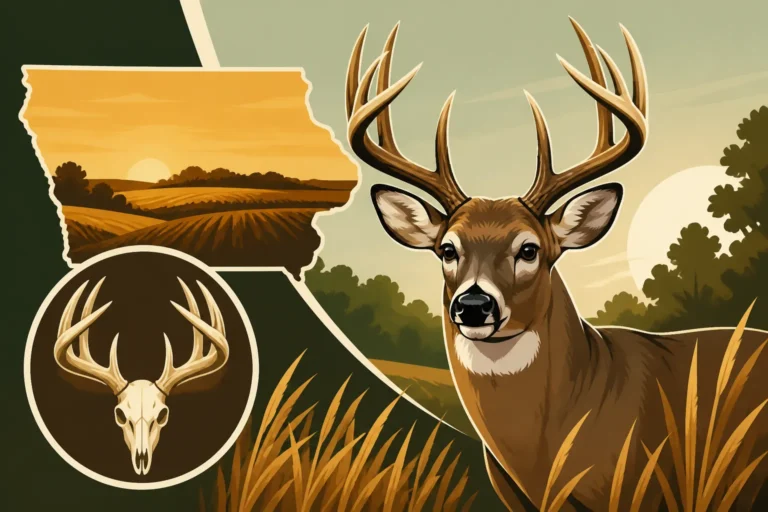
Iowa has a well-earned reputation for producing exceptional whitetail deer, and a significant part of that stems from the fact that many of our bucks are allowed to reach older age classes. It's not just luck; a combination of factors plays into this, creating an environment where a buck has a real shot at making it past its yearling years.
The Iowa Advantage: Why Bucks Live Longer Here
One of the primary drivers behind Iowa's older buck age structure is the sheer abundance of high-quality nutrition available to the deer herd. We're talking about endless acres of corn and soybeans, which provide an incredible protein and energy source that fuels rapid growth, both in body size and antler development. This rich diet means bucks don't have to spend as much energy searching for food, allowing them to focus on growing bigger and stronger. Think about it: a buck that's well-fed can withstand the rigors of winter, the stress of the rut, and simply has more reserves to bounce back from injuries or evade predators.
Beyond the agricultural bounty, Iowa offers excellent cover. While much of the state is farmed, there are still crucial pockets of timber, CRP (Conservation Reserve Program) grasslands, and dense creek bottoms that provide sanctuary for deer. These areas, often overlooked by less persistent hunters, act as natural refuges where bucks can bed down undisturbed, allowing them to escape hunting pressure and mature. This combination of abundant food and secure cover is a powerful recipe for bucks to age gracefully, often leading to them reaching impressive sizes, which contributes to Why Iowa Grows Trophy Whitetails.
Average Age at Harvest: What the Data Tells Us
While every buck's journey is unique, data from wildlife agencies and extensive hunter surveys give us a clearer picture of the average age at which bucks are harvested in Iowa. Unlike some states where yearling bucks (1.5 years old) make up the majority of the harvest, Iowa hunters often encounter and harvest bucks in older age classes. Many hunters, driven by the desire to let younger bucks reach their potential, voluntarily pass on smaller deer, a practice that significantly shifts the age structure upwards.
The table below illustrates a typical breakdown of buck age classes and some general characteristics you might observe in the field. Keep in mind, these are averages, and individual deer can always surprise you!
| Age Class | Antler Characteristics (General) | Body Characteristics (General) | Hunter Impression (Common) |
|---|---|---|---|
| 1.5 Years Old | Spikes to small 8-points; thin bases | Lean, "teenager" look; long legs, short body | "Fork horn," "basket rack" |
| 2.5 Years Old | Good 8-points, sometimes 10; improving mass | Leaner body, but starting to fill out; neck distinct from chest | "Nice young buck," "future stud" |
| 3.5 Years Old | Solid 8 or 10-point, good mass, wider | Filling out, beginning of thick neck, belly still tucked | "Mature enough," "shooter" |
| 4.5 Years Old | Heavy mass, wider, taller; character points | Barrel-chested, thick neck, belly begins to sag | "Big boy," "trophy class" |
| 5.5+ Years Old | Maxed out or slightly declining rack; heavy | Sagging belly, short legs, deep chest, thick neck all season | "True old warrior," "peak mature" |
What you'll notice from this is that a significant number of Iowa bucks are harvested at 2.5 years old and older, with a healthy percentage reaching 3.5 years old and even 4.5+ years old. This is a testament to both the natural advantages of the Iowa landscape and the prevalent hunting culture that values mature animals. Understanding the Buck Age Structure in Iowa is key to setting your expectations and appreciating the quality of hunting available.
Factors Influencing Buck Age Before Harvest
It's not just about the deer themselves; our actions as hunters and the regulations set by the Iowa DNR play a massive role in shaping how old bucks get. These human elements, coupled with the natural environment, create the complex tapestry of Iowa's deer management.
Hunter Choices and Management Philosophy
The single biggest factor in allowing bucks to reach older age classes is often voluntary restraint by hunters. Many Iowa hunters, residents and nonresidents alike, participate in a form of informal Quality Deer Management (QDM). This isn't always about strict antler restrictions (though those exist in some areas for specific seasons), but rather a personal choice to pass on younger bucks, often referred to as "letting them walk" to grow another year. This philosophy is driven by a desire to improve the overall quality of the herd and to have more opportunities to harvest truly mature deer.
This collective mindset is a powerful force. When enough hunters make the decision to pass on 1.5-year-old and even 2.5-year-old bucks, those deer survive to put on more bone and body weight in subsequent years. It requires patience and discipline, especially when a buck steps out, but the rewards are evident in Iowa's reputation for big whitetails. The culture of sharing successful harvests of older bucks on social media and in local communities also reinforces this ethic, inspiring newer hunters to consider waiting for more mature animals. Programs like GoHunt often provide resources and forums where hunters can discuss these strategies and share insights into identifying mature deer.
Season Structure and Weapon Type
Iowa's diverse deer season structure also plays a significant role in influencing buck age at harvest. We have archery seasons, early and late muzzleloader seasons, and two shotgun seasons, each with its own nuances and hunter densities.
- Archery Season: This season typically spans a longer period, often extending through much of the rut. Bowhunters tend to be more selective, and the inherent challenges of bowhunting (closer ranges, greater need for stealth) mean that fewer deer are harvested compared to gun seasons. This selectivity allows more bucks to survive into older age classes.
- Early Muzzleloader Season: Often occurring during a warmer, less pressured time, this season can present opportunities for mature bucks before the peak gun pressure.
- Shotgun Seasons: These are often high-pressure events, especially the first shotgun season. With more hunters in the woods and the broader effective range of a slug gun, harvest rates tend to be higher. However, even during these seasons, the sheer amount of cover and the localized nature of many hunting efforts mean that plenty of bucks still manage to slip through.
- Late Muzzleloader and January Antlerless Seasons: These occur after much of the gun pressure has subsided. Bucks that have survived the earlier seasons are often more wary but may be focused on critical late-season food sources, making them vulnerable to strategic hunters.
The varying demands and success rates of different weapon types inherently influence which bucks are taken and at what age. For instance, Shotgun Season Drives in Small Timber might yield different age classes than a solo bowhunter targeting a specific buck during Bowhunting Iowa Deer From October to January.
Habitat Quality and Cover Availability
We touched on this earlier, but it bears repeating: habitat is king. Iowa's mix of agricultural fields, timber blocks, CRP, and river bottoms provides an ideal environment for deer to grow old. When bucks have ample places to hide, rest, and feed without constant disturbance, they naturally live longer.
Consider a mature buck bedding in a dense cedar thicket bordering a cornfield. He has immediate access to food but also impenetrable cover where he feels safe. This reduces his exposure to hunters, allowing him to evade detection season after season. Similarly, the extensive river corridors and large timber tracts in southern and eastern Iowa create vast sanctuaries where deer can disappear. The ability of a buck to use this cover effectively is a major component of Whitetail Home Range in Farm Country and allows them to navigate the landscape while avoiding human encounters. Hunters who understand Reading Aerial Imagery for Bedding Cover often find these critical hiding spots.
Identifying Buck Age in the Field
Knowing a buck's age when you see him can be tricky, but it's a skill that develops with experience. It's not just about antler size; it's a holistic assessment of body language, physical characteristics, and even behavior.
Antler Development as an Age Indicator (with caveats)
Antlers are often the first thing we notice, and they do provide clues, but they are not the sole determinant of age. A 2.5-year-old buck with exceptional genetics and nutrition might sport a rack that rivals a 3.5-year-old from an area with poorer conditions. Conversely, an older buck past his prime might have a declining rack.
Generally, you'll see a progression:
- Yearlings (1.5 years): Often spikes or small forks, thin bases. They're all legs and ears.
- 2.5-year-olds: Starting to get some mass and spread, often an 8-point. Their body is still a bit lanky.
- 3.5-year-olds: Good mass and spread, well-developed tines. Their body is starting to look powerful, with a noticeable neck during the rut.
- 4.5-year-olds and older: Heavy mass, often wide, with good tines. Their bodies are deep-chested, thick-necked (even outside the rut), and their legs look shorter in proportion to their body.
The key is to not solely focus on the rack. While a buck may have an impressive set of antlers, knowing Soil Fertility and Antler Growth can help you understand the potential in a given area.
Body Characteristics and Behavior
This is where true aging in the field comes into play. You need to look at the whole animal.
- Body Proportions: A young buck (1.5-2.5 years) looks like a teenager – long legs, a slender neck that blends seamlessly into its chest, and a relatively short body. As they age, their body deepens, their legs appear shorter, and their neck becomes thicker and more distinct, especially during the rut. An old buck will often have a noticeable sag in its belly, even when well-fed, and its back might appear swaybacked.
- Head and Neck: Younger bucks have a more "fine" facial appearance. As they mature, their snouts might appear longer, and their faces can look heavier. The neck is a huge indicator: a 1.5-year-old has a thin neck all year. A 3.5-year-old will have a moderately thick neck during the rut. A 4.5+ year old buck will have a very thick neck, often looking like it goes directly into its brisket, and it will retain some of that thickness even outside the rut.
- Behavior: Younger bucks often move more erratically, sometimes even sparring playfully when there are no does around. Older bucks tend to be more deliberate, cautious, and move with a purpose. During the rut, a mature buck will often cruise slower, scent-checking, and may hold its head lower when walking. Their confidence, even when wary, can be a subtle but telling sign. During When the Whitetail Rut Peaks in Iowa, these behavioral differences become even more pronounced.
Using Technology for Informed Decisions
In today's hunting world, technology can be a huge asset in pre-season scouting and even real-time decision-making. Trail cameras are invaluable for tracking buck development year over year. By running cameras year-round, you can literally watch a buck age, tracking its antler development and body changes. This pre-season intel, especially when placed strategically for Trail Camera Placement on Iowa Public Land, can give you confidence in identifying a specific age class when you see that buck in person.
Mapping apps like those offered by GoHunt allow you to mark specific sightings, note characteristics, and track movements without disturbing the area. This digital scouting, combined with boots-on-the-ground observation, gives you a comprehensive understanding of the deer in your hunting area. Even during a sit, a quick check of your photos on your phone can help you confirm the identity and age of a buck you're considering harvesting.
Iowa's Commitment to Quality Deer
Iowa's reputation for producing big, old bucks isn't accidental. It's a result of careful management and a strong dedication from both the state's wildlife agency and its hunting community.
DNR Management Goals and Herd Health
The Iowa DNR works tirelessly to manage the state's deer herd, balancing hunter opportunity with herd health and agricultural impact. This involves setting antlerless quotas to manage overall deer numbers, especially does, which in turn influences the buck-to-doe ratio and gives bucks more breathing room to age. The goal is often to maintain a healthy and robust herd, which naturally means allowing a good proportion of bucks to reach older age classes.
This management approach, detailed in resources like the Iowa Deer Herd Management and Harvest reports, has been incredibly successful. The focus isn't solely on "trophy" production but on ecological balance, and a natural outcome of that balance in an agricultural state like Iowa is often a high-quality deer herd with older animals. Hunters play a crucial role in this by accurately reporting their harvests, as outlined in the Iowa Deer Harvest Reporting Rules, which provides the data necessary for the DNR to make informed decisions.
The Nonresident Factor and Preference Points
Iowa's draw system for nonresident deer tags also indirectly supports the older age structure. The demand for Iowa tags is incredibly high, and nonresidents often accumulate Iowa Preference Points and How They Work for several years before drawing a coveted archery or gun tag. This waiting period often means that when a nonresident finally draws a tag, they're typically even more committed to holding out for a mature animal, further reducing pressure on younger bucks.
The entire process, from understanding Iowa Nonresident Deer Draw Explained to meticulously planning a hunt, tends to instill a deeper appreciation for the resource. This added layer of commitment means that nonresident hunters are often looking for that "once-in-a-lifetime" buck, reinforcing the trend of passing on younger deer and contributing to the sustained presence of older, more mature whitetails in the Iowa landscape.
Disclaimer
This article is for general informational purposes only and does not constitute professional advice. Laws, prices and regulations vary by location and change over time. Consult a qualified professional for guidance on your specific situation.