Buck Dispersal Distance in Iowa
It's incredibly frustrating when you've been watching a promising young buck all summer, maybe even gotten him on trail camera a few times, only to have him vanish just as hunting season approaches. You start wondering if you spooked him, if a neighbor got him, or if he just decided greener pastures were elsewhere. The truth is, often, it's a natural phenomenon called buck dispersal, and understanding it is key to anticipating deer movement and improving your hunting strategy in the diverse Iowa landscape. This guide will deep dive into why Iowa bucks disperse, how far they typically travel, and how you can adapt your approach to account for these crucial shifts in their lives.
Understanding the 'Walkabout' Phenomenon: What is Buck Dispersal?
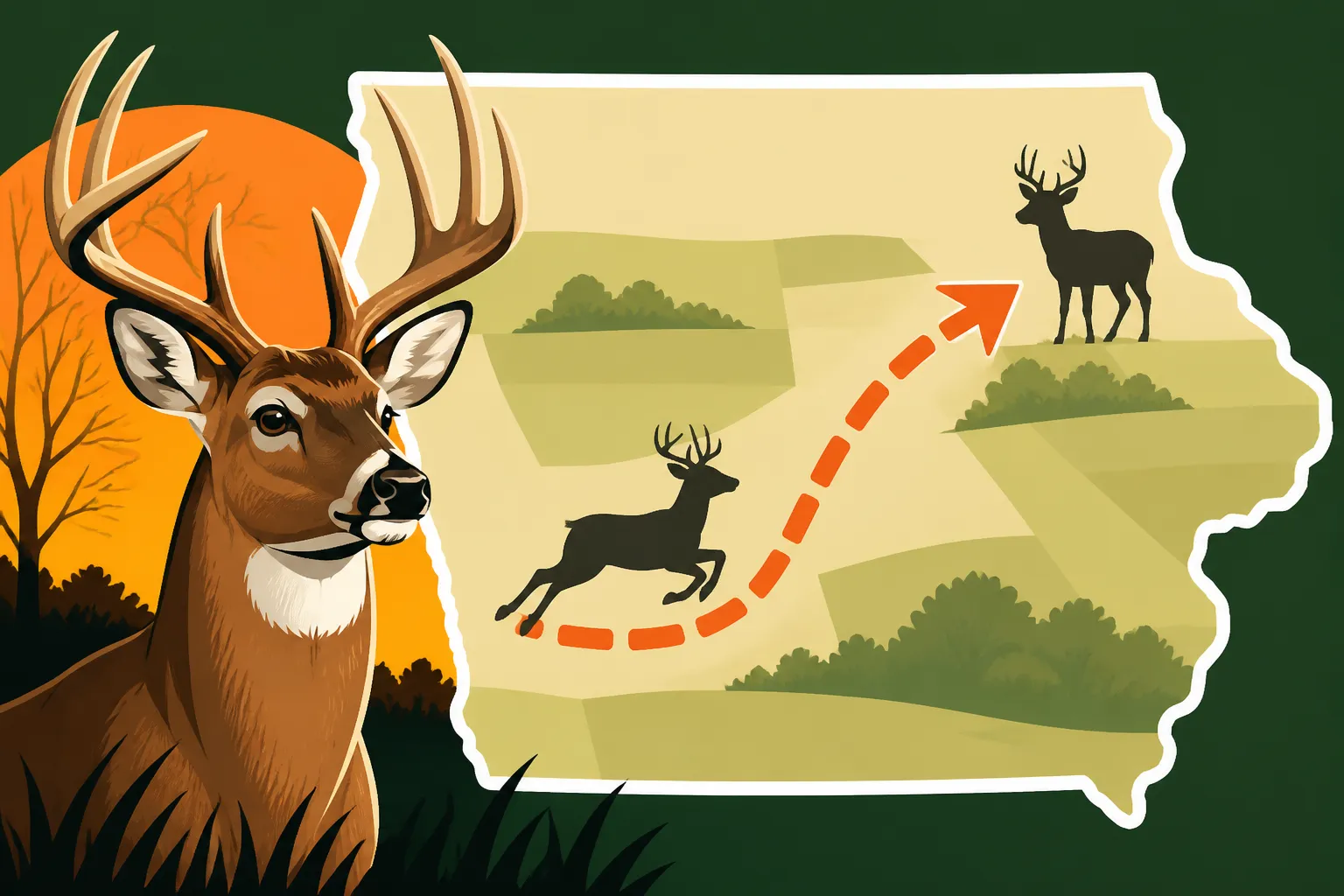
Buck dispersal is a critical, natural part of a whitetail deer's life cycle, particularly for younger males. It's not just a random wanderlust; it's an ingrained biological imperative that shapes deer populations and, consequently, our hunting opportunities. If you've ever felt like a specific buck "disappeared" from your property, there's a good chance dispersal played a significant role.
The Biological Imperative to Move
At its core, buck dispersal is the process where young male deer leave their birth area to establish a new, independent home range. This behavior is driven by several evolutionary factors. First and foremost, it helps prevent inbreeding within the local herd, promoting genetic diversity. Imagine a world where every young buck stayed with its mother and sisters – the gene pool would quickly become too shallow, leading to weaker deer. By forcing these young males to strike out on their own, nature ensures a constant mixing of genetics across the landscape.
Beyond genetics, there's the intense social hierarchy within a deer herd. As young bucks mature, especially during the pre-rut and rut phases, they begin to feel the pressure from older, more dominant bucks. These mature bucks, often larger and more aggressive, will actively push younger males out of prime bedding and feeding areas, asserting their dominance. It's a clear signal for the younger generation to find their own space, where competition for resources and breeding opportunities is less intense. This competition is a powerful motivator for that "walkabout."
When and Why it Happens
Dispersal typically occurs when bucks are between one and a half and two and a half years old, often referred to as yearling bucks. The timing can vary, but it most commonly happens in the late summer or early fall, just before the whitetail rut peaks. This period coincides with several factors: young bucks reaching a level of physical maturity where they can survive independently, increasing territoriality among older bucks as the breeding season approaches, and a potential decline in localized food sources that might have sustained larger numbers of deer earlier in the year.
For example, a two-year-old buck, full of youthful vigor but lacking the sheer size and experience to stand up to a five-year-old patriarch of the local timber block, will often be the first to pack his bags, so to speak. He's not just looking for any new spot; he's seeking an area with sufficient cover, food, and water where he can establish himself without constant harassment. This seasonal timing means that bucks you've been seeing regularly during the summer could be completely gone by bow season, only to be replaced by new, unfamiliar deer who have dispersed from other areas.
How Far Do Iowa Bucks Really Travel? Key Factors and Distances
The distance an Iowa buck will disperse is far from a fixed number. It's influenced by a complex interplay of environmental factors, deer population dynamics, and the individual buck's drive. While there are averages, it's crucial for hunters to understand these variables to better anticipate where a buck might end up.
The Average Iowa Dispersal Range
While individual cases can see bucks traveling much further, studies generally show that most yearling bucks disperse an average of 1 to 10 miles from their birth range. However, it's not uncommon for some individuals to travel upwards of 20, 30, or even more miles to find suitable habitat and establish a new home. This variability is what makes predicting the exact movements so challenging for hunters. These longer dispersals often contribute to the high-scoring deer Iowa is famous for, as these bucks explore new, resource-rich territories.
To get a clearer picture, let's look at some of the factors influencing these distances:
| Factor | Impact on Dispersal Distance | Typical Outcome |
|---|---|---|
| Buck Age | Younger bucks (1.5 – 2.5 years old) disperse most often. | Higher chance of longer moves. |
| Deer Density | High density increases competition, pushing bucks further. | Longer dispersal distances. |
| Habitat Quality | Poor habitat can force longer moves for resources. | Bucks seek better food/cover elsewhere. |
| Habitat Fragmentation | Dense timber vs. open fields. Barriers can shorten moves. | Shorter, more direct moves between cover. |
| Pressure from Dominants | Older, larger bucks force younger ones out. | Primary driver for initial dispersal. |
| Food Availability | Abundant food might reduce immediate need to disperse. | Can temporarily delay or shorten dispersal. |
Understanding these average ranges and the factors at play can help you better predict potential travel corridors. Mapping tools, like those found on GoHunt, can be invaluable here. You can look at large-scale aerial imagery to identify continuous timber blocks or river corridors that might serve as natural pathways for a dispersing buck, helping you to broaden your scouting efforts beyond your immediate property lines.
Influences on Dispersal Distance
Iowa's diverse landscape significantly impacts how far a buck might roam. Take habitat fragmentation, for instance. In areas dominated by vast stretches of row crops with only small, isolated timber pockets, a dispersing buck might only need to travel a mile or two to find the next suitable patch of cover. They move from one "island" of timber to another, limiting their overall travel distance to the next perceived safe haven. This is a common pattern in much of central and northern Iowa.
Conversely, in areas with large, unbroken tracts of timber, like those found in parts of southern or northeast Iowa, a buck might have the opportunity to travel much further before feeling the need to settle. The sheer expanse of contiguous cover allows for longer, less interrupted movements. These Timber and Creek Corridors as Deer Cover act as superhighways for deer movement, facilitating extensive dispersal.
Deer density also plays a major role. If the local population of mature bucks is particularly high, the competition for breeding rights and prime habitat will be fierce, putting more pressure on young bucks to disperse further. This is a key reason why Whitetail Home Range in Farm Country can sometimes appear to shift drastically for younger animals compared to established, older bucks. A lack of available does in their natal area might also prompt a longer journey, especially once the pre-rut hormones start flowing. It's a complex equation, but the underlying driver is often the need to find a place where they can successfully breed and thrive away from intense competition.
The Hunting Impact: Adapting Your Strategy to Dispersal
Buck dispersal directly impacts how we hunt in Iowa. Ignoring it means potentially misinterpreting deer movement or, worse, hunting "ghosts" that have long since moved on. Acknowledging dispersal allows us to refine our scouting, adjust our in-season tactics, and even reconsider where we focus our efforts.
Adjusting Your Scouting Efforts
If you’re relying solely on summer trail camera pictures from a small property, you might be setting yourself up for disappointment. The very bucks you've targeted could be miles away by opening day. This means traditional scouting, focused only on your immediate property or a single small tract, needs to evolve. Instead, think bigger. E-scouting becomes paramount. Utilizing satellite imagery and property boundary maps can help you identify potential travel corridors and destination areas for dispersed bucks. Consider large timber blocks, river bottoms, or even small, overlooked parcels of public ground that might offer a safe haven for a buck seeking new territory. These could be the areas where a dispersed buck from a neighboring farm eventually settles.
Don't just look for sign on your primary hunting spot; think about connecting pieces of habitat in a wider radius. Scouting Iowa Timber and River Bottoms should now involve not just your immediate vicinity, but also the broader landscape that connects to it. Look at how parcels of timber link up, how creek beds provide cover, and where pinch points might funnel deer from one larger block to another. By understanding these landscape-level movements, you can better anticipate where a new buck might show up or where your familiar summer buck might have moved. Using the aerial view from mapping services, like the one offered by GoHunt, you can simulate these dispersal routes and identify potential areas where a young buck might decide to make his new home. This broader view allows you to effectively expand your scouting reach without physically walking endless miles. Remember, Reading Aerial Imagery for Bedding Cover from a wider perspective can reveal these hidden dispersal destinations.
Early Season vs. Rut Strategies
The timing of buck dispersal also dictates different hunting approaches throughout the season. In the early archery season, especially in September, most bucks are still in their summer patterns or have only just begun their dispersal journeys. During this time, focusing on established resident buck patterns, like movements between bedding and food sources, will be most effective. The bucks you've patterned throughout the summer are still likely in their Whitetail Home Range in Farm Country.
However, as October progresses into November, the impact of dispersal becomes more pronounced. Yearling bucks are settling into new areas, and new bucks are often passing through unfamiliar territories, driven by the desire to breed and a drive for new resources. This means the rut can bring surprises. A buck you've never seen before could suddenly appear on your trail camera, or be spotted on a public land walk, simply because he dispersed from miles away. These "new" bucks can be a fantastic opportunity. You might find a three-year-old buck that suddenly pops up on your property after dispersing from a high-pressure zone a few miles away. This is where Trail Camera Placement on Iowa Public Land in strategic travel corridors, rather than just food plots, can reveal these transient bucks. While unpredictable, the rut's increased activity means even these dispersing bucks become more visible and vulnerable.
Public Land vs. Private Land Implications
For those hunting private land, buck dispersal can be a bittersweet reality. You might invest time and effort into patterning a specific buck, only to have him disperse to a neighboring property or even further away. This often leads to the feeling that "the deer just disappear." The flip side is that new, desirable bucks can disperse onto your private ground from other areas, giving you unexpected opportunities. It's a constant rotation that keeps things interesting.
On public land, dispersal can be a major advantage. While established resident bucks are often wise to hunting pressure, dispersed bucks are often less familiar with their new surroundings and the local hunter activity. They might be more prone to making mistakes as they explore their new territory. Public lands, especially those bordering large agricultural areas, often see an influx of younger bucks that have dispersed from nearby private lands where hunting pressure or competition was higher. Understanding Public Land Deer Hunting in Iowa tactics means recognizing these transient populations. These are the deer that might follow a secluded creek bottom for miles before settling into a new timber patch. This means that hunters who diligently scout and understand wider landscape patterns can often intercept these bucks. When considering public land hunting, using a tool like GoHunt to examine surrounding private and public parcels can help you anticipate where a buck might be pushed from or where he might travel to find refuge from Hunting Pressure Patterns on Iowa Public Land.
Tracking the Unpredictable: Tools and Mindset for Dispersal
While buck dispersal can introduce an element of unpredictability to your hunting season, it doesn't have to be a source of constant frustration. By adopting a broader mindset and leveraging modern tools, you can better understand, and even capitalize on, these natural movements.
Leveraging Technology for Broader Understanding
Modern hunting technology has revolutionized our ability to understand deer movement, including dispersal. GPS-enabled mapping applications, like those found within GoHunt, are no longer a luxury but a necessity for serious hunters. These tools allow you to view vast landscapes, identify critical habitat features, and visualize potential travel corridors that a dispersing buck might use. You can mark bedding areas, food sources, and pinch points not just on your property, but in the surrounding areas up to several miles away. This wider perspective helps you piece together the puzzle of where a buck might have originated from or where he might be heading.
For instance, you might notice a series of connected timber lines or a winding river corridor that leads directly from a known bedding area on private ground to a less pressured public land tract a few miles distant. This isn't just a random observation; it's a potential dispersal highway. While trail cameras are excellent for confirming presence, they typically only show you what's on your immediate property. To truly understand dispersal, you need to step back and look at the larger picture that these mapping tools provide. They allow you to mentally track deer over much larger distances than you could ever cover on foot.
Patience and Observation
Even with the best technology, understanding dispersal still requires a keen eye and a healthy dose of patience. When that familiar buck disappears, don't immediately assume the worst. Instead, start looking for new buck sign. Are there fresh rubs or scrapes in areas where you haven't seen them before? Are there new buck tracks on old logging roads? These could be indications that a new, dispersed buck has moved into the area. Remember, while the specific individual might change, the habitat and resources remain, often attracting other bucks to fill the void.
The "new" deer on your property, even if they aren't the monster you were hoping for, could very well be a disperser from a neighboring section. Take the time to observe their patterns, their demeanor, and their interactions with other deer. Understanding Buck Age Structure in Iowa for your area can help you identify these younger, dispersing males. Every buck leaves sign, and by keenly observing these changes, you can adapt your strategy. Sometimes, the best strategy is simply to stay consistent in a good location, knowing that eventually, a new buck will likely find it.
Connecting the Dots Across the Landscape
Ultimately, effectively hunting in an environment where buck dispersal is a common phenomenon means thinking beyond your fence lines. It's about recognizing that your hunting ground is just one piece of a much larger deer habitat mosaic. Consider how your property connects to other timber blocks, CRP fields, or river bottoms. Are there obvious travel corridors that deer would use to move between these areas? This includes understanding Finding Private Land Access in Iowa not just for your own hunting, but for seeing how other properties might influence deer movement onto yours.
For this reason, keeping an eye on larger population trends and Iowa Deer Herd Management and Harvest reports can give you a better idea of what to expect in terms of overall deer numbers and health. While you might not be able to stop a buck from dispersing, you can certainly position yourself to intercept one. By understanding the broad patterns of deer movement across the Iowa landscape, you're not just hunting a spot; you're hunting a dynamic system.
Disclaimer
This article is for general informational purposes only and does not constitute professional advice. Laws, prices and regulations vary by location and change over time. Consult a qualified professional for guidance on your specific situation.