How Much Meat an Iowa Buck Gives
When you finally get that Iowa deer on the ground, whether it's a giant buck or a respectable doe, one of the first thoughts after the initial excitement often turns to, "Okay, how much venison am I actually going to get from this?" It's a common question, and honestly, the answer can vary quite a bit, leading to a lot of frustration if you have an unrealistic expectation. This guide is here to demystify the process and help you understand how much delicious, organic meat you can expect from an Iowa whitetail buck, addressing the factors that influence that final freezer weight.
Understanding the Factors That Influence Meat Yield
It's not as simple as looking at a deer in the field and guessing the exact number of pounds of venison you'll take home. There are so many variables at play, from the moment that deer hits the ground to when it's wrapped and frozen. Hunters often overestimate the final yield, only to be a little disappointed when they pick up their processed meat. Let's dig into what truly makes a difference.
Live Weight Versus Dressed Weight
This is probably the biggest piece of the puzzle that often confuses hunters. When you talk about a "200-pound buck," are you talking about its live weight, or its field-dressed weight? The distinction is crucial for estimating your meat yield.
A deer's live weight is exactly what it sounds like – the total weight of the animal when it's alive and walking around. This includes everything: hide, head, internal organs, blood, bones, and all that juicy muscle. However, once you field dress a deer, you remove a significant portion of that weight. The internal organs, blood, and sometimes even the head and lower legs are removed, which can account for a substantial percentage of the live weight. For an average Iowa whitetail buck, the field-dressed weight is typically 20-30% less than its live weight. So, that "200-pound" live weight buck might only be 140-160 pounds on the scale after it's been field-dressed. It's a noticeable drop, and it sets the stage for how much actual meat you'll recover.
Age and Size of the Buck
It stands to reason that a bigger deer yields more meat, but the age of the buck also plays a role in the quality and tenderness of that meat, even if the total poundage is similar. Iowa is renowned for growing big-bodied whitetails, and a mature Iowa buck, say a 3.5 to 5.5-year-old animal, will naturally have more muscle mass than a yearling buck. These older bucks often have robust body weights, sometimes tipping the scales well over 200 pounds live weight, especially after a good growing season with plenty of corn and beans.
Younger bucks, while still providing excellent venison, simply haven't had the time to put on as much muscle. Their frames are smaller, and their bone-to-meat ratio might be a little higher. Also, the overall health and condition of the deer at the time of harvest are critical. A buck that's been run ragged during the peak of the rut, or one that's been struggling with limited food sources, might be significantly lighter and yield less meat than a well-fed, healthy buck from the same age class. The rich agricultural landscape across much of Iowa contributes to these deer often being in prime condition, which means more meat on the bone.
Shot Placement and Associated Damage
This is a point many hunters don't immediately consider, but it's incredibly important for maximizing your venison harvest. A clean, ethical shot that hits the vitals – the lungs and heart – will cause minimal damage to the prime meat cuts. A double-lung shot, for example, might mean losing a small portion of the shoulder meat on the exit side, but the rest of the animal's muscle tissue remains intact and untainted.
However, a shot that impacts a major bone like the shoulder blade, a leg, or tracks through the paunch or gut can contaminate or destroy a significant amount of meat. A gut shot can introduce digestive fluids and bacteria into the muscle, potentially spoiling meat that otherwise would have been perfectly fine. Similarly, a high shoulder shot, while effective at dropping a deer on the spot, can ruin a sizable portion of one of the most desired cuts – the front shoulder. As ethical hunters, our primary goal is a quick, humane kill, but being mindful of shot placement can also significantly contribute to a higher meat yield. This is where practicing your Shot Placement on a Whitetail at Twenty Yards or your slug gun accuracy can pay dividends beyond just a quick kill.
Field Dressing and Processing Efficiency
The care you take in the immediate aftermath of the harvest also impacts your final meat yield. Prompt and proper field dressing is paramount. Getting the internal organs out quickly helps the carcass cool down, especially important during warmer early archery seasons in Iowa. Lingering heat can cause bacteria to multiply rapidly, leading to spoilage and potentially requiring you to trim away more meat than necessary. For guidance on this, check out Field Dressing in Warm October Weather.
Beyond field dressing, the actual butchering process makes a difference. A skilled butcher, whether it's you at home or a professional locker plant, will be more efficient at separating meat from bone, trimming fat, and minimizing waste. An inexperienced hand might leave more meat on the bone or trim too aggressively. Consider whether you're going to try Processing Your Own Deer at Home or take it to one of the many Locker Plants During Iowa Shotgun Season. Each approach has its benefits, but professional processors often have specialized tools and experience that can maximize your yield and provide consistent cuts.
Estimating Your Iowa Buck's Meat Yield
Okay, so you've got a buck down, it's field-dressed, and you're wondering what to tell the butcher, or how many freezer bags to prepare. Let's talk numbers.
General Formulas and Ratios
While every deer is different, there are some generally accepted ratios you can use to estimate the amount of boneless, trimmed meat you'll get. Most hunters refer to the field-dressed weight (FDW) for these calculations, as it's the most common benchmark after the initial harvest.
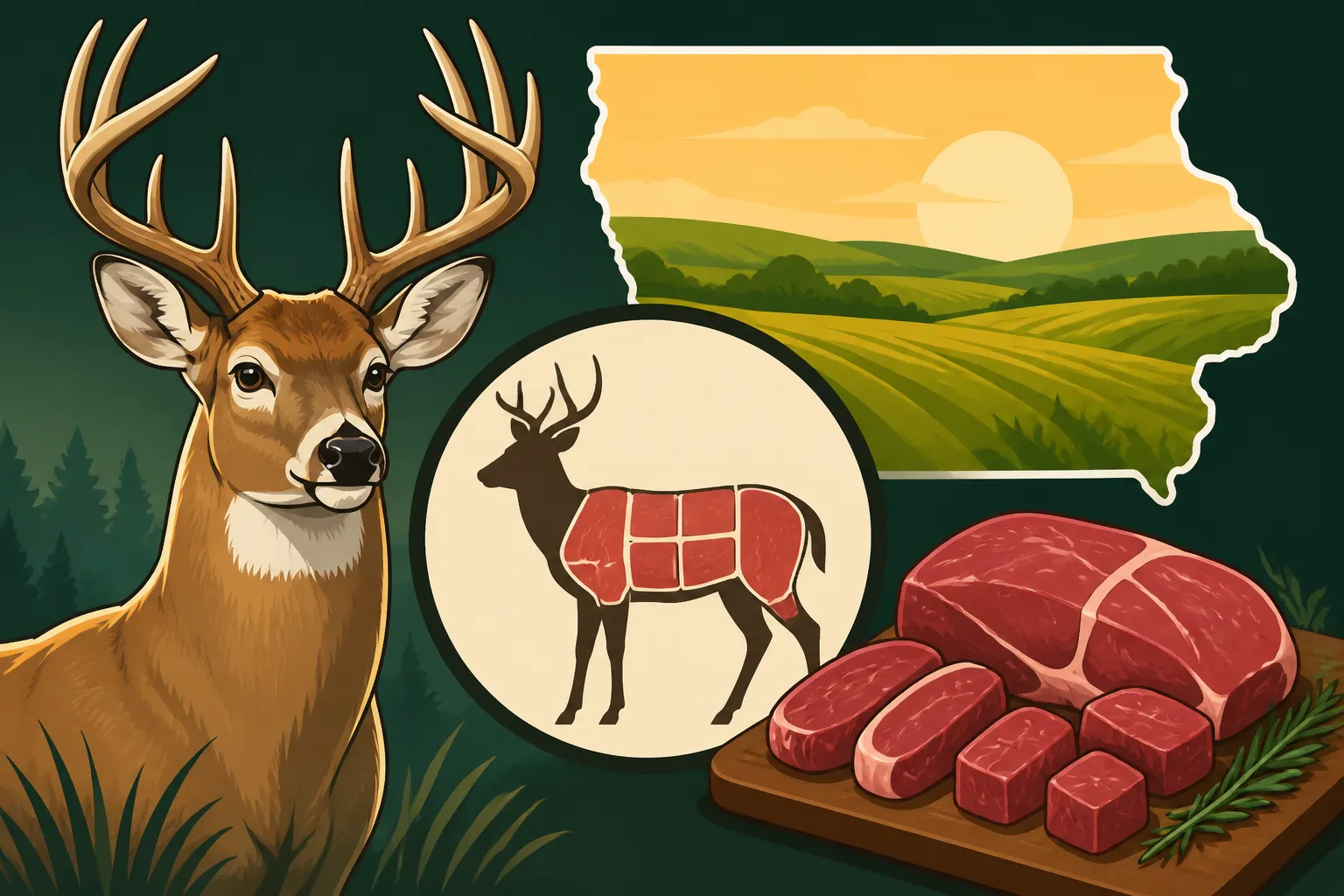
A good rule of thumb for boneless, trimmed meat from a field-dressed whitetail deer is typically 40-55% of the field-dressed weight. This percentage range accounts for bone, excess fat, gristle, and any meat lost to bullet damage.
So, if you have a field-dressed buck weighing 150 pounds:
- At the lower end (40%), you might get around 60 pounds of meat.
- At the higher end (55%), you could get 82.5 pounds of meat.
This range is why the other factors we discussed are so critical. A clean shot, careful field dressing, and efficient butchering will push you towards that higher percentage.
If you only know the estimated live weight (e.g., you saw a deer you guessed at 200 pounds before you shot it), you first need to estimate its field-dressed weight. As mentioned, FDW is usually 70-80% of live weight. So, a 200-pound live weight buck might have a 140-160 pound field-dressed weight. Then you apply the 40-55% rule to that number.
Let's look at a quick example: A 200 lb live weight buck becomes ~150 lbs FDW. Applying the 40-55% rule means a yield of 60-82.5 lbs of boneless meat.
Estimated Yield Table for Iowa Bucks
To make this a bit clearer, here's a table based on common field-dressed weights for Iowa whitetails. Remember, these are estimates, and your actual yield will vary!
| Estimated Field-Dressed Weight (lbs) | Estimated Boneless, Trimmed Meat Yield (lbs) (40% of FDW) | Estimated Boneless, Trimmed Meat Yield (lbs) (55% of FDW) |
|---|---|---|
| 100 | 40 | 55 |
| 120 | 48 | 66 |
| 140 | 56 | 77 |
| 160 | 64 | 88 |
| 180 | 72 | 99 |
| 200+ | 80+ | 110+ |
It's common for a mature Iowa buck to fall into the 140-180 lb field-dressed weight range, meaning a typical yield of 56 to 99 pounds of venison. These numbers can sometimes be a bit of a reality check for hunters expecting closer to 100 or 150 pounds from a "big" buck.
Real-World Examples from Iowa Hunters
Talking to other Iowa hunters, you'll hear a lot of different experiences. Many folks report getting anywhere from 60 to 90 pounds of boneless meat from an average mature Iowa whitetail buck. For example, a friend of mine who harvested a really nice 4.5-year-old buck near Decorah that probably went 220 pounds live weight, ended up with about 85 pounds of venison after it was professionally processed. Another hunter I know, who shot a younger, smaller 1.5-year-old buck in southern Iowa, might only get around 45-55 pounds of meat. The Iowa Whitetail Body and Antler Size really do vary across the state, and this impacts the final meat tally.
The processing style also matters. If you opt for bone-in cuts like bone-in roasts or chops, your total weight might seem higher, but the actual boneless meat content remains the same. Most hunters, however, prefer boneless cuts for ease of cooking and storage. So, when comparing notes with hunting buddies, always clarify if they're talking about bone-in or boneless weight! Knowing what you can realistically expect helps manage expectations and plan your freezer space. It also helps you appreciate the incredible bounty that these animals provide.
Maximizing Your Venison Harvest
Getting that deer on the ground is just the first step in filling your freezer. The next critical steps, which often occur under pressure or in challenging conditions, are all about preserving and maximizing the edible meat. You put in the effort to draw an Iowa tag, scout with tools like GoHunt, and make the shot – don't let the subsequent steps compromise your hard-earned venison!
Proper Field Dressing Techniques
The clock starts ticking the moment your deer is down. Speed and cleanliness are key. The goal is to remove the internal organs as quickly and cleanly as possible to allow the carcass to cool internally.
- Be Prepared: Always carry a sharp, dedicated field dressing knife. Gloves are a good idea for hygiene.
- Position the Deer: Lay the deer on its back. This helps keep the belly taut and easier to work on.
- Opening the Cavity: Make a shallow incision from the breastbone down to the pelvis, being careful not to puncture the intestines. You can use your fingers to lift the skin and muscle away from the organs as you cut.
- Severing Connections: Cut around the rectum and bladder. Reach into the chest cavity to sever the windpipe and esophagus as high up as you can.
- Removing Organs: Roll the deer onto its side, and the organs should largely tumble out. Check that nothing is left behind.
- Cleanliness: If you have access to clean water, a quick rinse of the cavity can help, but it's not always practical in the field. What's more important is getting the deer cooled.
- Cooling: Prop the cavity open with a stick or whatever is handy to promote airflow. This is especially vital in warmer weather, like those mild October bow season days.
For more in-depth advice on this, I've covered Field Dressing in Warm October Weather which goes into specifics for those challenging early season conditions.
Getting the Deer Cooled Quickly
After field dressing, cooling the carcass rapidly is paramount to preventing spoilage and ensuring good meat quality. Bacterial growth accelerates significantly at warmer temperatures.
- Airflow is Your Friend: Don't throw a field-dressed deer into the back of a pickup truck and cover it with a tarp if it's warm outside. That traps heat and invites spoilage. Hang the deer if possible, allowing air to circulate around it.
- Shade and Airflow: If hanging isn't an option immediately, get the deer into the shade and off the ground. Prop the body cavity open.
- Ice if Necessary: In warm conditions, placing bags of ice inside the body cavity can dramatically speed up cooling. Just make sure the meltwater can drain out to avoid soaking the meat. For detailed strategies, read Getting a Deer Cooled in October.
- Transport: When transporting, ensure airflow. If it's a longer drive and the temperature is mild, consider a tarp over a frame to create an air gap, or simply tie it securely in the open bed of a truck. If you have a long haul, Dragging Versus Cart Hauling also has some advice on getting the deer out efficiently and keeping it clean.
Home Processing Versus Commercial Locker Plants
Once your deer is field-dressed and cooled, you have a choice: take it to a professional processor or handle the butchering yourself.
Commercial Locker Plants
Pros:
- Expertise: Professional butchers have the experience and tools to efficiently break down a carcass, maximize yield, and provide consistent, clean cuts.
- Convenience: You drop off the deer, and they do all the dirty work. This is a huge time-saver, especially if you're busy or new to butchering.
- Variety: Many locker plants offer a wide array of specialty products like jerky, summer sausage, brats, and other smoked goods, allowing you to get more diverse products from your deer.
- Cooling Facilities: They have large coolers to properly age and chill the meat, which can improve tenderness and flavor. This is particularly beneficial if you don't have adequate cooling space at home.
Cons:
- Cost: Professional processing isn't free. While the price is usually reasonable for the service, it's an added expense to your hunt. The specific price will vary, so always check with your chosen locker plant for their current rates.
- Wait Times: During peak hunting seasons, especially around the Iowa shotgun seasons, locker plants can be swamped. This might mean a longer wait to get your meat back.
- Control: You have less direct control over the specific cuts or how much trim is included, though most reputable places will follow your instructions closely.
Home Processing
Pros:
- Cost Savings: No processing fees! This is a big draw for many hunters.
- Full Control: You decide every cut, how much fat to trim, what goes into grind, and how it's packaged. You can learn to Quartering a Deer in the Field to make transport and initial breakdown easier.
- Satisfaction: There's a deep sense of satisfaction in taking an animal from the field all the way to your plate.
- Educational: It's a great way to learn anatomy and improve your butchering skills, which is valuable for future hunts.
Cons:
- Time and Effort: It's a labor-intensive process that requires several hours of work, often spread over a couple of days.
- Equipment: You'll need good knives, a cutting surface, game bags, a grinder (if you want ground meat), and vacuum sealer or freezer paper.
- Space: A clean, cool workspace is essential. This can be a challenge for some, especially if you live in an apartment or don't have a dedicated butchering area.
- Experience Curve: Your first few attempts might not be as efficient or yield as much meat as a professional. Don't be discouraged! There are plenty of online resources and mentors who can help. For those considering doing it themselves, check out Processing Your Own Deer at Home.
Ultimately, the choice comes down to your budget, time, experience, and personal preferences. No matter which route you choose, the careful steps you take from the moment the buck hits the ground until the meat is in the freezer will dictate how much delicious, high-quality venison you get to enjoy.
Disclaimer
This article is for general informational purposes only and does not constitute professional advice. Laws, prices and regulations vary by location and change over time. Consult a qualified professional for guidance on your specific situation.