Turkey Flock Behaviour in Winter
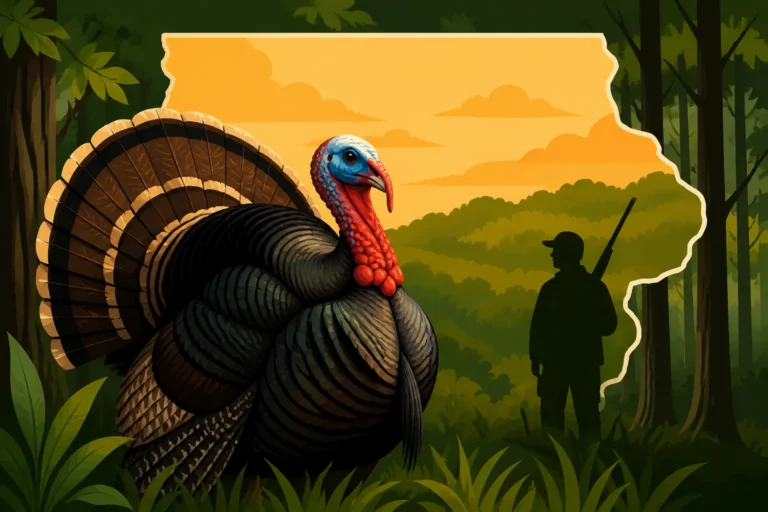
If you've ever found yourself bundled up in a December stand, scanning the frosted timber for movement, you might wonder what the Iowa turkeys are up to. Unlike the boisterous spring mornings or the scattered autumn days, winter is a season of stark survival, and understanding turkey flock behaviour in winter is key to appreciating their resilience. This guide will dive deep into how these incredible birds navigate Iowa's coldest months, from their tightly-knit social structures to their desperate search for calories.
The Harsh Realities of Winter for Iowa Turkeys
Iowa winters can be brutal, serving up everything from freezing rain to deep, insulating snow. For wild turkeys, this isn't just an inconvenience; it's a test of survival. The vibrant fall colors give way to a muted landscape, and with that change comes a dramatic shift in how turkeys live. Gone are the days of abundant insects, lush green forage, and easily accessible mast crops. Now, every calorie counts, and every decision is critical for making it to spring. This intense pressure is precisely why we see such distinct changes in their behavior during the colder months.
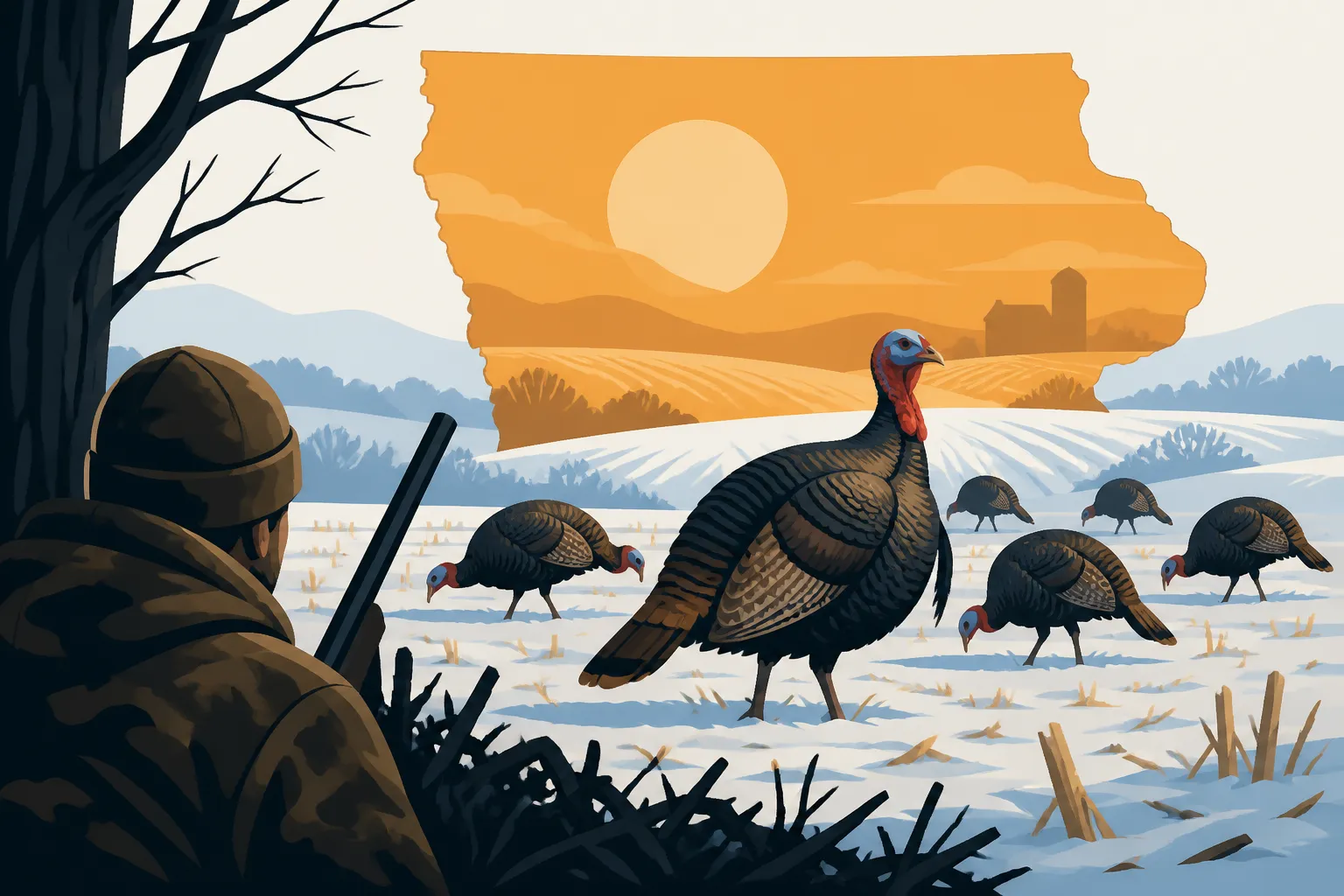
One of the most immediate and noticeable changes is the formation of large winter flocks. If you've spent any time Scouting Iowa Timber and River Bottoms, you'll likely notice that turkeys, which might be spread out in smaller, family groups during warmer months, suddenly consolidate into much larger gatherings. These super-flocks can sometimes number in the dozens, or even over a hundred birds in areas with ample resources. This isn't just a social gathering; it's a critical survival strategy. More eyes mean more vigilance against predators like coyotes or bobcats, which are also struggling to find food in the lean season. When one turkey spots danger, the entire flock benefits from the warning.
Beyond predator avoidance, flocking also helps with energy conservation. While they don't huddle for warmth quite like some other species, moving as a large group can help them collectively find and exploit limited food sources more efficiently. Imagine a lone turkey trying to scratch through a foot of snow for acorns versus a hundred turkeys doing it. The collective effort often turns up more sustenance for everyone. This shared struggle often defines Iowa Turkey Population Trends, especially how many birds make it through tough winters. The birds that survive are the ones most adept at working together to find the scarce resources available.
Understanding Winter Food Sources and Movement Patterns
When the snow starts to fly and temperatures plummet, an Iowa turkey's diet shifts dramatically. The rich smorgasbord of insects, seeds, and soft mast from summer and fall is largely inaccessible. Instead, winter turkeys become connoisseurs of hard mast, leftover agricultural grains, and any persistent natural seeds they can find. This change in diet directly influences their daily movement and where you'll find them.
Forested areas, particularly those with mature oak or hickory trees, become critical. Acorns and other nuts, if they weren't entirely consumed by deer and squirrels earlier, provide a dense, high-energy food source that can be scratched out from under a thin layer of snow. Turkeys have strong legs and feet, perfectly adapted for this kind of foraging. However, deep snow can render even the most abundant mast crop unusable. That's when agricultural fields become paramount. Corn and soybean fields, especially those not completely picked clean by combines, are absolute magnets for hungry turkeys. They'll spend hours, sometimes all day, meticulously working through stubble fields, gleaning every last kernel or bean.
The travel patterns of these winter flocks are often dictated by a simple equation: food to roost, and back again. They'll generally leave their roosts at first light, head directly to a preferred feeding area, spend a significant portion of the day foraging, and then return to a communal roost before dark. This daily migration might be a quarter-mile or several miles, depending on the availability of resources. Using mapping tools like those offered by GoHunt can really help you identify potential feeding areas—look for unharvested corners of fields, timber pockets adjacent to agriculture, or even standing grain food plots that farmers might leave for wildlife. Understanding Late-Season Food Source Hunting in Iowa for deer can often give you clues to where turkeys might also be concentrating, as they share some of the same needs for high-energy winter sustenance.
Consider an unharvested cornfield bordered by a creek bottom full of mature hardwoods. This is prime winter turkey habitat. The turkeys will roost in the biggest trees in the creek bottom, fly down at dawn, and immediately pitch into the cornfield. They might work that field for several hours, slowly moving across it, before retreating back to the timber to digest and loaf during the midday. Their movements become highly predictable, almost clockwork, driven by the fundamental need for calories to maintain body temperature.
Roosting and Thermal Cover in the Cold
In the dead of winter, a good roosting site isn't just a safe place to sleep; it's a critical component of energy conservation and predator avoidance. Iowa turkeys don't just pick any tree; they look for very specific characteristics that provide safety and protection from the elements. Tall, mature trees with strong, horizontal limbs are preferred. These limbs offer a stable platform for many birds to roost together, often tightly packed, which might offer a slight communal warmth benefit, but primarily enhances their collective vigilance.
Ever noticed how Eastern Turkeys in Iowa Timber prefer certain areas? During winter, these preferences become even more pronounced. Look for trees in sheltered areas, often on leeward slopes or within dense stands of evergreens like pines or cedars, if available. These conifer stands act as natural windbreaks, reducing exposure to chilling winds and helping the birds retain body heat. The dense canopy also offers some protection from falling snow or sleet. A group of turkeys huddled together on a large limb, nestled deep within a cedar thicket, is a testament to their adaptive survival strategies.
The journey to and from the roost is a vulnerable time. They often utilize established flyways, paths where they've learned to travel safely. These might follow creek beds, ridge lines, or fence rows. As a hunter or observer, identifying these flyways can give you an incredible insight into their daily routines. GoHunt's satellite imagery can be incredibly helpful for spotting these natural corridors and identifying dense timber blocks that could serve as ideal roosting grounds. Observing Roosting Turkeys on an Iowa Evening can provide invaluable information, not just for winter patterns but also for planning future spring hunts. Their consistent use of certain roost sites day after day, week after week, is a clear indicator of a critical resource for their winter survival.
The Social Dynamics of Winter Flocks
The formation of large winter flocks isn't just about food and safety; it's also a complex social structure at play. These aren't random gatherings; they're often composed of smaller, individual family groups that have consolidated for the winter. You'll often see distinct separation within these larger groups, with mature gobblers forming their own "bachelor groups," jakes forming separate gangs, and hens (jennies) and poults staying together. But in winter, the lines blur a bit more as all seek the benefits of a larger group.
Within these massive winter flocks, a pecking order is always in effect. Dominant birds, usually older, larger gobblers or lead hens, will assert their authority, having first access to prime feeding spots and preferred roosting branches. While there isn't the intense, aggressive strutting and fighting seen during the spring breeding season, subtle cues and occasional scuffles maintain this hierarchy. A younger jake might be nudged away from a particularly good patch of corn, or a less dominant hen might wait for others to finish before moving in.
This social cohesion is vital for their survival. While individual birds might squabble, the overall benefit of the group outweighs these minor conflicts. It creates a collective intelligence for finding food and detecting danger. In fact, if you spend enough time observing them, you might notice that some individual birds act as sentinels, standing tall and surveying the surroundings while others feed, rotating guard duty within the flock. This kind of cooperative behavior is a hallmark of Iowa Wild Turkeys Across the State's winter strategy.
Understanding this social dynamic is also important for predicting how turkeys might react to disturbances. A large flock, while more resilient in some ways, can also be more prone to panic if spooked, leading to mass evacuations. But once they feel safe, they tend to regroup quickly, relying on their numbers for security. This instinct to stick together often means if you find one turkey in winter, you've likely found many. And as spring approaches, these large groups will begin to break apart as the breeding instinct takes over, bringing us back to the classic Gobbling Activity Through the Spring.
| Winter Turkey Behavior Aspect | Description | Key Survival Benefit |
|---|---|---|
| Flocking | Formation of large groups (dozens to over a hundred birds). | Enhanced predator vigilance, collective foraging efficiency. |
| Diet Shift | Focus on hard mast (acorns, nuts), leftover grains (corn, soybeans), persistent natural seeds. | High-energy caloric intake to combat cold and sustain life. |
| Movement Patterns | Predictable daily migrations from roost to primary feeding area and back. | Maximize feeding time, minimize energy expenditure during travel. |
| Roost Selection | Preference for tall, mature trees with strong limbs, often in sheltered, wind-protected areas. | Safety from predators, reduced exposure to wind and elements. |
| Social Hierarchy | Pecking order within flocks, with dominant birds having priority for food and roosting. | Maintains order, ensures collective decision-making for survival. |
Disclaimer
This article is for general informational purposes only and does not constitute professional advice. Laws, prices and regulations vary by location and change over time. Consult a qualified professional for guidance on your specific situation.