Which Iowa Counties Produce Big Bucks
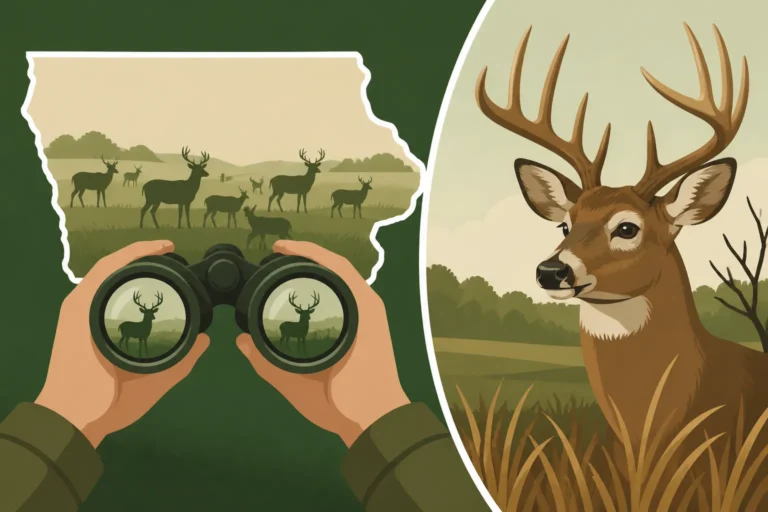
It's a question almost every Iowa deer hunter has pondered, and certainly every nonresident dreams about: "Which Iowa counties consistently produce those massive, antlered giants we see in magazines?" The frustration is real when you spend countless hours scouting only to come up short, feeling like you're missing the secret handshake. This guide is going to pull back the curtain on the factors that make certain Iowa counties deer hunting hotspots, helping you understand where to focus your efforts for a real chance at a buck of a lifetime.
Understanding Iowa's Trophy Potential
Iowa has earned its legendary status for big whitetail bucks, and it's not by accident. There's a perfect storm of environmental factors, genetics, and management practices that converge to create a haven for trophy deer. Understanding these foundational elements is key to appreciating why certain areas consistently outproduce others.
The 'Why' Behind Iowa's Big Bucks
It might seem like magic, but Iowa's reputation for producing huge whitetails is built on a very solid foundation. Primarily, it comes down to a rich agricultural landscape that provides an unparalleled food source. Think about it: endless fields of corn and soybeans offer a buffet of high-protein, high-energy forage that fuels rapid body growth and, crucially, phenomenal antler development. This isn't just about survival; it's about abundance. Bucks don't just get by; they thrive, packing on pounds and inches of antler every year. The availability of this nutrition year-round, from spring green-up to post-harvest gleaning, means deer are rarely stressed for food. This consistent, high-quality diet is a cornerstone of why Iowa Whitetail Deer and Why They Score So High.
Beyond the food, Iowa's diverse habitat, even within its agricultural dominance, provides excellent cover. River bottoms, timbered draws, CRP fields, and scattered woodlots offer safe bedding areas and travel corridors. This mosaic of food and cover allows deer to grow old, which is a critical component for antler size. Without secure places to hide from pressure, even the best fed buck wouldn't make it to maturity. This combination of rich nutrition and adequate cover is a powerful engine for growing big deer.
Key Factors in Antler Growth
Antler growth is a complex process influenced by several interconnected factors, but nutrition, age, and genetics are the undisputed "big three." While genetics set the potential, nutrition allows a buck to reach that potential. Iowa's fertile soils, brimming with minerals, translate into nutrient-rich plants. Deer consume these plants, and those minerals, especially calcium and phosphorus, are directly incorporated into their growing antlers. This is why you often hear discussions about Soil Fertility and Antler Growth in prime deer country. A buck that is well-fed from fawn-hood through maturity will consistently produce larger antlers than one struggling for sustenance, even if they share similar genetic potential.
Age is arguably the most crucial factor a hunter can influence, indirectly, through herd management. A buck's antlers typically peak in size between 4.5 and 6.5 years old. Younger bucks might show promise, but they haven't had the time to fully express their genetic potential. When a significant portion of the buck herd is allowed to reach these older age classes, the chances of encountering a truly giant deer increase dramatically. This is where hunters and management practices play a vital role – by letting younger bucks walk, the overall quality of the herd improves over time.
Age Structure and Management
The concept of age structure is paramount to understanding Iowa's big buck reputation. It's not just about having deer; it's about having old deer. Iowa's antlerless harvest strategies, designed to keep deer populations in check, have also helped maintain a healthy buck-to-doe ratio, which can positively influence rut timing and buck development. Furthermore, while there aren't statewide antler point restrictions, a strong culture of letting younger bucks mature has taken root among many hunters, both resident and nonresident. This collective decision contributes significantly to the number of mature bucks on the landscape. This cultural shift, combined with ample nutrition, is why the Buck Age Structure in Iowa is so favorable for trophy hunting.
The state's management philosophy, balancing hunter opportunity with herd health, has also played a role. By issuing a limited number of nonresident tags and offering various resident seasons, the pressure is spread out, allowing bucks to navigate the seasons and grow. This often leads to bucks surviving past their first or second year, giving them the crucial time needed to develop those impressive racks. For hunters, this means the patience to pass on younger animals truly pays off in the long run, contributing to the overall quality of the deer available.
Top Regions for Record Book Whitetails
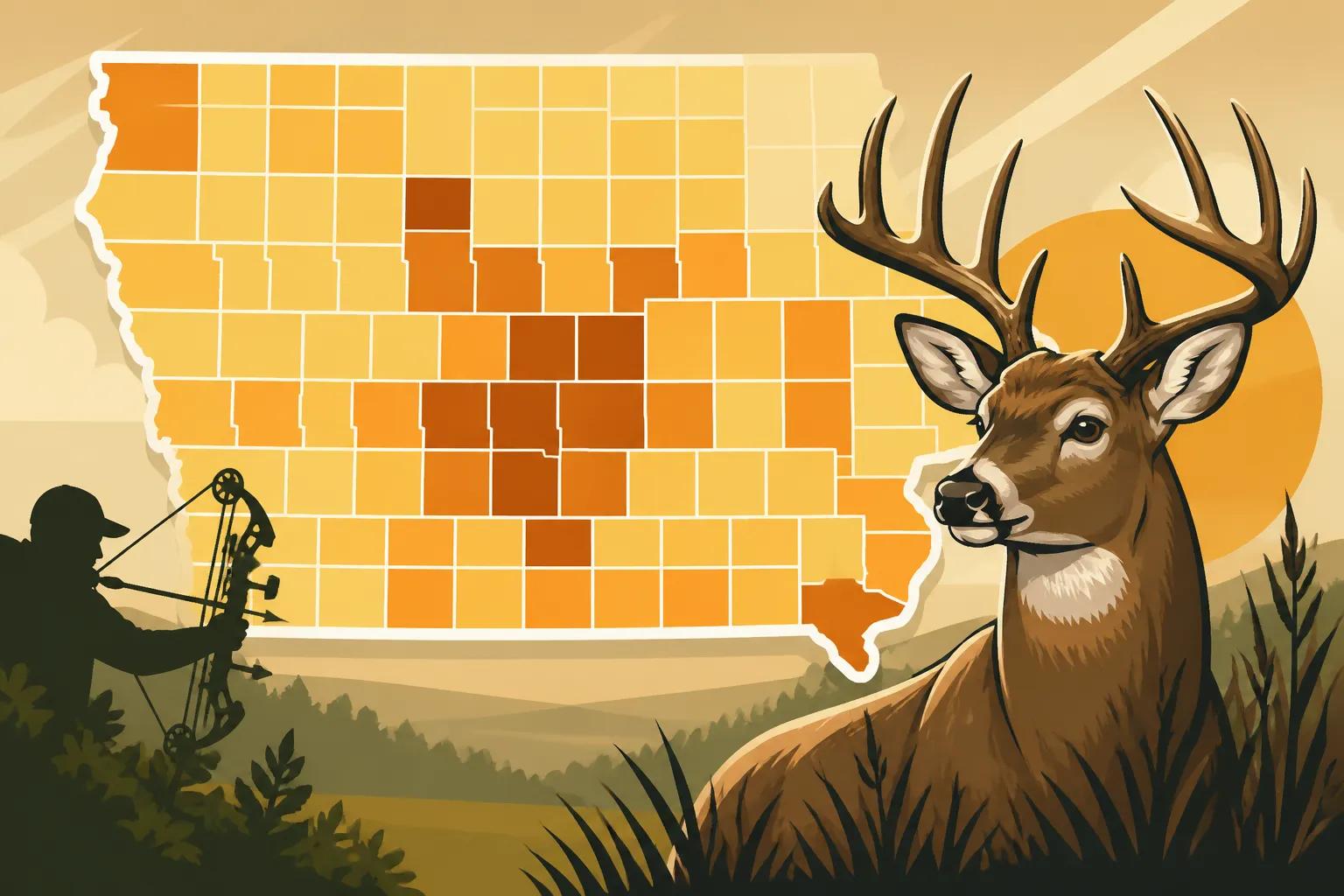
When it comes to pinpointing the best Iowa counties for big bucks, certain regions consistently rise to the top, often appearing in harvest reports and Boone and Crockett entries. These areas share common characteristics: a blend of prime habitat, robust food sources, and a history of producing giants.
Southern Iowa's Timber and Crop Belt
Without a doubt, southern Iowa is often considered the epicenter for trophy whitetails in the state. Counties like Warren, Madison, Clarke, Lucas, Monroe, Appanoose, Van Buren, and Davis are frequently mentioned when discussing Iowa Record Book Whitetails. This region is characterized by a beautiful mix of rolling timber, deep creek draws, and expansive crop fields. The timber provides excellent bedding and security cover, especially along the many river and creek systems that dissect the landscape. These timbered corridors are crucial travel routes for bucks, offering protection as they move between bedding and feeding areas.
The presence of vast corn and soybean fields interspersed with these timber blocks creates an ideal scenario. Bucks have immediate access to high-quality forage, and then they can quickly retreat to the dense cover of the woods. This pattern of food-to-cover is a hallmark of big buck country. Furthermore, the topography, with its ridges and valleys, naturally funnels deer movement, creating predictable patterns that savvy hunters can exploit. Accessing some of these areas often means navigating challenging terrain, but the rewards can be significant.
Central and Western Iowa's Farmland Pockets
While southern Iowa often steals the spotlight, central and western Iowa also hold incredible potential, particularly in counties with significant timbered river corridors and conservation lands that break up the vast agricultural fields. Counties along the Missouri River, for instance, or those with large state forests like Stephens or Loess Hills, can produce exceptional bucks. The key here is finding those pockets of continuous cover within the dominant agricultural landscape. These islands of timber, brush, and CRP grass become magnets for deer.
For example, areas around Saylorville Lake or Red Rock Reservoir also contain significant public hunting ground which can be overlooked by hunters focusing only on the "classic" southern Iowa hotspots. These river bottoms, especially the larger ones, offer excellent resources. Deer utilize these areas for bedding, especially in thick cedar or multiflora rose thickets, and then move out to feed in adjacent fields. It’s about understanding how deer use these linear features in a landscape dominated by open country. Scouting these specific tracts thoroughly can reveal hidden gems. You can use platforms like GoHunt to e-scout these areas and analyze public land boundaries before even stepping foot on the ground.
Northeastern Iowa's Driftless Zone
Northeastern Iowa, particularly the "Driftless Zone" counties like Allamakee, Clayton, and Winneshiek, offers a completely different, yet equally productive, hunting experience. This region is characterized by steep bluffs, deep valleys, and extensive timber, a dramatic contrast to the rolling farmlands elsewhere. The rugged topography and dense timber provide incredible sanctuary for deer, allowing bucks to age gracefully. While the agriculture here is less widespread than in other parts of the state, the mix of hardwoods, pines, and scattered crops in the valley floors still provides excellent nutrition.
Hunting the Driftless Zone requires different tactics, often involving navigating steep terrain and understanding how wind and thermals play a role in deer movement through these dramatic elevation changes. The security cover found here means bucks can often reach impressive ages without encountering significant human pressure in their core bedding areas. For a more detailed look at the area, you might want to read about Scouting Iowa Timber and River Bottoms. Hunters willing to put in the physical effort to access remote pockets of this rugged landscape often find themselves rewarded with encounters with mature, heavy-racked deer.
Table: Representative Top Iowa Counties for Big Bucks (Based on Historical Data & Reputation)
| Region | Representative Counties | Primary Habitat Characteristics | Hunting Style Often Employed |
|---|---|---|---|
| Southern Iowa | Appanoose, Davis, Monroe, Van Buren, Warren, Madison | Rolling timber, deep creek draws, abundant corn/soybean fields | Stand hunting, still hunting |
| Central/Western | Adair, Guthrie, Dallas, Ringgold, Taylor | River bottom timber, CRP, fragmented crop fields, larger woodlots | Stand hunting, some drives |
| Northeastern | Allamakee, Clayton, Winneshott | Steep bluffs, extensive timber, narrow crop valleys | Mobile hunting, steep terrain |
Note: This table represents general trends. Trophy bucks can be harvested in any Iowa county with proper management and hunting strategy.
Using Data and Resources to Locate Hotspots
Modern hunting isn't just about heading to the woods; it's about smart preparation. Leveraging available data and digital tools can significantly increase your odds of finding a big buck, especially in a state as renowned as Iowa.
Interpreting Harvest Reports and Boone and Crockett Entries
One of the most valuable resources for understanding where big bucks come from is the historical data on harvest reports and, crucially, Boone and Crockett and Pope and Young entries. The Iowa DNR often publishes county-level harvest data, which can give you a general idea of deer density and success rates. However, for "big bucks," you need to dig a bit deeper. Boone and Crockett (for firearms) and Pope and Young (for archery) maintain records of trophy entries by county. While these records are historical, they paint a very clear picture of which counties have consistently produced record-book animals over decades. If a county has a long list of entries, it suggests the habitat, genetics, and age structure are consistently favorable.
While these entry lists don't guarantee you'll find a giant tomorrow, they show potential. It tells you that the conditions for growing big bucks are present and have been for a long time. These lists are a strong indicator of "big buck genetics" being well-established in the area. When researching, don't just look for total entries, but also consider the frequency of recent entries to gauge current conditions. This historical context is often one of the first places serious trophy hunters, including those using sophisticated platforms like GoHunt, will start their research.
Leveraging Mapping Tools for Scouting
In today's hunting world, digital mapping tools are non-negotiable, especially when trying to pinpoint prime big buck country. Services like onX Hunt or even simpler topographic maps allow you to E-Scouting Iowa Farm Country From Home. You can analyze aerial imagery to identify key features: timber blocks, creek drainages, pinch points, field edges, bedding cover (like dense cedar thickets or CRP), and potential travel corridors. Look for areas where these features converge, creating natural funnels or secure sanctuaries away from human disturbance. The ability to identify these subtle landscape features from your couch can save you countless hours of unproductive walking.
Furthermore, these mapping apps often have public land overlays, helping you understand access points and property boundaries, which is crucial in a state with a mix of private and public ground. You can mark potential stand locations, observe historical weather patterns, and even gauge hunting pressure by looking at roads and trails. For a nonresident planning a hunt, or even a resident exploring new areas, these tools are invaluable for developing a strategic plan before ever setting foot in the field. Understanding how deer move within these landscapes is critical, and these maps help visualize it.
Understanding Local Conditions and Pressure
While historical data and mapping tools are excellent starting points, nothing replaces understanding current local conditions and hunting pressure. A county with a history of big bucks can still be a bust if it's experiencing heavy hunting pressure, drought, or localized disease outbreaks like EHD. It's important to talk to local hunters, wildlife biologists, and even landowners if possible. Pay attention to current crop rotations – are beans or corn dominant this year? Are there late-season food plots available? This year-to-year variability can significantly influence deer movement and antler growth.
Hunting pressure, in particular, is a massive factor. Even in the best counties, highly pressured public land can push mature bucks into nocturnal patterns or into very thick, inaccessible cover. This is where researching Hunting Pressure Patterns on Iowa Public Land becomes critical. Look for smaller, harder-to-reach parcels, or plan your hunt during weekdays or later in the season when pressure might drop. The goal is to find those overlooked pockets where big bucks feel safe enough to move during legal shooting light. Sometimes, the "best" county isn't about the biggest bucks, but about the least pressured big bucks.
Strategies for Hunting Big Bucks in Top Counties
Simply knowing which counties produce big bucks isn't enough; you need a strategy to actually hunt them. This involves understanding the dynamics of land access, timing your efforts, and meticulous scouting and stand placement.
Public Land vs. Private Land Dynamics
In Iowa, a significant portion of the land is privately owned, and while public land exists, particularly in certain regions, it often sees higher hunting pressure. Securing private land access is often seen as the golden ticket to consistently hunting big bucks, as it offers more control over management and pressure. This can involve knocking on doors, offering to help landowners, or considering a hunting lease. While challenging, building relationships with landowners can provide unparalleled opportunities.
However, don't write off public land entirely, even in top counties. Many Boone and Crockett bucks are harvested from public ground or walk-in areas. The key to public land success is often found in Public Land Deer Hunting in Iowa: finding less-pressured areas. This might mean walking further, hunting thicker cover, or targeting areas with difficult access. Researching specific WMAs or Iowa Habitat and Access Program (IHAP) tracts using resources like GoHunt can reveal these overlooked spots. On public ground, mobile hunting setups, like saddles, can be highly effective, allowing you to quickly adapt to deer movement and pressure.
Timing Your Hunt for Peak Activity
When you choose to hunt can be as important as where you hunt. While trophy bucks can be taken throughout the season, certain periods offer elevated chances. For many, the rut is the undisputed prime time. Understanding When the Iowa Rut Peaks – typically the first two weeks of November – is crucial for planning your most impactful hunting days. During this period, bucks are actively seeking does and are far more prone to making mistakes during daylight hours, covering greater distances and entering areas they might normally avoid. Focusing your time off work or your nonresident hunt during this window significantly increases your odds.
Beyond the rut, the early season can also be productive, particularly if you've done your summer scouting and identified predictable feeding patterns. Bucks are often still on predictable patterns from their summer feeding habits before hunting pressure scatters them. The late season, especially during periods of extreme cold, also offers unique opportunities around hard food sources like standing corn or specific brassica plots, as deer become highly concentrated on calories. Each season segment has its own quirks and strategies that can lead to success.
Scouting and Stand Placement Specifics
Meticulous scouting is the bedrock of big buck hunting. In top counties, you're not just looking for deer sign; you're looking for mature buck sign: large rubs, big tracks, and significant scrapes. Start well before the season, utilizing trail cameras to monitor travel routes, food sources, and bedding areas. Placing Trail Camera Placement on Iowa Public Land requires careful thought to avoid disturbing deer or alerting other hunters. Look for subtle terrain features that funnel deer, like saddle crossings, pinch points between timber and fields, or inside corners of crop fields. These natural features dictate deer movement, making them prime stand locations.
Stand placement should always consider wind direction and access routes. You need to be able to get to and from your stand without alerting deer. For instance, if you're hunting a timber edge near a field, you need to identify an approach that keeps your scent out of the deer's primary travel paths and bedding areas. This might mean long walks, using creek beds, or staying well within the timber. For hunting in more challenging topography, like the Driftless Zone, reading a timber draw for subtle deer sign is crucial to predicting how deer use the terrain. Ultimately, even in the best counties, it's the attention to these fine details of scouting and execution that makes the difference between seeing a giant and tagging one.
Disclaimer
This article is for general informational purposes only and does not constitute professional advice. Laws, prices and regulations vary by location and change over time. Consult a qualified professional for guidance on your specific situation.