Late-Season Food Source Hunting in Iowa
The crunch of frozen cornstalks underfoot or the stark, barren landscape of an Iowa winter can make late-season deer hunting feel like an entirely different ballgame. The hustle and bustle of the rut are long gone, and the intense pressure from early gun seasons has often scattered deer into the densest cover. Many hunters pack it in after December, discouraged by the cold and the apparent lack of deer. But for those willing to brave the chill, late season offers a unique opportunity, as deer become incredibly predictable, driven by one primary instinct: finding reliable food. This guide will walk you through how to pinpoint and effectively hunt those crucial late-season food sources, helping you extend your success into the harshest months.
Understanding Late-Season Deer Behavior in Iowa
When the calendar flips to December and beyond, Iowa's whitetails undergo a significant shift in their daily patterns and priorities. Gone are the days of bucks cruising miles looking for does; now, survival reigns supreme, and that means minimizing energy expenditure while maximizing caloric intake.
The Impact of Cold and Snow on Deer
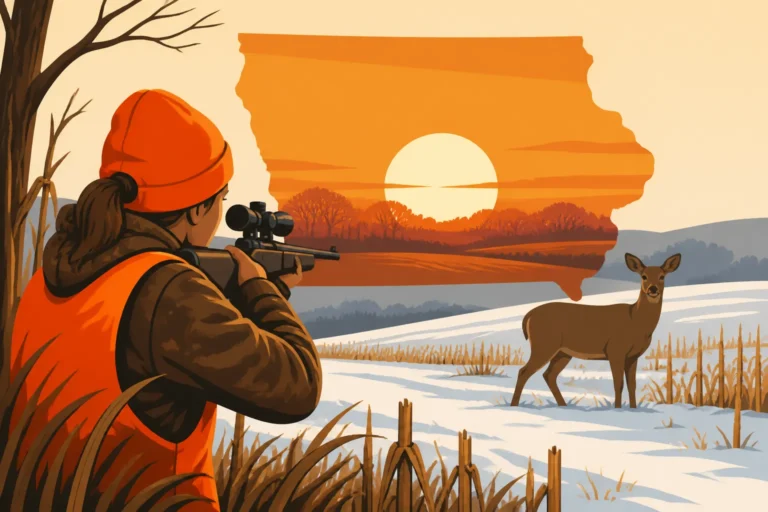
The brutal cold fronts that sweep through Iowa, often bringing with them significant snowfall, drastically alter a deer's world. Each degree drop in temperature and every inch of snow cover increases their metabolic needs and makes finding sustenance harder. Deer instinctively seek thermal cover, like thick cedar thickets, brushy creek bottoms, or dense stands of conifer trees, to escape the wind and conserve body heat. Their travel corridors will shorten, primarily connecting these bedding areas directly to the most calorie-rich food sources available. You'll notice deer often won't move far from bedding once the temperatures plummet, making the journey between warmth and food a short, efficient sprint.
Snowfall isn't just a picturesque backdrop; it's a game-changer. Fresh snow can reveal invaluable travel patterns, showing you exactly where deer are emerging from cover and heading directly to a food plot or a picked field. Heavy snow, however, can bury some food sources, forcing deer to dig, which expends precious energy. This is when high-energy foods become even more critical, and deer will gravitate towards whatever is easiest to access and most nutritious. Understanding these nuances is crucial for locating them. For a deeper dive into how deer react to the colder months, check out our piece on December Cold Front Deer Movement.
Post-Rut Recovery and Caloric Needs
The whitetail rut is an exhausting marathon for bucks, often leaving them significantly depleted in terms of fat reserves and body condition. By late season, both bucks and does are in recovery mode, desperately trying to replenish their energy stores before the even leaner days of late winter. Their bodies are screaming for carbohydrates and fats, which means they're prioritizing foods that offer the most bang for their buck, literally.
This intense focus on calorie replenishment makes them incredibly vulnerable around consistent food sources. They'll often feed for longer durations, sometimes even during daylight hours, especially on bitter cold days. If you can identify the highest-calorie food source in an area, you're halfway to understanding where the deer will be. This post-rut drive for nutrition is what makes late-season hunting so predictable, if you can find that golden ticket food.
Identifying Key Late-Season Food Sources
The secret to late-season success in Iowa lies almost entirely in understanding and locating the very best food sources available. These aren't always the lush green fields of early fall; instead, they're the resilient, high-energy options that can withstand the cold and still provide sustenance.
Standing Row Crops: Corn and Soybeans
In Iowa, it's hard to talk about deer food without mentioning corn and soybeans. Even after harvest, these fields remain absolute magnets for deer, especially into the late season.
Advantages of Standing Corn
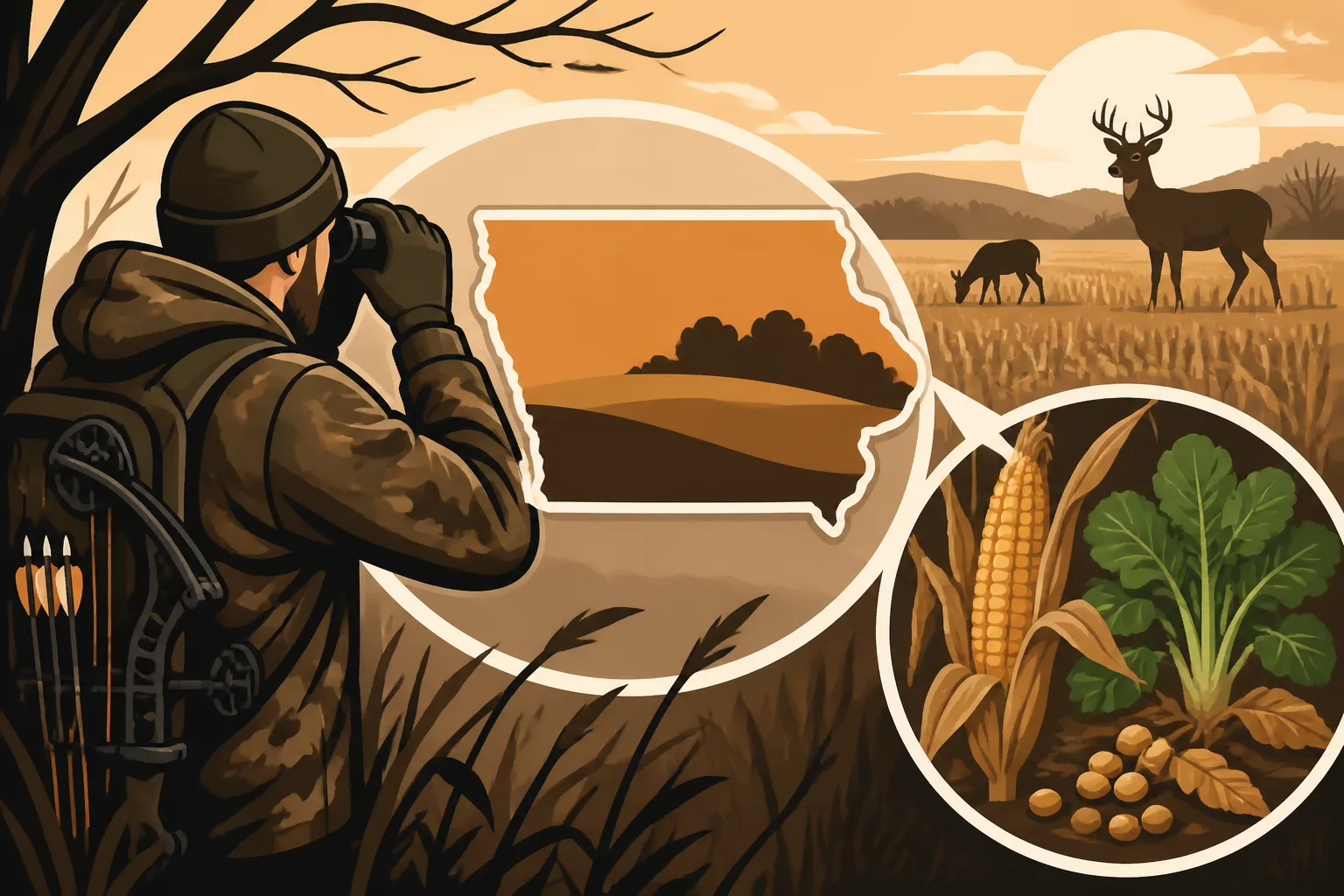
Standing corn is arguably the king of late-season food and cover in Iowa. It provides a phenomenal combination of high-energy food and crucial thermal and visual cover. Deer will bed in standing corn, move through it, and feed on the dropped ears or those still clinging to stalks. On bitter cold, windy days, a mature deer might spend almost its entire day within the confines of a standing cornfield, only venturing out to an adjacent picked bean field or timber edge as darkness falls. The tall stalks break the wind, offer concealment from predators and hunters, and the corn itself is packed with carbohydrates. This is why you'll often see groups of deer, sometimes dozens, pouring into standing corn in the late afternoons. For more on hunting these specific patterns, you might find our article on Standing Corn and Bean Field Deer Patterns insightful.
Scrutinizing Picked Soybean Fields
While standing corn offers cover, picked soybean fields are pure food. After harvest, many beans remain on the ground, either knocked off by the combine or simply missed. These soybeans are rich in protein and fat, which are crucial for deer trying to recover and build reserves. A picked bean field adjacent to a standing cornfield or a dense timber block is a late-season goldmine. Deer will often stage in the cover of the corn or timber, then emerge into the bean field to fill their bellies. Look for fields that were harvested recently or those with a lot of combine "waste" – areas where the machinery might have struggled, leaving more beans on the ground. Snowfall can make these dropped beans harder to find, but deer will still dig for them, especially if they're the best high-fat option around.
Purpose-Planted Food Plots: Brassicas and Winter Grains
Beyond the agricultural staples, many landowners, and even some public land managers, plant specific food plots designed to attract and hold deer into the late season. These plots can be absolute magnets when everything else is frozen solid.
The Allure of Brassicas
Brassicas like turnips, kale, radishes, and rape are incredible late-season food sources. They can withstand severe cold and even light snow, and their leaves become sweeter after a hard frost, making them incredibly palatable to deer. Deer will first browse the leafy tops, but as winter progresses and other food becomes scarce, they'll often dig up and consume the nutrient-dense roots. These plots, particularly those that offer a variety of brassicas, can hold deer throughout the day. When you find a brassica plot that deer have heavily browsed, it's often a sign that it's a primary draw in the area. Some hunters even use these plots for specific late-season hunts, like the Iowa January Antlerless Hunts, as they often draw in large groups of does.
Winter Wheat and Cereal Rye
Winter wheat and cereal rye, often planted as cover crops or specific food plots, provide a green, palatable food source that deer will readily graze on, even under snow. While not as calorie-dense as corn or soybeans, the fresh green forage is highly digestible and provides essential nutrients when woody browse is less appealing or buried. These plots are especially attractive in areas with less standing corn or picked beans, offering a vital "green" option. Deer will often hit these fields earlier in the evening or later in the morning compared to higher-calorie sources, sometimes just topping off before heading back to bed. Look for areas where the grain has been browsed heavily, indicating a consistent deer presence.
Scouting and Pinpointing Prime Food Sources
Finding these late-season food sources isn't always easy, especially if you're not intimately familiar with the area. It requires a combination of modern scouting tools and good old-fashioned boots-on-the-ground investigation.
E-Scouting and Aerial Imagery
Before you ever set foot in the woods, thorough e-scouting can save you countless hours and reduce pressure on the deer herd. Modern mapping applications are your best friend here.
Using Digital Mapping Tools
Platforms like GoHunt are invaluable for identifying potential late-season food sources from the comfort of your home. Start by zooming in on your hunting area and looking for large agricultural fields, particularly those with standing corn or picked soybeans. Pay close attention to the edges of these fields where they meet timber, creek bottoms, or dense cover. These are your primary entry and exit points for deer. Identify any smaller, more secluded fields that might be planted with food plots, or even old overgrown fields that might have browse.
Look for patterns in the landscape: finger ridges leading into fields, pinch points, and saddles that connect bedding to feeding. These features will funnel deer movement. Also, use the topo layers to identify elevation changes and potential thermal covers. Understanding Reading Aerial Imagery for Bedding Cover can greatly enhance your e-scouting efforts, helping you visualize deer movement even before you visit the property.
Identifying Access Points and Bedding Cover
Once you've identified promising food sources, the next step in e-scouting is to determine how you'll access them without spooking deer. Look for natural barriers, ditches, or terrain features that allow you to approach a potential stand location undetected. Consider wind direction and how it will carry your scent. Pay particular attention to dense cover areas within a short distance of the food source – these are prime bedding locations. If you're hunting public land, identify legal access points and parking areas. Remember, late-season deer are incredibly wary; your entry and exit routes are just as important as your stand location. For public land, always review maps before the opener. You can find more detail on this in our guide to Scouting Iowa Public Land Before the Opener.
Boots-on-the-Ground Reconnaissance
E-scouting is a fantastic starting point, but nothing beats getting out there and seeing the reality for yourself. Fresh tracks, droppings, and browse lines tell the true story of deer activity.
Interpreting Fresh Sign and Trails
Once you've narrowed down potential food sources, it's time to hit the field. Focus your efforts on the edges of fields and the areas where cover meets food. Look for fresh deer tracks leading in and out. In snow, this is particularly easy; you'll see beaten-down trails if deer are regularly using an area. Pay attention to the size and direction of tracks, which can give you clues about the number and type of deer present. Look for fresh droppings – shiny black pellets indicate recent activity.
Also, examine the browse line on woody plants around the field edges. If young saplings or brush show signs of heavy browsing, it confirms deer are actively feeding in that vicinity. Don't be afraid to walk a little deeper into the timber edges to identify the main trails leading from bedding to the chosen food source. These trails often become more defined in the late season as deer funnel into predictable routes.
Locating Preferred Entry and Exit Points
Deer, being creatures of habit and efficiency, will typically use the path of least resistance to get to and from food. Your ground scouting should focus on confirming these routes. Look for pinch points in the terrain, fence crossings, or natural funnels that concentrate deer movement. These can be small dips in a field edge, a narrow strip of timber connecting two larger blocks, or a small draw. Identifying these exact entry and exit points is critical for stand placement.
Sometimes, deer will create "staging areas" just inside the timber edge, where they will mill around, scent-check the field, and wait for darkness before entering the open. Look for heavily disturbed ground, rubs, or scrapes (though scrapes are less common and active in late season) in these staging areas. Your goal is to intercept them before they step into the wide-open field, maximizing your shooting opportunities.
Strategic Hunting Approaches for Late-Season Food Sources
Hunting late-season food sources isn't just about finding them; it's about executing a precise, low-impact strategy that capitalizes on deer predictability without alarming them.
Stand Placement and Wind Considerations
Late-season deer are highly sensitive to pressure. Your stand setup needs to be almost perfect to avoid detection.
Setting Up on Field Edges and Pinch Points
The classic setup for late-season food plots is on a field edge, overlooking the primary feeding area. However, it's often more effective to set up slightly off the field, within the timber edge, to catch deer before they fully commit to the open. Look for bottlenecks or pinch points where deer are forced to travel a narrow path between cover and the food source. This gives you a closer shot opportunity before they spread out.
Consider the sun's position. In late season, the sun sits low in the sky, and you don't want it blinding you or silhouetting you to incoming deer in the late afternoon. Position yourself so the sun is at your back or to your side. Most importantly, always prioritize the wind. Your scent must be carried away from where you expect deer to approach and feed. This often means hunting specific stands only on specific wind directions. A mistake with wind in the late season means an empty freezer.
Utilizing Thermal Hubs and Cover
Deer often bed in specific thermal cover areas during the late season. If you can locate these areas, you might be able to set up between the bedding and the food source. However, be incredibly careful not to push into bedding areas, especially in the late season, as it can spoil the spot for weeks. Instead, identify the pathways leading out of bedding. Think about how deer will conserve energy; they will follow the path of least resistance and often the most sheltered route from their beds to the food.
For instance, if deer are bedding in a thick cedar grove, they might follow a protected ditch or a low ridge line through timber to reach a standing cornfield. Placing a stand along this corridor, where the wind is favorable, can intercept deer moving naturally. This is where a detailed mapping tool comes in handy; you can identify these subtle terrain features and predict deer movement.
Low-Impact Hunting Tactics
Late-season deer are jumpy. The slightest disturbance can send them scurrying, and they won't quickly forget a negative encounter. Employing low-impact tactics is paramount to sustained success.
Minimizing Pressure and Entrance/Exit Routes
The golden rule of late-season hunting is to be a ghost. This means silent, scent-free entry and exit. Plan your routes carefully, using existing terrain features or even open fields (if you can move quickly and quietly in low light) to avoid busting deer. If you're hunting a food plot, avoid walking across it to your stand. Skirt the edges, or use a creek bed or ditch for concealment. Once you're in your stand, stay absolutely still and quiet.
Hunt smart, not hard. If you have multiple potential food sources, rotate your pressure. Don't hunt the same prime spot multiple days in a row, especially if you see any signs of deer being spooked. Sometimes, a well-executed single hunt can be far more effective than multiple haphazard ones. For advice on movement that won't give away your presence, check out our guide on Access Routes That Do Not Bump Deer.
All-Day Sits and Timing
While bucks are less likely to cruise all day like they do during the peak rut, late-season does and even bucks will often hit food sources multiple times a day, especially during brutal cold snaps. On exceptionally cold days, a deer might feel the need to feed more often to fuel its internal furnace. This makes all-day sits particularly effective in the late season, as deer might move during midday when pressure is typically lowest.
The best hunting, however, still tends to be the last two hours of daylight, when deer emerge from bedding to feed, and the first hour of daylight as they make their way back. If you choose an all-day sit, ensure you're equipped for the cold. Our articles on Cold Weather Stand Clothing and Staying Warm on a December Sit can provide crucial tips to endure the chill and maximize your time on stand. Remember that the days are short, so legal shooting light comes and goes quickly.
Overcoming Late-Season Hunting Challenges
Late-season hunting is rewarding, but it comes with its own unique set of challenges that can test a hunter's resolve. Being prepared for these obstacles is key to success.
Battling the Elements: Extreme Cold and Snow
The most obvious challenge in late season is the weather. Frigid temperatures, biting winds, and deep snow can make a comfortable sit difficult, and even dangerous if not properly prepared.
Gear for Winter Hunting
Investing in quality cold-weather gear is not a luxury; it's a necessity. Layering is paramount: start with good base layers that wick moisture, add insulating mid-layers like fleece or down, and top it off with a windproof, waterproof outer shell. Don't forget your extremities: insulated boots, hand warmers, a warm hat, and a face mask are essential. Many successful late-season hunters swear by a good insulated muff to keep their hands toasty warm, ready for a shot.
Consider things like a portable heater (if legal and safe for your blind type) or a heated vest for those truly brutal days. Even a hot beverage in a thermos can make a huge difference in morale and warmth. Remember, shivering not only makes you uncomfortable but also makes it impossible to hold steady for a shot. Preparation in terms of gear can turn a miserable hunt into an enjoyable and successful one.
Navigating Snow-Covered Terrain
Snow can be both a blessing and a curse. While it reveals fresh tracks, it can also make walking silently incredibly difficult. Crunching snow underfoot can alert deer to your presence long before you reach your stand. Wear appropriate footwear, like insulated rubber boots, that provide good traction and can keep your feet dry. If the snow is deep, consider snowshoes for quieter travel, if practical for your area.
Dragging a deer out of deep snow can also be a monumental task. If you're successful, having a good deer cart or a heavy-duty drag sled can save your back and make recovery much easier. You can find useful tips on this in our piece about Deer Carts on Iowa Walk-In Ground. Plan your recovery route beforehand, especially if hunting solo, and let someone know your plans.
Deer Recovery and Meat Care in the Cold
Once you've made a successful shot, the challenges aren't over. Recovering the deer and caring for the meat correctly are crucial, especially in varying late-season temperatures.
Tracking and Recovery Tactics
Blood trailing in snow can be both easier and harder. Fresh blood on white snow is a blessing, but if the snow is actively falling, it can quickly cover a trail. Always give a deer enough time before taking up the trail, especially if your shot wasn't ideal. In colder temperatures, deer might not bleed as profusely, but a good blood trail should still be visible.
Look not just for blood, but for disturbed snow, broken branches, or even tracks leading away. If the temperature is well below freezing, you might be able to find the deer quickly without much concern for spoilage. However, if it's hovering around freezing or slightly above, rapid recovery and cooling are still essential. A quality headlamp or two is non-negotiable for finding a deer in the dark.
Field Dressing and Cooling in Cold Weather
Cold weather simplifies meat care significantly compared to early-season hunts. The natural refrigeration means you have more time to get the deer out and processed. However, don't become complacent. Still field dress the deer promptly to allow the carcass to cool down as quickly as possible and prevent bacterial growth. Remove all internal organs, and if practical, wipe the cavity clean.
If you plan to hang the deer whole for a few days to age the meat, ensure it's in a shaded, well-ventilated area where the temperature remains consistently cold (ideally between 35-40°F). Protect the carcass from scavengers. The cold temperatures are a huge advantage, allowing for excellent meat quality if handled correctly. The Iowa DNR has specific rules on Iowa Deer Harvest Reporting Rules and carcass transport, so always be sure to comply.
Final Thoughts on Late-Season Success
Late-season hunting in Iowa is not for the faint of heart, but it offers some of the most consistent and rewarding opportunities for hunters who are willing to adapt their strategies. The deer herd's singular focus on food, driven by the harsh realities of winter, funnels them into predictable patterns that are often easier to exploit than the erratic movements of the rut. By diligently scouting, understanding deer behavior, and preparing for the cold, you can unlock a whole new dimension of hunting success.
It's a time when stealth, patience, and attention to detail truly pay off. Don't be discouraged by the cold or the apparent scarcity of deer. Focus on the best food, stay warm, and commit to your sit. You might just be surprised by the mature buck that finally emerges from the cover, drawn by the irresistible call of a few kernels of corn or the promise of a sweet brassica root. Remember, the game isn't over until the season officially closes!
Disclaimer
Please ensure you always consult the latest Iowa Department of Natural Resources (DNR) regulations and guidelines before planning and executing any hunting activities. Seasons, tag requirements, and rules can change, and it is the hunter's responsibility to stay informed and compliant. This article provides general information and recommendations, not legal advice.