Elk and Moose Sightings in Iowa
It's quite a thrill, isn't it? You're out in the field, maybe checking trail cameras or just enjoying a crisp Iowa morning, and suddenly, you see something that just doesn't quite fit. A massive animal, clearly not a whitetail, and your mind immediately jumps to "elk" or even "moose." It's exciting, a little disorienting, and it leaves you with a lot of questions. This guide is here to cut through the speculation and give you a realistic look at elk and moose sightings in Iowa, what they mean, and what you should do if you're lucky enough to encounter one of these magnificent wanderers.
The Rarity of Elk and Moose in Iowa
Let's get one thing straight right off the bat: Iowa is not elk or moose country, at least not in the sense that states like Colorado, Wyoming, or Maine are. That doesn't mean they never show up, but it's important to understand why these sightings are so unusual and why they stir up so much conversation among hunters and wildlife enthusiasts.
Historical Presence vs. Modern Reality
Back in the day, before European settlement drastically altered the landscape, elk certainly roamed parts of what is now Iowa. They were native to much of the North American continent, including the tallgrass prairies and timbered river bottoms that defined our state. However, relentless hunting pressure and massive habitat loss as settlers converted prairie to farmland pushed them out of Iowa entirely by the late 1800s. The last native elk herd disappeared well over a century ago. Moose, on the other hand, were likely never truly resident in Iowa, preferring the more dense boreal forests and wetlands of states further north. So, when we talk about elk and moose today, we're discussing animals that are far removed from their historical context in our state.
Today, Iowa's landscape is perfectly suited for our thriving whitetail deer population, which benefits from the abundant agriculture and scattered timber blocks. But it's not the vast, uninterrupted wilderness that elk and moose require for sustainable populations. Their sheer size, dietary needs, and preference for large, remote territories simply don't align with the mosaic of cornfields, soybean fields, and smaller timber patches that define most of Iowa. When an elk or moose does show up, it's typically a sign of an animal that has traveled a long, long way.
Transient Visitors from Neighboring States
So, if Iowa isn't their home range, where do these occasional visitors come from? More often than not, they are young, dispersing males that have wandered far from established populations in neighboring states. For elk, these often originate from herds in states like Minnesota, Wisconsin, or even further west in Nebraska or South Dakota. Young bulls, especially during or after the rut, can be quite adventurous, pushing the boundaries of their known territory in search of new opportunities or simply following their instincts. They might follow river corridors, which offer a natural pathway and some cover, slowly making their way across hundreds of miles.
Moose sightings are even rarer but follow a similar pattern. These animals are almost always coming down from Minnesota or Wisconsin, where healthy moose populations exist. Again, it's typically a young bull striking out on his own. They might find the occasional patch of dense timber and wetlands here in Iowa to their liking for a short time, but the overall lack of their preferred browse and extensive cover usually means they don't linger long. They're just passing through, often confused themselves, and will eventually either turn back, move on, or unfortunately, sometimes succumb to traffic accidents or other misfortunes in unfamiliar territory.
Misidentification and Common Confusions
Let's be honest: seeing a truly massive animal that isn't a domestic cow or horse can make your heart pound. In that moment of excitement, it's easy for your brain to jump to the most impressive conclusion. While genuine sightings of elk and moose do happen, many reported sightings turn out to be misidentifications. The most common culprit? A really, really big whitetail buck. Especially during the peak of the Iowa Whitetail Hunting Tactics Through the Rut, an older, mature Iowa buck can weigh well over 200 pounds and have an impressive antler spread, which might look larger than life in dim light or at a distance.
Here's what often gets confused:
- Large Whitetail Bucks: Their body size, especially after years of feeding on Iowa's rich agricultural bounty, can be truly staggering. An old mature buck, particularly one with a wide non-typical rack, can easily be mistaken for a smaller elk, especially if you only get a quick glimpse. Why Iowa Grows Trophy Whitetails really hits on how robust our deer can get.
- Domestic Livestock: In rural areas, it's not unheard of for people to mistake a dark-colored cow or even a large dog for something wild and exotic, especially from a distance or in poor visibility. Farmers often have breeds that might not be instantly recognizable to everyone.
- Deer with Velvet or Unique Antlers: Sometimes, unusual antler growth on a whitetail, perhaps due to injury or genetics, can create a silhouette that isn't immediately recognizable, leading to misidentification.
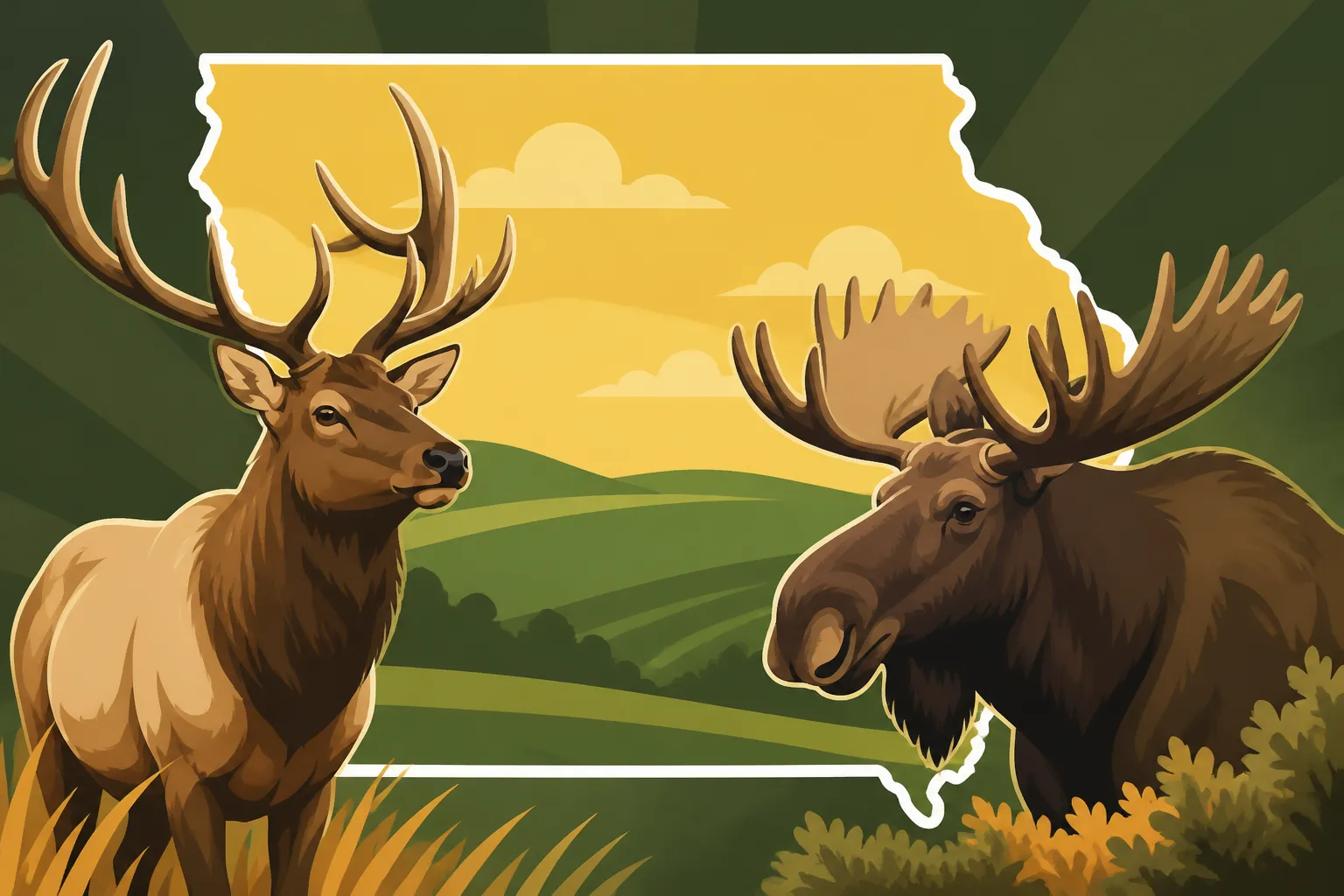
It's natural to be excited, but a clear photo or video is always the best way to confirm what you're seeing. Remember, elk have a distinct light-colored rump patch and a dark mane, and their antlers sweep back and up. Moose are unmistakable with their huge palmate antlers (on bulls), massive bodies, prominent shoulder hump, and a dewlap under the chin. A typical Iowa whitetail just doesn't have these features.
Documented Sightings and What They Mean
While rare, confirmed sightings of elk and moose in Iowa do happen. These aren't just campfire stories; they are verified occurrences that the Iowa Department of Natural Resources (DNR) takes seriously. Understanding how these sightings are tracked and what they reveal can paint a clearer picture of these wandering giants.
Confirmed Reports and the DNR's Role
When someone reports an elk or moose sighting in Iowa, the DNR typically investigates. They rely on credible reports from the public, often accompanied by photographic or video evidence. These reports are crucial because they help wildlife biologists track the movements of these animals and understand if they are truly transient or, in exceptionally rare cases, attempting to establish a presence. The DNR’s primary concern with these infrequent visitors is often their safety and public safety, especially concerning traffic accidents or potential interactions with domestic livestock.
It's important to remember that these aren't part of the regular Iowa Deer Herd Management and Harvest plans. There are no hunting seasons for elk or moose in Iowa, nor are there any plans to establish them due to the lack of resident populations. The DNR's approach is generally to monitor, and if an animal becomes a nuisance or a danger to itself or others, they might intervene by attempting to haze it back to its home range or, as a last resort, relocate or euthanize it. This careful management ensures that these unique visitors are treated appropriately within a state not typically prepared for them.
Where and When Sightings Occur
Geographically, most elk and moose sightings in Iowa tend to cluster along the state's borders, especially in the northern and eastern counties adjacent to Minnesota and Wisconsin, and sometimes along the Missouri River in the west, connecting to Nebraska. These river systems and associated timber blocks act as natural travel corridors, offering some semblance of cover and water sources for animals moving through unfamiliar territory. You're far less likely to see an elk or moose deep in the agricultural heartland of central Iowa, simply because there's little reason for them to venture that far from their native habitats or travel routes.
| Species | Typical Size (Lbs) | Antler Shape (Male) | Coat Color | Typical Habitat | Status in Iowa |
|---|---|---|---|---|---|
| Whitetail Deer | 100-300 | Forward-curving, branched | Brown/Gray, white belly, tail | Forests, fields, suburbs | Abundant, native |
| Elk | 500-1000 | Large, multi-tined, sweeping back | Tan body, dark mane, light rump | Mountains, forests, prairies | Transient, rare visitor |
| Moose | 800-1600 | Large, palmate (paddle-like) | Dark brown/black, shoulder hump, dewlap | Boreal forests, wetlands | Extremely rare visitor |
Timing-wise, sightings can occur at any time of year, but there might be slight increases during certain periods. Young elk bulls are most likely to disperse after the rut, when they're pushed out by dominant males, or during periods of abundant forage when they're just exploring. Moose might follow a similar pattern, often as young males strike out from their maternal cows. These animals are often driven by instinct and opportunity, moving until they hit a barrier or find a temporary suitable habitat. Hunters spending time scouting and hunting in river breaks and larger timber blocks, areas like those covered in Scouting Iowa Timber and River Bottoms, might have a slightly higher chance of encountering one.
The "GoHunt" Tool for Wildlife Tracking
While most hunters primarily use platforms like GoHunt to analyze draw odds for western big game or to e-scout for whitetails on public land, its comprehensive mapping and data features can be incredibly useful in understanding the broader wildlife landscape. You might not be looking for elk or moose in Iowa specifically with your GoHunt subscription, but you can certainly use it to understand their established ranges in neighboring states. By viewing land ownership and habitat types through the GoHunt app, you can anticipate potential travel corridors an animal might use to wander into Iowa, especially along state lines. For instance, if you're looking at a large tract of public land in northeast Iowa near the Wisconsin border, Using the Iowa DNR Hunter Atlas in conjunction with GoHunt could help you visualize how an animal might migrate across state lines.
Although GoHunt doesn't provide real-time tracking of individual rogue elk or moose in Iowa, it does give you access to historical data and land intelligence that allows you to contextualize these rare events. Understanding the typical habitat of these animals, easily viewable on mapping layers, can help you appreciate just how far out of their comfort zone a wandering elk or moose truly is when it finds itself in an Iowa cornfield. For those planning hunts in states with established populations, GoHunt is an invaluable tool for planning and maximizing success. But here in Iowa, for elk and moose, it’s more about understanding the broader picture of wildlife movement across the continent. Even the most dedicated GoHunt user isn't likely to find a reliable "elk zone" or "moose hot spot" within Iowa's borders!
Understanding the Impact of These Wanderings
The occasional appearance of an elk or moose in Iowa is more than just a novelty; it brings with it a unique set of ecological, legal, and safety considerations that everyone, especially hunters and landowners, should be aware of. These animals aren't just pretty faces; they're large, powerful, and, in Iowa, out of place.
Ecological and Management Implications
From an ecological standpoint, a lone elk or moose passing through Iowa typically has very little lasting impact. These are not large enough numbers to affect local vegetation, compete significantly with native deer populations, or introduce new diseases. However, if multiple individuals were to establish a breeding population – a highly unlikely scenario given the habitat constraints – then the ecological considerations would change dramatically. They would begin to impact browse, potentially introduce pathogens from their home range, and might even compete for resources with the abundant Iowa Whitetail Deer and Why They Score So High.
For now, the management implications are mostly about monitoring and responding to individual animals. The Iowa DNR keeps tabs on sightings, not because they are managing an elk or moose herd, but because they are responsible for all wildlife within the state. This means if an elk or moose is injured, becomes trapped, or poses a significant public safety risk (for example, by wandering into a populated area or causing repeated vehicle accidents), the DNR has to step in. Their focus remains on the well-being of the animal and the safety of Iowa's citizens.
Hunter Considerations and Legalities
This is where it gets really important for hunters: you absolutely cannot hunt elk or moose in Iowa. Period. There is no legal season, no tag, and no mechanism to obtain one. If you encounter an elk or moose while you are legally hunting other species, such as during Iowa Archery Deer Season Segments or Iowa First Shotgun Season Dates, you must simply enjoy the rare sighting and let the animal go on its way. Attempting to harvest an elk or moose in Iowa would be a serious poaching offense, carrying significant fines, loss of hunting privileges, and potentially even jail time.
It's tempting, I know. Your heart races, the adrenaline surges, and the thought of such a trophy crossing your path might make you forget the rules for a split second. But remember your Iowa Hunter Education Requirements and the importance of ethical and legal hunting. Iowa's hunting regulations are very clear about what species can be hunted and when. These regulations are meticulously laid out in annual booklets and online, and it's every hunter's responsibility to know them inside and out. If you're unsure about a rule, always err on the side of caution or contact the DNR directly.
Reporting Sightings and Citizen Science
If you are fortunate enough to see an elk or moose in Iowa, the most responsible thing you can do is report it to the Iowa DNR. This isn't just about sharing a cool story; it's a valuable contribution to citizen science. Your report helps wildlife biologists track dispersal patterns, understand potential migration routes, and respond appropriately if the animal needs assistance.
When you report a sighting, try to gather as much information as possible without disturbing the animal:
- Location: Be as precise as possible. GPS coordinates from your phone or a nearby landmark are ideal.
- Date and Time: When did you see it?
- Description: Was it an elk or a moose? Male or female? How many animals? Note any distinguishing features or injuries.
- Photographs or Video: If safe to do so, capture visual evidence. This is the most helpful confirmation.
- Behavior: What was the animal doing? Was it calm, agitated, feeding, moving quickly?
You can usually find contact information for your local DNR office or a statewide wildlife reporting number on the Iowa DNR website. They will appreciate your diligence and the valuable information you provide. These rare sightings are a testament to the resilience of wildlife and the surprising journeys animals sometimes undertake, even across human-dominated landscapes. By reporting these events, you play a small but important role in understanding and protecting these magnificent wanderers.
Disclaimer
This article is for general informational purposes only and does not constitute professional advice. Laws, prices and regulations vary by location and change over time. Consult a qualified professional for guidance on your specific situation.