Turkey Poult Survival and Spring Weather
It can be incredibly frustrating for Iowa turkey hunters to have a banner year one spring, only to find the woods eerily quiet and poults few and far between the next. You might scout religiously, listen intently, and put in your time, yet the numbers just aren't there. This guide will dive deep into a primary culprit behind these ups and downs: the dramatic impact of spring weather on turkey poult survival. We'll explore exactly why those early weeks after hatching are so critical and what environmental factors make all the difference for a healthy Iowa turkey population.
The Critical Link Between Spring Weather and Turkey Broods
For anyone who’s spent time in the Iowa woods, you know spring weather can be a real rollercoaster. One day it’s 70 degrees and sunny, the next it's a cold, driving rain. While we might grumble about it, these swings can be life-or-death for newly hatched turkey poults. Their first few weeks are a gauntlet, and weather is perhaps their biggest hurdle.
The Vulnerability of Young Poults to Cold and Rain
Imagine being barely larger than a golf ball, covered in downy fluff, and unable to regulate your own body temperature. That’s the reality for a turkey poult in its first two weeks of life. They are incredibly fragile creatures, completely dependent on the hen for warmth. When a cold, wet spring rolls through Iowa, it's a recipe for disaster.
Heavy, persistent rain can soak a poult's down to the skin, stripping away any insulating properties it might have. This quickly leads to hypothermia, even if temperatures aren't freezing. Think of it like a small child getting drenched in a sudden downpour without a coat – they'll get cold fast. Poults can’t just shake it off or find shelter like a mature bird can. They need to be tucked under the hen's wings. If the hen has to move to find food, or if the rain is relentless for days, the exposure can be fatal. It’s a common scenario where a seemingly strong hatch gets decimated by just a few days of truly miserable weather. This vulnerability during their first 10-14 days is why you might hear about "poor poult survival" even if a lot of nests hatched successfully.
How Extreme Temperatures Impact Nesting Hens
It's not just the poults themselves that are affected by harsh spring weather; the nesting hens face their own challenges. A hen turkey is an incredibly dedicated mother, often incubating her clutch for about 28 days. During this time, she might only leave the nest once a day, sometimes not even that, to feed and drink. This is an immense energy drain, and extreme weather only amplifies the stress.
If spring brings an unseasonably cold spell with freezing rain or even late snow, the hen has to work harder to keep her eggs warm. This expends vital calories she needs for her own health and to sustain her through incubation. Conversely, sudden heat waves can also be problematic. If temperatures soar, the hen might have to leave the nest more frequently to cool off or find water, leaving the eggs vulnerable to predators or to overheating themselves if left exposed to direct sunlight for too long. A hen that is already weak or stressed from extreme weather might be less attentive after the poults hatch, or her overall health might impact the quality of the eggs she lays, potentially leading to lower hatch rates or weaker poults from the start. Understanding these pressures helps explain some of the fluctuations in Iowa Turkey Population Trends
Understanding Poult Survival Rates: Beyond Just the Rain
While spring weather is a huge piece of the puzzle, it's not the only factor dictating how many young turkeys make it to adulthood. Think of poult survival as a delicate balance where weather, habitat, and predation all play significant roles. It's a complex equation that biologists and hunters alike constantly try to decipher when assessing Iowa Wild Turkeys Across the State.
The Role of Habitat Quality in Protecting Young Turkeys
Even with perfect weather, poults still need somewhere safe to grow up. High-quality habitat is absolutely crucial for their survival, providing both concealment from predators and a reliable food source. When we talk about "brood rearing cover," we're not just talking about dense woods. Poults need a mix of tall, thick grasses (like CRP fields), forbs, and low-growing shrubs where they can hide from aerial predators like hawks and owls, as well as ground predators.
These areas also serve as prime foraging grounds. Newly hatched poults primarily feed on insects – spiders, grasshoppers, crickets, and other invertebrates are packed with the protein they need for rapid growth. Fields with diverse plant life often host a booming insect population, making them ideal nurseries. If the habitat is too open, or if it lacks these crucial insect food sources, poults become easy targets or simply don't get the nutrition they need to thrive. Landowners and conservation efforts that focus on creating and maintaining diverse undergrowth and insect-rich environments are literally giving these young birds a fighting chance.
Predation Pressure on Nests and Broods
Even the healthiest poults in the best habitat still face constant danger from predators. Iowa is home to a robust population of animals that view a turkey poult or egg as an easy meal. Raccoons, opossums, skunks, coyotes, and foxes are all common nest predators, often wiping out an entire clutch of eggs before they even hatch. Once poults are on the ground, the threats increase to include raptors like great horned owls and various hawks, as well as snakes and even house cats if they are too close to human dwellings.
The intensity of predation can fluctuate year to year and location to location. In areas with high predator populations or fragmented habitats, poult survival will naturally be lower. This is why you'll often see conservation efforts that also include habitat management designed to deter predators, such as creating larger blocks of cover or reducing edge habitat where predators often patrol. While it's a natural part of the ecosystem, intense predator pressure on already vulnerable poults can be the tipping point in a year with marginal weather. This adds another layer to understanding Nest Predation and Turkey Numbers.
Disease and Parasites Affecting Poult Health
Beyond the obvious threats of weather and predators, poults can also succumb to various diseases and parasites. Like any young animal, their immune systems are still developing, making them susceptible to pathogens that might not bother an adult turkey. Blackhead disease, for example, is a well-known historical killer of domestic and wild turkeys. While less prevalent in completely wild populations today, it can still surface. Other bacterial or viral infections can sweep through broods, especially in areas where turkeys might congregate or if their immune systems are compromised by stress from weather or poor nutrition.
External parasites like mites and ticks can also weaken poults, especially heavy infestations that can lead to anemia or transmit other diseases. Internal parasites, though less often directly fatal, can certainly hinder growth and overall health, making poults more vulnerable to other environmental stresses. A poult that is fighting off disease or a heavy parasite load is less likely to survive a cold snap, outrun a predator, or grow quickly enough to reach a more resilient size. This hidden layer of threats is an important, albeit often unseen, contributor to the overall poult survival rate each spring.
Key Weather Factors That Make or Break a Hatch
When we look back at a spring and try to figure out why turkey numbers seem high or low, it almost always comes down to the specific weather patterns during the critical hatching and early brooding period. It's a fine line between a productive spring and one that leaves us scratching our heads.
Cold, Wet Springs: A Poult's Worst Nightmare
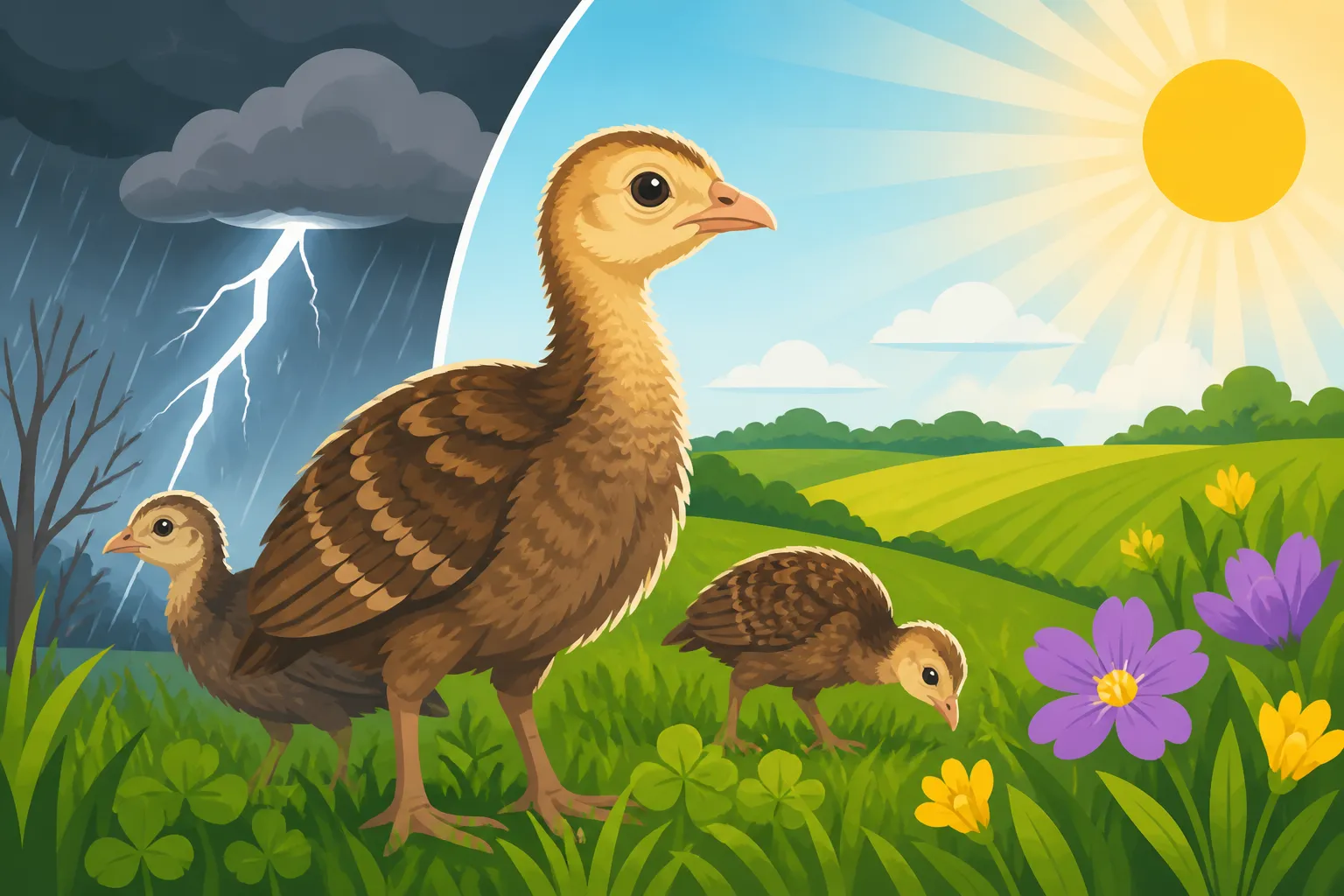
For newly hatched turkey poults, the combination of cold temperatures and heavy rain is truly the worst-case scenario. Their delicate down offers little protection when soaked, and their tiny bodies struggle to generate enough heat to combat the chill. Hypothermia sets in quickly. Poults rely on the hen to brood them constantly, especially during the first two weeks, but even a dedicated hen can only do so much.
Imagine extended periods, sometimes days on end, where temperatures hover in the 40s or 50s with continuous rainfall. During such times, the hen must either stay on the nest or huddle tightly with her poults, which limits their ability to forage for the insects they desperately need for protein and energy. Without proper nutrition, their already fragile condition worsens. The damp ground can also contribute to respiratory issues or make them more susceptible to chilling. These conditions are directly linked to the success or failure of a Spring Rain and Poult Survival in Iowa, making them a key focus for researchers tracking populations.
Drought Conditions and Their Hidden Dangers
On the surface, a hot, dry spring might sound ideal for poults – no cold rain to worry about! However, prolonged drought conditions present their own set of hidden dangers that can significantly impact survival. While poults won't die from exposure to rain, a lack of moisture can severely limit the insect populations they depend on for food.
Insects, especially soft-bodied invertebrates, thrive in moist environments. If the ground is parched and vegetation withers, the insect numbers can plummet. This leaves poults with fewer high-protein food sources, stunting their growth and weakening them. A weaker poult is slower, less agile, and more susceptible to predation or disease. Additionally, extreme heat can cause dehydration, and while poults can drink dew, prolonged dryness makes finding consistent water sources more challenging for both hens and poults, especially in agricultural landscapes where natural water features might be limited.
The "Goldilocks" Spring: Just Right for Reproduction
So, what does an ideal spring look like for turkey poult survival in Iowa? It's often referred to as a "Goldilocks" spring – not too hot, not too cold, not too wet, and not too dry. This typically means moderate temperatures, generally in the 60s and 70s, with a healthy mix of sunshine and intermittent, gentle rainfall.
These conditions allow for a booming insect population, providing abundant food for growing poults. The periodic rain keeps vegetation lush and green, creating excellent cover for concealment, but isn't so intense or prolonged that it risks hypothermia for the young birds. The warmth allows poults to dry quickly if they do get wet, and the hen can efficiently lead her brood to forage without constantly having to huddle for warmth. A spring with these balanced conditions often correlates with a significant boost in the turkey population numbers come fall, providing an exciting season for those pursuing Iowa Turkey Hunting Tactics for Spring Gobblers.
Here's a quick overview of how different weather scenarios impact poult survival:
| Spring Weather Condition | Impact on Poults (0-2 weeks) | Impact on Food Sources | Predator Vulnerability | Overall Survival Tendency |
|---|---|---|---|---|
| Cold & Wet (Persistent) | High risk of hypothermia, pneumonia, poor health | Reduced insect activity due to cold/damp | Higher, as hens must brood more, limiting mobility | Low |
| Hot & Dry (Drought) | Dehydration risk, stress from heat | Significantly reduced insect populations | Higher, as sparse cover offers less concealment | Low |
| Moderate & Balanced (Ideal) | Low risk of exposure, healthy growth | Abundant and active insect populations | Lower, with good cover and active foraging | High |
| Early Heat Wave, then Cold Snap | Initial good hatch, then sudden die-off | Variable, depending on timing | Variable, as poults may be caught exposed | Variable |
Habitat Management: Giving Poults a Fighting Chance
Understanding the weather is one thing, but can we do anything about it? Directly, no. But indirectly, through smart habitat management, we can significantly buffer the negative effects of less-than-ideal springs. Good habitat provides turkeys with the resources they need to thrive, even when Mother Nature throws a curveball.
The Importance of Diverse Brood Rearing Cover
Imagine a newly hatched poult trying to survive in a barren, mowed field. It wouldn't stand a chance. This is why diverse brood rearing cover is paramount. Poults need a mosaic of vegetation types that provide overhead cover from aerial predators, lateral cover from ground predators, and easy access to the insect-rich foraging grounds. This isn't just one type of plant; it's a mix.
Think of areas with dense stands of native grasses, interspersed with clumps of shrubbery, briar patches, and wildflowers. These "edge habitats" are crucial. The tall grasses offer protection and hold insects, while the thicker shrubs provide escape routes and deeper concealment. Farmers who utilize conservation practices like establishing buffer strips along waterways or enrolling land in programs like the Conservation Reserve Program (CRP) are creating invaluable pockets of this diverse cover. Even small patches of undisturbed native vegetation can make a huge difference in local poult survival rates, especially during the critical first few weeks. When you're scouting, an app like GoHunt can help you identify these specific habitat types by overlaying public and private land data with aerial imagery, highlighting prime brooding areas you might otherwise miss.
Managing Predators to Boost Survival
While predation is a natural part of the ecosystem, excessive predator pressure can certainly depress turkey numbers, especially when combined with poor weather or limited habitat. Management efforts aren't about eliminating all predators, which isn't feasible or desirable, but rather about creating conditions where turkeys have a better chance to evade them.
This can involve targeted predator control efforts in specific areas during nesting and brooding seasons, though these are often controversial and complex to implement effectively. More often, predator management is intertwined with habitat work. By creating dense, continuous patches of escape cover, we make it harder for predators to effectively hunt poults. For example, reducing fragmented habitat and minimizing linear features like fencerows that predators often use as travel corridors can help. In some cases, working with landowners to reduce feral cat populations, which are incredibly efficient and devastating predators of ground-nesting birds, can also have a noticeable positive impact. This thoughtful approach helps ensure the long-term health of Turkey Flock Behaviour in Winter and throughout the year.
Farmer Partnerships and Regenerative Agriculture
In a state like Iowa, where agriculture dominates the landscape, the relationship between farmers and wildlife conservation, especially turkeys, is incredibly important. Farmer partnerships and the adoption of regenerative agricultural practices offer some of the most promising avenues for improving poult survival. Regenerative practices, such as no-till farming, cover cropping, and diverse crop rotations, all contribute to healthier soils. Healthier soils, in turn, support more robust insect populations – the very food source poults depend on.
Cover crops, for instance, provide both food and excellent bug habitat, as well as crucial overhead cover for poults traversing fields or foraging along edges. Reducing pesticide use also directly benefits insect numbers. Furthermore, farmers participating in programs that establish pollinator habitats, wetlands, or prairie strips on their land are directly creating the type of diverse brood-rearing cover that turkeys need. When hunters and conservation groups collaborate with landowners, they can unlock massive potential for enhancing turkey habitat across the landscape, proving that good farming practices can also be good for wildlife.
What Hunters Can Do: Observing Trends and Supporting Conservation
As hunters, we're often the first to notice changes in wildlife populations. Our boots-on-the-ground observations are incredibly valuable. Understanding the factors that influence poult survival, like spring weather, empowers us to be better stewards of the resource and more informed conservationists.
Participating in Summer Brood Surveys
One of the most direct ways hunters can contribute to understanding turkey populations is by participating in summer brood surveys. The Iowa DNR, like many state agencies, relies on citizen scientists to help gather data on poult production. These surveys typically involve recording the number of adult hens and the number of poults observed during specific routes or while out and about in July and August. This real-time data helps biologists track annual poult survival rates and identify areas where populations might be struggling or thriving.
Your observations, combined with data from countless other individuals, provide a clearer picture of how successful the spring hatch was. It’s a simple yet powerful way to turn your time in the field into valuable scientific data. If you're using a mapping application like GoHunt, you could even mark your observation points, noting weather conditions and habitat, and then cross-reference with official survey data. This kind of community involvement is vital for accurate assessments of Iowa Turkey Population Trends.
Understanding Local Population Swings
It's easy to get discouraged if you don't see many turkeys in your usual hunting spots for a season or two. However, understanding that poult survival is highly dependent on localized weather patterns and habitat quality can help put these swings into perspective. Just because one area had a tough hatch due to a cold, wet spell doesn't mean another part of the state with better conditions experienced the same decline.
Learning to read the signs – observing flock dynamics, looking for evidence of successful broods (or lack thereof), and keeping an eye on local weather reports during nesting season – can give you a better grasp of what to expect. This also helps manage expectations when planning your hunts, whether you're trying Roosting Iowa Turkeys the Night Before or honing your calls. Sometimes, a "down" year might simply mean that the weather wasn't conducive to a booming hatch, rather than a permanent decline in the overall population. It often comes down to adapting your tactics if you're Calling a Henned-Up Iowa Gobbler and there are fewer birds around.
Supporting Iowa's Conservation Efforts
Ultimately, the best way to ensure robust turkey populations for future generations is through continuous support of conservation efforts. This includes purchasing hunting licenses and turkey tags, as the revenue from these sales directly funds the Iowa DNR’s wildlife management and habitat improvement programs. Volunteering with local conservation organizations or supporting groups like the National Wild Turkey Federation (NWTF) also makes a tangible difference.
These organizations work tirelessly on habitat restoration, land acquisition, and advocating for policies that benefit wildlife. By investing our time and money, we contribute to creating and maintaining the high-quality habitat that turkeys need to survive, especially when facing challenging spring weather. Every little bit helps to ensure that Iowa remains a fantastic place to hunt turkeys, whether you're wondering Which Iowa Turkey Seasons Nonresidents Can Hunt or how to get your Iowa Turkey Licence Costs.
Disclaimer
The information provided in this guide is for general educational purposes and is based on common knowledge and current understanding of turkey biology and weather impacts. Hunting regulations, wildlife populations, and environmental conditions can change. Always consult the most recent Iowa Department of Natural Resources (DNR) regulations and local weather forecasts before planning any hunting activities.