Are There Wolves in Iowa?
It's a question many of us Iowa hunters have whispered around a campfire or wondered while tracking a deer through the timber: "Are there wolves in Iowa?" The thought can be exhilarating, maybe a little unnerving, and it certainly adds a wild dimension to our already rich hunting experiences. This guide is going to dive deep into the reality of wolves in the Hawkeye State, exploring their history, current status, and what those rare sightings actually mean for our landscape.
A Look Back: Wolves in Iowa's Past
Before European settlement transformed Iowa's vast prairies and woodlands into agricultural powerhouses, gray wolves were a natural and vital part of the ecosystem. They were apex predators, playing a crucial role in maintaining the health and balance of deer and other prey populations. Imagine the early Iowa landscape, teeming with bison, elk, and deer, and wolves silently patrolling the edges, a testament to true wilderness.
The Original Inhabitants
For thousands of years, gray wolves, specifically the subspecies known as the Great Plains wolf, roamed freely across what would become Iowa. They were integral to the food web, their presence shaping the behavior and health of herbivore populations. These wolves weren't just passing through; they lived, hunted, and raised their pups here, establishing complex social structures and territories within the state's diverse habitats. Their howls were a common sound echoing across the river bottoms and tallgrass prairies, a signal of a truly wild land.
The Era of Extirpation
As settlers moved westward, bringing with them livestock and an agricultural economy, the relationship between humans and wolves became fraught. Wolves were seen as a direct threat to domestic animals, and fear, combined with a lack of understanding of their ecological role, led to aggressive eradication campaigns. Bounties were common, and by the late 1800s and early 1900s, gray wolves were effectively extirpated from Iowa. This wasn't a slow fade; it was a deliberate, widespread effort that succeeded in removing these magnificent predators from the landscape, leaving a significant void in the natural order. It’s a somber chapter in our state’s wildlife history, a stark reminder of how quickly human actions can alter an ecosystem.
Current Status: Transient Visitors, Not Residents
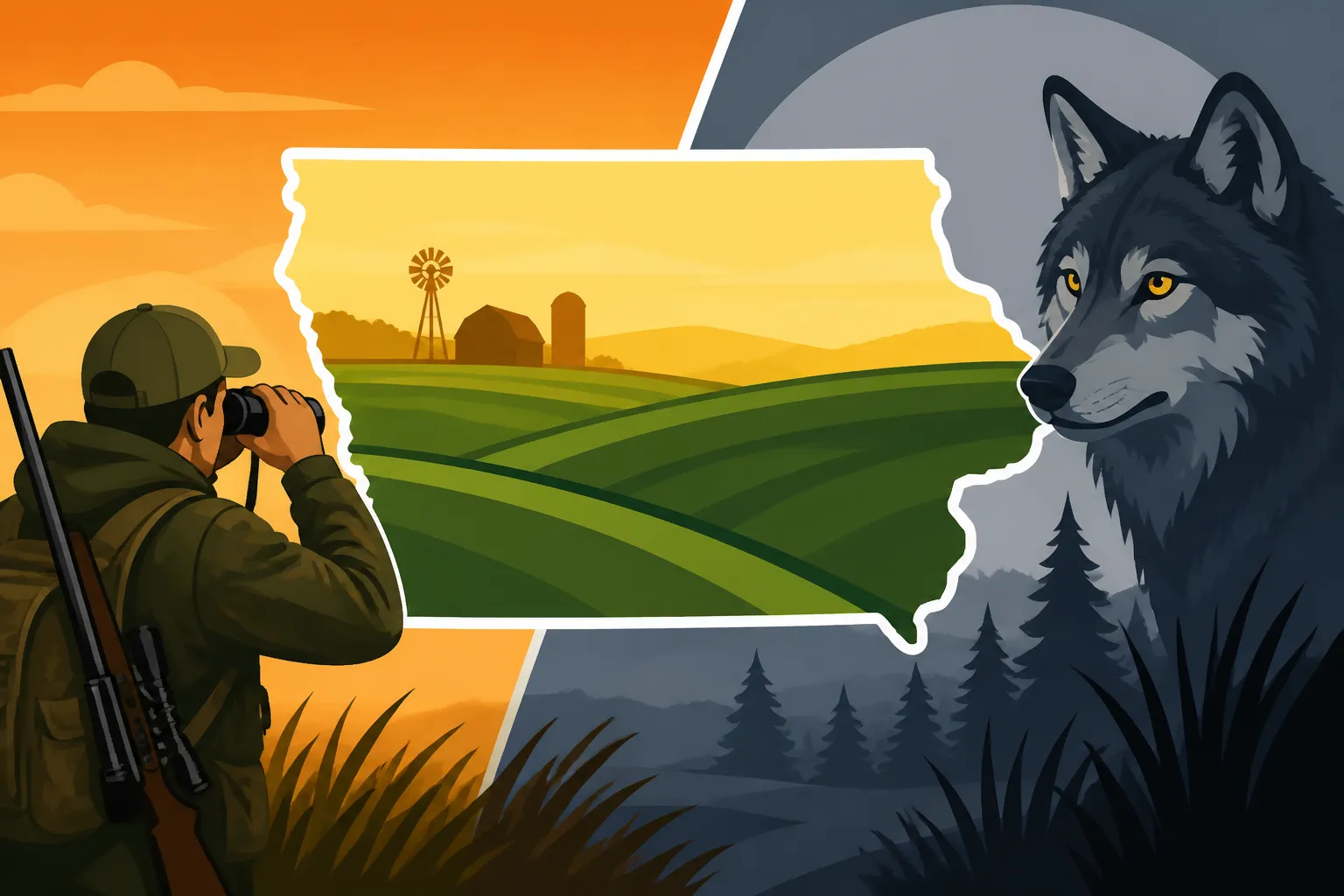
So, are there wolves in Iowa today? The short answer is: occasionally, but they are not considered to have an established, breeding population within the state's borders. What we see are typically transient individuals, often young males, dispersing from established populations in neighboring states.
Lone Wolves on the Move
These aren't packs of wolves roaming Iowa; instead, they are usually lone individuals, often young males, striking out to find new territory, mates, and food sources. They typically originate from the healthy wolf populations in Wisconsin and Minnesota, where these animals are well-established and thriving. Iowa acts as a sort of "bridge" or, more accurately, a challenging corridor for these wanderers. When one is sighted, it's usually a big deal because it’s so rare. These animals are incredibly resilient and capable of covering vast distances, driven by instinct to explore and expand their range. They might spend a few weeks or even months in an area before moving on, or sadly, they might not make it due to human conflict or other challenges.
Documented Sightings and Verification
Iowa's Department of Natural Resources (DNR) takes all wolf sightings seriously, especially with the growing interest in wildlife and the ease of sharing photos and videos. However, verifying these sightings can be tricky. Often, what people believe to be a wolf turns out to be a large coyote or even a wolf-hybrid dog. Coyote Calling in Iowa Farm Country highlights just how common coyotes are and how easily they can be mistaken, especially from a distance or in poor lighting. The DNR typically requires solid evidence – clear photos, tracks, or even scat – to confirm a wolf sighting. Even then, it’s about documenting a presence, not declaring a new population. Most confirmed sightings tend to be in the northeastern and eastern parts of the state, closer to those established populations in Wisconsin and Minnesota, or along the Mississippi River corridor.
Why No Established Populations Yet?
Despite the occasional visitor, wolves haven't re-established breeding populations in Iowa. Several factors contribute to this. First, our landscape is heavily fragmented by agriculture, leaving fewer large, contiguous tracts of wilderness that wolves prefer for hunting and raising young. Second, prey density, while excellent for deer, might not be consistently high enough in every area to support a pack year-round, especially without significant buffer zones from human activity. Lastly, and perhaps most significantly, human tolerance plays a huge role. Wolves require vast, undisturbed areas, and Iowa's population density, combined with agricultural interests, means there's a higher chance of conflict. Farmers, in particular, are understandably wary of predators that could threaten livestock, making natural re-establishment a complex social and political issue, not just an ecological one.
Distinguishing Wolves from Other Canids
It's easy to mistake a large coyote or even a domestic dog for a wolf, especially when you're caught off guard or if the sighting is brief. Knowing the key differences can help you accurately identify what you're seeing in the Iowa wilderness.
Wolf vs. Coyote
This is the most common point of confusion for Iowa hunters and outdoor enthusiasts. While both are canids, they have distinct differences in size, build, and even behavior.
| Feature | Gray Wolf (Average) | Coyote (Average) |
|---|---|---|
| Size/Weight | 60-100+ lbs, 2.5-3 ft tall | 20-45 lbs, 1.5-2 ft tall |
| Build | Stockier, broader chest, large paws, blockier head | Sleeker, slender, small paws, pointed snout |
| Tail | Bushy, often held low, rarely curls up | Bushy, often held between legs |
| Ears | Shorter, more rounded | Longer, more pointed |
| Snout | Broad, blocky | Narrow, pointed |
| Howl/Vocalization | Deep, sustained howl | High-pitched yips, barks, howls |
When you're out in the field, remember that a wolf's tracks will be noticeably larger than a coyote's, roughly the size of a human hand without the thumb. Their gait is also more purposeful and direct. If you're on a multi-day hunt and using an app like GoHunt to scout areas beforehand, you might even notice a significant lack of human trails in areas where a reclusive animal like a wolf might attempt to travel, though finding concrete evidence is still very rare.
Wolf vs. Domestic Dog
Sometimes, a domestic dog that's gotten loose, especially a large breed like a German Shepherd, husky, or a wolf-hybrid, can be mistaken for a wild wolf. The key here is behavior and subtle physical cues. Wild wolves are inherently wary of humans and will almost always try to avoid contact. They move with an unmistakable wildness, an efficiency born of survival. Domestic dogs, even strays, often show signs of human interaction – they might be less shy, or you might notice a collar or signs of grooming, however neglected. Hybrids are trickier, as they can possess some wolf-like features, but their lineage often gives them away with variations in coat color, eye color (wolves almost always have amber or yellow eyes), and ear shape that aren't quite "pure" wolf.
The Future of Wolves in Iowa
While established wolf populations are not currently found in Iowa, the possibility of their return is a topic of ongoing discussion among wildlife biologists and conservationists. It's a complex issue with many facets, from ecological benefits to potential challenges for landowners.
Reintroduction vs. Natural Expansion
There are generally two ways a species like the gray wolf could return to Iowa: natural expansion or reintroduction. Natural expansion, as we've discussed, is already happening with transient individuals moving in from neighboring states. This is a slow, organic process driven by the wolves themselves as populations grow and young animals seek new territories. A formal reintroduction program, on the other hand, would be a deliberate effort to capture and release wolves into specific areas of Iowa. This is a much more contentious approach, requiring extensive public support, scientific study, and political will, as seen in other states that have undertaken such programs. Given Iowa's highly agricultural landscape and population density, a formal reintroduction would face significant hurdles.
Ecological Impacts and Considerations
Should wolves ever establish a permanent presence in Iowa, the ecological impacts would be significant and generally positive for the health of the ecosystem. As apex predators, wolves help regulate prey populations, particularly deer. This can lead to healthier deer herds by culling weaker or diseased animals, and it can also influence deer behavior, leading to more natural browsing patterns that benefit forest regeneration. For hunters, this could mean a shift in deer dynamics; perhaps fewer deer in some areas, but potentially healthier, stronger animals. It’s an interesting thought to ponder when we consider Iowa Deer Herd Management and Harvest strategies, which are currently heavily focused on human hunters as the primary predators. A natural predator adds another layer of complexity and balance.
However, there are also considerations for existing livestock. While wild wolves primarily prey on wild animals, the potential for livestock depredation is a valid concern for farmers, and management plans would need to address this to foster coexistence.
Coexisting with a Returning Predator
The thought of wolves returning stirs strong emotions, both excitement for a wilder Iowa and concern for potential conflicts. If wolves were to re-establish, it would require a significant effort in public education and proactive management strategies. This would involve teaching people about wolf behavior, implementing non-lethal deterrents for livestock, and potentially compensation programs for farmers experiencing losses. It’s not just about the wolves; it’s about how human communities choose to adapt and coexist with a powerful natural force. Tools like GoHunt can provide valuable insights into landscape features and land ownership, which are crucial for understanding potential wolf habitats and planning for their return or documenting rare occurrences. Public Hunting Land in Iowa could also become even more vital as potential refuges for such animals. Ultimately, the question of whether wolves will truly call Iowa home again rests not just on their ability to survive, but on our collective willingness to make space for them in our modern landscape.
Disclaimer
This article is for general informational purposes only and does not constitute professional advice. Laws, prices and regulations vary by location and change over time. Consult a qualified professional for guidance on your specific situation.