Coyote Calling in Iowa Farm Country
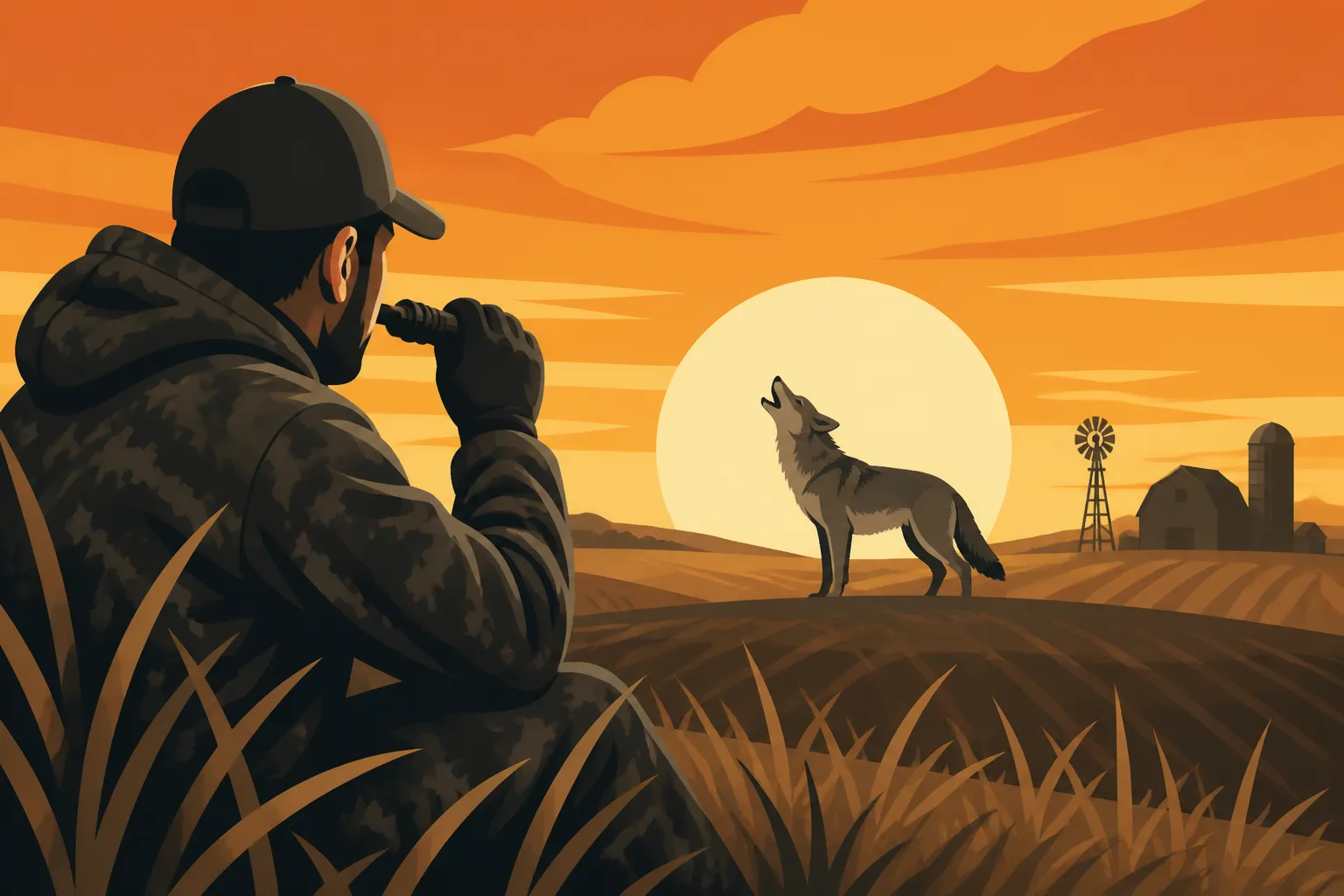
Hunting coyotes in Iowa's vast farm country can feel like an endless game of hide-and-seek. These intelligent predators are incredibly adaptable, and just when you think you've got them figured out, they'll surprise you with their wariness and cunning. This guide will walk you through the nuances of calling coyotes in the heart of agricultural Iowa, offering practical strategies to increase your success and make those long hours worthwhile.
Understanding the Iowa Coyote Landscape
Before you even think about blowing a call, you need to understand the animals you're pursuing and the unique environment they call home in Iowa. It's not the wide-open West; it's a patchwork of fields, timber, and drainage.
Coyote Behavior Around Iowa Farms
Iowa coyotes are true opportunists and incredibly smart. Unlike some western populations that might be more accustomed to human presence, our Iowa coyotes in farm country are often incredibly wary due to consistent hunting pressure, trapping, and their natural intelligence. They thrive on a diverse diet, everything from voles and mice hiding in crop stubble to rabbits, pheasants, and even deer fawns during the spring. They're also not above scavenging on livestock carcasses or roadkill, which means they're constantly moving and exploring.
Their daily patterns are largely dictated by food sources and security cover. They might bed down in dense patches of CRP grass during the day, much like deer might in areas we scout for prime spots like CRP Grass and Where Bucks Bed. As dusk approaches, they become more active, moving along field edges, through timber belts, and especially along drainage ditches and creek beds that crisscross agricultural fields. Understanding these movement corridors is key to intercepting them.
Prime Iowa Coyote Habitat
In Iowa farm country, "prime habitat" for coyotes isn't just one thing; it's a combination of elements. You'll find them in large timber blocks, especially those connected to river systems or winding creek bottoms. These areas provide dense cover for denning and escape. However, they also spend a significant amount of time in less obvious places:
- Shelterbelts and Tree Rows: These narrow strips of trees, often planted as windbreaks, serve as excellent travel corridors and ambush points. Coyotes will often travel these unseen by humans in the open fields.
- CRP (Conservation Reserve Program) Fields: The thick, unmolested stands of native grasses offer superb bedding cover for coyotes, as well as habitat for their prey like pheasants and rabbits.
- Drainage Ditches and Creek Beds: These natural funnels cut through open fields, providing cover and often acting as highways for coyotes moving between larger blocks of timber or food sources. They can offer a surprising amount of concealment in what appears to be otherwise open country.
- Wooded Draws: Even small finger draws leading out into crop fields can hold coyotes, especially when combined with thicker cedar or locust thickets. These features, similar to those that hold deer, such as Cedar and Locust Thickets as Bedding Cover, also provide excellent bedding and travel routes for coyotes.
When you're looking for a spot to set up, think like a coyote: where can I travel unseen? Where can I find food? Where can I hide from danger? Using tools like GoHunt can help you identify these features from an aerial perspective, highlighting contours, cover changes, and potential travel routes that might not be obvious from the road.
Coyote Calling Strategies for Iowa Fields
Once you've got a grasp of their habits and hangouts, it's time to talk calling. This is where the art and science truly meet, and patience is your most valuable tool.
Deciding on Stands and Approach
Your stand location and how you approach it are paramount, arguably more important than the specific call you use. Coyotes have an incredible sense of smell and hearing.
- Wind is King: Always, always, always hunt with the wind in your favor. This means setting up so your scent blows away from where you expect the coyote to approach. If a coyote gets downwind of you, the game is usually over. This is a fundamental rule, similar to understanding Wind and Thermals in River Breaks for deer.
- Concealment is Crucial: Iowa farm fields often mean less dense cover than big timber blocks. Utilize whatever is available: a brush pile, a small knoll, the edge of a standing cornfield, or even a deep drainage ditch. Your goal is to break up your silhouette and remain undetected until it's time to shoot.
- Long-Range Visibility: Try to pick a spot that gives you a good view of the approaching coyote while still offering concealment. Coyotes often circle downwind to get a sniff, so anticipating this and having a clear shooting lane in that direction is a huge advantage.
- Stealthy Approach: Plan your route into your stand carefully. Avoid walking through bedding areas or skylining yourself on ridges. A silent, indirect approach ensures you don't spook any coyotes already in the area. This goes hand-in-hand with finding Access Routes That Avoid Bedding Areas when deer hunting; the principle is identical for coyotes. Many experienced callers use apps like GoHunt to digitally scout their routes and plan entries. This helps in understanding topography and land boundaries from your home, similar to E-Scouting Iowa Farm Country From Home.
Mastering Call Types and Sequences
There are generally three main categories of coyote calls, and each has its place:
Distress Calls
These are your bread and butter. Mimicking a rabbit in distress, a bird, a fawn, or a rodent can appeal to a coyote's hunger instinct.
- Rabbit Distress: By far the most popular. A dying rabbit scream sounds like an easy meal. Start with softer whimpers, then increase intensity. Vary the cadence to sound realistic. This is often the best opener.
- Fawn Distress: Especially effective in late spring and early summer when fawns are vulnerable, but can work anytime as coyotes prey on deer. This is a more aggressive, pleading sound.
- Bird/Rodent Distress: These are often higher-pitched and less urgent, great for drawing in more cautious coyotes or when you suspect they're already close.
Howls
Howls are primarily used for locating coyotes or challenging a territorial male.
- Lone Howl: A long, drawn-out howl that asks, "Is anyone out there?" Good for eliciting a response to pinpoint locations.
- Group Howl/Challenge Howl: More aggressive, sounding like multiple coyotes. This can sometimes provoke a dominant male to come investigate or challenge the intruders. Use these sparingly, as they can also intimidate coyotes into staying away.
Pup Distress
This call mimics an injured or threatened coyote pup. It can be incredibly effective, especially if there are breeding pairs or dens nearby, as it taps into a coyote's parental instinct to protect their young. This can often draw in both the male and female.
When it comes to the sequence, think about telling a story. Start soft, as if the distressed animal is just beginning its struggle. Then, build intensity, mimicking a fight for survival. Introduce pauses – sometimes long ones – to allow coyotes time to respond or to close the distance. Don't be afraid to experiment with the volume and duration, much like you might adjust Rattling Volume in Thick Timber for deer. A common mistake is calling too much or not waiting long enough. Give it at least 15-20 minutes, sometimes longer, for a coyote to commit.
| Call Type | Primary Purpose | Best Time to Use | Common Mistakes |
|---|---|---|---|
| Rabbit Distress | Attract hungry coyotes (prey drive) | Year-round, especially colder months | Calling too loud initially, not varying cadence |
| Fawn Distress | Target coyotes preying on deer | Spring/Summer, but can work anytime | Overusing, not sounding realistic |
| Lone Howl | Locate coyotes, get a response | Anytime to scout, especially early morning/late eve | Expecting them to come to the call (often just locate) |
| Challenge Howl | Incite territorial coyotes to investigate | During breeding season (Jan-Mar), dominant males | Too aggressive, scaring off wary coyotes |
| Pup Distress | Draw out protective adults, breeding pairs | Denning season (Spring/Early Summer) | Using when no pups are likely around, overuse |
Essential Gear and Setup for Success
You don't need a massive amount of gear to hunt coyotes, but what you bring should be reliable and appropriate for Iowa's varied conditions.
Firearms and Optics
Your choice of firearm depends on personal preference and the expected range.
- Rifles: For longer shots across fields, a rifle chambered in .223 Remington, .204 Ruger, .243 Winchester, or even 6.5 Creedmoor is common. Accuracy is paramount. Make sure you've practiced rangefinding and shot placement, especially if you're hunting in areas where you might also be practicing Rangefinding in Timber for deer.
- Shotguns: If you're hunting in thick cover where shots will be close (under 40 yards), a shotgun with buckshot (like #4 Buck) can be incredibly effective. This is particularly useful in timbered draws or heavy CRP where coyotes might pop up quickly.
- Optics: A good scope with variable magnification (e.g., 3-9x or 4-12x) is essential for rifles. For shotguns, a red dot or a low-power scope can work. Binoculars (8x or 10x) are crucial for scanning distant cover before and during your stand.
Stand Placement and Concealment
As mentioned, concealment is key.
- Natural Cover: Always prioritize natural cover. A large hedge row, a stand of evergreens, a brush pile, or even a depression in the ground can be enough.
- Ground Blinds: Portable pop-up ground blinds are excellent for coyote hunting, offering maximum concealment and breaking up your silhouette. They allow for more movement and comfort, which is important for long sits in cold weather.
- Camouflage: Full head-to-toe camouflage is essential, including face masks and gloves. Coyotes have excellent eyesight, and any movement or shine can give you away.
- Shooting Sticks: These are invaluable for steadying your shot, especially with a rifle. They allow you to get a solid rest in varied terrain, which is particularly helpful in open farm fields where natural rests are scarce.
Night Hunting Rules for Coyotes in Iowa
Iowa does permit night hunting for coyotes with some specific regulations. This can be a highly effective method, as coyotes are often more active and less wary after dark.
- Legal Hours: You can generally hunt coyotes at night year-round in Iowa. However, it's critical to check the most current Iowa DNR regulations, as rules can change.
- Equipment: The use of artificial light, night vision, and thermal imaging devices for hunting coyotes is generally permitted. However, avoid shining lights onto roads or private property without permission.
- Safety First: Night hunting requires extreme caution. Always be absolutely certain of your target and what lies beyond it. Use caution with ATVs and other vehicles.
Advanced Tactics and Ethical Considerations
Beyond the basics, there are ways to refine your approach and ensure you're hunting ethically and effectively.
Reading Coyote Behavior
When a coyote responds to your call, pay close attention to its body language.
- Hesitant Approach: A coyote that slowly edges in, stops frequently, and looks around is wary. It might be circling downwind to test the air. Be ready for a shot, but don't rush.
- Direct Approach: A coyote that trots straight in, perhaps pausing but not showing extreme caution, is likely hungry and committed. These often present quicker shot opportunities.
- Circling Downwind: This is the most common and challenging scenario. The coyote is trying to get your scent. If you anticipate this and have shooting lanes open in that direction, you're ahead of the game. If it catches your scent, it will likely bolt.
Knowing when to take the shot is critical. Don't wait too long for the "perfect" broadside if the coyote is about to wind you or disappear. A coyote moving away or quartering away might still offer a clean shot if you know your anatomy.
Dealing with Wary Coyotes
Iowa coyotes get smart quickly. If you've called an area repeatedly with no success, or if coyotes respond but hang up out of range, it's time to adjust.
- Change Calls: Switch from rabbit distress to pup distress, or try a subtle bird call. Sometimes, a different sound is all it takes to pique their curiosity.
- Longer Pauses: Increase the silent periods in your calling sequence. Sometimes, a long period of silence after an intense burst of calling is what finally draws them in, making them think the "meal" is over and they missed out.
- Minimum Pressure: If you hunt an area too frequently, coyotes will learn to avoid it. Give spots a break, especially if you've spooked them.
- Two-Person Teams: Hunting with a partner can be incredibly effective. One person calls, while the other positions themselves to cover likely approach routes, especially the downwind side. This can drastically increase your success rate.
- Consider Winter Conditions: Snow can be your friend, revealing tracks and travel patterns. Coyotes are also often hungrier in deep winter. Dress warmly with layers, remembering the importance of Cold Weather Stand Clothing for long, stationary waits.
Disclaimer
Hunting is an inherently dangerous activity. Always prioritize safety, understand and follow all Iowa hunting regulations, and ensure you have the proper licenses and permits. This guide is for informational purposes only and does not supersede official Iowa Department of Natural Resources rules and guidelines. Always verify current regulations before hunting.