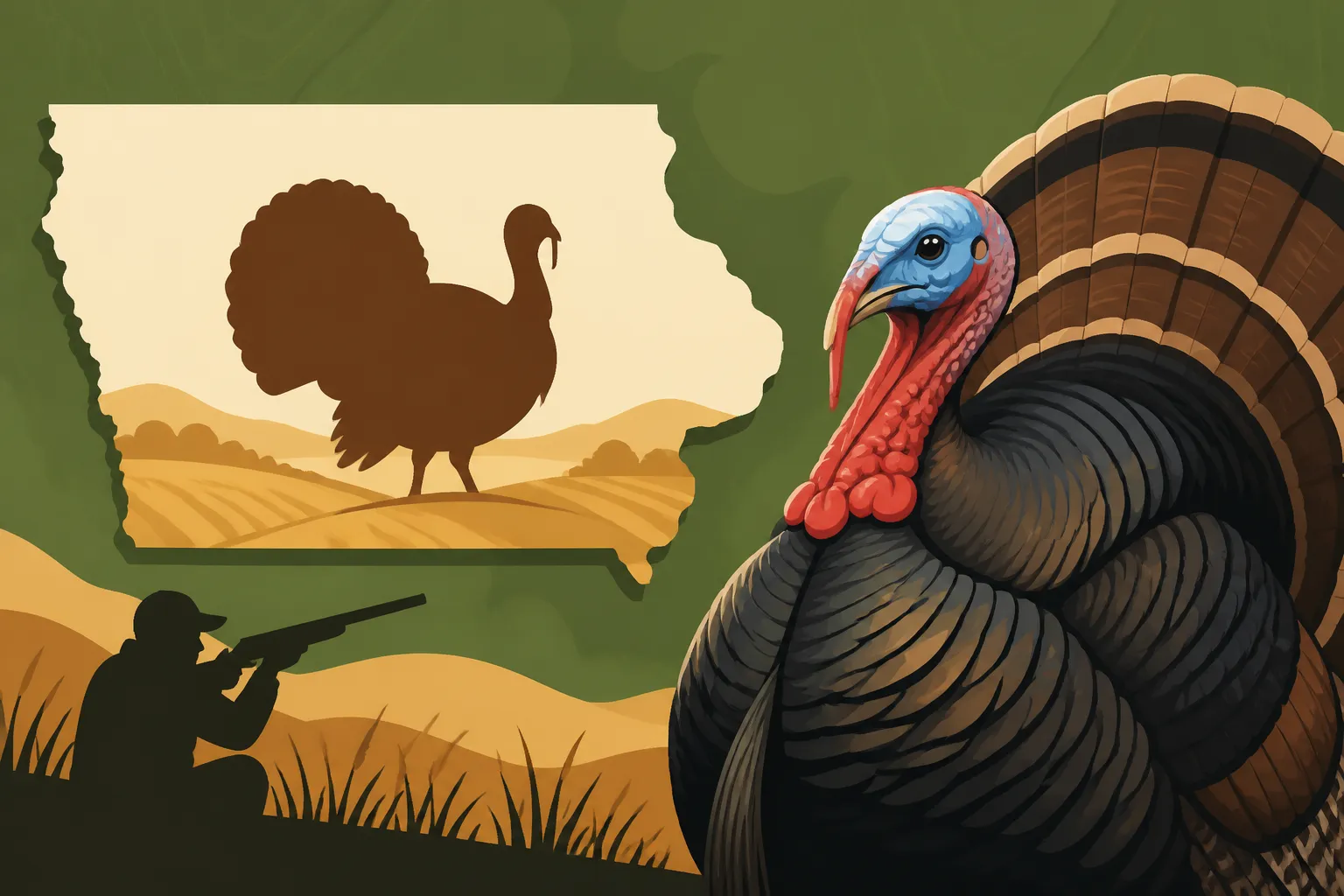
Iowa Turkey Population Estimate
Every Iowa turkey hunter has asked themselves the same question, usually after a quiet morning or a spring season where gobblers seemed few and far between: "How are the turkey populations really doing?" It's easy to base our perception on our personal experiences, but those snapshots don't always reflect the broader picture. This guide is here to shed light on how Iowa's wild turkey population is estimated, what those numbers actually tell us, and how you can use this understanding to become a more informed and successful hunter.
Deciphering Iowa's Wild Turkey Population Estimates
Understanding the state's wild turkey population isn't just a matter of curiosity for serious hunters; it's a vital piece of the puzzle for planning your season, understanding success rates, and even contributing to conservation efforts. When you hear about "Iowa Turkey Population Trends," it's often based on careful data collection that goes far beyond what any single hunter observes in the field. These estimates help the Iowa Department of Natural Resources (DNR) manage the resource responsibly, ensuring healthy turkey populations for generations to come.
Why Population Estimates Matter to Hunters
For us hunters, knowing the general health and trajectory of the turkey population can dramatically influence our approach. If numbers are strong and stable, you might feel more confident in your usual spots or in trying new areas, knowing there's likely a good density of birds. Conversely, if estimates show a dip, it might signal a need to hunt smarter, perhaps focusing on premium habitat or adjusting your calling strategies. It also puts those tough hunts into perspective; sometimes it's not you, it's just a down year for the birds in your area due to environmental factors. It helps manage expectations and appreciate the hard-earned successes even more. For those who like to do their homework before heading afield, tools that compile and present this kind of data, like those found on GoHunt, can be invaluable for gaining an edge.
When you've invested time and money into licenses and gear, you want to know your odds. While no estimate can tell you exactly where the gobblers will be on opening morning, it provides a crucial baseline. It helps you understand if the seemingly empty timber you walked through was an anomaly or part of a larger, regional trend. This knowledge empowers you to adjust, adapt, and refine your tactics rather than just feeling frustrated. After all, hunting is about problem-solving, and good data is the first step toward a solution.
The Nuance Behind the Numbers
It's easy to look at a single number, like a statewide estimate, and think it tells the whole story. But the truth is, these figures are complex and represent an average across a highly varied landscape. Iowa's turkey population isn't a uniform blanket; it's a mosaic of local strongholds, areas with moderate numbers, and regions where turkeys are less common or perhaps just starting to establish a foothold. Factors like habitat quality, winter severity, and spring nesting success can create significant local variations that might not be immediately apparent in a broad state-level report.
Furthermore, estimates are not exact counts. They are projections based on sampling, observations, and statistical models. This means there's always a margin of error, and the real value lies in the trends over time, rather than any single year's specific figure. Are numbers consistently rising, falling, or remaining stable over several seasons? That's the key takeaway. A slight dip one year might be a blip, but several years of decline warrant attention and changes in management. These nuances are what allow hunters to make truly informed decisions, whether it's scouting new areas or simply understanding why their favorite timber has been a bit quieter than usual.
Key Factors Influencing Iowa's Turkey Numbers
Wild turkey populations are incredibly dynamic, influenced by a complex interplay of environmental factors. These aren't just abstract ideas; they directly affect the number of birds you'll encounter when you're out chasing gobblers in Iowa's diverse landscapes. From the quality of the woods you hunt to the severity of the previous winter, every element plays a role in the health and abundance of the flock.
The Critical Role of Poult Survival and Nest Success
Perhaps the single most important factor determining the health of a turkey population is the success of its reproduction, specifically the survival of young turkeys, known as poults. If hens aren't successfully nesting and raising their broods, the population simply can't sustain itself, let alone grow. A successful nest depends on a few things: suitable nesting cover, protection from predators, and favorable weather conditions during incubation and the first few weeks after hatching.
Heavy rains and cold temperatures during late May and early June, when most poults are hatching and are highly vulnerable, can be devastating. Wet, cold poults are susceptible to hypothermia and disease, and their insect food sources can be harder to find. This is why a mild, dry spring often translates into a bumper crop of turkeys come fall and the following spring. Conversely, a severe spring can significantly impact Spring Rain and Poult Survival, leading to fewer birds reaching maturity. This directly affects the number of jakes and adult gobblers available in subsequent seasons.
Habitat and Weather Patterns
You can't talk about wild turkeys without talking about habitat. Eastern turkeys in Iowa thrive in a mix of mature timber, open woodlands, and agricultural fields. These areas provide the necessary components for survival: roosting trees, nesting cover, foraging grounds for insects and seeds, and escape routes from predators. A loss of quality timber, increased fragmentation of wooded areas, or changes in agricultural practices can all impact turkey numbers. For example, if a significant block of timber is cleared, it directly reduces the amount of secure cover available for roosting and breeding.
Beyond habitat, weather plays an undeniable role. Harsh Iowa winters with prolonged deep snow can make it difficult for turkeys to find food, leading to increased mortality, especially among younger or weaker birds. While turkeys are resilient, a winter that saps their energy reserves can mean hens enter the spring breeding season in poorer condition, potentially affecting nest success and the overall health of the Eastern Turkeys in Iowa Timber population. Similarly, extended droughts can impact food sources and water availability, indirectly stressing the birds.
Predation and Disease Pressures
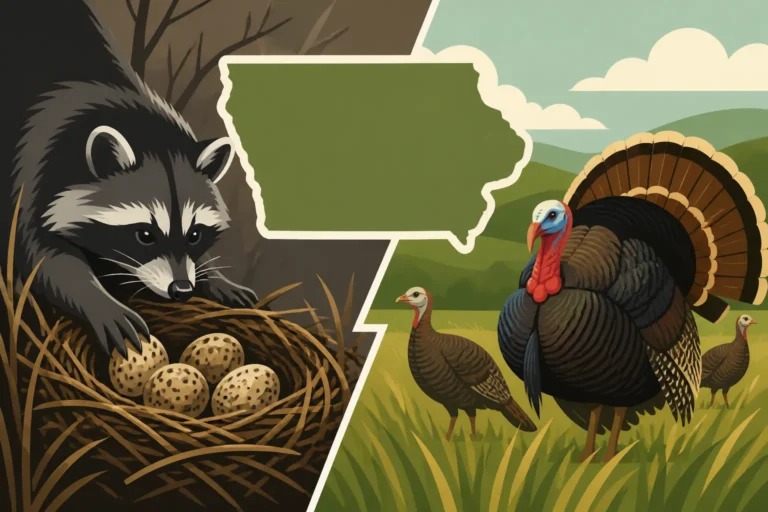
While turkeys are naturally wary, they face constant pressure from predators. Raccoons, opossums, skunks, foxes, and coyotes are all keen nest predators, capable of wiping out entire clutches of eggs. If nest predation is particularly high in an area, even strong hen numbers might not translate to a robust poult crop. After poults hatch, aerial predators like hawks and owls, and ground predators, continue to take a toll. Understanding Nest Predation and Turkey Numbers is crucial for biologists when assessing population dynamics, as it's a natural limiting factor that can fluctuate year to year.
Disease can also strike turkey populations, though perhaps not as dramatically as with deer. Avian pox, blackhead disease, and other ailments can weaken birds and, in severe cases, cause localized die-offs. While not typically a widespread population reducer like EHD in deer, these diseases can add stress to already struggling local flocks. It's an ongoing monitoring effort by wildlife agencies to track these pressures and understand their potential impact on overall turkey health.
How Iowa Biologists Track Turkey Populations
So, how do we actually get these population estimates? It's not like someone is out there counting every single turkey. Instead, the Iowa DNR employs a combination of systematic surveys, hunter reports, and long-term observation to build a comprehensive picture of the state's wild turkey populations. This blend of scientific methodology and on-the-ground observations is essential for effective wildlife management.
Summer Brood Surveys: Eyes on the Ground
One of the most critical tools for estimating turkey populations is the annual Summer Brood Survey. Every July and August, DNR staff, rural mail carriers, and volunteers participate by recording observations of turkey hens and their poults. They tally the number of adult hens seen, the number of poults accompanying them, and the size of the brood. This data is collected across various routes throughout the state, providing a broad sample of reproductive success.
The "poult-to-hen" ratio derived from this survey is a powerful indicator. A high ratio suggests excellent reproductive success and strong recruitment of young birds into the population, which bodes well for future hunting seasons. A low ratio, however, can signal a tough spring for nesting or poult survival and might predict a leaner season a year or two down the road. These surveys are invaluable for understanding Iowa Turkey Population Trends and predicting how many new birds are joining the flock each year. It's a snapshot of the future, taken months in advance.
Hunter Harvest Data and Observations
Another crucial data point comes directly from us, the hunters. After harvesting a turkey, Iowa hunters are required to report their harvest to the DNR. This harvest data provides vital information: how many turkeys were taken, in which county, and during which season. When combined with license sales, this allows biologists to estimate harvest success rates and gauge hunter effort. If harvest numbers are high but success rates are dropping, it might indicate more hunters are pursuing fewer birds, suggesting a declining population.
Beyond mandatory reporting, many hunters voluntarily provide observations through online surveys or platforms like GoHunt. These anecdotal reports, when collected from a large enough sample, can corroborate or provide additional context to formal surveys. For instance, if hunters across several counties report seeing significantly fewer jakes than usual, it can back up low poult-to-hen ratios from the previous summer. This ground-level feedback from the people spending the most time in the turkey woods is a valued part of the overall data picture.
Limitations of Current Estimation Methods
While these methods are effective, it's important to acknowledge their limitations. Brood surveys, for example, rely on visibility and the participation of observers. Turkeys can be notoriously secretive, especially hens with young poults, making them hard to spot. Variations in habitat density, weather during the survey period, or even the time of day observations are made can all introduce variability. It's not an exact count, but rather a robust index that tracks changes over time.
Harvest data also has its own set of considerations. It reflects hunter participation and effort, which can fluctuate independently of the actual turkey population. For instance, a surge in hunter numbers might temporarily inflate harvest totals even if the underlying turkey population is stable or slightly declining. Conversely, a poor spring might discourage hunters, leading to lower reported harvests even if birds are present. Biologists use complex statistical models to account for these variables, but the key is always to look at the data in context and as part of long-term trends, rather than fixating on any single number.
What the Trends Mean for Your Iowa Turkey Hunt
So, you've looked at the reports, absorbed the data, and seen the trends. What does all this mean when you pull on your camo, grab your shotgun, and head out into the Iowa timber or river bottoms? Understanding population dynamics isn't just for biologists; it's practical knowledge that can make you a more adaptable and ultimately, more successful turkey hunter.
Adapting Tactics to Population Fluctuations
If the population estimates are strong and the poult-to-hen ratios have been good for a few years, you might find a more vocal, responsive flock. This could be a season to experiment with more aggressive calling, try Rattling and Grunting During the Iowa Rut for whitetails (if you're thinking deer), or be more mobile, covering ground to find those active gobblers. You might have more options, more opportunities, and potentially less pressure on individual birds if they're abundant.
However, if numbers are down, or if you're hunting an area known for lower turkey densities, a more conservative approach might be in order. This could mean calling less frequently, setting up in known travel corridors or feeding areas, or being extra patient. Understanding Turkey Flock Behaviour in Winter can give you clues about where birds might congregate as spring approaches, helping you narrow down your search. Instead of running and gunning, you might focus on stealth and observation, trying to roost birds the night before or setting up quietly in a high-traffic area.
Focusing on Productive Areas
One of the most significant takeaways from population estimates and surveys is identifying "Where Iowa Turkeys Are Most Common." While statewide numbers give a general idea, deeper dives often reveal regional hotspots where habitat, weather, and management align to create thriving turkey populations. For instance, certain counties in southern Iowa might consistently show higher densities due to ample timber and less severe winters, while some heavily agricultural northern counties might have sparser, more localized flocks.
By combining broad population data with detailed local scouting – and perhaps using mapping tools from GoHunt to identify key habitat features – you can prioritize your hunting efforts. Instead of spreading yourself thin across vast tracts of land, you can focus on areas with a higher likelihood of encountering birds. This doesn't guarantee success, but it certainly tips the odds in your favor. It also means you might adjust your travel plans, opting to drive an extra hour to a county known for robust populations rather than hunting a closer, less productive area.
Contributing to Future Data
Remember, many of these estimates rely on hunter input. By diligently reporting your harvest and participating in voluntary surveys, you become an active participant in wildlife management. Every piece of data helps biologists refine their models and make more accurate assessments. If you see something unusual – an abundance of jakes or a noticeable absence of birds in an area that was once productive – sharing that information, even informally, can be valuable.
Your observations from the field, whether it's seeing Roosting Turkeys on an Iowa Evening or successfully Calling a Henned-Up Iowa Gobbler, contribute to the collective knowledge base. It's a way to give back to the resource that provides us with so many memorable experiences. Being an informed hunter means not just consuming data but contributing to it, ensuring that future generations have the same, if not better, opportunities to chase Iowa's incredible wild turkeys.
Here's a quick look at some key factors influencing Iowa's turkey population:
| Factor | Impact on Turkey Population |
|---|---|
| Poult-to-Hen Ratio | High: Population increase |
| Low: Population decrease | |
| Spring Weather | Mild/Dry: High poult survival |
| Cold/Wet: Low poult survival | |
| Winter Severity | Mild: High overwinter survival |
| Harsh: Increased winter mortality | |
| Habitat Quality | Good: High carrying capacity |
| Poor: Limited population growth | |
| Predation | Low: High nest/poult survival |
| High: Reduced reproductive success | |
| Disease Outbreaks | Localized impact, can stress birds |
| Food Availability | Ample: Healthy birds, good reproduction |
| Scarce: Stressed birds, lower survival |
This table provides a simplified overview, but it highlights the primary drivers of turkey population changes in Iowa. Keep these in mind as you plan your hunts and observe the birds in the field.
Disclaimer
This article is for general informational purposes only and does not constitute professional advice. Laws, prices and regulations vary by location and change over time. Consult a qualified professional for guidance on your specific situation.