Blocking a Field End for Roosters
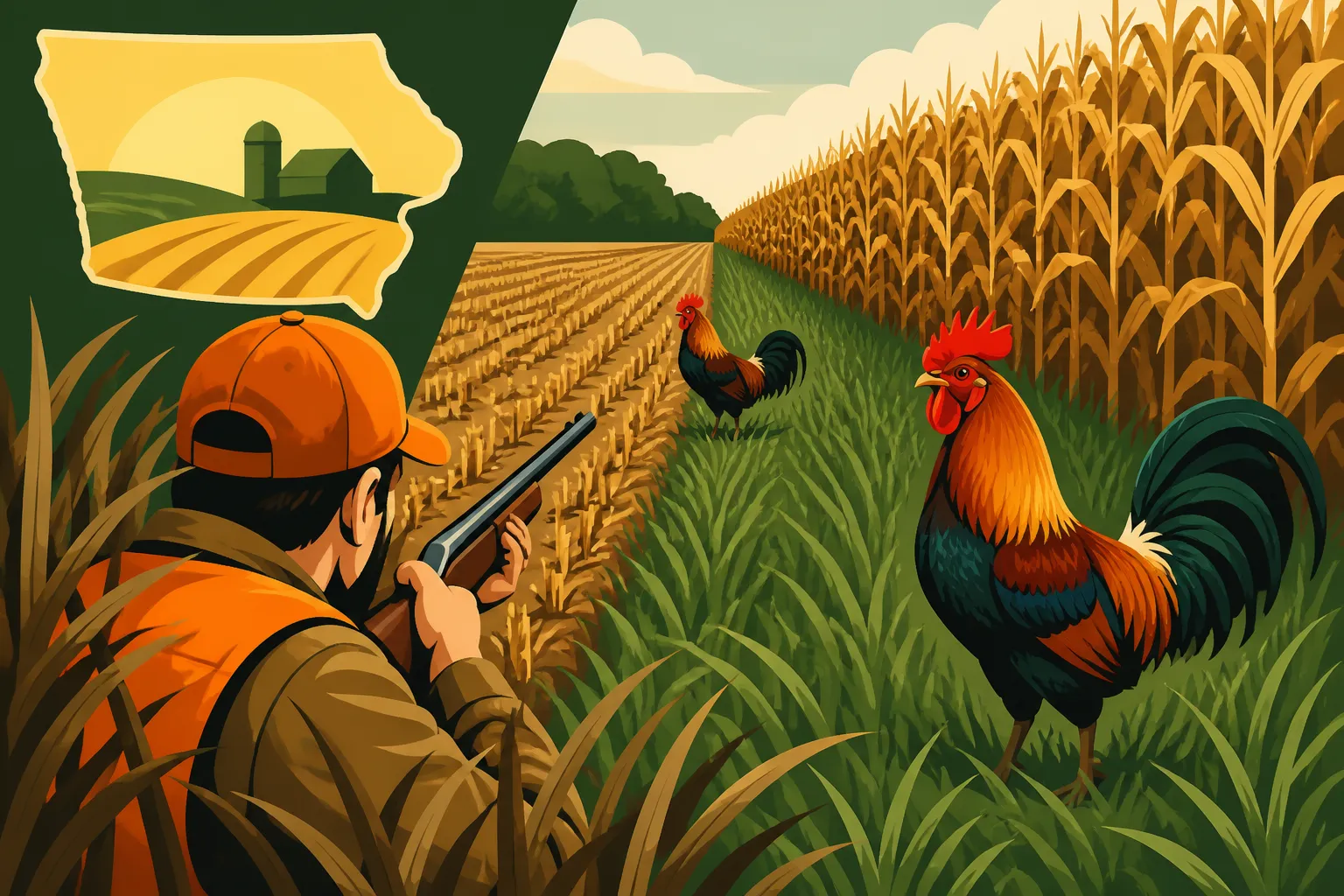
There's nothing quite as frustrating as seeing a big Iowa rooster burst out of the far end of a field, well out of shotgun range, just as you and your buddies are getting within striking distance. Or worse, watching them simply melt away through a ditch line without ever flushing, leaving you scratching your head. This common scenario for pheasant hunters highlights the need for a strategic approach, and one of the most effective ways to turn those frustrating misses into successful flushes is by blocking a field end for roosters. This guide will walk you through how to properly set up a block and drive a field to maximize your chances of putting those wily birds in the bag.
Understanding Rooster Movement and Escape Routes
Pheasants are brilliant at self-preservation, and a mature rooster's first instinct isn't to fly when pressured; it's to run. They'll use every bit of available cover, from tangled multiflora rose to dense switchgrass, to escape danger on foot. Understanding this behavior is absolutely crucial for successful field-end blocking.
Why Pheasants Prefer Running Over Flying
Imagine being a pheasant. You're a ground-dwelling bird, and flying takes a lot of energy. It exposes you to aerial predators and makes you a visible target for hunters. Running, on the other hand, allows you to stay hidden in the thick cover you already inhabit. Roosters, especially those that have seen a few hunting seasons, are masters of this ground game. They'll push through heavy cover, often moving along natural travel corridors like drainage ditches, fencerows, or field edges, hoping to simply outpace the pressure. They're often trying to reach thicker, safer cover like a timber edge or a brushy creek bottom. This tendency is why just walking through a wide-open field often results in birds flushing far ahead or simply disappearing.
Identifying Key Escape Routes and Holding Cover
Before you even think about setting up a block, you need to scout the field, either physically or using mapping tools. Look for the "escape routes" where pheasants are most likely to run out. This could be a specific corner where a picked cornfield meets a dense CRP field, a thick ditch that runs along one side, a brushy creek bottom, or even just a particularly thick patch of standing beans that hasn't been harvested yet. Think like a rooster: Where would you go to avoid detection and slip away quietly?
For instance, if you're hunting a long, narrow picked cornfield, the birds are likely to run parallel to the rows, often hugging the edges where there might be some residual weeds or brush. If that field dead-ends into a large block of timber or a thick grass buffer, that's where they'll pile up. Using a mapping application like GoHunt can be incredibly helpful here. You can zoom in on aerial imagery to identify these pinch points, fencerows, and areas of dense cover that act as natural funnels for running birds. Understanding these routes is the first step in effective blocking, much like understanding Reading an Iowa Timber Draw for Deer Sign helps deer hunters predict movement.
Reading the Field Edge and Terrain
Not all field ends are created equal. Some might have a clear, distinct edge, while others might gradually thin out into thinner cover or an open road. Your blocking strategy needs to adapt to the terrain. A sharp, defined edge like a timber line or a deep creek will funnel birds much more predictably than a gentle slope into open pasture. Pay attention to how the wind is blowing, too. Pheasants, like many game birds, often prefer to run and flush into the wind. If the wind is blowing down the length of the field, towards your blockers, the birds might be even more inclined to run. Conversely, if it's blowing from the blockers towards the drivers, the birds might hold tighter or try to circle back around the drivers. This dynamic is a key consideration when you're Working Pheasant Cover Without a Dog and trying to predict where birds will go.
Setting Up Your Blockers Effectively
Once you understand how pheasants move, the next step is to position your blockers to intercept those running birds. This isn't just about standing at the end of the field; it's about strategic placement, concealment, and communication.
Determining the Ideal Number of Blockers
The number of blockers you need depends heavily on the size and shape of the field, as well as the number of hunters in your group. For most standard Iowa crop fields that are relatively narrow, two blockers are usually sufficient – one positioned at each corner of the field's end. This creates a natural "gate" that the birds are pushed towards.
If you're dealing with a very wide field, or if the cover at the end is particularly sprawling and dense, you might consider three or even four blockers. A third blocker can be placed centrally, slightly behind the two corner blockers, to catch any birds that might try to sneak through the middle. For a larger group, you might even have a fourth "roamer" who can move to intercept birds that try to break out early along a side edge. Remember, the goal isn't to cover every inch of ground, but to cover the most likely escape points. More isn't always better if it compromises safety or spreads your group too thin for effective communication.
Strategic Positioning for Interception
Blockers should position themselves just inside the field edge or at the very end, covering the most likely exit points. The key is to be concealed but also have a clear line of sight and shooting lanes into the field. Avoid standing in wide-open spaces where you'll be easily silhouetted. Use natural cover like tall grass, brush piles, fencerows, or even the remnants of standing crops.
Consider the angle of the field. If it's a typical rectangular field, you'll want to cover the corners. If it's more irregular, identify the "point of no return" for running birds. Blockers should aim to be about 20-40 yards inside the effective range of a shotgun from the field's absolute end. This gives them space to let birds work in and make clean shots. It’s a lot like choosing Best Stand Locations in Rolling Timber for deer – you’re thinking about the path of least resistance for the animal and positioning yourself accordingly.
The Importance of Concealment and Stillness
Roosters have excellent eyesight. If your blockers are standing out in the open, waving their arms, or constantly shifting around, those smart birds will either flush wild much sooner or find a way to circle around the perceived threat. Concealment is paramount. Wear good camouflage that blends with the late-season Iowa landscape – muted browns, grays, and tans are perfect. Utilize any available cover. If you're on a flat field, even lying down in the tall stubble can make you surprisingly invisible.
Once in position, stillness is key. Minimizing movement reduces your profile and prevents alarming birds prematurely. Only raise your gun when a bird is committed and within range. This disciplined approach is crucial for a successful block. You're essentially creating a subtle trap, not a glaring roadblock. Think of it like Brushing In a Ground Blind – the more you blend, the better your chances. Before the drive starts, each blocker should clearly understand their shooting lane and boundaries to avoid any unsafe situations during the drive.
The Art of the Drive: Pushing Roosters Towards the Block
Once your blockers are in place, the drivers take over. The drive isn't a frantic chase; it's a deliberate, organized push designed to encourage pheasants to run towards your waiting guns.
Pacing the Drive for Optimal Results
The pace of the drive is critical. You don't want to go too fast and push birds ahead of your line before they're ready, causing them to flush wildly. But you also don't want to go too slow and give them ample time to circle back or slip out undetected through the sides. A steady, deliberate walk is usually best. The drivers should maintain an even line across the width of the field, keeping roughly the same distance from each other.
As you near the end of the field, where the blockers are waiting, you can slightly increase the pressure. This encourages birds that have been running to finally flush. For longer fields, consider pausing briefly about halfway through to let the birds settle slightly before resuming the drive. This can sometimes make them hold tighter towards the end. When considering how to pace the drive, it’s worth thinking about Hunting Pressure After Opening Weekend in reverse; instead of dealing with pressured birds, you are applying controlled pressure.
Effective Use of Dogs and Drivers
If you have hunting dogs, they are invaluable for a blocked drive. Well-trained pointers or flushers can find birds that drivers might miss, keeping them moving forward and preventing them from circling back. They also help to kick up birds that are holding tight in heavy cover. The dogs should work slightly ahead of the drivers, systematically covering the ground.
If you're Working Pheasant Cover Without a Dog, drivers need to be extra diligent. Walk in straight lines, kick through clumps of grass, and try to make a reasonable amount of noise to keep birds moving. The more hunters you have as drivers, the wider a front you can cover, and the less likely birds are to slip past. This is where a group effort really shines, much like the camaraderie and planning involved in Blocking and Driving Iowa Grass Strips.
Working the Wind and Sun
Always try to plan your drive so that the drivers are moving into the wind, or at least across it. Pheasants prefer to flush into the wind, which gives them better lift and control. If you're driving into the wind, they're more likely to run ahead of you and hold until they hit the block, then flush into the wind as they feel trapped. If the wind is at your back, birds might flush earlier, turning to face the wind, or simply run faster away from you.
The sun's position can also play a role. If possible, have the sun at your back as drivers, which puts the sun in the eyes of the birds when they flush, giving you a slight advantage. For blockers, having the sun at their back ensures better visibility of incoming birds. While this isn't always feasible, considering these factors can subtly improve your odds during Pheasant Hunting Iowa Grass and Crop Edges.
Safety First: Communication and Spacing
Group pheasant hunting, especially with blocking and driving tactics, requires absolute adherence to safety protocols. Communication and clear understanding of roles are paramount to prevent accidents.
Pre-Determined Signals and Call-Outs
Before anyone steps into the field, establish clear communication signals. This includes verbal calls, whistles, or hand signals. Common signals might include:
- "Bird up!" or "Rooster!" to alert everyone to a flushing bird.
- "Hen!" to indicate a hen pheasant, which is illegal to shoot in Iowa.
- "Forward" or "Hold" to adjust the pace of the drive.
- "Stop" if there's an emergency or someone needs to reload.
Everyone in the group, including drivers and blockers, should know these signals by heart. During the drive, continuously communicate your position, especially if you're working through particularly dense cover where visibility is limited. A good mapping app on your phone, like GoHunt, can also help your group maintain awareness of each other's positions, especially on larger public land tracts that might be unfamiliar, such as those found through Scouting Iowa IHAP Tracts on Foot.
Establishing Clear Shooting Lanes and Zones
This is arguably the most critical safety rule for any group hunt. Before the hunt begins, clearly define everyone's shooting lane. For blockers, this typically means shooting only at birds that flush into the field, or directly away from the block, within a safe arc. Never, under any circumstances, swing on a bird towards another hunter, a road, or any occupied structures.
Drivers should only shoot at birds that flush ahead of the line, away from the blockers. Never shoot at birds that flush behind the driving line or try to swing back over the top of the drivers. If a bird flushes high and fast and is flying directly over other hunters, hold your shot. It's far better to miss a bird than to risk injuring a fellow hunter. A clear understanding of these zones is essential, much like the detailed rules and responsibilities outlined in Party Hunting Rules and Safe Drives.
Hunter Spacing and Situational Awareness
Maintain appropriate spacing between hunters at all times. Drivers should stay roughly equidistant to ensure a consistent push and to avoid inadvertently entering another hunter's safe shooting zone. Blockers should be positioned far enough apart to cover the field end effectively but close enough to hear each other and see the overall picture of the drive.
Constant situational awareness is key. Know where your hunting partners are at all times, even if you can't see them directly. Be aware of any roads, buildings, or livestock nearby. If you encounter unexpected obstacles or changes in terrain, call it out to the group. Never assume a situation is safe without confirming it. By being disciplined and communicating effectively, a blocked field end hunt can be one of the most exciting and productive ways to chase Iowa roosters.
| Role | Primary Responsibility | Key Considerations |
|---|---|---|
| Drivers | Push birds downfield in a controlled, even line. | Maintain pace, use dogs if available, communicate |
| Side Blockers | Cover the corners of the field end. | Concealment, clear shooting lanes, listen for call-outs |
| End Blocker (Optional) | Cover the central area of wide field ends. | Stay back slightly, watch for sneaky birds, safety arc |
| All Hunters | Safety, communication, knowing legal shooting hours. | Blaze orange, identifying hens, responsible shot placement |
Disclaimer
Hunting is an inherently dangerous activity. Always prioritize safety, follow all local and state regulations, and ensure you have proper training and equipment. The information provided here is for educational purposes only and should not replace official safety guidelines or professional instruction.