Party Hunting Rules and Safe Drives
The excitement of Iowa's deer shotgun seasons often brings together groups of hunters, making "party hunting" a time-honored tradition for many. However, the unique rules surrounding how groups can legally harvest and tag deer, combined with the inherent risks of coordinating deer drives, can be a real source of anxiety and confusion for even experienced hunters. This guide is here to walk you through the nuances of Iowa's party hunting regulations and, more importantly, equip you with the knowledge to conduct safe and effective deer drives, ensuring a successful and responsible hunt for everyone involved.
Understanding Iowa's Party Hunting Regulations
Iowa's approach to party hunting is designed to allow groups to work together efficiently while maintaining individual accountability. It's not just about sharing the harvest; it's about understanding the specific legal framework that governs how you and your hunting companions can operate as a team. This can feel a bit complex at first glance, especially if you're used to solo hunting or systems in other states.
The Basics of Iowa's Party Hunting Law
At its core, Iowa's party hunting law allows any member of a hunting party to tag a deer legally taken by any other member of that same party. This is a huge advantage for groups, especially during shotgun seasons where coordinating drives is common. Imagine you're on a drive, pushing a patch of timber, and a deer breaks out in front of your buddy, who makes a clean shot. If he doesn't have an available tag, but you do, you can legally tag that deer for him. This flexibility is what makes Iowa's party hunting so effective for group success.
The key here is that all hunters involved must possess a valid, unfilled deer license for the current season and zone. You can't just have a base hunting license; you need an actual deer tag that you are eligible to fill. The party itself doesn't need to be formally registered, but it implies a shared intent and active participation in the hunt together. This isn't an excuse to just hand out tags to anyone; everyone needs to be actively involved in the hunting effort. For more in-depth knowledge, understanding the specific rules around Iowa Party Hunting and Group Tagging is crucial for every hunter.
Tagging and Reporting Requirements
Once a deer is down and you've decided who is tagging it, the process is pretty straightforward, but critical to get right. The hunter whose tag is being used must immediately notch the date and time of kill on their license. This is non-negotiable and must be done before the carcass is moved or field-dressed. It's a fundamental part of the legality. Then, within 12 hours of harvest and before processing the deer or leaving the state, the deer must be reported to the Iowa Department of Natural Resources (DNR). This can be done online through the Go Outdoors Iowa system or by calling a toll-free number.
The reporting process requires specific information: the county of harvest, the weapon used, and whether the deer was a buck or doe. If it was a buck, you'll need to indicate if it was antlered or antlerless. This data helps the Iowa DNR manage deer populations effectively. It's important to remember that even if another member of your party physically shot the deer, the person whose tag is affixed is responsible for accurately reporting it. Always double-check your information before submitting; errors can lead to issues down the line. It's also worth noting that specific antlerless tags, especially during the Iowa January Antlerless Hunts, often have different reporting codes or requirements depending on the county and season segment, so always review your tag carefully.
Common Misconceptions and Legal Pitfalls
There are a few areas where hunters often get confused, and these can lead to serious legal problems. One common misconception is that a hunter can "loan" their tag to someone who isn't actively hunting with the party. This is absolutely not the case. The individual whose tag is used must be a legitimate member of the hunting party at the time of the harvest. They don't have to be the one who pulled the trigger, but they must be present and participating in the hunt.
Another pitfall involves tags for specific seasons or zones. If you have an antlerless-only tag for a particular county, you cannot use it to tag an antlered buck shot by your friend, even if you are in a party. Similarly, if you have an archery tag, it cannot be used during a shotgun season, regardless of party hunting rules. Each tag is specific to the species, sex (if specified), season, and zone printed on it. Always make sure the tag you're using matches the deer and the circumstances of the harvest. Finally, be mindful of Iowa Party Hunting Rules regarding the number of deer taken. While multiple people can tag, the total number of deer harvested cannot exceed the total number of valid tags possessed by the party members present and actively participating. Don't let enthusiasm lead to over-harvesting or illegal tagging; clarity and adherence to the rules keep everyone safe and legal.
The Art of a Safe Deer Drive
Deer drives, while incredibly effective for moving deer in specific areas, inherently involve more moving parts and potential hazards than a stationary stand hunt. Executing them safely and effectively is truly an art form that requires meticulous planning, clear communication, and unwavering discipline from every participant. Without these elements, what should be an exciting hunt can quickly become dangerous.
Planning Your Drive: Reconnaissance and Communication
Before you ever step foot into the woods for a drive, the groundwork needs to be laid. This starts with thorough reconnaissance. You need to identify the bedding areas, escape routes, and potential travel corridors deer are using. This might mean walking the terrain, looking for fresh sign, and using mapping tools like GoHunt to mark key features. Knowing the terrain inside and out helps you anticipate where deer will go and, crucially, where your hunters should be positioned for safe shots. Consider how deer respond to human pressure and how Hunting Pressure Patterns on Iowa Public Land might affect their movement during a drive.
Communication is paramount. Before the drive begins, gather everyone and clearly outline the plan. This includes:
- Designated Drivers and Standers: Who is pushing, and who is waiting?
- Start and End Points: Clearly define where the drive begins and where it's expected to conclude.
- Direction of Push: Ensure everyone knows the exact vector of the drive.
- Boundaries: Identify natural or man-made boundaries that will keep deer within the drive's perimeter and hunters within their safe zones.
- Safety Briefing: Cover all safety protocols, especially firearm handling, target identification, and "zones of fire" (which we'll cover next).
- Emergency Plan: What happens if someone gets lost or injured? How do you signal an emergency stop?
- Check-in Procedure: How will everyone confirm they are out of the woods safely?
Using two-way radios can be invaluable for real-time updates and safety checks, especially in dense timber or larger areas. Ensure everyone understands radio etiquette and the meanings of specific commands or signals.
Identifying Roles: Drivers, Standers, and Safety
Every successful deer drive relies on clearly defined roles, and understanding these roles is key to both effectiveness and safety. There are typically two main groups: drivers and standers.
- Drivers: These individuals are responsible for moving through a piece of cover, pushing deer towards the standers. Their role isn't necessarily to shoot deer, although opportunities can arise. Their primary objective is to make noise, move deliberately, and keep the deer moving in the intended direction. Drivers should maintain a safe line, ensuring they always know where other drivers are and where standers are positioned. They must also be acutely aware of their surroundings and never take a shot towards another hunter. For smaller drives, say Small Timber Drives With Two Hunters, the roles can blur a bit, but safety protocols remain the same.
- Standers: These hunters are strategically positioned at the anticipated escape routes or pinch points where deer are expected to emerge. Their job is to remain still, quiet, and vigilant, waiting for deer to present themselves for a safe, ethical shot. Standers have a fixed position, which makes their zone of fire easier to define and communicate. They must know exactly where the drivers are coming from and where other standers are located.
- Safety Coordinator/Spotter (Optional but Recommended): For larger or more complex drives, having one person designated as a safety coordinator can be beneficial. This individual might oversee the overall plan, manage radio communications, and ensure everyone is adhering to safety guidelines. They often position themselves in a location with good visibility or a central point for communication.
Regardless of your role, everyone is a safety officer. If you see something unsafe, speak up immediately. Don't assume someone else will.
Establishing Clear Boundaries and Zones of Fire
This is arguably the most critical aspect of drive safety. A "zone of fire" is the specific area where a hunter can safely take a shot without endangering other members of the party, non-hunters, or property.
- Define Boundaries: Before the drive, use physical landmarks (creeks, roads, property lines, distinct tree lines) to clearly mark the perimeter of the driving area and the stander positions. Use mapping apps like GoHunt to draw these boundaries and share them with the entire group. This minimizes confusion and ensures everyone stays within the planned operational area.
- Communicate Zones of Fire: Each stander must know their safe shooting lanes. This means understanding exactly where other standers are, where the drivers are pushing from, and what's beyond their target. A common rule is "know your target and what's beyond it." In a drive, this takes on heightened importance. Never shoot at a deer running directly at or parallel to another hunter.
- No Shots into the Drive: Drivers should generally avoid shooting into the area where other drivers are, or towards the standers. Shots should always be taken in a direction that is known to be clear.
- Elevated Positions: Standers often benefit from elevated positions, like treestands, which provide a safer downward angle for shots, reducing the risk of projectiles traveling far and wide. However, whether using stands or Ground Blinds in Iowa Farm Country, the principle of clear shooting lanes remains paramount.
- "Safe Zones" Concept: During the planning phase, explicitly identify Safe Zones in a Deer Drive—areas where no shots should ever be directed, either because another hunter is there, or because it's too close to a road, building, or property line. These are non-negotiable areas that everyone must respect.
A table outlining typical roles and their primary safety considerations might look something like this:
| Role | Primary Objective | Key Safety Considerations | Recommended Gear |
|---|---|---|---|
| Driver | Move deer towards standers; clear cover | Know location of all hunters; never shoot towards unknown; maintain formation; identify targets clearly. | Blaze orange, comfortable boots, water, two-way radio. |
| Stander | Harvest deer safely at designated exit points | Establish clear zone of fire; identify drivers' approach; never swing on game towards other hunters; know backstop. | Blaze orange, firearm/bow, binoculars, two-way radio, rangefinder. |
| Coordinator | Oversee plan, communication, safety checks | Maintain overview of all hunter positions; manage radio traffic; enforce safety rules; have emergency plan. | GoHunt app, maps, first-aid kit, two-way radio, whistle. |
By adhering to these principles, your party can significantly reduce the risks associated with deer drives, making them a productive and enjoyable way to hunt Iowa's whitetails.
Essential Safety Protocols for Every Drive
Safety isn't just a suggestion when you're coordinating deer drives; it's the absolute foundation upon which any successful and ethical hunt is built. Ignoring basic safety protocols can lead to tragic consequences, undermining the very essence of hunting. Let's dig into the critical elements that must be in place for every single drive.
The Critical Role of Blaze Orange and Communication Devices
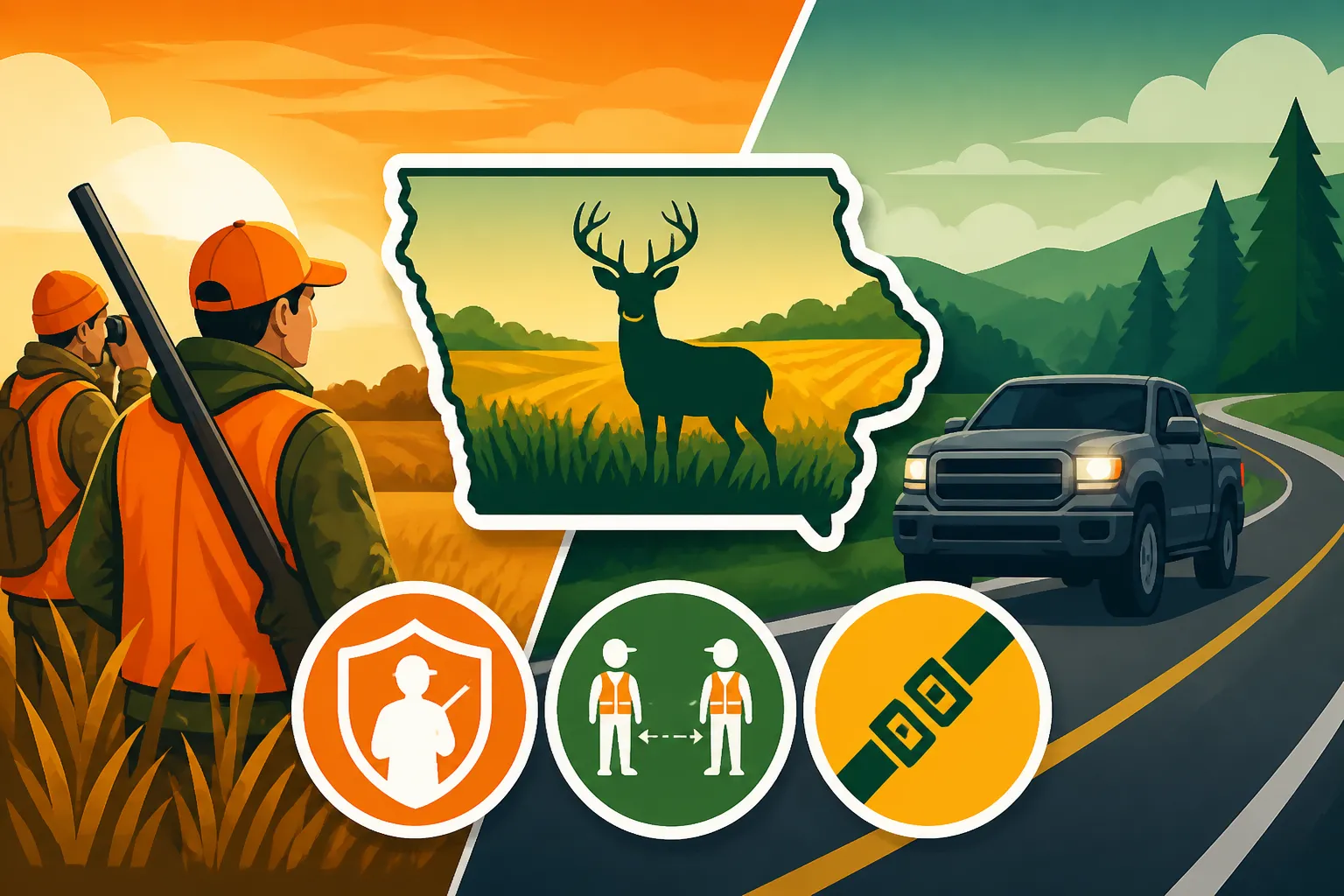
Wearing highly visible blaze orange isn't just an Iowa DNR rule during gun seasons; it's a lifeline. During deer drives, when hunters are moving through cover and adrenaline is high, positive identification of other human beings is paramount. Every single participant, whether a driver or a stander, must wear sufficient blaze orange, visible from all directions. This means not just a hat, but a vest or outer garment that meets the state's requirements. Reviewing Blaze Orange Rules During Iowa Gun Season before your hunt is a simple, non-negotiable step. There's no such thing as too much blaze orange in a deer drive scenario. The more visible you are, the safer everyone is.
Beyond visual identification, reliable communication is the next most vital safety tool. Two-way radios are almost a necessity for most drives. They allow drivers to relay their progress, standers to confirm they are in position, and everyone to call out potential hazards or stop the drive instantly if needed. Before the hunt, ensure all radios are fully charged, on the same channel, and tested for range in the specific terrain you'll be hunting. Establish clear codes or phrases for specific situations, like "STOP, STOP, STOP" for an immediate halt, or "DEER MOVEMENT" to alert standers. Relying on shouting or hand signals alone is insufficient, especially in dense timber or across longer distances.
Shot Placement and Target Identification
This is where the rubber meets the road, or more accurately, where the slug meets the whitetail. In the fast-paced, often chaotic environment of a deer drive, adrenaline can cloud judgment. It is absolutely crucial that every hunter maintains discipline regarding shot placement and, even more critically, positive target identification.
- Positive ID, Every Time: You must be 100% certain you are shooting at a deer, not another hunter, a domestic animal, or a silhouette that might be a deer. In heavy cover, this means waiting for a clear, unobstructed view. If in doubt, do not shoot. It's better to let a deer walk than to take a risky shot. Remember that the drivers are moving through, so a shot at a deer that seems clear might have a person behind it.
- Ethical Shot Angles: Aim for the vital organs (heart/lungs). This typically means a broadside or quartering-away shot. Never take a "Texas heart shot" or a shot directly at the rear of a deer, as these are often unethical and result in wounded animals. Knowing Shot Placement on a Whitetail at Twenty Yards and extending that knowledge to various ranges is critical.
- Understanding Backstops: Every shot needs a safe backstop. This is the terrain or natural barrier behind your target that will safely stop your projectile. Never shoot over a ridge where you don't know what's on the other side. Never shoot towards roads, homes, or outbuildings. In flat, open fields, be acutely aware of how far your slug or bullet can travel.
- Practice Makes Perfect: Regularly sighting in your shotgun or straight-wall rifle, and practicing shooting from various positions you might encounter in the field, will build confidence and accuracy. Don't wait until opening day to ensure your firearm is ready. A session Sighting In Before Shotgun Season is time well spent for safety and success.
Post-Drive Procedures and Game Recovery
The hunt isn't over when the shot is fired. Proper post-drive procedures are just as important for safety and successful recovery.
- Confirm Everyone is Accounted For: Once the drive is complete, drivers and standers should confirm their positions and that everyone is safe. Use radios for a roll call. No one moves from their stander position until confirmation is given that the drive is clear and safe.
- Waiting Period: If a deer is shot, especially if it doesn't drop immediately, give it time. This allows the animal to lay down and expire, reducing the chance of jumping it and having a long, difficult track. The recommended waiting time can vary, but an hour is a good general guideline, especially for marginal hits.
- Blood Trailing and Recovery: When you do take up the trail, do so methodically. Look for blood, broken branches, and tracks. Mark the last spot you found blood if the trail gets sparse. If the trail is completely lost, expand your search grid. Utilize the whole party to help with the recovery. If you're struggling, consider retrieving a tracking dog, which is legal in Iowa under certain conditions. Recovering a deer in challenging terrain like Blood Trailing in CRP and Multiflora Rose or dealing with a deer in an obstacle like Getting a Deer Out of an Iowa Creek Bottom requires patience and often a team effort. Always tag the deer immediately upon recovery, as per Iowa law.
- Field Dressing and Transport: Once recovered and tagged, field dress the deer efficiently to begin the cooling process, especially in warmer temperatures. Plan how you'll get the deer out of the woods. Whether you're dragging it, using a deer cart, or quartering it in the field, ensure you have the necessary tools and manpower. Remember that some areas might have restrictions on vehicles, so plan your Access Routes That Do Not Bump Deer for recovery as well.
Navigating Different Terrains: Tactics for Success and Safety
Iowa's diverse landscape offers a variety of challenges and opportunities for deer drives. From tight timber blocks to expansive crop fields, each terrain type demands a tailored approach to maximize success while prioritizing safety. Generic drive plans simply won't cut it; you need to adapt to the specific features of the land.
Small Timber and Brushy Draws
Small timber blocks and brushy draws are often overlooked but can hold a surprising number of deer, especially mature bucks looking for thick cover. These areas are ideal for smaller parties and provide excellent opportunities for drivers to push deer out.
- Tactics: For these smaller areas, you often don't need a huge group. Two to four hunters can be very effective. Have one or two drivers make a slow, methodical push through the thickest cover, while one or two standers are positioned at the pinch points or field edges where the deer are most likely to exit. The key is to move slowly enough that deer get up and sneak out rather than busting past the drivers. Focus on pushing into the wind if possible, as deer often prefer to escape downwind to detect danger. These areas are perfectly suited for Shotgun Season Drives in Small Timber.
- Safety: The dense cover in these areas limits visibility, making blaze orange and constant communication even more critical. Drivers should maintain voice contact or short radio checks to confirm locations. Standers must establish extremely clear shooting lanes and be absolutely sure of their target and what's beyond it, as a deer might appear suddenly and close. Never shoot blindly into heavy brush. Because of the limited visibility, shots will often be at close range, requiring quick, decisive action.
- Real-life Scenario: Imagine a party of three hunting a 10-acre patch of cedar thicket bordered by a cornfield on one side and a creek on the other. Two hunters slowly walk the thicket, making noise and sweeping outwards, while the third stands silently at the narrow neck of the thicket where it meets the corn, anticipating a deer skirting the edge. Radios keep everyone aware of the drivers' progress.
Large Woodlots and River Bottoms
Large woodlots and sprawling river bottoms are classic Iowa deer habitat, offering extensive cover and complex terrain. These areas can hold large numbers of deer, but their sheer size makes effective drives more challenging and requires more strategic planning.
- Tactics: You'll likely need a larger group for these areas to cover the ground effectively. Instead of one continuous drive, consider breaking it into multiple, smaller, overlapping drives. Or, conduct a longer, slower drive with more drivers spaced out to cover the width of the timber. Utilize natural funnels created by the terrain, such as narrow timber points between fields or bends in a river. Understanding Wind and Thermals in River Breaks is crucial here; deer will often use elevation and air currents to their advantage. Standers should be placed at major crossings, saddles, or where the timber narrows significantly. Don't forget that deer often try to loop back behind drivers, so consider placing a "back-blocker" or two.
- Safety: The increased scale and complexity mean communication becomes even more critical. GPS-enabled mapping apps like GoHunt are invaluable for tracking hunter positions and ensuring everyone stays within their designated areas. Mark all stander positions on maps and share them beforehand. Due to longer sightlines in some parts of these areas, standers must be aware of maximum effective range for their chosen weapon and not take shots that might endanger hunters far off. Always confirm that all drivers have cleared the area before standers begin to move or enter the drive zone.
- Real-life Scenario: A party of six is hunting a half-mile stretch of river timber. Three drivers walk slowly side-by-side along the river, while two standers are positioned at a known deer crossing where a small ditch empties into the river. A sixth hunter is positioned further down as a "long-stop." All communicate via radio, ensuring a steady, safe push. They've reviewed the map on GoHunt to mark everyone's exact spot.
Standing Crops and Field Edges
Hunting standing corn or bean fields late in the season, or pushing deer out of cover along field edges, presents its own unique set of considerations. Deer often use these agricultural landscapes for both food and incredibly dense bedding cover.
- Tactics: Standing corn can be a fortress for deer, making drives incredibly difficult. For smaller sections, a line of drivers can push through. However, for large fields, it's often more effective to position standers at key exit points: inside corners, ditches, or narrow timber lines connected to the field. Deer will often follow rows or natural breaks in the field. When fields are picked, deer will hug the edges of remaining cover. Consider how Standing Corn and Bean Field Deer Patterns influence where deer will move when pressured. If driving a large cornfield, hunters might need to stay within earshot of each other to maintain the line.
- Safety: The lack of visibility in standing corn is the biggest safety concern. This makes blaze orange absolutely paramount, and drivers must maintain very close proximity and constant communication. Shots will almost certainly be at very close range as deer suddenly burst out of the rows. Standers need to be acutely aware of what's behind the deer as it exits the field – often another field or a road. Because of the noise, drivers should avoid yelling unless it's an emergency; controlled movement and intentional sounds are often more effective.
- Real-life Scenario: A party of five is targeting a section of standing corn where a timber finger pushes into it. Three drivers walk slowly through the corn, spread out, staying in constant vocal contact. Two standers are positioned at the end of the timber finger and an adjacent ditch crossing, anticipating deer to run out. Everyone is wearing plenty of blaze orange, and they've practiced their communication signals for when a deer is spotted.
Ethical Considerations and Respectful Hunting
Beyond the regulations and safety protocols, there's an overarching responsibility that every hunter carries: to uphold ethical standards and demonstrate respect for the game, the land, and the public. Party hunting and deer drives, being highly visible and often energetic activities, carry an even greater need for hunters to conduct themselves with the utmost integrity.
Minimizing Impact and Maintaining Sportsmanship
Hunting is a privilege, and preserving that privilege means ensuring our actions don't leave a negative mark on the environment or generate public disapproval.
- Leave No Trace: When conducting drives, especially on public lands or walk-in access areas, it's crucial to minimize your footprint. This means packing out everything you pack in – spent shell casings, snack wrappers, and any other trash. If you set up temporary blinds or markers, remove them completely when you leave. Remember the ethos of Leaving No Trace on Iowa Walk-In Ground.
- Respect Property and Boundaries: Always know where property lines are and strictly adhere to them. Never trespass, even accidentally. If a deer runs onto private property where you don't have permission, you must seek permission from the landowner before attempting recovery. This is not only legal but a fundamental show of respect for landowners who might already be wary of hunters.
- Fair Chase: Ensure that your drive tactics are consistent with fair chase principles. This means not over-pressuring animals to the point of exhaustion or taking unethical shots simply because the opportunity arose in the heat of the moment. The goal is a clean harvest, not just any harvest.
- Sportsmanlike Conduct: Treat other hunters with respect, whether they are part of your party or not. Avoid excessive noise or disruptive behavior that might interfere with their hunt. Acknowledge and appreciate the efforts of everyone in your party, especially those acting as drivers who might not get a shot opportunity themselves.
Recovering Wounded Game Responsibly
Nothing tarnishes the image of hunting more than wounded game left unrecovered. A responsible hunter commits to every reasonable effort to find an animal they've shot. This is an ethical imperative that transcends legal requirements.
- Thorough Tracking: As mentioned before, if a deer doesn't drop on the spot, assume it's wounded and begin a methodical tracking effort. This might mean hours of searching, crawling on hands and knees, and enlisting the help of your entire party. Don't give up easily.
- Utilize Resources: Don't be afraid to call in additional help. If permitted, a tracking dog can be an invaluable asset. Use mapping apps like GoHunt to mark the last known blood trail and expand your search pattern. Return to the last known spot with fresh eyes if the trail goes cold.
- Honest Assessment: Be honest about your shot. If you suspect a marginal hit, dedicate even more time and effort to recovery. It's an unfortunate part of hunting, but owning up to it and working diligently to recover the animal is a mark of true sportsmanship.
- Plan for Difficult Recovery: Sometimes, a deer will expire in a truly difficult spot, like a deep ravine, dense briar patch, or a creek bottom. Have a plan for how you will extract it safely. Quartering a deer in the field might be necessary to facilitate removal, rather than leaving it.
Public Perception and the Hunter's Image
Every time you step into the field, you are an ambassador for hunting. Your actions, especially during highly visible activities like deer drives, directly influence how the non-hunting public perceives our sport.
- Positive Representation: Present a positive image. Dress appropriately, avoid excessive noise, and handle harvested game respectfully. Don't drag a deer through town where it might upset non-hunters, and ensure your vehicle is clean and presentable.
- Educate and Inform: If approached by curious non-hunters, be polite and willing to explain what you're doing, why you do it, and the conservation benefits of hunting. Dispelling myths and fostering understanding can go a long way.
- Adherence to Laws: Strictly following all hunting regulations, from tagging to trespass laws, reinforces the idea that hunters are responsible and law-abiding citizens. Violations reflect poorly on the entire hunting community.
- Focus on Conservation: Emphasize that hunting is a vital tool for wildlife management and conservation. Explain how license fees contribute directly to wildlife habitat and research. This helps shift the narrative from hunting as merely a recreational activity to a necessary component of ecological balance, especially with how the Iowa DNR handles Iowa Deer Herd Management and Harvest.
By consciously incorporating these ethical considerations into every aspect of your party hunting and deer drives, you not only enhance your own hunting experience but also contribute positively to the future of hunting in Iowa and beyond.
Disclaimer
The information provided in this guide is for general informational purposes only and does not constitute legal advice. Hunting regulations in Iowa are subject to change, and it is the responsibility of every hunter to consult the most current Iowa DNR hunting regulations booklet or website before engaging in any hunting activity. Always prioritize safety and ethical conduct in the field.