Hungarian Partridge in Northern Iowa
Hunting Hungarian partridge in Northern Iowa can feel like chasing ghosts sometimes, can't it? You spend hours walking cover, your legs are tired, your dog is beat, and you might only jump a handful of birds, if any. These little dynamos are famously tough to pin down, often disappearing into thin air right when you think you've got them. This guide aims to pull back the curtain on these elusive birds, helping you understand their habits, preferred Northern Iowa habitats, and most effective hunting strategies to turn those frustrating outings into successful ones.
Understanding the Elusive Hungarian Partridge
The Hungarian partridge, often affectionately called "Huns" by upland hunters, is a beautiful and challenging game bird. For those of us used to the more predictable flushes of pheasants, Huns can be a real curveball. They're smaller, faster, and possess an uncanny ability to run far ahead or flush at extreme ranges, making them a true test of a hunter's skill and patience.
Identifying a Hun in the Field
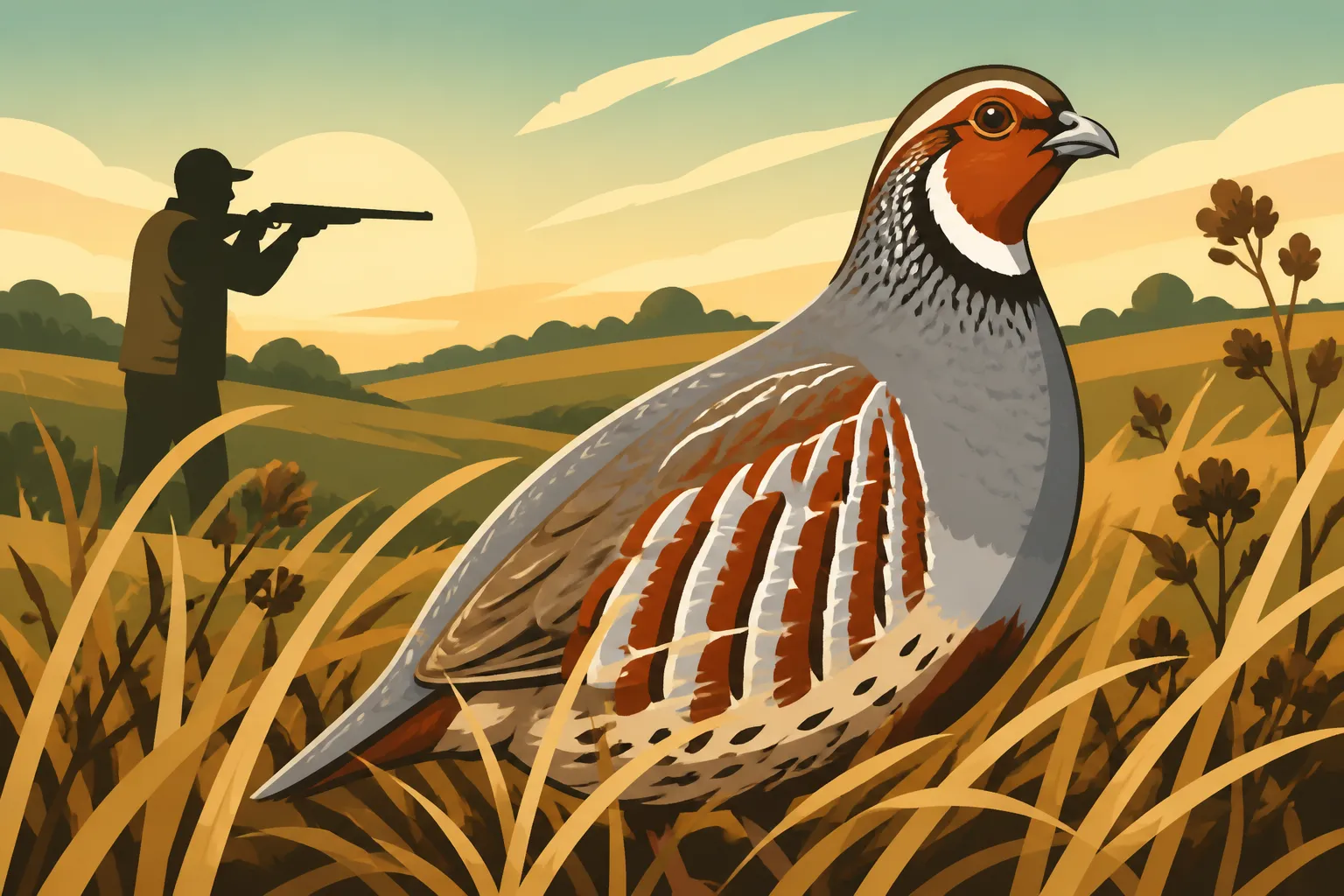
When you're out in the field, especially in Iowa where they share habitat with pheasants, it's crucial to know what you're looking for. Hungarian partridge are compact, chicken-like birds, typically weighing less than a pound. They boast a distinctive rusty-red face and throat, grey barring on their flanks, and a prominent chestnut-colored horseshoe mark on their breast – though this mark is often less pronounced in hens. Their short, rusty-colored tail is very noticeable in flight, often providing the key identification marker as they rocket away from you. Unlike pheasants that typically flush singly or in small groups with a loud cackle, Huns usually burst out as an entire covey, flying with rapid wingbeats in a tight, aerodynamic formation. The sound is less a cackle and more a whirring explosion.
Their coloration provides excellent camouflage against the corn stubble, grass, and bare earth of Northern Iowa's agricultural landscape. This is why a good bird dog is almost indispensable when hunting Huns; their natural camou makes them incredibly hard to spot on the ground, even when you know they're there. They'll often hold incredibly tight, relying on their camouflage, only flushing when you're practically stepping on them, or, frustratingly, running out the far side of a field.
Typical Covey Behavior and Flight Patterns
Hungarian partridge are incredibly social birds, almost always found in coveys outside of nesting season. These coveys can range from a handful of birds to a dozen or more. Their primary defense mechanism is running, and they are adept at it. A covey will often run considerable distances through cover before deciding to hold or flush. This running behavior is one of the most maddening aspects of hunting them, as your dog might be hot on their trail, only for the birds to eventually flush 100 yards out, well beyond shotgun range.
When they do flush, it's usually a dramatic, synchronized explosion of wings. The entire covey erupts simultaneously, flying low and fast, often hugging the contours of the land before leveling out and putting some serious distance between themselves and the perceived threat. They'll typically fly a few hundred yards, sometimes even up to a quarter-mile, before setting down again. The critical thing to remember about their flight is that they very rarely fly into heavy timber or dense brush. They prefer open, sparse cover, often settling into another patch of grass, a different crop field edge, or even a mowed ditch line. This predictability in their choice of landing spots can be a huge advantage if you can mark their fall well and are quick to follow up.
Historical Presence and Current Population Trends in Iowa
The story of the Hungarian partridge in Iowa is one of both hope and challenge. These aren't native birds; they were introduced in the early 20th century, and for a time, they thrived. However, like many other upland species, their numbers have seen fluctuations tied directly to changes in habitat and agricultural practices.
Early Introductions and Distribution
Hungarian partridge were first introduced to Iowa in the early 1900s, primarily to provide another upland game bird opportunity for hunters. Initial releases, often from Europe, found favorable conditions in Iowa's burgeoning agricultural landscape. The state's northern counties, with their vast grain fields, seemed to be particularly well-suited for these birds, which prefer a mix of cultivated land, idle grasslands, and light brush. They quickly established self-sustaining populations, and by the mid-20th century, Huns were a common sight and a popular quarry across much of Northern Iowa. They were especially prevalent in the northwestern and north-central regions, often overlapping with prime pheasant country. It was a golden era for mixed-bag upland hunting, a time many older hunters remember fondly.
However, as farming practices intensified, with larger fields, less diverse crop rotations, and the loss of fencerows and small patches of idle cover, their habitat began to shrink. Their populations, while still present, became more fragmented and less robust.
Factors Affecting Iowa's Hun Populations
Several factors contribute to the ups and downs of Hungarian partridge populations in Iowa, particularly in the northern part of the state. One of the biggest drivers, as mentioned, is habitat loss and degradation. Huns need a specific mix of nesting cover, brood-rearing cover, and winter escape cover, often in close proximity. The trend towards "clean farming" means less of this crucial edge habitat. Broad-scale pesticide use can also impact insect populations, which are vital food sources for partridge chicks.
Weather patterns play an enormous role too. Severe winters with prolonged deep snow and ice can be devastating, making it hard for these relatively small birds to find food and shelter. Conversely, cold, wet springs can lead to high poult mortality, as young chicks are vulnerable to hypothermia and a lack of insects. Just like pheasants, a mild winter followed by a warm, dry spring is ideal for partridge nesting success. You might find some interesting parallels when looking into Iowa Pheasant Population Cycles. Predator populations, while always a factor, tend to be less of a primary driver compared to habitat and weather.
Interpreting DNR Surveys and Data
The Iowa Department of Natural Resources (DNR) conducts various surveys to monitor upland bird populations, including the Hungarian partridge. While not as extensive or publicized as the pheasant roadside survey, the data gathered offers important insights. These surveys help the DNR understand population trends, set season lengths and bag limits, and identify areas where habitat improvements might be most beneficial. For hunters, paying attention to these reports, usually released in late summer or early fall, can help manage expectations and even pinpoint areas that had a better nesting season.
However, it's important to remember that these surveys provide a snapshot and are not always perfectly predictive of hunting success. Hungarian partridge numbers can be notoriously difficult to survey accurately due to their evasive nature and patchy distribution. When you're trying to figure out where to focus your efforts, tools like GoHunt can be incredibly useful. By combining DNR data with satellite imagery, you can identify potential habitat features that align with what good Hun country looks like. Looking at the broader data on the Iowa Pheasant Roadside Survey Measures can also give you a general feel for how upland birds are doing in Northern Iowa.
| Factor | Impact on Hungarian Partridge Populations |
|---|---|
| Habitat Loss | Primary negative impact; reduction in nesting, brooding, and winter cover. |
| Intensive Agriculture | Reduces fencerows, small grains, and diverse plant life. |
| Severe Winters | High mortality from deep snow, ice, and food scarcity. |
| Cold, Wet Springs | High poult mortality, limited insect availability. |
| Pesticide Use | Reduces insect food for chicks. |
| Predation | Consistent, but generally less impactful than habitat/weather. |
| DNR Management | Habitat programs, season regulations to protect/promote populations. |
Pinpointing Prime Hungarian Partridge Habitat in Northern Iowa
Finding Hungarian partridge isn't just about covering ground; it's about covering the right ground. In Northern Iowa, these birds have very specific habitat preferences that you can learn to read on a map and in the field. Understanding these preferences is key to increasing your odds of a successful hunt.
Agricultural Landscapes and Edge Cover
Northern Iowa is, first and foremost, an agricultural powerhouse, dominated by corn and soybean fields. While this might seem less than ideal for upland birds, Huns have adapted to utilize the edges and remnants of this landscape. Their prime habitat is a mosaic: standing or picked corn, soybean stubble, small grain fields (like oats or wheat, which are less common now), alfalfa or hay fields, and critically, adjacent grassy cover. Think about areas where fields meet ditches, fencerows, Conservation Reserve Program (CRP) ground, or even small patches of cattails or brush. These "edge habitats" provide transition zones where Huns can feed in the crop fields and quickly retreat to cover.
They particularly favor areas with low, dense herbaceous cover that offers protection from aerial predators like hawks and owls, but isn't so thick that it impedes their ability to run. Think about short, dense grasses, or even the lower growth within a picked cornfield. The presence of weeds like foxtail or ragweed in disturbed areas can also be attractive, offering both cover and seeds. When you're scouting, look for those subtle breaks in the farming intensity – where a grass waterway cuts through a field, or where an old farmstead offers a few acres of overgrown yard. These small nuances are often what attract Huns. This also applies to Pheasant Hunting Iowa Grass and Crop Edges.
The Importance of Winter Roosting and Nesting Cover
Winter can be incredibly harsh in Northern Iowa, and Hungarian partridge need robust cover to survive. Unlike pheasants, which might burrow into dense cattails or brush piles, Huns often rely on standing crop residue, particularly corn, for thermal cover and protection from wind and snow. A field of standing corn, or even a picked cornfield with substantial stubble, can be a lifesaver for a covey during a blizzard. They'll also utilize areas with short, dense grass that can trap heat and create microclimates. This type of cover is crucial for nesting too. Hens will build shallow nests in grassy areas, often along field edges, road ditches, or in hayfields, preferring undisturbed areas that offer good concealment.
The key here is that the winter cover, nesting cover, and feeding areas need to be relatively close together. Huns have smaller home ranges than pheasants, so they don't like to travel far between their essential survival elements. A successful hunt often involves identifying these critical overlaps in habitat. For more on finding bedding areas, consider "CRP Grass and Where Bucks Bed", as good CRP for deer can also hold birds.
Geographic Sweet Spots in the Northern Half
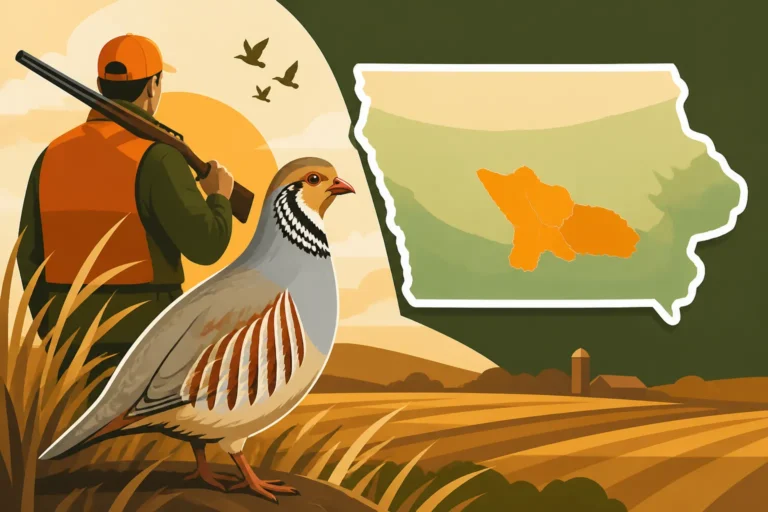
While Huns can be found throughout Northern Iowa, certain regions tend to hold more consistent populations. Historically, the northwestern and north-central counties have been considered the heart of Iowa's Hun range. Counties like Dickinson, Clay, Palo Alto, Kossuth, Emmet, and even some eastern counties like Howard and Winneshiek have reported better numbers in recent years. These areas often have a slightly different agricultural mix, sometimes including more small grains or hay, and a higher prevalence of Conservation Reserve Program (CRP) land, which provides ideal nesting and winter cover.
When you're planning a trip, focus your efforts on these regions. Look for public land tracts within these counties, specifically those that feature a good blend of crop fields and grassy buffers. The Iowa DNR's public hunting atlas is an invaluable tool for this, allowing you to scout from home and identify potential areas with the right blend of cover. Don't overlook the margins of large wildlife management areas, especially where they border private farmland, as these transition zones are often partridge magnets. For navigating these areas, looking into topics like Hunting Iowa Walk-In Ground Without Burning It Out can be helpful.
Effective Hunting Strategies for Huns
Hunting Hungarian partridge requires a different mindset and approach than pheasants. They are cunning, fast, and often lead you on a merry chase. However, with the right strategies and a bit of patience, you can consistently put birds in the bag.
The Value of Dogs and Walking Techniques
Let's be blunt: hunting Huns without a good bird dog is an exercise in extreme frustration, if not futility. Their camouflage is incredible, and their tendency to run makes them nearly impossible for a human to track effectively. A well-trained pointing dog is ideal, allowing you to get in position before the covey flushes. A flushing dog can also be effective, but you need to be quick and ready for that sudden explosion. The dog's nose is your most critical tool in locating these birds, especially when they're holding tight.
When walking, aim for a systematic approach. Rather than aimlessly wandering, think about covering ground in a grid pattern or along specific habitat edges. Walk into the wind if possible, as this allows your dog's nose to work more effectively. Pay close attention to areas where different cover types meet: a picked bean field next to a grassy ditch, or the edge of a CRP field that abuts a corn stubble field. These transition zones are where Huns like to congregate. Don't be afraid to walk slower than you would for pheasants, allowing your dog ample time to work out scent. If you're looking for pointers, many of the techniques used for "Working Pheasant Cover Without a Dog" can be adapted to Huns, especially regarding methodical walking patterns.
Covering Ground and Flushing Coveys
Hungarian partridge are typically found in open or semi-open country, meaning you'll often be covering significant distances. Be prepared to walk. If you're hunting with a partner or a small group, consider employing a blocking strategy. Send one or two hunters around to the far end of a likely strip of cover while the others walk it out. This can help prevent those frustrating long-range flushes where the birds simply run out the end of the field. This method is often called "Blocking and Driving Iowa Grass Strips" in pheasant hunting and is very effective for Huns.
When your dog goes on point or gets birdy, approach cautiously and be ready for a flush at any moment. Huns can be incredibly cagey, and they might decide to run out the side instead of flushing directly ahead. If they do flush, take note of the direction of flight and, more importantly, where they land. Marking the fall of a covey is paramount. This is where a mapping app like GoHunt can be invaluable. Immediately mark their general landing zone on your GPS, so you have a target to walk towards. Don't hesitate to cover ground quickly to get to their landing spot; the longer you wait, the more likely they are to run further.
Post-Flush Tactics and Relocation
This is where the real work (and often the best hunting) begins. Once a covey flushes and you mark their general landing spot, hustling to that area is critical. Hungarian partridge, unlike pheasants, tend to scatter after the initial flush, but usually not too widely. Once they hit the ground again, especially if they've been pressured, they often hold much tighter as singles or small groups. This is your best chance to get individual birds.
Approach the marked landing area slowly and systematically with your dog. Let the dog work meticulously. The scent cone from a single Hun holding tight can be very small. These individual birds will typically hold very tight, relying on their camouflage, sometimes flushing almost at your feet. Be ready for quick, close-range shots. The second flush is often more productive than the first, so never give up on a covey after the initial burst. Keep working the area for at least 15-20 minutes, moving through the cover thoroughly, before deciding to move on. Sometimes, after a few minutes of quiet, they'll call to re-group, which can help pinpoint their location if you listen carefully.
Navigating Regulations and Ethical Hunting
As with all hunting, understanding and adhering to regulations, and practicing ethical hunting, is paramount. This ensures the safety of everyone in the field and the sustainability of the Hungarian partridge population for future generations.
Season Dates and Bag Limits Overview
Before you even think about heading out, make sure you're up to date on the current Iowa hunting regulations for Hungarian partridge. These regulations are set by the Iowa DNR and are subject to change annually based on population surveys and management goals. Generally, the Hun season runs concurrently with the pheasant and quail seasons, typically opening in late October and extending through the end of January. However, exact dates can vary slightly year to year.
Bag limits are usually quite conservative, often a daily limit of 6-8 birds, with a possession limit twice the daily. Always double-check the current Iowa Hunting, Trapping & Migratory Bird Regulations booklet or the DNR website before your hunt. It's not just about avoiding a citation; it's about respecting the resource and ensuring these birds continue to provide hunting opportunities. This falls under the broader context of Iowa Upland Bird and Waterfowl Seasons.
Accessing Public and Private Land
Northern Iowa offers a mix of public and private hunting opportunities. Public lands, such as state wildlife management areas (WMAs), state forests, and particularly Iowa Habitat and Access Program (IHAP) lands, are excellent places to start. The IHAP program opens up private land to public hunting access, often providing prime upland bird habitat. Make sure you understand the specific rules for each public area, as some might have special restrictions or access points. The Iowa Hunting Atlas is your best friend here, providing detailed maps of public hunting grounds. You can also explore specific sections on "Scouting Iowa Public Land Before the Opener" to maximize your time.
For private land, always secure permission from the landowner before you step foot on their property. Iowa law is clear on trespass, and you want to maintain a good relationship with landowners to ensure future access. A knock on the door, a polite conversation, and offering to share some of your harvested game can go a long way. This is also where a tool like GoHunt can be incredibly helpful. Its mapping features allow you to clearly see property lines and landowner information, making it easier to identify who to ask for permission. Respecting these boundaries and asking first is crucial.
Respecting the Resource and Other Hunters
Ethical hunting goes beyond just following the rules. It's about responsible stewardship of the game and courteous behavior toward others. When hunting Hungarian partridge, practice good shooting habits, only taking shots within your effective range to minimize the chance of wounding a bird. Work hard to recover every bird you shoot; Huns can be tough to find in cover after they fall, especially if they're only wounded, so a good dog is invaluable for this.
Be mindful of other hunters, especially on public land. Give them plenty of space, avoid walking into areas where they are actively hunting, and communicate clearly if you're working a shared area. If you find yourself in a situation where birds are scarce or pressure is high, consider moving to a different area rather than over-pressuring a covey. Our goal as hunters is not just to harvest game, but to experience the outdoors and appreciate these unique birds, ensuring they are there for generations to come.
Disclaimer
Please note: Hunting regulations and seasons can change. Always consult the latest official Iowa Department of Natural Resources (DNR) regulations before planning and embarking on any hunting trip. This guide provides general information and recommendations but should not be considered a substitute for official legal guidelines.