Quail Numbers and CRP Acres
For many years, Iowa has held a special place in the hearts of hunters, often for its incredible whitetail deer and robust pheasant populations. But for those who love the explosive flush and camaraderie of a covey rise, the bobwhite quail offers a unique challenge and immense satisfaction. The struggle, however, is often in consistently finding these birds, especially as agricultural practices evolve. This guide is dedicated to unraveling the vital connection between Iowa's quail numbers and the expansive Conservation Reserve Program (CRP) acres, offering insights into where these elusive birds thrive and why, helping you identify promising hunting grounds.
Understanding Iowa's Bobwhite Quail Population Dynamics
Iowa's bobwhite quail population has always been a bit of a rollercoaster, experiencing dramatic highs and disheartening lows. To truly appreciate their current status and the impact of habitat programs, it helps to look back and understand what makes these birds tick.
Historical Trends and Current Status
Back in the mid-20th century, quail were far more widespread across Iowa. Farmers managed smaller, more diverse operations with fencerows, small woodlots, and patchy fields that inadvertently created fantastic quail habitat. You could often find coveys in nearly every county, and the sounds of "bob-white!" were a common backdrop to summer evenings. However, as agriculture industrialized in the latter half of the century, pushing for larger, monoculture fields and removing vital edge habitat, quail numbers began a steep decline. Severe winters, particularly those with heavy ice and persistent snow, compounded these losses, as quail struggle to find food and thermal cover in barren landscapes.
Today, Iowa's bobwhite quail are primarily found in the southern tier of counties, an area often referred to as "Southern Iowa brush country." This region, with its more rugged topography, smaller farm fields, abundant timbered draws, and a higher prevalence of early successional cover, offers a mosaic of habitats crucial for quail survival. While you might occasionally find isolated pockets further north, the consistent populations, the ones that offer realistic hunting opportunities, are concentrated below Highway 92, and especially south of Highway 2. The Iowa Department of Natural Resources (DNR) monitors these populations through roadside surveys, giving us a snapshot of annual trends, but often it’s the on-the-ground observations of landowners and dedicated hunters that truly highlight a good quail year. For a deeper dive into their presence across the state, consider exploring resources on Bobwhite Quail in Southern Iowa.
Key Ecological Needs for Quail Survival
Quail, unlike some other game birds, have relatively small home ranges, often living their entire lives within a few hundred acres. This makes their immediate surroundings incredibly important. They are absolute habitat specialists, requiring a very specific "edge" habitat to thrive.
First and foremost, quail need diverse food sources. They are primarily seed-eaters, feasting on seeds from native grasses, ragweed, smartweed, tick-trefoil, and various agricultural crops like waste corn and soybeans. Beyond seeds, especially for growing chicks, insects are an absolute must. Young quail chicks, often described as little fuzzballs on legs, rely almost exclusively on insects during their first few weeks of life for essential protein to fuel their rapid growth. Without a readily available supply of grasshoppers, beetles, and other invertebrates, poult survival plummets.
Secondly, and perhaps most critically, is cover – and not just any cover, but a variety of cover types integrated within close proximity. They need dense nesting cover for hens to lay their clutches, often found in taller, undisturbed grasses. Brood-rearing cover, where chicks can find insects and hide from predators, typically consists of open ground with overhead cover, allowing them to move freely while being protected from above. Escape cover, usually dense brush piles, multiflora rose thickets, or thorny cedar patches, is vital for evading predators like hawks, owls, and coyotes. Finally, thermal cover, often provided by dense evergreens or thick briar patches, is paramount for surviving harsh Iowa winters, sheltering them from wind, snow, and extreme cold. Without all these elements within a short flight or walk, a covey simply won't persist.
The Critical Role of CRP in Quail Habitat
Given the intensive agricultural landscape of Iowa, programs that incentivize land conservation are absolute lifelines for many wildlife species, and none more so than the bobwhite quail. The Conservation Reserve Program (CRP) stands out as a cornerstone of modern quail conservation in the state.
What is CRP and How Does It Benefit Wildlife?
The Conservation Reserve Program (CRP) is a voluntary program available to agricultural producers, administered by the USDA Farm Service Agency (FSA). It encourages landowners to take environmentally sensitive land out of agricultural production and plant species that will improve environmental health and wildlife habitat. In exchange for a yearly rental payment, farmers agree to enroll eligible land into CRP for contracts that typically range from 10 to 15 years. This means land that might otherwise be planted with corn or soybeans, or perhaps left fallow and susceptible to erosion, is instead planted with perennial grasses, legumes, and forbs.
For wildlife, particularly game birds like quail and pheasants, CRP is a game-changer. It creates islands of habitat in a sea of monoculture. These fields provide crucial nesting cover, offering hens a safe place away from farm equipment and predators. The diverse vegetation within CRP fields fosters a rich insect population, which as we discussed, is indispensable for young quail. Furthermore, many CRP plantings, especially those incorporating native warm-season grasses and brushy edges, offer excellent winter thermal cover, protecting birds from the brutal cold and heavy snow that can decimate populations. Beyond quail, CRP helps control soil erosion, improves water quality, and provides habitat for a myriad of other species, from pollinators to songbirds and deer. For hunters looking to understand programs that enhance public access, exploring Iowa's Habitat and Access Program Explained can offer additional insights, as CRP often complements these access initiatives.
Specific CRP Practices that Favor Quail
Not all CRP is created equal when it comes to quail. The specific practices and plant species used can dramatically impact its value as quail habitat. Landowners have various "Conservation Practices" (CPs) they can enroll in, each with different goals and vegetation requirements.
For bobwhite quail, native warm-season grasses are king. Species like switchgrass, big bluestem, and indiangrass grow in clumps, creating open ground at the base where quail can run and forage, while still providing overhead cover from predators. This clumpy growth is far superior to cool-season grasses like fescue or brome, which tend to form a dense, impenetrable mat, making it nearly impossible for small quail to move through, find insects, or escape.
Even better than a pure grass stand is one with good forb diversity. Forbs are broadleaf plants – wildflowers, legumes, and other herbaceous vegetation – that provide critical food sources (seeds) and also host a much greater variety and density of insects compared to pure grass stands. Think of plants like partridge pea, lespedeza, or various clovers. These species often fall under specific CRP practices like CP33, which focuses on habitat buffers for upland birds, or CP38, sometimes called SAFE (State Acres for Wildlife Enhancement), which allows for more diverse plantings tailored to specific regional wildlife needs. A CRP field that integrates these elements, especially near brushy draws or timber edges, becomes a veritable quail paradise. Without this diversity, a block of CRP can often fall short of its full potential for quail.
Analyzing Quail Numbers in Relation to CRP Acres
The relationship between Conservation Reserve Program (CRP) acres and bobwhite quail numbers is not merely theoretical; it’s a well-documented ecological phenomenon in Iowa and across the Midwest. Analyzing this connection provides crucial insights for hunters and conservationists alike.
Direct Correlation and Regional Differences
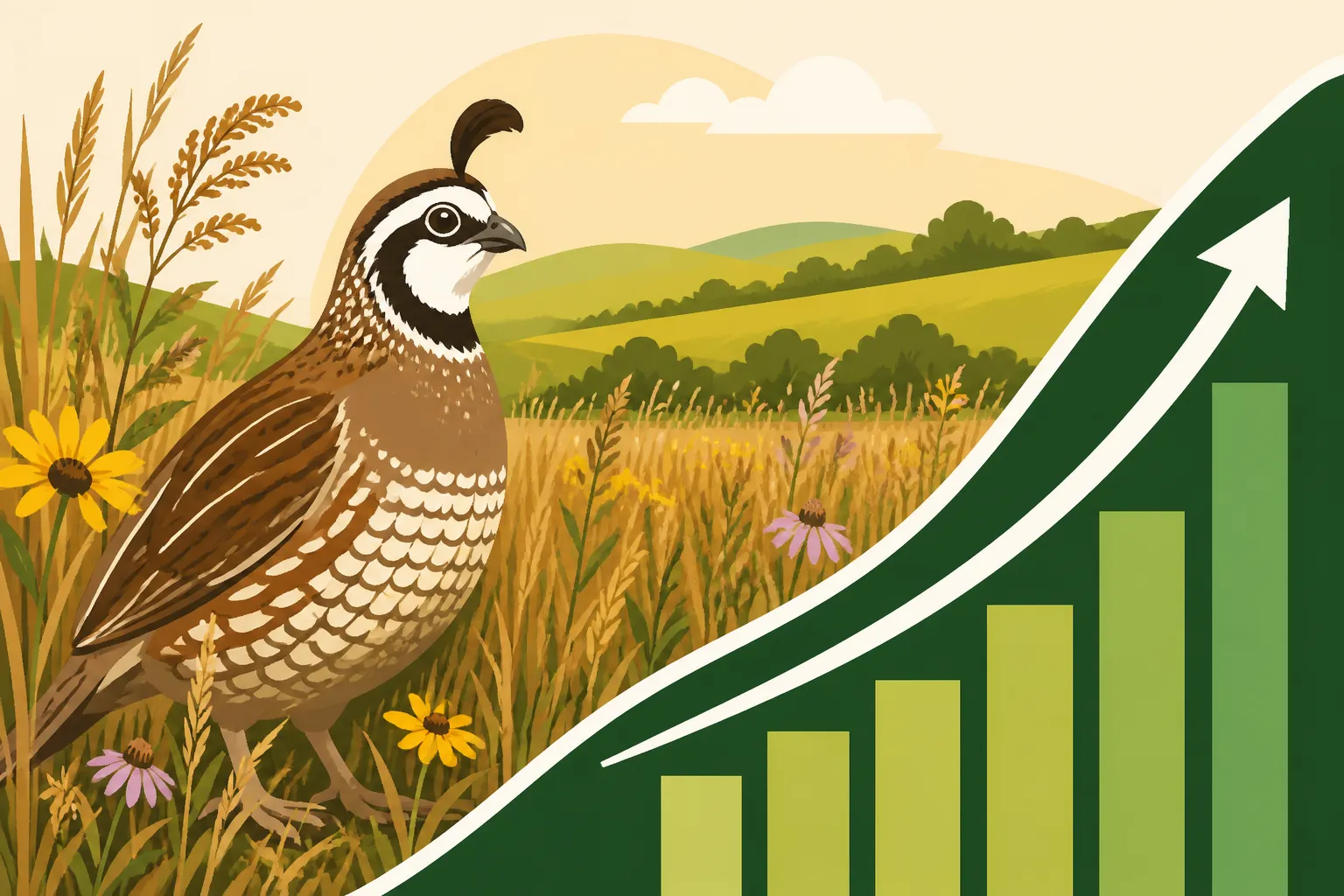
Generally speaking, when CRP enrollment is high, and especially when those acres are planted in quail-friendly cover, quail numbers tend to see an uptick. This isn't a perfect one-to-one correlation, as other factors like winter severity, spring rainfall, and predation still play significant roles. However, CRP provides the foundational habitat necessary for populations to rebound. The perennial cover offers secure nesting sites, abundant insect populations for poults, and crucial escape and thermal cover. For a glimpse at broader trends, it's worth checking out resources like Iowa Quail Population Trends which often highlight the positive impact of habitat programs.
This correlation isn't uniform across the state. Southern Iowa, as mentioned, consistently leads in quail populations. This is largely due to its landscape, which naturally offers more fragmented timber, brushy draws, and a greater predisposition for landowners to enroll smaller, less productive fields into CRP. These smaller, more numerous CRP tracts often create excellent interspersion of habitat – meaning various habitat types (like timber, brush, CRP, and crop fields) are all available within a small area, which is exactly what quail need. In contrast, in the intensively farmed northern and central parts of Iowa, even large blocks of CRP can sometimes be isolated "islands" of habitat, too far from the brushy escape cover or diverse food plots that quail also require. The absence of interconnected habitat corridors makes it harder for coveys to expand their range or rebound after a tough year.
Beyond Just Acreage: Quality of CRP Matters
It's easy to look at total CRP acreage as the sole indicator of quail potential, but the reality is far more nuanced. Not all CRP is created equal. A sprawling, monoculture field of solid fescue, while technically CRP, offers very little to a bobwhite quail. These dense, cool-season grass fields lack the open ground needed for foraging, provide poor insect habitat, and can be difficult for small birds to navigate.
The true value lies in the quality and diversity of the CRP planting. Fields dominated by native warm-season grasses like switchgrass, big bluestem, and indiangrass, especially those intermixed with broadleaf forbs like partridge pea, clover, and various native wildflowers, are far more productive. This mix provides varied heights and densities, creating the "clump-and-gap" structure that quail love. Furthermore, the age of the CRP stand can influence its utility. Freshly planted CRP might take a few years to develop into prime cover, while very old, unmanaged stands can become too dense or woody, losing their appeal for quail.
Effective management practices are also crucial. Periodic disturbance, such as prescribed burns, light disking, or selective herbicide application, can be vital for maintaining the early successional habitat quail prefer. These practices prevent the CRP from becoming too rank, encourage forb growth, and set back woody encroachment, ensuring a continuous supply of diverse cover and food sources. Without these active management strategies, even well-designed CRP can slowly degrade in its value for quail. Data-driven platforms like GoHunt often incorporate habitat mapping that can help discern these quality differences from afar, allowing hunters to identify prime locations.
Hunting Strategies in CRP-Rich Areas
Hunting quail in Iowa's CRP-rich landscapes offers a unique blend of challenge and reward. Success often hinges on understanding how quail utilize these habitats and employing tactics that leverage that knowledge.
Identifying Productive CRP for Quail Hunting
Not every acre of CRP will hold quail, and knowing how to scout and identify the most productive spots is key. Quail are creatures of the edge, meaning they rarely venture far from where different habitat types meet. When looking at a CRP field, don't just see a block of grass. Instead, envision its interfaces.
Prime spots are often found at the intersection of CRP with brushy draws, timbered edges, or even old fencerows. These transitional zones provide a quick escape route into denser cover, which quail rely on heavily. Look for CRP fields that have fingers of timber or brush protruding into them, or those that border a creek bottom with heavy, thorny cover like multiflora rose or osage orange hedgerows. Areas where CRP transitions into unharvested crop fields (like standing corn or soybeans, if available late in the season) can also be highly productive, offering both food and cover.
Utilizing mapping tools is indispensable for identifying these features. Platforms like GoHunt, or the Iowa DNR's online hunting atlas, allow you to study aerial imagery, highlighting public hunting grounds, IHAP (Iowa Habitat and Access Program) tracts, and private land features. Look for color changes in the vegetation indicating different plant types, or distinct lines that suggest field edges and fencerows. These tools can help pinpoint areas of Quail Coveys in Southern Iowa Brush before you ever step foot in the field, saving you precious hunting time. Also, keep an eye out for smaller, irregular-shaped CRP fields rather than massive, perfectly rectangular ones. The more "edge" a field has, the better its potential for holding quail.
Effective Tactics for Working CRP Cover
Once you've identified a promising CRP field, the real work begins. Quail hunting is often a physically demanding sport, requiring a lot of walking and strategic maneuvering to get birds to flush within range.
For most serious quail hunters, a good bird dog is practically a necessity. A well-trained pointing dog can cover significantly more ground, locate coveys much more efficiently, and hold them long enough for hunters to get into position for a shot. The dog's ability to scent and pinpoint birds deep within the thick cover of CRP is invaluable. However, it's absolutely possible to hunt quail effectively without a dog, though it requires a different approach. Similar to Working Pheasant Cover Without a Dog, you'll need to walk slowly and deliberately, often in a zigzag pattern, pushing through dense cover to try and flush birds.
When walking, pay close attention to the wind direction. Quail often flush into the wind, as this helps them gain lift and speed. Try to work the cover so that any birds flushing will either present a shot or be pushed towards known escape cover where you can try for a second flush. Always be ready, as quail can burst out of cover with surprising speed and noise.
Approaching edges and escape cover carefully is paramount. Quail will often run ahead of hunters and dogs, especially if they sense pressure, making a beeline for the nearest dense brush pile or timber. Positioning blockers or having hunters ready at these escape points can sometimes convert a running covey into a shooting opportunity. Remember, a covey that flushes wild and scatters might offer single bird opportunities as they sit tight, hoping to evade detection. That's when your dog's, or your own, persistence truly pays off. When hunting in groups, always maintain safe shooting lanes and communicate clearly about where everyone is positioned, especially when birds flush unpredictably.
Challenges and Future Outlook for Iowa Quail
While CRP has been a monumental success for Iowa's bobwhite quail, the journey for these iconic upland birds is still fraught with challenges. Understanding these hurdles is critical for both current hunters and for the long-term outlook of quail populations.
Factors Limiting Quail Recovery
Despite the undeniable benefits of CRP, several factors continue to limit a widespread, robust quail recovery across Iowa. One of the most significant is habitat fragmentation. Even with CRP fields, if these crucial habitat blocks are isolated by vast expanses of row crops or development, they become islands. This makes it difficult for coveys to expand, for new birds to disperse into an area, or for populations to naturally repopulate after local losses. Quail have relatively small flight capabilities, so large distances between suitable patches act as significant barriers.
Predation pressure is another constant challenge. With healthy populations of raptors (hawks, owls), coyotes, raccoons, and opossums, quail are continually targeted. While predators are a natural part of the ecosystem, a lack of secure nesting and escape cover can make quail particularly vulnerable, especially when populations are already low. Well-designed habitat, particularly dense, thorny escape cover like multiflora rose or cedar thickets, is the best defense against predation.
Weather impacts can be devastating. Harsh Iowa winters with heavy, persistent snow cover or long periods of ice can prevent quail from accessing food, leading to starvation. Similarly, cold, wet springs can significantly reduce poult survival, as young chicks are highly susceptible to hypothermia and a lack of insects. This directly affects annual recruitment and can wipe out the gains from a good habitat year. For more information on how weather affects upland birds, read about Winter Severity and Iowa Pheasant Numbers, which offers transferable insights for quail.
Finally, a major programmatic challenge comes from CRP contract expirations and fluctuating enrollment rates. When CRP contracts expire, landowners face the decision to re-enroll, convert to another program, or return the land to agricultural production. Economic pressures can often lead to land being returned to row crops, resulting in significant habitat loss overnight. This cyclical nature of CRP can create instability for quail populations that rely on these acres.
Conservation Efforts and Hunter Involvement
Despite these challenges, there's significant hope for Iowa's bobwhite quail, largely thanks to dedicated conservation efforts and the invaluable involvement of hunters. Organizations like Pheasants Forever and Quail Forever are at the forefront, working directly with landowners to implement habitat projects that go beyond basic CRP requirements. They provide technical expertise, financial incentives, and even equipment to create diverse, high-quality habitat through practices like native grass plantings, prescribed fire, brush pile creation, and food plot establishment. These efforts are often targeted in the southern Iowa quail range, strategically enhancing the critical areas where quail are most likely to thrive. You can learn more about general pheasant and quail conservation in Iowa by looking into Nesting Cover and Pheasant Broods, which is highly relevant to quail.
Hunter involvement is absolutely critical. Beyond purchasing licenses and stamps, which directly fund wildlife agencies like the Iowa DNR, active participation in local conservation chapters can make a tangible difference. Hunters are often the first to notice changes in wildlife populations and habitat, and their advocacy helps ensure continued support for programs like CRP. Engaging with landowners, offering assistance with habitat projects, and simply sharing the positive impact of wildlife on their land can foster valuable partnerships that lead to more private land habitat. The future of Iowa's quail hinges on a continued, collaborative effort between state agencies, conservation organizations, and passionate hunters to not only protect existing habitat but also to expand and improve it wherever possible. Understanding where to focus those efforts, such as highlighted in Iowa Quail Numbers and Recent Gains, becomes vital for maximizing impact.
CRP Features and Their Quail Habitat Value
To help visualize the impact of different CRP types, here's a quick comparison of features that either enhance or diminish a CRP field's value as bobwhite quail habitat. This table can serve as a guide when you're scouting potential hunting areas or evaluating habitat quality.
| CRP Feature | High Quail Habitat Value | Low Quail Habitat Value |
|---|---|---|
| Dominant Grass Type | Native Warm-Season Grasses (Switchgrass, Big Bluestem) | Cool-Season Grasses (Fescue, Smooth Brome) |
| Forb Diversity | High (Partridge Pea, Clover, Native Wildflowers) | Low (Monoculture Grass, Few Broadleaf Plants) |
| Structure of Vegetation | Clumpy, with open ground at base; varied heights | Dense, impenetrable mat; uniform height |
| Proximity to Escape Cover | Adjacent to brushy draws, timber, thorny thickets | Isolated from dense cover by open fields |
| Management History | Regularly managed (prescribed burns, light disking) | Unmanaged for many years; overly dense or woody |
| Field Shape/Size | Irregular borders, smaller fields, high "edge" ratio | Large, rectangular blocks with minimal edge |
| Insect Production | High (diverse forbs, native grasses) | Low (cool-season grasses, pesticides nearby) |
| Winter Thermal Cover | Incorporates cedars, multiflora, dense thickets | Exposed, wind-swept, sparse cover |
| Food Sources | Native seeds, waste grain, diverse forb seeds | Primarily grass seeds, limited diversity |
This table underscores that simply having CRP acres isn't enough; the type and management of those acres are paramount for bobwhite quail. Hunters leveraging tools like GoHunt or the Iowa DNR Hunter Atlas should keep these distinctions in mind to identify optimal areas on public ground, IHAP tracts, or when seeking permission on private land. These principles also apply to understanding "Hunting Iowa Walk-In Ground Without Burning It Out" as proper management is key to maintaining quality habitat without destroying it.
Disclaimer
Hunting and wildlife regulations can change frequently. Always consult the official Iowa Department of Natural Resources (DNR) regulations booklet and website for the most current laws, season dates, license requirements, and any specific area restrictions before planning your hunt. The information provided here is for general guidance and informational purposes only.