Iowa Railroad Right-of-Way Hunting
Navigating the legalities and safety considerations of hunting near active railroad lines in Iowa can feel like threading a needle in the dark. It's a common frustration for hunters who see deer using these linear corridors but are unsure about where they can and cannot legally be. This guide is here to untangle the complexities surrounding hunting on or near Iowa's railroad rights-of-way, helping you stay legal, safe, and ethical.
Understanding Railroad Property and Public Access in Iowa
It's a common misconception that because railroad lines appear to cut through the landscape, they might offer some form of public access or unowned territory. In reality, nothing could be further from the truth. Railroad property is private property, and treating it as anything less can lead to serious consequences.
The Complex Nature of Railroad Rights-of-Way
Railroad rights-of-way are corridors of land owned or controlled by railroad companies. These aren't just the tracks themselves, but often a strip of land extending a significant distance on either side, sometimes 50, 75, or even 100 feet or more from the centerline of the tracks. This land is critical for the safe and efficient operation of trains, as well as for maintenance, infrastructure, and future expansion.
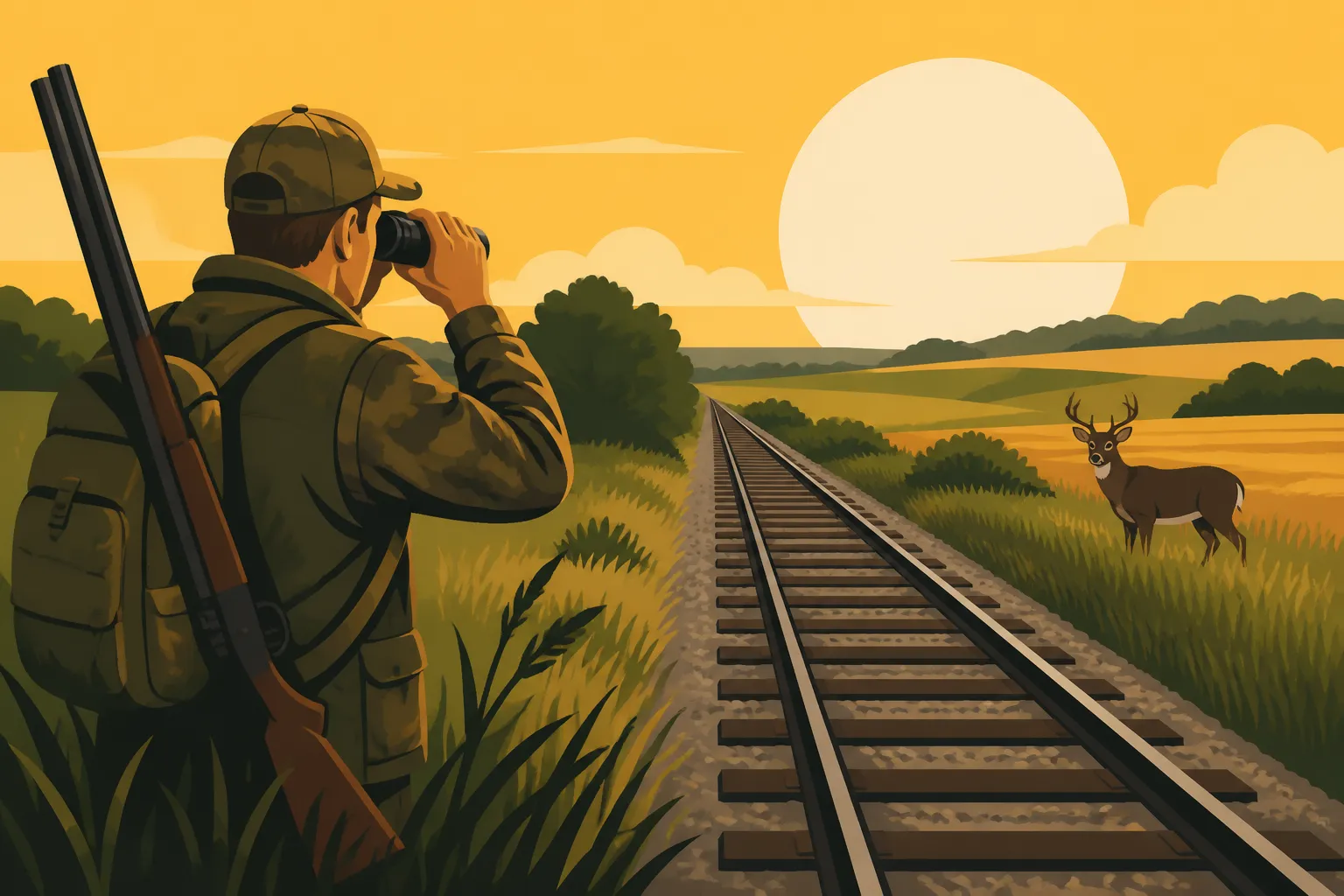
From a hunter's perspective, seeing a deer step off private land onto a railroad grade can be incredibly tempting. You might observe a large buck using a brushy section of the railroad as a bedding area or a travel corridor between two fields. However, assuming this land is fair game or somehow "unclaimed" is a dangerous gamble. These areas are actively monitored, and railroad police or local law enforcement will enforce trespass laws. The immediate dangers are also very real: trains are fast, surprisingly quiet until they're very close, and they cannot swerve. The ballast (the crushed rock around the tracks) is uneven and unstable, and there's often hidden debris or infrastructure that could cause a fall or injury.
Distinguishing Between Easements and Ownership
The term "right-of-way" can be a bit tricky, as it can refer to outright ownership or to an easement. In many cases, the railroad company holds an easement, meaning they have the right to use the land for railway purposes, but the underlying land ownership might still technically belong to an adjacent landowner. However, and this is a crucial point for hunters, even if the adjacent landowner technically owns the ground under the right-of-way, they typically do not have the legal authority to grant permission for activities that interfere with railroad operations or safety, including hunting, within that right-of-way. The railroad company maintains exclusive control over that corridor for its intended purpose.
This means that asking a farmer if you can hunt their land next to the railroad tracks is a good move, but their permission usually stops dead at the railroad's established property line. You cannot assume that because you have permission from the adjacent landowner, you suddenly have permission to step onto the railroad grade itself to retrieve game or pursue an animal. Always err on the side of caution: assume all railroad property is private and off-limits unless you have explicit, written permission from the railroad company itself, which is exceedingly rare for hunting purposes. Mapping tools like onX Hunt can be invaluable here, as they often display railroad corridors and property lines, helping you visualize exactly where legal access ends.
Legalities of Hunting Near Railroads in Iowa
Iowa has specific laws regarding trespassing and hunting on private property, and railroad rights-of-way fall squarely under these protections. Understanding these regulations is paramount to avoiding legal trouble and ensuring a safe hunt.
Iowa Trespass Law and Railroad Property
Iowa's trespass laws are clear: hunting on private land without permission is illegal. Railroad property is no exception. If you are found hunting, retrieving game, or even just walking along a railroad right-of-way without explicit authorization from the railroad company, you are trespassing. This isn't just a minor infraction; it can carry significant penalties. You could face fines, have your hunting equipment confiscated, and potentially lose your hunting privileges for a period.
Consider a scenario: you've been granted permission to hunt a fantastic block of timber that borders a railroad line. You've scouted well and know a big buck often uses the railroad embankment to slip from a bedding area to a cornfield. The buck steps onto the railroad grade, and you take a shot. If that deer falls on railroad property, you are in a precarious legal situation. Even retrieving legally taken game from railroad property without permission is considered trespassing. Railroad companies employ their own security personnel, often deputized as railroad police, who actively patrol these lines and are well-versed in enforcing trespass laws. Local sheriffs and conservation officers also have jurisdiction and will act on reports of trespass. When you're using detailed mapping systems like onX Hunt, it's easy to visualize these boundaries and ensure you're always operating within the law. For more detailed information, check out Iowa Trespass Law and Posted Land.
Safety Zones and Shooting from Rights-of-Way
Beyond general trespass, there are critical safety considerations that are often codified into law regarding shooting near or from railroad property. Shooting from a railroad right-of-way is incredibly dangerous and almost universally illegal. Trains operate at high speeds, and a bullet could strike the train itself, damage critical infrastructure like signal boxes, switches, or communication lines, or even ricochet unpredictably. Even if a train isn't present, the risk to maintenance workers or the integrity of the tracks is too great.
Iowa law also dictates safe shooting distances from various structures and public areas. While a railroad right-of-way isn't typically considered a "public road" in the same way a county blacktop is, the principle of maintaining a safe zone for shooting is vital. Never position yourself on railroad property to take a shot, and always be aware of what's beyond your target. The consequences of an accidental hit could range from property damage to injury or even death, with severe legal repercussions. This is distinct from rules governing Shooting From an Iowa Road Right-of-Way, which have their own complexities but share the core principle of public safety.
Adjacent Private and Public Land Considerations
It bears repeating: permission to hunt private land adjacent to a railroad right-of-way does not grant you permission to be on railroad property. This is a common pitfall for hunters. The boundary is absolute. If you have secured access to a fantastic piece of private ground, congratulations! Now, be diligent about understanding where that access ends.
If you're hunting legitimate public land that happens to border a railroad, the same rules apply. The railroad right-of-way remains off-limits. This is where meticulous scouting and utilizing tools like the Iowa DNR Hunter Atlas or commercial mapping apps become crucial. You need to know precisely where the property lines are. While deer will often use these corridors, your strategy must be to intercept them before they enter the railroad right-of-way or after they leave it, all while remaining on legal ground. This might involve setting up a stand where a timber point meets a field, forcing deer to cross your shooting lane before they reach the relative safety of the railroad property. Understanding Access Routes That Do Not Bump Deer is also essential, especially when your approach might parallel a railroad line.
Here's a quick reference table regarding hunting near railroad property in Iowa:
| Action | Legality & Safety | Notes |
|---|---|---|
| Hunting on Railroad Property | Illegal (Trespassing) | Assumed private property. Requires explicit railroad permission, which is almost never granted. |
| Retrieving Game from Railroad Property | Illegal (Trespassing) | Even if legally shot, entering without permission is trespass. Contact law enforcement/railroad first. |
| Shooting across Railroad Tracks | Extremely Dangerous & Illegal | High risk of hitting trains, infrastructure, or ricochet. |
| Shooting from Adjacent Private Land | Legal (with permission) if shot is not on railroad property | Ensure your target is on authorized ground and you know what's beyond it. |
| Using Railroad Grade for Access | Illegal (Trespassing) | Do not walk, drive, or use ATVs on railroad property for hunting access. |
| Observing Deer from Legal Vantage Points | Legal | Scout from adjacent private land (with permission) or public roads (safely, without obstructing traffic). |
Why Railroad Companies Prohibit Hunting
Railroad companies have very clear and legitimate reasons for strictly prohibiting hunting and all unauthorized access on their rights-of-way. These reasons are rooted in safety, operational efficiency, and legal liability.
Safety Concerns for Hunters and Employees
The most paramount concern for any railroad company is safety. Active railroad lines are inherently dangerous environments. Trains can travel at high speeds, often approaching silently until they are upon you. The sound of an approaching train can be masked by wind, natural sounds, or even hearing protection worn by hunters. Blind curves and cuts further reduce visibility, making it impossible to see or be seen until it's too late. The ballast stone used around tracks is unstable and easy to slip on, especially when carrying equipment or a harvested animal.
Beyond the obvious risk of being struck by a train, there are other dangers. Railroad bridges and trestles are not designed for pedestrian traffic and can be extremely hazardous. There are also railroad employees who work on or near the tracks, performing maintenance, inspections, or repairs. These individuals expect a secure work environment, and the presence of hunters, especially those discharging firearms, creates an unacceptable risk to their well-being. A railroad company faces significant legal liability if a hunter is injured on their property, regardless of whether the hunter was trespassing.
Infrastructure Protection and Operational Integrity
Railroad rights-of-way are not just strips of dirt; they are complex corridors of vital infrastructure. This includes the tracks themselves, but also signal systems, communication lines, bridges, culverts, switches, and various electronic components. Even a seemingly minor incident involving a hunter could have severe consequences for railroad operations.
Imagine a stray bullet striking a signal box, disrupting train movements for miles, or damaging a critical switch. Such an event could cause significant delays, costing the railroad company immense sums of money, and potentially compromising safety across their network. Railroads are highly sensitive to anything that could interfere with their scheduled operations or the integrity of their physical plant. They invest heavily in maintaining this infrastructure and cannot tolerate activities that introduce unnecessary risk or potential damage. This is a primary reason why they strictly enforce no-trespassing rules, as unauthorized persons are a risk to both themselves and the railway system.
Public Perception and Wildlife Management
Another factor, though perhaps less tangible, is public perception. Railroad companies are often large corporations, and they are sensitive to how their operations are perceived by the public. Incidents involving hunters on their property, especially if they lead to accidents or confrontations, could generate negative publicity. It's simply not in their best interest to be associated with activities that could be seen as dangerous or irresponsible.
Furthermore, railroad rights-of-way are not managed as wildlife habitat in the traditional sense, even though deer and other animals undoubtedly use them. The primary purpose of this land is transportation. Unlike state wildlife management areas or even private lands where landowners might actively manage for deer, pheasants, or turkeys, railroad land is managed for train traffic. Therefore, any form of recreational hunting simply doesn't align with their core mission or land management objectives.
Alternative Approaches and Best Practices for Hunters
So, while hunting on railroad property is a clear no-go, deer certainly don't recognize property lines. They utilize these corridors as travel routes, bedding areas, and escape cover. The savvy hunter can still leverage these areas by employing smart strategies and respecting boundaries.
Securing Adjacent Private Land Permission
This is by far the most effective and legal way to hunt deer that are interacting with railroad rights-of-way. Many landowners whose property borders a railroad will tell you stories of how deer use the railroad embankment or adjacent thickets as a sanctuary. Deer often feel secure on these industrial corridors because they know hunters generally avoid them.
Your goal as a hunter is to gain permission from these landowners to hunt their property, specifically focusing on areas adjacent to the railroad. This allows you to set up stands or blinds where you can intercept deer as they move to or from the railroad corridor. It's a classic strategy of hunting the transition zones. When approaching landowners, explain your understanding of the railroad's private status and your commitment to respecting their property and the railroad's boundaries. This professionalism can go a long way in building trust. For tips on gaining access, refer to Finding Private Land Access in Iowa. You might also find that landowners are more amenable to giving permission if you're targeting Iowa January Antlerless Hunts to help manage local populations.
Utilizing Mapping Tools for Boundary Identification
In today's hunting world, mapping applications are indispensable, and nowhere are they more critical than when hunting near complex property lines like those involving railroads. Tools like onX Hunt provide detailed property ownership information, parcel boundaries, and often mark railroad rights-of-way.
Before you ever step foot in the field, use these apps to meticulously study the terrain. Identify the precise boundary between the private land you have permission for and the railroad property. Look for natural pinch points, timber edges, or field corners on the legal side of the line where deer might enter or exit the railroad corridor. You can drop waypoints for potential stand locations and access routes, ensuring you're always staying on the right side of the law. This preparation helps you avoid accidental trespass and allows you to formulate a safe, ethical, and effective hunting plan. While GoHunt is a great resource for overall hunt planning and draw odds, for hyper-local property line details, onX Hunt excels.
Observing and Planning Around Railroad Corridors
Even without setting foot on railroad property, you can learn a tremendous amount by observing deer movement patterns. From a legal vantage point – perhaps a county road (where safe and legal to stop) or from within the private land you have permission to hunt – watch how deer interact with the railroad.
Do they use it as a midday bedding area? Do they travel along it at dawn and dusk to move between distinct feeding and bedding areas? Reading Aerial Imagery for Bedding Cover can reveal how thick cover along a railroad might function as a deer haven. Look for where deer trails intersect the railroad line and where those trails lead on the legal side of the fence. These intersection points are often prime locations for a stand. For example, a narrow creek corridor that parallels a railroad might be a natural travel route, offering a great ambush point just off the railroad property. You might discover Timber Points Between Two Fields that funnel deer directly across a railroad line, giving you an opportunity to catch them as they enter or exit.
Your setup should always be on legal ground, with your shot angled away from the railroad or, at the very least, with a clear, safe backstop that isn't railroad property. Focus on stand locations that intercept deer before they get to the railroad or after they leave it, using the cover and terrain of the authorized hunting ground. This requires patience and strategic placement, but it's the safest and most legal way to capitalize on the deer movement that railroad corridors often facilitate. Consider how Best Stand Locations in Rolling Timber principles could apply to timber bordering a railroad, or how to use a Hunting a Narrow Creek Corridor effectively if it runs alongside the tracks.
Disclaimer
This article is for general informational purposes only and does not constitute professional advice. Laws, prices and regulations vary by location and change over time. Consult a qualified professional for guidance on your specific situation.