Timber Points Between Two Fields
Finding consistent deer movement in Iowa's patchwork of timber and agriculture can feel like a guessing game, especially when those mature bucks seem to vanish into thin air. One of the most overlooked, yet incredibly productive, features on the landscape is the humble timber point that juts out between two crop fields. This guide will walk you through exactly why these subtle terrain features are so crucial for whitetails, how you can effectively scout them, and the best ways to hunt them to maximize your chances of punching your tag this season.
Why Timber Points Are Deer Magnets
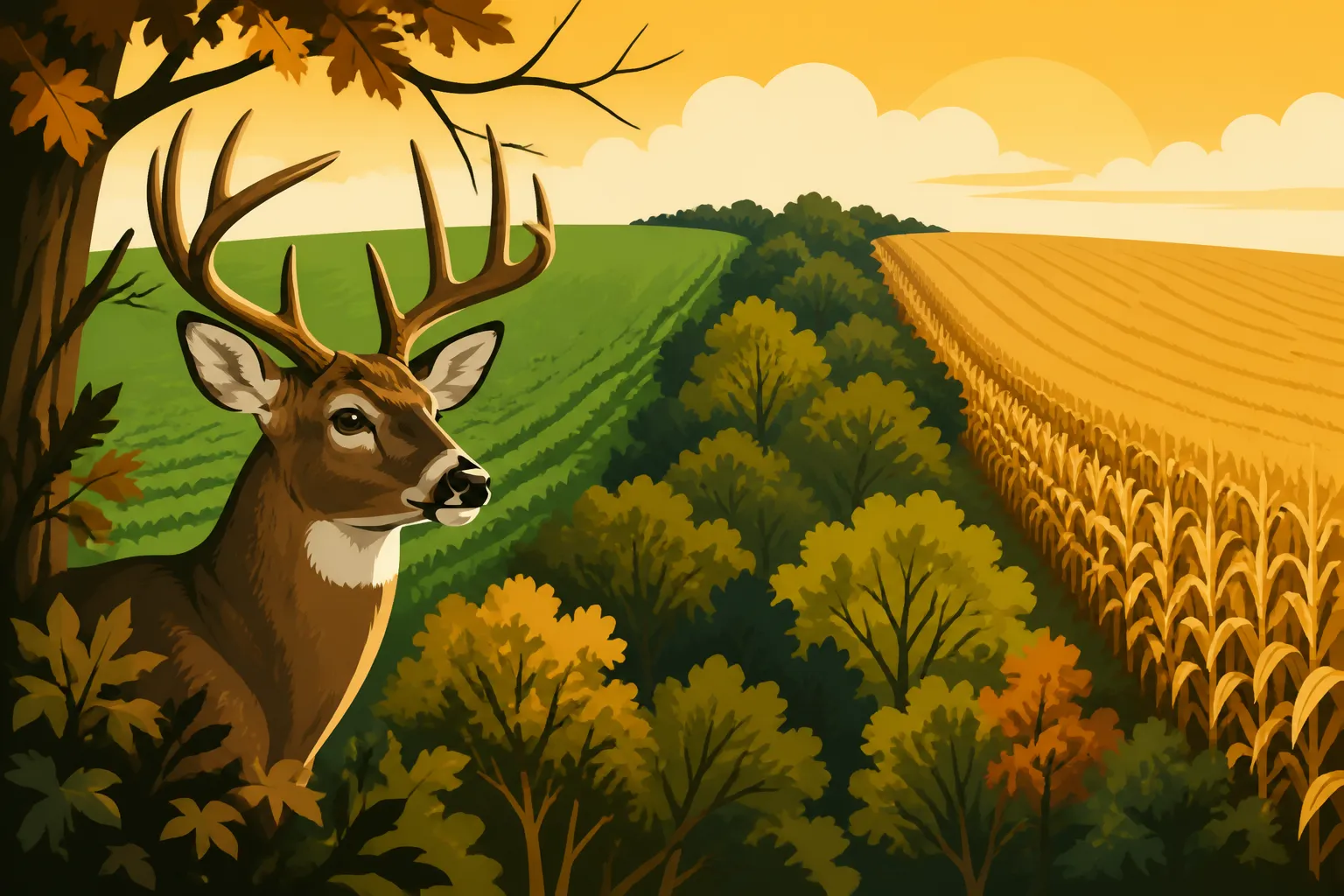
These seemingly insignificant fingers of trees extending into open fields are far more than just random clumps of woods; they are strategic hubs for deer activity, often dictating how deer move, feed, and find security in agricultural landscapes. Understanding their appeal is the first step to hunting them effectively.
Providing Cover and Security
Deer, especially older, wiser bucks, are creatures of security. They thrive on having dense cover nearby, allowing them to feel safe from predators and human disturbance. A timber point, by its very nature, offers a crucial sanctuary in a landscape often dominated by open fields. It’s like a mini-fortress where they can stage before stepping into the open or even bed down if the cover is thick enough. Imagine a buck trying to navigate a wide-open bean field during daylight – it's a huge risk. But a timber point allows him to poke his head out, survey the scene, and retreat instantly if he senses danger.
What makes these points even more appealing is their typical structure. They often contain a mix of mature trees, dense saplings, and sometimes even thorny brush like multiflora rose or dense cedar thickets. This provides not only visual cover but also a barrier to human penetration, making deer feel more secure. They can bed in these thickets during the day, confident that they're nearly undetectable, yet still within sniffing distance of their evening meal. The narrowness of a point also means they have escape routes in multiple directions, adding to their sense of safety.
This combination of dense cover and multiple escape options makes timber points prime locations for deer to spend daylight hours, particularly as hunting pressure increases. While the main timber block might hold the majority of a deer’s bedding, these points serve as staging areas where deer gather and orient themselves before venturing into the fields, or where they seek refuge from persistent hunting pressure.
Funneling Movement Between Food Sources
Deer are incredibly efficient animals, always seeking the path of least resistance. Why would a deer walk an extra quarter-mile around a large timber block when a narrow point of woods offers a direct, covered route between two highly attractive food sources? This is the primary reason timber points become major deer highways. They act as natural bridges, connecting disparate feeding areas like a cornfield on one side and a picked soybean field on the other, or even connecting two different sections of a larger timber block that might be separated by a field.
These points become especially active during the low-light hours of dawn and dusk, which is when deer are most actively moving between bedding and feeding. You'll often find multiple, well-worn trails converging on these points, indicating consistent daily use. Bucks, in particular, will use these covered corridors to travel, checking for does or other bucks without exposing themselves unnecessarily. It's a critical component of their daily routine, particularly through the fall and into the later seasons.
During the rut, these points become even more vital. A cruising buck, constantly on the move to find receptive does, will instinctively follow these funnels. Instead of crossing wide-open fields where he's vulnerable, he'll stick to the edge of the timber, using the point to navigate from one field to the next, scent-checking for does along the way. These areas are natural "pinch points" that concentrate deer movement, making them ideal ambush sites. If you’re looking for areas that create predictable deer movement, understanding Hunting Saddles and Pinch Points in Rolling Timber is very similar in concept to how deer use these timber points.
Reading the Landscape for Productive Points
Identifying a timber point on a map is one thing, but truly understanding its potential requires a blend of digital scouting and old-fashioned boots-on-the-ground investigation. Both methods are crucial for deciphering deer movement patterns and pinpointing the best stand locations.
Using Topo Maps and Aerial Imagery
Before you ever step foot in the woods, the best way to start is by e-scouting. Tools like GoHunt's mapping platform are invaluable for this initial phase. Start by pulling up aerial photos of your hunting area – look for those distinctive fingers of woods that extend out from larger timber blocks into agricultural fields. Pay close attention to the shape and size of these points. Are they long and narrow, or more rounded and stout? The more pronounced and extensive the point, generally the more significant it will be for deer travel and cover.
Next, layer on a topographic map. Even subtle elevation changes on these points can be highly significant. A small rise or knoll within a timber point can serve as a prime bedding or staging area, offering deer a slight advantage in elevation for better visibility and wind detection. Look for points that offer not just cover, but also good visibility for deer to observe the adjacent fields before stepping out. Digital mapping tools, like those offered by GoHunt, allow you to overlay property lines, topo maps, and recent aerial imagery to get a complete picture of the area. This kind of detailed analysis is covered further in E-Scouting Iowa Farm Country From Home and helps immensely in Reading Aerial Imagery for Bedding Cover for finding these subtle features.
Finally, analyze the surrounding food sources. Are the fields surrounding the timber point currently in corn or soybeans? Have they been harvested? Are there any small food plots tucked into corners that deer might frequent? The type and proximity of adjacent food sources will heavily influence how and when deer utilize these points. For instance, a point between a standing cornfield and a picked beanfield will likely see different patterns of use than one between two pastures. Understanding Standing Corn and Bean Field Deer Patterns is key to predicting how deer will use these specific features.
Ground Scouting for Sign and Travel Routes
While e-scouting provides a fantastic overview, there's no substitute for getting your boots on the ground. Once you've identified a few promising timber points from your maps, it's time for quiet, efficient scouting. Your goal is to confirm what the maps suggest and identify the precise travel routes, bedding areas, and staging zones deer are actually using. When you enter these areas, move slowly, quietly, and with the wind in your favor, just as you would when hunting. This approach minimizes your impact and avoids alerting any deer that might be holding in the area.
Look for fresh deer sign, including rubs, scrapes, and well-worn trails. Big, fresh rubs on trees 4-6 inches in diameter or larger are clear indicators of mature buck activity. Multiple scrapes, especially those with fresh pawed dirt and overhead licking branches, suggest a buck is actively marking his territory and checking for does. Pay close attention to where these trails enter and exit the timber point, and where they converge. Often, you'll find a primary travel corridor cutting through the middle of the point, with smaller trails branching off to staging areas or specific feeding spots on the field edges. You can learn more about interpreting these signals in Reading an Iowa Timber Draw for Deer Sign.
During your ground scouting, also assess the cover within the point itself. Is there a dense thicket that looks like a prime bedding area? Are there particular trees suitable for hanging a treestand, or natural openings that would make for a good ground blind setup? Bucks will often create rubs and scrapes right on the edge of the timber point, just inside the cover, before stepping out into the open field. These specific spots are invaluable for stand placement, as they represent the last moments a buck is entirely in cover before exposing himself. Don't forget to look for historical sign too, as deer often use the same travel patterns year after year.
Hunting Strategies for Timber Points
Successfully hunting timber points requires a thoughtful approach to stand placement, a keen understanding of wind, and an awareness of how deer use these areas throughout the different phases of the season. It’s all about putting yourself in the right place at the right time without alerting the deer.
Stand Placement for Different Winds
Wind is arguably the single most critical factor when hunting these features. Timber points are often exposed to field edges, meaning your scent can easily drift into the open or downwind to approaching deer. It’s imperative to have multiple stand locations or at least a flexible setup that allows you to hunt a point effectively on various wind directions. A point that is a hot spot on a prevailing northwest wind might be entirely unhuntable or unproductive on a south wind if your scent blows directly into the deer's approach. Planning your stand sites to account for Wind and Thermals in River Breaks is crucial here.
Generally, you'll want to identify two primary stand types for a timber point: an interior setup and an edge setup. An interior stand, placed perhaps 20-50 yards inside the timber, is ideal for catching deer moving through the point between bedding and feeding, or for intercepting cruising bucks during the rut. Your scent should ideally blow across the point, or away from the likely entry/exit routes. An edge stand, placed right on the tip or flank of the timber point where it meets the field, is perfect for observing deer that are staging before entering the field, or for catching bucks that are scent-checking the field edge. With an edge stand, ensure your scent is blowing directly into the open field, away from where deer would typically approach the point from the main timber.
Beyond stand location, your entry and exit routes are paramount. You must plan these routes to be as quiet and undetected as possible. This often means walking a long way around, using a ditch line for cover, or walking through a harvested field to get to your stand without bumping deer that might be bedding or staging in the point. Remember, once you alert deer in a sensitive area like a timber point, they'll often avoid it for days or even weeks. Prioritizing stealthy access, as discussed in Access Routes That Do Not Bump Deer, will greatly improve your success.
Considering Time of Day and Season
The effectiveness of hunting a timber point can vary significantly depending on the time of day and the specific phase of the hunting season. Timber points truly shine during the transition periods – dawn and dusk. These are the peak movement times when deer are shifting from their bedding areas in the main timber to feed in the fields, and then back again. Setting up an hour before legal light in the morning or staying until well after dark in the evening will increase your chances of catching a buck actively moving through.
During the pre-rut and especially the peak rut, timber points become prime locations for all-day sits. Bucks will often cruise these funnels throughout the mid-day, constantly scent-checking for does that might be moving between fields or holding in the adjacent cover. This is a fantastic time to implement calling strategies like rattling or grunting, as a curious buck might investigate the sounds coming from within the timber point. For more on this, check out Rattling and Grunting During the Iowa Rut. In the peak of the rut, a buck might also be actively chasing a doe right through these narrow strips of timber.
Different seasons also bring different dynamics. In the early season, deer might be more focused on specific, high-quality food sources, making points adjacent to preferred crops particularly hot. In the late season, with cold temperatures and limited food, deer will gravitate towards points that offer the densest thermal cover and easy access to remaining food. During Iowa's shotgun seasons, timber points become critical escape routes and temporary refuges as hunting pressure pushes deer to seek out any available cover. Knowing your target area's regulations, especially on public land, is important; before heading out, it’s a good idea to check your chosen area on your GoHunt app for any special public land regulations or recent closures.
Avoiding Common Mistakes on These Key Features
While timber points offer incredible potential, they are also highly sensitive areas that can be ruined with improper hunting tactics. Avoiding common mistakes is just as important as knowing where to set up.
Minimizing Intrusion
The biggest, most prevalent mistake hunters make when targeting timber points is simply overhunting them or intruding too heavily. These are often smaller, more confined areas, and deer will quickly detect human presence and alter their patterns. A single bad entry or exit, a noisy walk, or even just leaving too much human scent can make a hot timber point go cold for days, if not the rest of the season. It’s easy to get excited and want to check a point frequently, but patience and minimal disturbance are key.
Emphasize stealthy entry and exit above all else. This means walking in well before legal shooting light in the morning, often in the dark, and not leaving your stand until well after dark in the evening. Always use routes that put the wind in your favor, even if it means a longer, more circuitous walk. Avoid cutting through suspected bedding areas at all costs. Deer learn very quickly where danger lies, and if they associate a timber point with human intrusion, they will simply use alternative, more secure travel corridors. This concept of minimizing your footprint is vital on any public ground and is discussed in detail in Hunting Pressure Patterns on Iowa Public Land.
Furthermore, limit your scouting trips to these areas. Once you've identified good sign and potential stand locations, back out and let the deer feel secure. Less is often more. Instead of constantly checking trail cameras in the middle of a point, place them on the periphery to monitor activity without disturbing the core area. For optimal, low-impact scouting, consider discreet Trail Camera Placement on Iowa Public Land. The goal is to make the deer feel like the timber point is their safe haven, not a place they're constantly being pressured in.
Adapting to Pressure
Whether you're hunting public land or private land surrounded by other hunters, understanding how deer react to pressure is crucial for hunting timber points. When hunting pressure increases, especially during Iowa's busy shotgun seasons, deer don't just disappear; they adapt. Timber points can shift from primary travel corridors to crucial escape routes or even midday bedding areas for pressured deer seeking refuge. A point that was hot at last light early in the season might now be holding a buck during midday as he tries to avoid hunters in larger timber blocks.
When deer feel pressured, their movement patterns on these points will change. They might become more nocturnal, holding tight in the densest cover within the point until full dark before venturing into fields. Or, they might use the interior of the point as a secondary bedding area, slipping in and out quietly, making them much harder to intercept. They'll use every bit of available cover to their advantage, often moving silently through the thickest parts of the point that humans avoid.
Adapting your tactics means being flexible. This might involve setting up a stand deeper inside the timber point, focusing on those dense bedding pockets you identified during scouting. It could also mean utilizing a ground blind brushed into a strategic location within the point if the cover allows for it without blowing out deer. Consider shifting your hunting times to target midday movement, as many hunters leave the woods during these hours, giving pressured deer a window to move. Remember to always check portable stand rules on Iowa public ground if you plan to leave a stand set up, even temporarily. Your ability to anticipate how deer will react to pressure and adjust your strategy accordingly is what will turn a good timber point into a truly exceptional hunting location.
| Scenario / Season | Ideal Wind Direction | Best Time to Hunt | Stand Placement | Key Strategy |
|---|---|---|---|---|
| Early Season (Food) | Crosswind to feeding | Evening | Field edge (downwind) | Observe feeding patterns, quiet entry/exit |
| Pre-Rut (Cruising) | Crosswind to travel | All day | Interior pinch point | Intercept cruising bucks, light calling |
| Rut (Seeking) | Variable, favorable | All day | Interior or edge | Call, decoy (if applicable), watch all day |
| Late Season (Cover) | Off bedding, into field | Midday | Deep interior | Catch pressured deer, focus on thermal cover |
Disclaimer
This information is for educational purposes only and is not a substitute for official Iowa Department of Natural Resources hunting regulations. Always consult the current Iowa hunting regulations before heading into the field. State laws and local regulations are subject to change, and it is the hunter's responsibility to stay informed and comply with all applicable rules.