Access Routes That Do Not Bump Deer
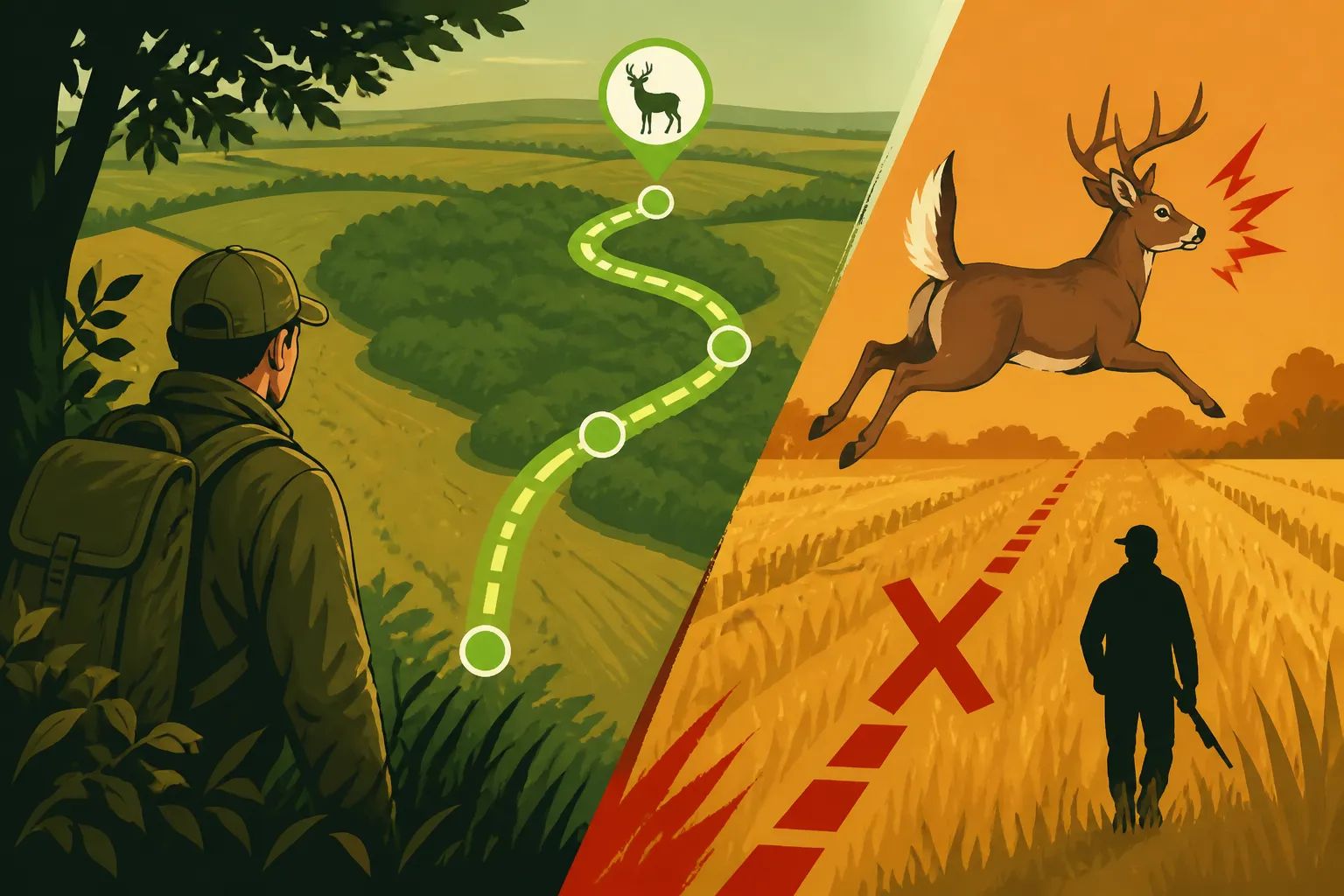
There's nothing quite as deflating as putting in hours of scouting and stand prep, only to have your entire hunt blown before you even get settled because a deer snorts at your entry. In the highly pressured landscapes of Iowa, where every whitetail seems to have an advanced degree in evading hunters, getting to your stand undetected is arguably as important as the stand location itself. This guide will meticulously break down how to plan, execute, and adapt your access and exit routes to ensure you're slipping past deer rather than sending them scattering.
Understanding Whitetail Senses and Behavior
Before we can effectively plan our access routes, we truly need to put ourselves in the deer's hooves, so to speak. Whitetails are survival machines, and their senses are finely tuned to detect threats. Ignoring their capabilities is the quickest way to empty your stand and send every buck within a quarter-mile running for the next county. Iowa deer are especially wary, having seen their fair share of hunters.
The Deer's Nose: A Hunter's Biggest Challenge
A deer's sense of smell is legendary, and for good reason. It's their primary defense mechanism, a constant radar scanning for danger. Scientists estimate a deer's sense of smell is 1,000 to 10,000 times more sensitive than a human's. They can pick out a single human odor from a complex array of natural smells, and they can even tell the difference between individual human scents. This means that every time you step foot in the woods, you're leaving a calling card.
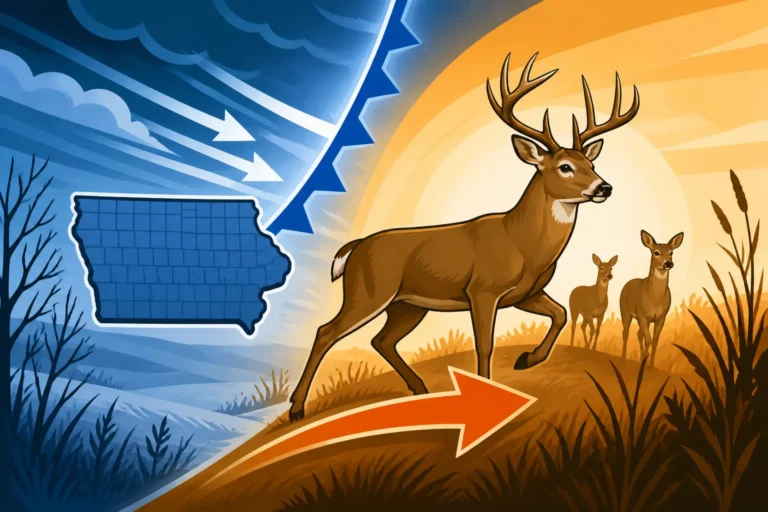
The wind is the highway for your scent, and understanding its behavior is non-negotiable. It's not just about the prevailing wind direction, either. Thermals, the subtle currents of air that rise with warming ground in the morning and fall with cooling ground in the evening, can carry your scent in unexpected directions, especially in hilly or river bottom terrain common in Iowa. In those low-lying areas, you might feel a breeze going one way, but the ground-level air currents could be carrying your scent directly into a bedding area. Ignoring these subtle shifts is a common mistake that blows many hunts. You absolutely have to factor in how the wind and thermals will interact with the topography of your chosen route. If you want a deep dive into this, check out our guide on Wind and Thermals in River Breaks.
Sight and Sound: The Silent Approach
While their nose is paramount, a deer's eyesight and hearing are also incredibly sharp. Their eyes are designed for detecting movement, particularly in low light conditions like dawn and dusk when they are most active. They have a wide field of vision, almost 300 degrees, meaning they can see a lot without turning their heads. Bright, contrasting colors or quick, jerky movements will instantly put them on high alert.
Hearing is another critical sense. Deer can pinpoint the source of a sound with remarkable accuracy. The snap of a twig, the rustle of synthetic clothing, or the clink of gear can all sound like alarm bells to a whitetail. Natural sounds, like a squirrel chattering or a turkey gobbling, are part of their world, but an unfamiliar, rhythmic crunch of footsteps or a metallic clang will send them bounding away. The goal, then, isn't just to be quiet; it's to be naturally quiet, blending any unavoidable sounds into the ambient noise of the woods. This is why paying attention to the type of clothing and gear you use, and how you walk, is so important.
Meticulous Planning with Digital Tools and Ground Truthing
You wouldn't drive cross-country without a map, and you shouldn't hunt a new piece of ground, or even a familiar one, without a solid plan for your access. This isn't just about finding the shortest path; it's about finding the quietest and least intrusive path, one that minimizes your footprint on the deer's world.
E-Scouting for Invisible Pathways
The digital age has gifted us with incredible tools for planning. Gone are the days of guessing game access or relying solely on paper topo maps. Now, apps like GoHunt and OnX Hunt allow you to become an armchair expert on your hunting grounds before you even lace up your boots. With these tools, you can spend hours analyzing aerial imagery, identifying potential bedding areas, food sources, and travel corridors. But more importantly for access routes, you can spot natural terrain features that offer concealment. Look for creek bottoms, deep drainage ditches, thick hedgerows, or even strips of timber that connect larger blocks. These aren't just great spots for deer; they're also fantastic pathways for you to sneak in and out.
When using GoHunt or similar platforms, zoom in and pay close attention to contour lines. Steep hillsides can create thermal currents that draw your scent uphill in the evening and drop it downhill in the morning. Identifying these subtle elevation changes can help you plan a route that stays out of a deer's wind. You can also mark potential stand locations and then draw multiple possible access and exit routes, seeing how they intersect with prevailing winds or known deer travel. For more on this, check out our piece on E-Scouting Iowa Farm Country From Home and how to effectively use Reading Aerial Imagery for Bedding Cover. Remember, the goal is to find a route that puts you at an advantage, not just the deer.
Verifying Routes on Foot
Digital maps are powerful, but they are no substitute for boots on the ground. Once you've identified a few promising access routes during your e-scouting, it's crucial to walk them in the off-season. This "ground truthing" allows you to verify what you saw on the screen. Are those brushy areas as thick as they looked? Is that creek bottom walkable, or is it a tangled mess of multiflora rose? Are there any unexpected fences, property lines, or pinch points you hadn't considered?
Walking your intended route when deer activity is low – say, during late winter or early spring – minimizes the risk of educating deer before the season even begins. This is your chance to clear small obstacles, prune a noisy branch, or identify potential noisy spots like crunchy leaf litter or gravel. You might even discover a completely new, better route that wasn't obvious from above. This on-the-ground reconnaissance is also essential for avoiding high-pressure zones or direct paths through known bedding areas, a critical consideration when trying to manage Access Routes That Avoid Bedding Areas. Always be respectful of private land boundaries, even during scouting, and know the rules for Scouting Iowa Public Land Before the Opener.
Utilizing Natural Cover and Topography for Concealment
Mother Nature often provides the best camouflage. Instead of fighting the landscape, learn to work with it. Iowa's diverse terrain, from rolling hills and timber to vast agricultural fields, offers plenty of opportunities to hide your approach.
Terrain Features as Your Ally
Think of the terrain as your personal invisibility cloak. Creek bottoms and drainage ditches, for instance, are often overlooked pathways. The banks offer visual screening, and the low-lying nature of the ditch can help contain your scent, particularly during those crucial early morning thermal drafts that carry scent downhill. However, be wary: these can sometimes be travel corridors for deer themselves, so always approach cautiously, watching for fresh sign. For a deeper understanding of these, check out our guide on Reading an Iowa Timber Draw for Deer Sign.
Ridgelines and subtle changes in elevation can also be your friend. Walking just below the crest of a ridge keeps you out of sight from deer looking across fields or valleys. Similarly, using the "dead space" on the back side of a hill can provide excellent cover. In farm country, the edges of standing cornfields or the taller grass of CRP (Conservation Reserve Program) fields provide fantastic visual and sound dampening. A well-planned route along a Standing Corn and Bean Field Deer Patterns edge or through a patch of CRP Grass and Where Bucks Bed can allow you to get surprisingly close to a stand location without being detected. Just remember, these are also prime bedding and feeding areas, so proceed with extreme caution and always respect the wind.
Water as a Scent and Sound Barrier
This might sound a bit extreme, but don't underestimate the power of water. If you have shallow creeks, streams, or even flooded ditches on your property or public ground, walking in them can be an incredibly effective, albeit uncomfortable, way to access a stand. The water washes away your scent trail, and the sound of your footsteps is muffled by the gurgling water. This is especially effective for crossing open areas or approaching stands situated near water sources.
Of course, this isn't practical for every situation, nor is it always comfortable, especially as the Iowa hunting seasons progress into colder weather. But for early season archery when temperatures are still mild, or for a very specific, high-priority stand location, it can be a game-changer. Just make sure you're properly outfitted with waterproof boots or waders, and understand the flow of the water – you don't want to get swept away or end up in water too deep.
The Art of Scent and Sound Management
Even with the best planned access route, if you're not diligently managing your scent and sound, you might as well be marching in with a brass band. This is where attention to detail really matters.
Beating the Nose: Wind, Thermals, and Scent Control
We've talked about the wind, but it bears repeating: hunt the wind, always. Your access route must be planned so that the wind carries your scent away from where you expect deer to be. This means understanding not just the wind forecast, but how it interacts with the local topography. Early morning, thermals tend to draw scent downhill, making creek bottoms good entry points, but risky if you're trying to hunt up the hill from a bedding area. In the evening, thermals typically rise, meaning your scent will carry uphill. Always be aware of these dynamics and have a backup plan if the wind shifts unexpectedly.
As for scent control products, they're a tool in the toolbox, not a magic bullet. Sprays, detergents, and carbon clothing can help reduce your odor, but they won't eliminate it entirely. The real value is in a holistic approach: showering with scent-free soap, washing all hunting clothes in scent-free detergent, storing them in airtight bags, and dressing at the vehicle. Rubber boots are also a must to avoid leaving foot-borne scent trails. And yes, always, always play the wind. To understand more about the effectiveness and limitations of these products, take a look at our article on Scent Control Products and What They Do. They are an aid, not a replacement for smart hunting.
Moving Like a Shadow: Minimizing Noise
Every sound you make echoes in the quiet woods, especially at dawn and dusk. Your clothing choice is paramount here. Avoid noisy fabrics like stiff nylons or certain rain gear that crinkles with every movement. Opt for fleece, wool, or brushed synthetics that are quiet. Layering your clothing, as you might for Cold Weather Stand Clothing, can also help dampen sounds.
Your walking technique is equally important. Instead of a rhythmic, heavy stride, practice a slow, deliberate "hunter's walk." Lift your feet, place your heel down gently, and then slowly roll to your toe, feeling for twigs or leaves before committing your weight. This takes practice, but it's invaluable. Organize your backpack so nothing clinks or rattles. Secure loose straps. Before you leave the truck, give yourself a little shake – if you hear anything, fix it. The goal is to move as quietly as possible, becoming an extension of the natural environment, not a foreign, noisy intruder.
Strategic Timing for Entry and Exit
Even with the perfect route and meticulous scent/sound control, poor timing can ruin everything. When you move can be just as important as how you move.
Dawn and Dusk: The Critical Windows
Most hunters want to be in their stand well before legal shooting light in the morning and stay until after dark in the evening. This is prime deer movement time, but also the most challenging for stealth. Entering in the dark requires intimate knowledge of your route. Every step must be deliberate, and you need to rely heavily on your e-scouted knowledge and ground truthing. A good headlamp, used sparingly and on a low red-light setting, is essential for navigation, but don't flash it around. The red light helps preserve your night vision and is less jarring to wildlife.
In the morning, try to arrive at your stand at least an hour before legal light, if not more, giving the woods time to settle after your approach. This means getting out of bed really early! For specific tips on how to approach this, you might find our article on Walking In Before Legal Light helpful. Similarly, staying put until well after dark allows deer to filter past your stand without you spooking them on your exit.
Midday Movements and Post-Hunt Exits
Sometimes, you need to make a move midday. Perhaps the wind has shifted unfavorably, or you're repositioning to capitalize on new information. These midday movements can be less risky than dawn/dusk, as many deer are bedded. However, you still need to be incredibly cautious. Use terrain and thick cover, move slowly, and still mind the wind. Deer often get up for a stretch or a quick bite to eat even in the middle of the day.
Exiting after a successful hunt presents its own set of challenges. You've got a downed deer, and you're likely excited and perhaps a bit less focused on stealth. But if you haul that deer out and spook every other deer in the area, you've potentially compromised future hunts. Try to choose an exit route that again uses terrain or cover to your advantage, especially if you're pulling a deer cart or dragging. If possible, avoid exiting through prime feeding or bedding areas. If you're working on getting a deer out of a tough spot, our guide on Getting a Deer Out of an Iowa Creek Bottom has some solid advice, much of which applies to access/exit strategies.
Adapting Routes for Different Scenarios
There's no one-size-fits-all access route. The "perfect" path changes with the land, the season, and even the hunting pressure. Being adaptable is key to consistent success.
Public Land vs. Private Land Challenges
Hunting public land in Iowa comes with unique pressures. Other hunters are often a greater concern than deer themselves. You might have a perfect plan, only to find another hunter has set up along your access route or in your intended stand. On public land, you need to be even more vigilant about stealth and flexible with your plans. Utilize mapping apps like GoHunt to scout areas that appear to have less obvious access points, or that require a longer, harder walk – these areas often see less pressure.
On public land, you're not just trying to avoid deer; you're trying to avoid other hunters who might unintentionally bump deer into your area, or worse, into an area you're trying to sneak into. The general rule is: if it's easy to get to, it's likely heavily hunted. So, sometimes the best access route on public land is the one that involves the most effort and dedication. Read up on Hunting Pressure Patterns on Iowa Public Land to understand how deer react to this, and how you can use it to your advantage. While our focus here is on access routes, the core principles of Public Land Deer Hunting in Iowa always apply.
Seasonal Adjustments and Crop Cycles
Iowa's landscape changes dramatically throughout the hunting seasons, and your access routes must change with it. In early archery season, standing corn provides incredible cover. You can slip through rows unseen and unheard, masking your approach. But once that corn is picked, the landscape opens up, and your old route might become a wide-open gauntlet. You'll need to find alternative routes along timber edges, drainage ditches, or brushy fence lines.
Similarly, early season green food plots or alfalfa fields might be magnets for deer, but later in the season, after a hard frost, they might shift to standing beans, acorns, or brassicas. Your access route needs to put you in a position to intercept deer moving to and from these changing food sources, always being mindful of the wind relative to where those deer will be. Being aware of the crop cycles and how they affect deer movement, as detailed in Standing Corn and Bean Field Deer Patterns, is crucial for planning your approach. The best access route in September might be completely useless by November, so keep scouting and adapting!
Comparison of Access Route Elements
To help consolidate some of these strategies, here's a quick look at how different elements contribute to a successful, stealthy access route:
| Element | Benefit for Deer Avoidance | Best Used When… | Potential Pitfalls |
|---|---|---|---|
| Wind | Carries human scent away from deer | Always, ensures scent is not an issue | Shifting winds, unpredictable thermals, requires constant monitoring |
| Thermals | Natural air currents carry scent up/down slopes | Morning (downhill), Evening (up-slope) | Can reverse quickly, less predictable in flat terrain |
| Creek Bottoms / Ditches | Visual and sound cover, can funnel scent | Approaching stands along natural draws/depressions | Can be noisy with water/debris, may hold deer, can be wet/muddy |
| Standing Crops (Corn/Beans) | Excellent visual & sound concealment | During early archery, before harvest | Deer bed inside, can be noisy walking, limited visibility |
| Timber Edges | Provides visual cover, can be quiet walking | Parallel to bedding/feeding transitions | Deer often parallel edges, high visibility for deer inside timber |
| Water (Wading in streams) | Washes away scent, muffles footsteps | Early season (warmer), crossing open areas, specific stand access | Uncomfortable, can be cold/deep, potential for slips/falls |
| Ridgelines / Hills | Uses topography for visual concealment | Walking parallel just below crest, back of hill approaches | Can expose you to deer on opposite slope, thermals can be tricky |
Disclaimer
Hunting is an inherently dangerous activity. Always prioritize safety, adhere to all Iowa hunting regulations, and obtain proper landowner permissions. The information provided in this guide is for educational and informational purposes only and should not be considered a substitute for professional instruction or official state regulations. Always consult the latest Iowa DNR hunting regulations before heading into the field.