Is .45-70 Legal for Iowa Deer?
Trying to figure out the maze of Iowa's deer hunting regulations can feel like navigating a dense cedar thicket in the dark. You’ve heard whispers, seen discussions, and probably scratched your head wondering if that old reliable thumper, the .45-70 Government, actually makes the cut for deer season here in the Hawkeye State. This guide is here to untangle the confusion and give you the definitive lowdown on using a .45-70 for deer hunting in Iowa, offering clear explanations and practical advice so you can hunt confidently and legally.
Navigating Iowa's Straight-Wall Cartridge Regulations for Deer
Iowa has some pretty specific rules when it comes to the firearms you can use for deer hunting, especially during the shotgun seasons. These regulations are designed with hunter safety and perceived range limitations in mind, often trying to strike a balance between allowing effective hunting and preventing excessively long-range shots in densely populated areas or fragmented habitats. This can lead to a lot of head-scratching for hunters, particularly those coming from states with more liberal rifle rules or those who appreciate classic cartridges like the .45-70. It’s easy to feel a bit lost in the acronyms and bullet point requirements, but understanding the core intent helps a lot.
The Specifics of Iowa's Straight-Wall Rule
At its heart, Iowa’s regulation for what many call "straight-wall cartridge rifles" focuses on two key aspects: the physical dimensions of the cartridge case and the energy it delivers. The term "straight-wall" itself refers to cartridges where the casing walls are essentially parallel from the base to the mouth, without the distinct shoulder taper you'd find on a traditional bottleneck rifle cartridge like a .30-06 or .270 Win. This design characteristic generally limits the projectile's velocity and thus, its effective range, compared to bottlenecked rounds.
For a cartridge to be legal for deer hunting during specific seasons in Iowa, it must meet several criteria. First, the bullet diameter must be between a specified minimum and maximum, typically ranging from .357 inches to .500 inches. This ensures that projectiles are of a sufficient size for deer but also prevents the use of extremely large, specialized rounds. Second, the cartridge must indeed be a straight-wall type, meaning it lacks a bottle-necked shape. This is crucial and often where confusion arises for newer cartridges. Lastly, and perhaps most importantly, the cartridge must generate a minimum amount of muzzle energy, usually set at 500 foot-pounds, and must use a single projectile. This energy requirement is a non-negotiable factor, ensuring that any legal round has adequate power to humanely harvest a deer at reasonable ranges. Many hunters use tools like the GoHunt app to quickly reference regulations and check cartridge specs, which can be incredibly helpful when you're trying to remember all these little details.
Does the .45-70 Government Cartridge Fit the Bill?
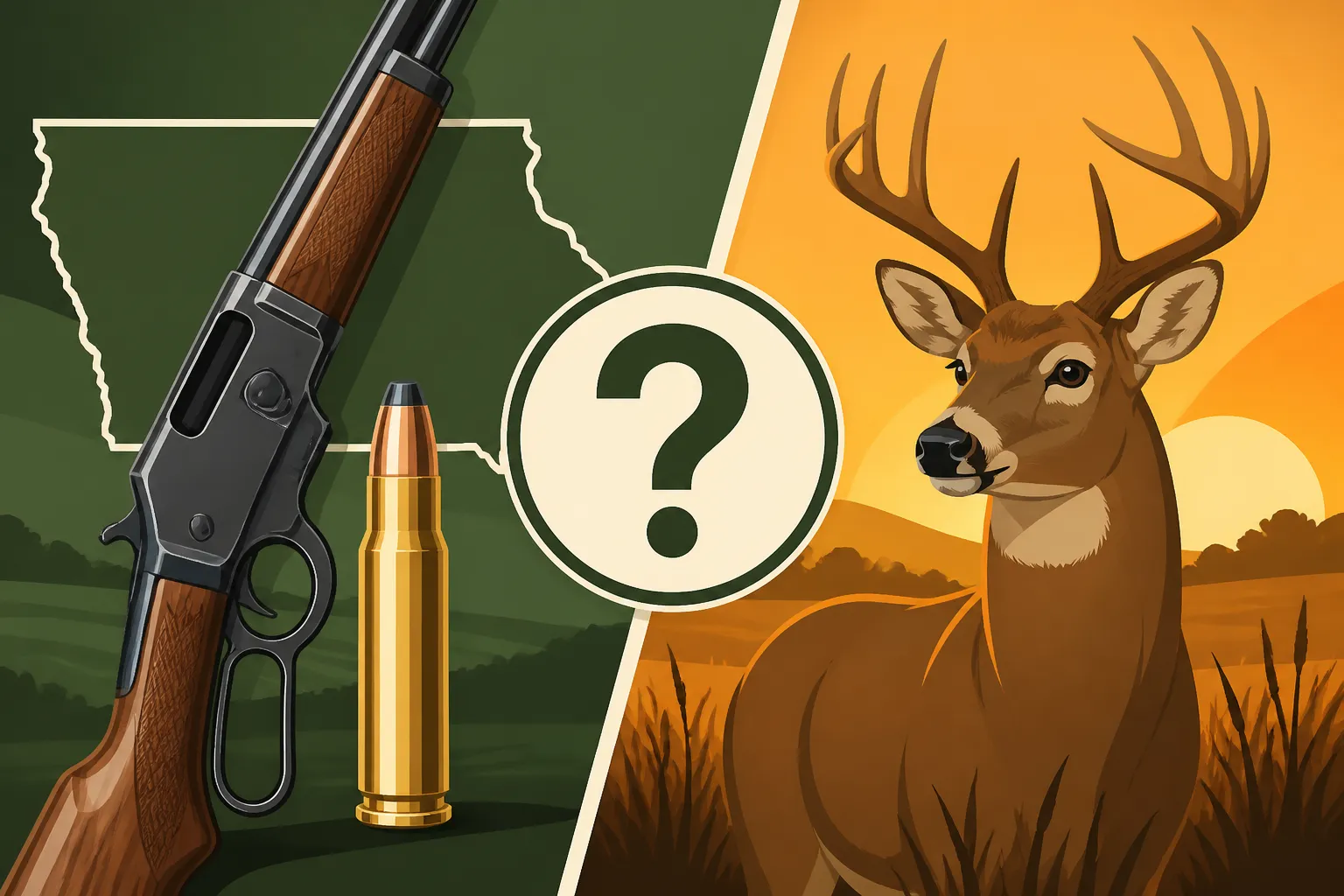
Now, for the burning question: Is the venerable .45-70 Government legal for deer hunting in Iowa? The short answer, thankfully for many traditionalists and big-bore enthusiasts, is yes, under specific conditions.
Let's break it down against Iowa's criteria. First, the .45-70 is undeniably a straight-wall cartridge. Its design dates back to 1873, and it's a classic example of a straight-cased round. So, that's a clear checkmark. Second, its bullet diameter typically falls within the legal range. The ".45" in .45-70 refers to a nominal bullet diameter of .458 inches, which comfortably sits between the .357 and .500-inch requirements. So far, so good.
The critical factor where hunters need to pay close attention is the muzzle energy requirement. Iowa mandates a minimum of 500 foot-pounds of muzzle energy. The .45-70, especially with modern loadings, far exceeds this minimum. Depending on the bullet weight and powder charge, a .45-70 can produce anywhere from 1,500 to over 3,000 foot-pounds of energy at the muzzle. This means that virtually any factory-loaded .45-70 ammunition designed for hunting will easily meet Iowa's energy requirements. However, it's always prudent to check the specific ballistics listed on your chosen ammunition box or manufacturer's website to be absolutely certain your load meets or exceeds the 500 ft-lbs minimum, just for peace of mind. Remember, the rules are in place for a reason, and understanding them prevents any unfortunate incidents or misunderstandings in the field.
Seasons When Straight-Wall Cartridges Are Legal
Understanding the legality of your firearm isn't just about the cartridge; it's also about when you can use it. Iowa's hunting seasons are segmented, and not all firearms are legal in all segments. For straight-wall cartridge rifles like the .45-70, their use is permitted during the First and Second Shotgun Seasons and the Late Muzzleloader Season.
This is important to grasp because it defines your hunting opportunities. If you plan to hunt the early archery season, your .45-70 rifle will need to stay home, as that season is strictly for bows and crossbows. Similarly, the Early Muzzleloader Season is typically reserved for traditional muzzleloading firearms, not modern cartridge rifles, even if they share some ballistic characteristics.
Therefore, if you're planning your Iowa deer hunt with a .45-70, you're looking at prime opportunities in early to mid-December during the shotgun seasons, and then again from late December into January for the late muzzleloader season. These seasons often coincide with colder weather, potential snow, and a deer herd focused on food sources. Knowing these season dates allows you to plan your hunt effectively, scout your areas for Late-Season Food Source Hunting in Iowa, and ensure your gear aligns with the specific regulations for that time of year. It's a fantastic way to extend your deer hunting opportunities in Iowa, especially if you're a fan of the power and history that the .45-70 brings to the field.
Beyond Legality: Practical Considerations for Hunting with a .45-70 in Iowa
Just because a cartridge is legal doesn't automatically make it the perfect choice for every hunter or every hunting scenario. The .45-70 is a powerful round with a distinct character, and it’s worth considering these practical aspects before you head afield in Iowa. Many hunters find that while it's a formidable cartridge, it requires some familiarity and respect to be truly effective.
Recoil and Ballistics of the .45-70
Let's not beat around the bush: the .45-70 Government can deliver a significant punch on both ends. While modern rifles and ammunition have certainly tamed some of the beast, it’s still a cartridge known for its robust recoil, especially with heavier bullet loads. For some hunters, this isn't an issue, but for others, it can lead to flinching or discomfort, which directly impacts accuracy. Practice is absolutely crucial with a .45-70. Spending time at the range, getting comfortable with the rifle's kick, and ensuring consistent shot placement will make all the difference when a buck steps out. You want to be confident in your ability to make a clean, ethical shot under pressure, and that confidence comes from practice.
When it comes to ballistics, the .45-70 is often characterized by its "rainbow" trajectory compared to high-velocity bottleneck cartridges. It’s a heavy, slow-moving projectile that starts dropping sooner. In Iowa, where typical shots might be in thick timber or across smaller crop fields, ranges often stay under 150 yards. Within this range, the .45-70 is an absolute hammer. Its heavy bullet retains significant energy and delivers tremendous knockdown power. However, beyond 150-200 yards, the bullet drop becomes much more pronounced, requiring precise range estimation and holdover. For the vast majority of Iowa hunting scenarios, where shots are typically closer, the .45-70 is more than capable, offering a powerful and decisive impact. Understanding its trajectory is key to mastering its use.
Ammunition Selection and Availability
The market for .45-70 ammunition has grown significantly in recent years, with manufacturers offering a variety of bullet weights and designs. You'll find everything from traditional flat-nose lead bullets to modern, aerodynamic polymer-tipped projectiles designed for improved ballistics. Brands like Hornady's LEVERevolution, for instance, have revolutionized the trajectory of the .45-70, making it flatter-shooting and extending its practical range without compromising its stopping power.
When choosing ammunition for Iowa deer, consider bullet construction. A good hunting bullet for the .45-70 will expand reliably upon impact to create a wide wound channel while retaining enough weight to penetrate deeply. Different bullet weights (e.g., 300-grain, 325-grain, 405-grain) will offer slightly different ballistic profiles and recoil impulses. It’s worth experimenting with a few options to see what your rifle shoots most accurately and what you're most comfortable with.
Compared to newer straight-wall cartridges like the .350 Legend or .450 Bushmaster, .45-70 might sometimes be a little less common on store shelves, depending on your local shops. However, it’s a classic, so major retailers and online suppliers usually have a good stock. It's always a good idea to buy your hunting ammunition well in advance of the season, and certainly before you start sighting in your rifle.
Shot Placement and Range Limits
The incredible power of the .45-70 might lead some to believe that shot placement is less critical, but nothing could be further from the truth. Ethical hunting demands precise shot placement regardless of the cartridge. While a .45-70 can certainly be forgiving due to its large diameter and energy transfer, aiming for the vital organs (heart and lungs) remains paramount for a quick and humane harvest. You can read more about Shot Placement on a Whitetail at Twenty Yards to refresh your understanding of vital areas.
For hunting in Iowa, with its mix of timber, creek bottoms, and agricultural fields, you’ll typically be looking at shots that are within the effective and ethical range of a .45-70—generally under 150 yards. While the cartridge is capable of reaching out further with certain loads and skilled shooters, the significant bullet drop beyond that range introduces more variables that can lead to missed shots or wounded game. Stick to ranges where you can confidently place your shot, understanding your rifle’s capabilities and your own limitations. This cartridge truly shines in situations where you might have brush to contend with or need to anchor a deer quickly in thick cover. For situations like Shotgun Season Drives in Small Timber, its power can be a real asset, but always keep safety and range limits in mind, especially when hunting in a group.
Setting Up Your .45-70 for Iowa Deer Hunting
Getting your .45-70 rifle ready for an Iowa deer hunt involves more than just buying a box of ammo. Proper setup, especially when it comes to optics and accessories, can significantly enhance your effectiveness and comfort in the field. Think about the conditions you'll be hunting in – cold, potentially wet, and often with fleeting opportunities in thick cover.
Optics and Sighting In
Given the .45-70's ballistic profile and the typical ranges encountered in Iowa, choosing the right optic is crucial. A variable power scope with a low bottom end (e.g., 1-4x, 1.5-5x, or 2-7x) is often ideal. This allows for a wide field of view and quick target acquisition at close ranges in timber or heavy cover, while still offering enough magnification for slightly longer shots across a food plot or field edge. Some hunters even prefer a robust red dot sight, especially if their hunting is primarily in dense woods where shots are expected to be under 75 yards. A red dot offers incredibly fast target acquisition and works well in low light, without the complexities of parallax or eye relief that a traditional scope might present.
Once you have your optic mounted, the next critical step is sighting in. For a .45-70 in Iowa, zeroing your rifle at 75 or 100 yards is a common and practical choice. This usually means your bullet will be slightly high at closer ranges and then begin to drop more significantly past your zero. Knowing your bullet's trajectory at common distances (25, 50, 75, 100, 125, and 150 yards) is vital. Spend time at the range, shooting from different positions you might encounter in the field (e.g., offhand, rested on a pack, from a treestand prop). This practice will build confidence and ensure you're ready when that Iowa giant steps out. You can find more tips on Zeroing a Slug Gun at Fifty Yards, which applies equally well to straight-wall rifles.
Accessories for Field Use
Beyond the rifle and optic, a few key accessories can make your .45-70 a more pleasant and effective hunting tool:
- Recoil Pad: If your rifle doesn't have a good recoil pad, investing in an aftermarket one is highly recommended. It can significantly reduce felt recoil, making practice more enjoyable and preventing flinching during a critical shot. Brands like Limbsaver or Pachmayr offer excellent options.
- Sling: A comfortable and durable sling is essential for carrying your rifle during long walks to and from your stand, especially if you're venturing into Hunting Iowa Walk-In Ground Without Burning It Out. It frees up your hands for climbing, carrying other gear, or navigating tough terrain.
- Cleaning Kit: The .45-70 is a relatively straightforward cartridge to clean, but having a proper kit is important, especially after hunting in wet or muddy conditions. Keeping your bore clean and free of corrosion will maintain accuracy and the longevity of your rifle.
- Hearing Protection: Given the substantial muzzle blast of a .45-70, high-quality hearing protection is non-negotiable for range sessions. For hunting, electronic hearing protection allows you to hear ambient sounds (like approaching deer or conversation with hunting partners) while still protecting your hearing from the shot.
Comparing to Other Iowa-Legal Firearms
It's helpful to put the .45-70 into perspective by comparing it to other firearms commonly used for deer hunting in Iowa. Most hunters during the shotgun seasons will be choosing between a traditional shotgun with slugs, or one of the modern straight-wall cartridge rifles.
Traditional Shotgun with Slugs (e.g., 12 gauge):
- Pros: Widespread availability, familiar to many, can be very accurate with rifled barrels and sabot slugs.
- Cons: Generally heavier recoil than many straight-wall rifles, limited range (often under 125 yards), ammunition can be expensive.
- Comparison to .45-70: The .45-70 often offers a flatter trajectory and potentially slightly longer effective range than a slug gun, with generally less harsh recoil than a heavy 3-inch magnum slug. However, slug guns are often more affordable to get into.
Other Popular Straight-Wall Cartridges (e.g., .350 Legend, .450 Bushmaster):
- Pros: Designed specifically for states with straight-wall rules, generally lighter recoil than .45-70, very flat shooting within ethical deer hunting ranges (up to 200+ yards for some loads), excellent ammunition availability.
- Cons: Less historical appeal, some hunters prefer the bigger "thump" of the .45-70.
- Comparison to .45-70: The .350 Legend and .450 Bushmaster are often seen as more modern, purpose-built alternatives that offer excellent performance with less recoil and flatter trajectories for their respective classes. The .45-70 is still a formidable round, but these newer cartridges offer strong competition.
Here's a quick comparison table:
| Feature | 12 Gauge Slug Gun | .45-70 Government Rifle | .350 Legend Rifle | .450 Bushmaster Rifle |
|---|---|---|---|---|
| Cartridge Type | Shotshell (single projectile) | Straight-Wall Rifle | Straight-Wall Rifle | Straight-Wall Rifle |
| Typical Bullet Diameter | .729" (12 ga) | .458" | .357" | .452" |
| Muzzle Energy (ft-lbs) | 1800-3000+ (depending on slug) | 1500-3000+ (depending on load) | 1500-1800+ | 2000-2500+ |
| Effective Deer Range | 75-125 yards | 100-175 yards | 175-225 yards | 150-200 yards |
| Recoil | Heavy | Moderate to Heavy | Light to Moderate | Moderate |
| Trajectory | Significant drop | Moderate drop | Relatively flat | Relatively flat |
| Ammunition Availability | High | Good | Very High | High |
Ultimately, the choice comes down to personal preference, comfort, and the specific hunting conditions you anticipate. The .45-70 is a proven performer with a rich history, and if you enjoy shooting it, it’s a perfectly legal and effective option for deer hunting in Iowa.
Remember, regardless of your chosen firearm, always consult the current Iowa hunting regulations, often available through the GoHunt platform or the state's DNR website. They are your ultimate guide to staying legal and safe in the field.
Disclaimer
This article is for general informational purposes only and does not constitute professional advice. Laws, prices and regulations vary by location and change over time. Consult a qualified professional for guidance on your specific situation.