Northeast Iowa Bluff Timber Access
Oh, the bluffs of Northeast Iowa! If you've ever tried to hunt those breathtaking, rugged hills, you know the frustration of finding good access. It's not like the flat farm fields of central Iowa where every section line is a road. Here, the landscape itself is a maze of steep timbered ridges, deep ravines, and winding creeks, often making public and even private land feel utterly inaccessible. This guide is dedicated to helping you unravel the mysteries of Northeast Iowa bluff timber access, from understanding the unique terrain to pinpointing public hunting opportunities and respectfully navigating private land.
Understanding the Unique Terrain of Northeast Iowa's Bluff Country
When you talk about Northeast Iowa, you're really talking about a slice of the "Driftless Area," a geological wonder that often leaves first-time visitors scratching their heads. This isn't your typical Iowa landscape, and understanding why it's different is the first step to figuring out how to get your boots on the ground and a stand in a tree.
The Driftless Area's Geological Wonders
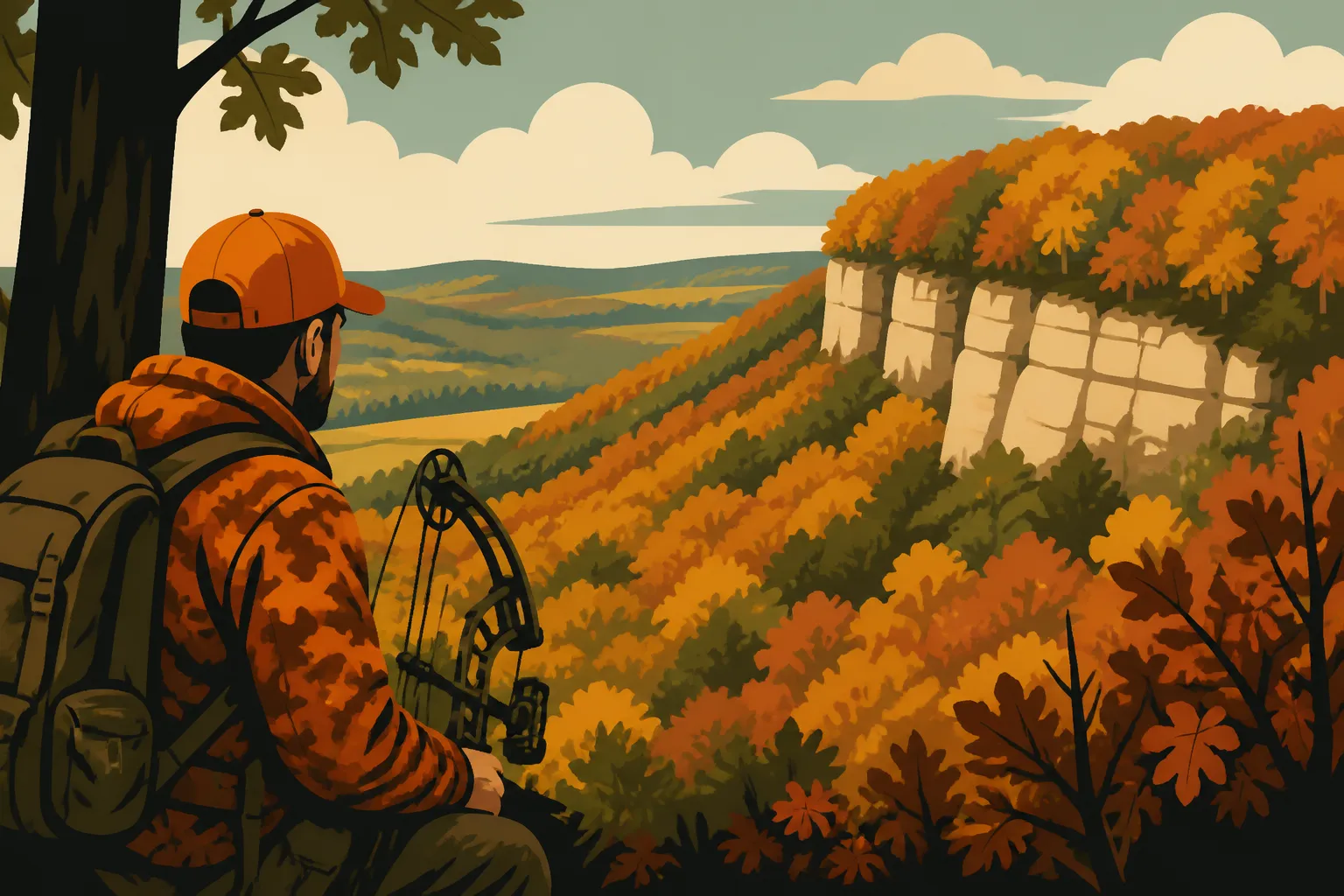
The "Driftless Area" earned its name because it was bypassed by the last continental glaciers, meaning it lacks the thick layers of glacial "drift" (sediment) that smoothed out much of the rest of Iowa. Instead, what you get are ancient, deeply carved river valleys, steep limestone bluffs, and a topography that feels more like a mountain range than a Midwestern state. Think towering timbered hills that drop sharply into spring-fed creeks and rivers like the Yellow River or the Upper Iowa. It's a land of dramatic elevation changes, hidden hollows, and dense hardwood forests that cling to the steep slopes.
This unique geology has a profound impact on everything, especially hunter access. Roads often follow the valleys, meaning much of the timbered bluff tops and steep slopes are quite a trek from the nearest vehicle access. You won't find many convenient pull-offs leading directly into prime deer habitat. Instead, expect to work for your access, often needing to hike significant distances uphill just to get to where the deer are bedding or traveling. The sheer ruggedness can be a deterrent for some, but for those willing to put in the effort, it offers a hunting experience unlike any other in Iowa, often with less pressure simply because of the physical challenge.
How Timber and Topography Dictate Deer Movement
Deer, like any creature, are products of their environment, and in the bluff country, the timber and topography are their guiding forces. Whitetails here use the terrain to their advantage, creating predictable patterns that, once understood, can lead to incredible hunting opportunities. They're masters of navigating these steep grades.
You'll find deer bedding heavily on the secluded benches and flat spots along the ridge tops, especially where dense cedar thickets or young timber offer thermal cover and security. From these vantage points, they can overlook the valleys, sensing danger below. When moving between these bedding areas or heading to food sources in the agricultural fields that often dot the valley floors or distant plateaus, they'll instinctively use the easiest paths. This means deer trails often funnel through saddles, pinch points between steep draws, or along the less severe slopes of benches and old logging roads. Reading an Iowa Timber Draw for Deer Sign becomes an essential skill here, as these draws are frequently highways for deer moving up and down the bluffs.
Wind and thermals play an even more critical role in this vertical landscape than in flat country. Thermals will pull scent uphill in the morning as the ground warms and push it downhill in the evening as temperatures drop, creating predictable air currents that you must factor into your access and stand placement. Understanding these nuances is key to hunting these areas effectively, ensuring your scent doesn't betray your presence as you attempt to access those secluded timber pockets. It's all about thinking vertically, not just horizontally, when planning your approach and hunt.
Key Public Access Points and How to Find Them
Finding public hunting ground in Northeast Iowa's bluff timber can feel like looking for a needle in a haystack, especially if you're used to the more defined block of public land out West. Iowa has a mix of state, county, and federal lands, each with its own quirks, but with the right tools and a little persistence, you can uncover some real gems.
State Forests and Wildlife Management Areas
The largest and most well-known public hunting areas in Northeast Iowa are often the state forests and larger Wildlife Management Areas (WMAs). Places like Yellow River State Forest in Allamakee County immediately come to mind. This sprawling forest offers thousands of acres of rugged, timbered bluffs, deep valleys, and winding creeks. It's exactly the kind of challenging terrain where you can truly get away from the crowds if you're willing to hike. These state forests are generally open to hunting during established seasons, but always check specific regulations as some areas might have special rules or closures. Yellow River State Forest Hunting is a fantastic resource if you plan to explore that particular area.
WMAs, while often smaller and more dispersed, can also offer critical access to timbered cover. These areas are managed specifically for wildlife habitat and public recreation, including hunting. They might range from smaller timber blocks nestled between farm fields to larger tracts bordering river systems. Using a good mapping application like onX Hunt is absolutely crucial here. These apps show clear property boundaries, allowing you to identify these public parcels and plan your entry and exit routes. They can also help you see how these WMAs connect to other timber blocks, which can be vital for understanding larger deer movement patterns.
Navigating County Conservation and Other Public Lands
Don't overlook the smaller, often fragmented parcels managed by county conservation boards. Many counties in Northeast Iowa have fantastic properties, from nature preserves to parks, which often allow hunting. The key is that rules can vary significantly from one county to the next, and even from one property to another within the same county. Some might have archery-only rules, others might restrict hunting to certain seasons or require special permits. It's always best to check with the specific county conservation board directly or look up their regulations online before heading out. Iowa County Conservation Land Rules can give you a general overview, but always drill down to the specific county and property you're interested in.
Beyond state and county lands, the Army Corps of Engineers manages land around certain river systems and reservoirs, some of which are open to hunting. The Upper Mississippi River National Wildlife and Fish Refuge, for example, spans parts of Northeast Iowa and offers extensive opportunities, particularly for waterfowl, but also some deer hunting on its islands and floodplains. Access to these areas often involves boating, adding another layer of adventure and reducing pressure from road-bound hunters. These varied public land types, while sometimes challenging to access, are the backbone of hunting in the bluff country.
Utilizing Digital Tools for Scouting and Access
In this rugged terrain, traditional paper maps just won't cut it anymore. Digital mapping tools are your best friend for uncovering access points and understanding the lay of the land without ever stepping foot out of your house (yet!). Services like onX Hunt have revolutionized how hunters approach public land, especially in complex areas like Northeast Iowa.
With onX Hunt, you can instantly see public and private land boundaries, landowner names, topographical lines, and satellite imagery all overlaid on one map. This is invaluable for identifying slivers of public ground that might otherwise be overlooked, understanding potential access corridors from roads or waterways, and even figuring out who owns the private parcels surrounding public areas. You can use it to pinpoint isolated timber stands, identify saddles and benches, and mark potential stand locations. E-Scouting Iowa Farm Country From Home might focus on different terrain, but the principles of digital scouting apply even more intensely here.
Another useful platform is GoHunt, which often provides detailed information on various hunting units, draw odds, and land types. While GoHunt might be more tailored to Western big game draws, its comprehensive approach to mapping and species information can still offer insights when planning a hunt in any state, including Iowa. Even if you're not applying for tags, the mapping features and general information can be helpful. Both these tools allow you to drop pins, measure distances, and track your movements, making them indispensable for navigating the often-confusing boundaries and steep grades of Northeast Iowa's timbered bluffs. Without these digital aids, finding and effectively hunting these public areas would be significantly more challenging.
Navigating Private Land and Building Relationships
While public land offers fantastic opportunities, the reality in Iowa, even in the timbered bluffs, is that much of the best hunting is often found on private property. Gaining access to these parcels can unlock incredible experiences, but it requires respect, communication, and often, building genuine relationships with landowners.
The Importance of Asking Permission
In Iowa, hunting on private land always requires permission, whether it's posted or not. It’s not just a legal requirement; it's a matter of respect and etiquette. Many of the landowners in Northeast Iowa are farmers or long-time residents who cherish their land and their privacy. Showing up with a genuine smile, a polite demeanor, and a clear request can go a long way.
When you approach a landowner, be prepared to introduce yourself, explain why you're interested in hunting their property (e.g., you appreciate the quality of their timber, you're looking for a specific type of hunting experience), and discuss your hunting ethics. Offer to share some of your harvest, help with chores, or simply lend a hand where needed. Don't be afraid of rejection; many landowners are simply overwhelmed with requests or already have hunters. But by being polite and persistent, you might just find someone willing to open their gates. Remember, you're not just asking to hunt; you're asking to build a relationship. Asking an Iowa Landowner for Permission goes into more detail on how to make a good impression.
Understanding Iowa's Trespass Laws and Posted Land
Iowa's trespass laws are pretty straightforward: if you don't have permission, you're trespassing. This is especially important in the bluff country where property lines can be obscure, and the timber often blends seamlessly from one parcel to the next. Posted signs are a clear indication that hunting is not allowed without express permission, but even if land isn't posted, the owner's permission is still required.
Always carry your hunting license and any written permission you might have (even a text message or email can suffice, though a signed note is best). Use your digital mapping tools like onX Hunt to constantly verify your location relative to property lines. It's incredibly easy to inadvertently cross onto someone else's property in rugged, timbered terrain, and that can quickly sour relationships for all hunters. Ignorance of the boundary is not an excuse. Familiarize yourself with Iowa Trespass Law and Posted Land before you head out, and always err on the side of caution. Being a responsible and respectful hunter not only keeps you legal but also helps ensure future access for everyone.
Hunting Strategies for Steep, Timbered Bluffs
Now that you've got your access sorted, it's time to talk strategy. Hunting Northeast Iowa's bluff timber is a different beast than hunting flat ground. The vertical nature of the landscape requires a fresh perspective on everything from stand placement to scent control.
Using Elevation to Your Advantage
In bluff country, elevation is everything. Deer use the contours of the land for travel, bedding, and security. As a hunter, you need to think vertically. Look for benches – these are flatter, narrower strips of land that run along the side of a bluff, often creating natural travel corridors. Deer will often traverse these benches rather than battling the steepest parts of the hill. Placing a stand on a bench overlooking a main travel route or intersecting a saddle where deer cross from one ridge to another can be highly effective. Saddles and Benches Deer Cross Daily are absolute magnets for deer movement in this kind of terrain.
Ridge lines, especially those with good cover, serve as prime bedding areas. Setting up on the downwind side of a ridge, perhaps 1/3 to halfway down, can catch deer as they move off their beds or cruise the ridge in search of does during the rut. Pay close attention to subtle changes in elevation that might funnel deer through a specific spot. Also, mastering Wind and Thermals in River Breaks is critical. Morning thermals will carry your scent uphill, while evening thermals will drag it down. Plan your approach and exit accordingly, ensuring your scent doesn't blow into potential bedding or travel areas. A strategic tree stand or saddle set that leverages these air currents can make or break your hunt.
Access Routes and Scent Control in Rugged Terrain
Accessing your stand in steep, timbered bluffs presents unique challenges. Your goal is always to get to and from your stand without alerting any deer. This means planning your routes meticulously. Look for terrain features that provide natural cover for your approach, like the bottom of a deep ravine or the backside of a ridge. Sometimes, the easiest physical path might not be the quietest or most scent-free, so choose wisely. Access Routes That Do Not Bump Deer are paramount, especially in areas where deer have limited escape routes or feel pressured.
Scent control becomes even more difficult when you're exerting yourself climbing steep hills. You're going to sweat, and that sweat carries human odor. Layer your clothing so you can shed layers on the hike in, putting them back on once you're in your stand and cooled down. Consider packing your outer hunting clothes in a scent-free bag and putting them on only when you're close to your stand, hiking in lighter clothing. Rubber boots are a must to minimize ground scent. The physical demands of hunting these bluffs mean you'll likely have a higher heart rate and body temperature, so every effort to control your scent needs to be amplified. Don't underestimate the power of quiet footsteps on a steep, leaf-covered slope; every crunch can echo far down a hollow.
A Quick Comparison of Public Land Access Types in Northeast Iowa
Understanding the general characteristics of different public land types can help you decide where to focus your scouting and hunting efforts.
| Public Land Type | General Characteristics | Typical Access Challenges | Key Hunting Opportunities |
|---|---|---|---|
| State Forests | Large, contiguous blocks of timbered, rugged terrain. Managed for timber, recreation. | Often limited road access; long, steep hikes required to get deep. | Deer, turkey, small game. |
| Wildlife Management Areas | Varied sizes, managed for wildlife. Can be timber, marsh, or mixed habitat. | Scattered, sometimes smaller parcels; boundary awareness is key. | Deer, turkey, pheasant, waterfowl (habitat dependent). |
| County Conservation Areas | Smaller, often multi-use. Rules vary greatly by county and specific property. | Highly variable rules; potentially high non-hunting recreational use. | Deer (often archery-only), turkey, small game. |
| Corps of Engineers Land | Along major rivers/reservoirs. Floodplain timber, islands, sometimes more open. | Often boat access required; seasonal flooding; specific refuge rules. | Waterfowl, deer, some small game. |
Remember, while these are general guidelines, every piece of public land in Northeast Iowa will have its own unique features and challenges. Always do your homework, scout diligently (both digitally and on foot), and respect the land and fellow users. The opportunities for a rewarding hunt in Iowa's Driftless Area are truly special for those willing to embrace the terrain. Public Land Deer Hunting in Iowa provides a great overview, but the bluff country is a beast of its own! If you want to dive deeper into how to scout these areas, check out Scouting Iowa Timber and River Bottoms. And when you're ready to hang a stand, understanding Hunting Saddles and Pinch Points in Rolling Timber will be invaluable.
Disclaimer
This article is for general informational purposes only and does not constitute professional advice. Laws, prices and regulations vary by location and change over time. Consult a qualified professional for guidance on your specific situation.